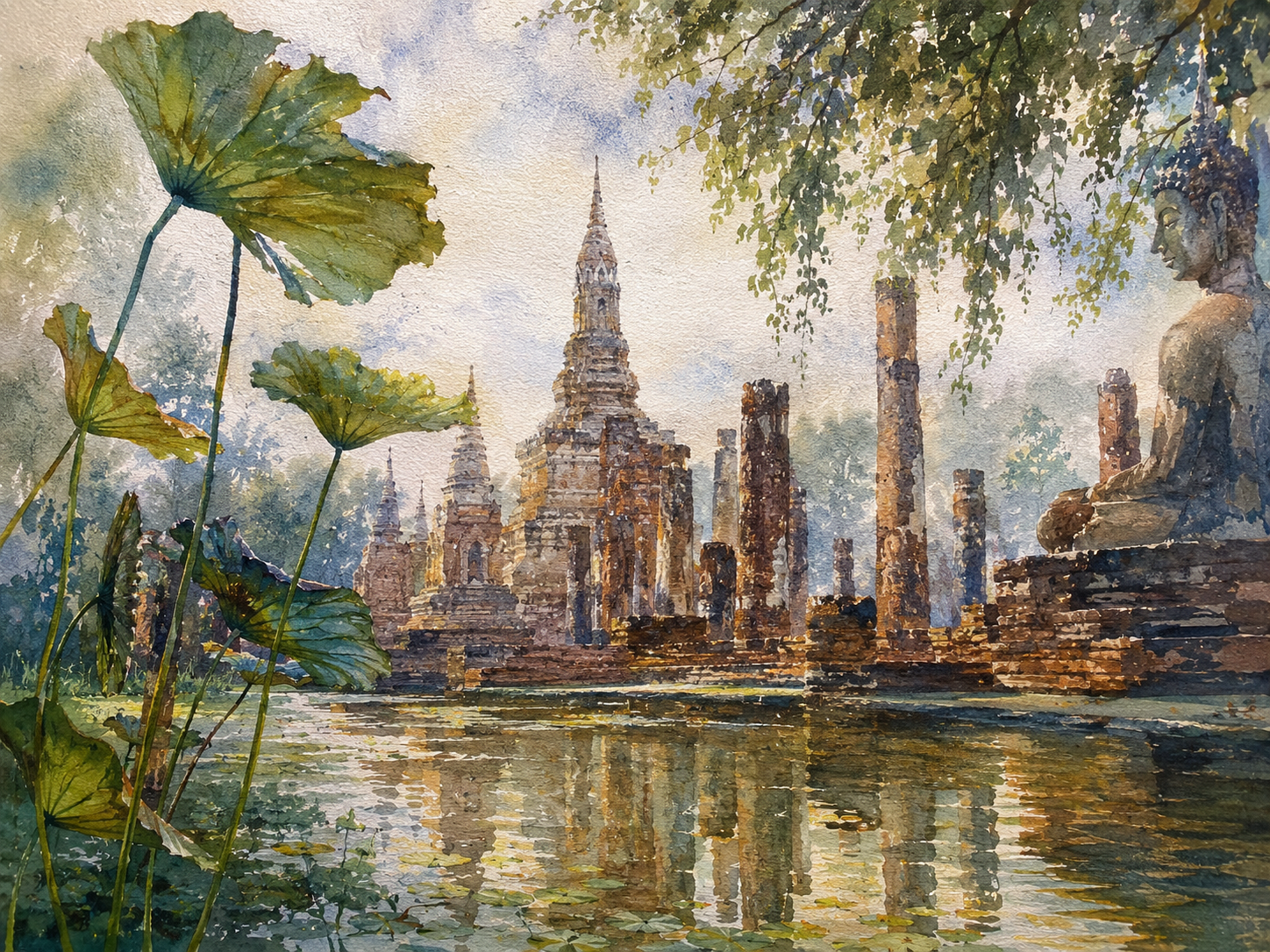
Whispers from the Sacred Waters
Critique
1. Introduction This evocative watercolor painting captures a serene and spiritual scene of ancient Buddhist ruins reflected in the still waters of a sacred pond. Large, vibrant lotus leaves in the foreground act as a natural frame, inviting the viewer into a landscape where history and nature are inextricably linked. The overall atmosphere is one of profound peace and contemplative stillness, characteristic of a site where time seems to have slowed to a graceful crawl. This initial impression of tranquility establishes a reverent tone that persists throughout the work. 2. Description The composition is rich in symbolic and architectural detail, featuring a large seated Buddha statue on the right side, its stone surface weathered and softened by centuries of exposure. In the center and background, a series of crumbling stupas and weathered stone pillars rise toward a soft, hazy sky, their forms mirrored with remarkable clarity in the water below. The immediate foreground is dominated by the broad, umbrella-like leaves of lotus plants, their delicate veins and textures rendered with exceptional precision and clarity. 3. Analysis Technically, the artist demonstrates a masterful use of the watercolor medium to create atmospheric depth and soft, ethereal light. The transition between the solid, earthly forms of the ruins and their liquid reflections is handled with great sensitivity, using subtle washes to suggest the transparency of the water. The verticality of the ancient spires is balanced by the horizontal expanse of the pond and the organic, sweeping curves of the foreground foliage, creating a harmonious visual structure that guides the viewer's eye through the space. 4. Interpretation and Evaluation The work successfully conveys the theme of "beautiful decay" and the enduring power of spiritual monuments amidst the cycles of nature. By placing the viewer behind the protective barrier of the lotus leaves, the artist creates a sense of discovery and reverence, as if peering into a hidden, sacred world. The technical execution is truly exceptional, particularly in the way light filters through the overhanging branches to illuminate the stone surfaces, imbuing the scene with a sense of divine presence and historical resonance. 5. Conclusion In conclusion, the artwork is a sophisticated study of light, spirituality, and natural harmony. The seamless transition from the tactile foreground elements to the misty architectural distance provides a compelling and meditative visual experience that rewards sustained contemplation. This piece stands as a powerful testament to the enduring allure of sacred ruins and their ability to evoke a sense of timeless tranquility in the modern soul. The final result is a deeply moving and technically accomplished interpretation of a revered cultural landscape.
Same Subcategory
 Monolith of Twilight on the Reflective Shore
 Symphony of the Alpine Mist
Similar Artworks
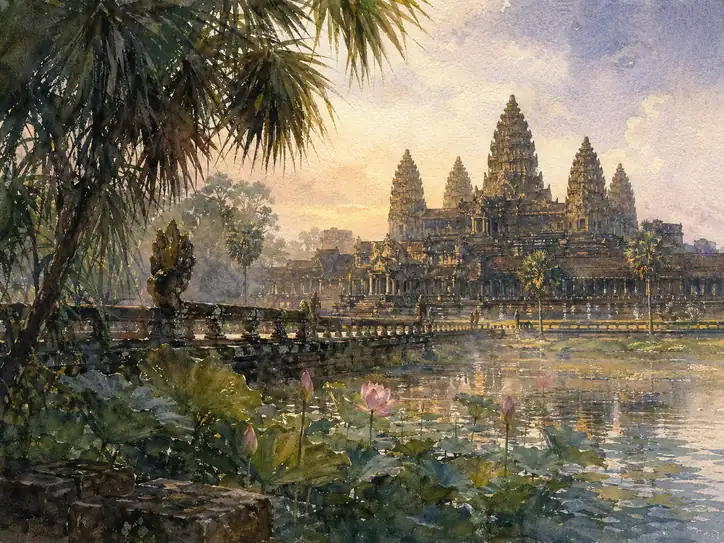 Sacred Reflection: Morning Serenity at Angkor Wat
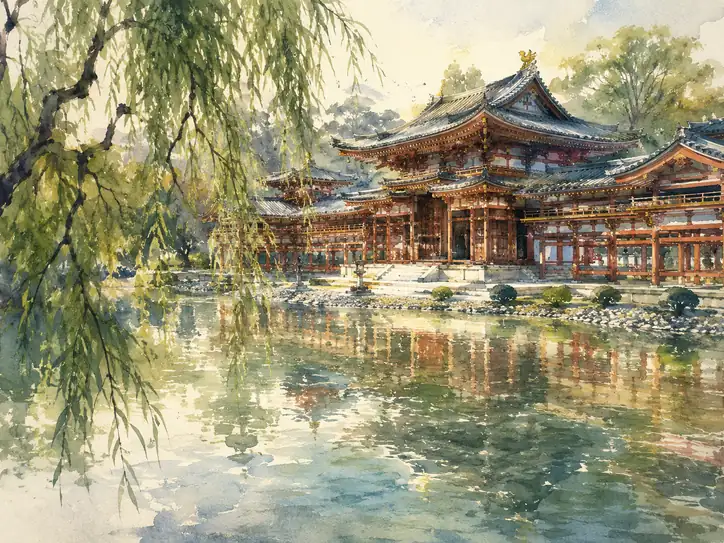 Mirror of the Celestial Paradise
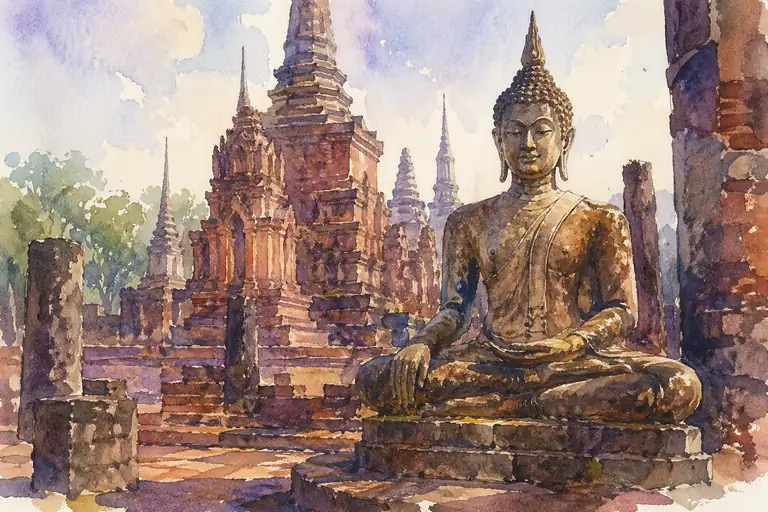 Stillness Across the Ages
 A Glimpse of Past Glories
 Eternal Serenity in Nature's Embrace
 The Mirror of Infinite Purity
 Ivory Radiance in the Morning Dew
 Golden Radiance on the Sacred Tide
 The Golden Stupa's Radiant Ascension
 The Golden Spire's Soliloquy