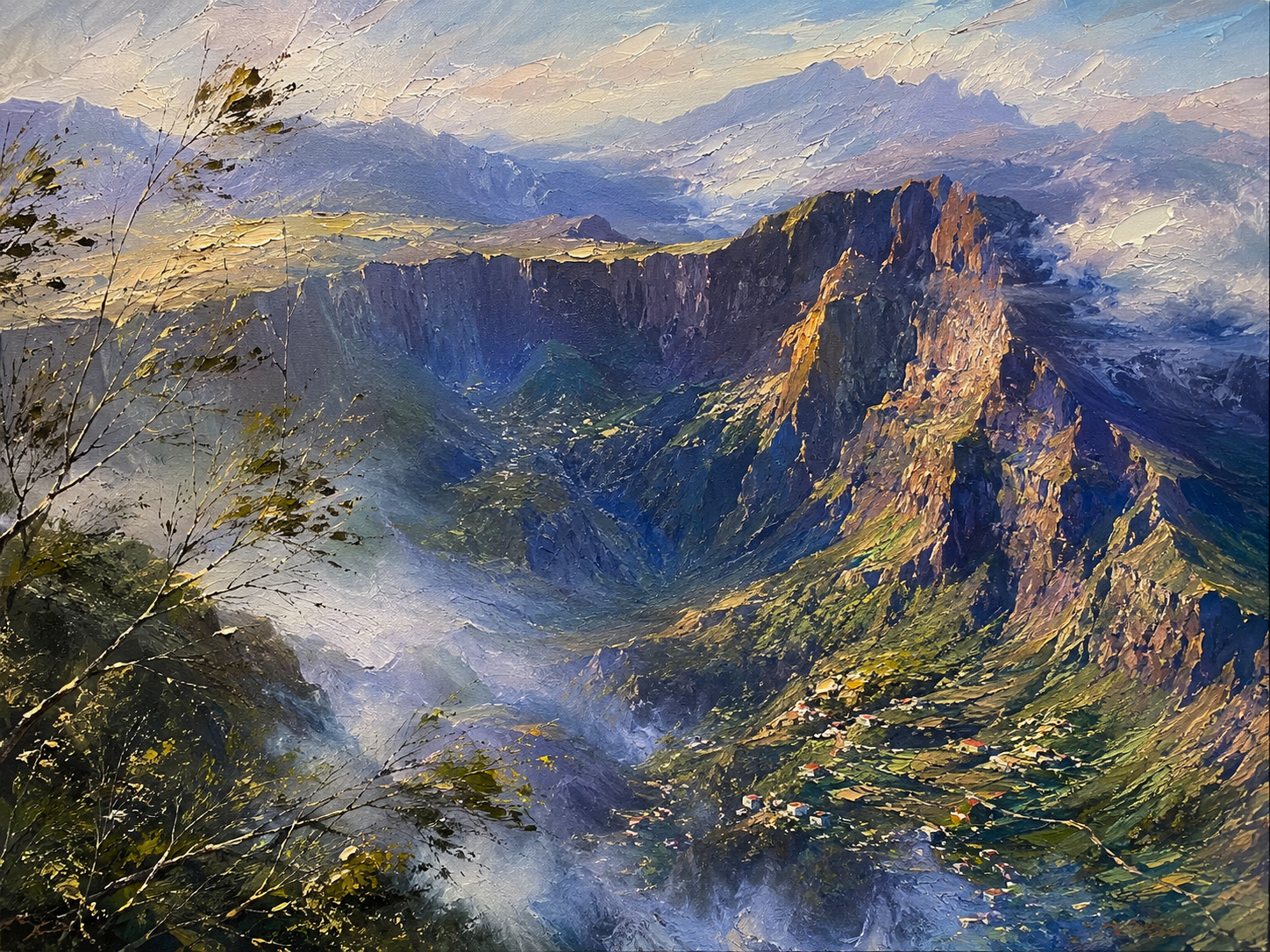
Watching the Mist Veil the Highlands
Critique
Introduction This expansive oil painting offers a panoramic view of a deep mountain valley, where small human settlements are nestled amidst rugged, towering cliffs. The work captures the immense scale of a volcanic or high-altitude landscape, characterized by sharp ridges and ethereal mists. Through a bold use of texture and a vibrant, atmospheric palette, the artist explores the relationship between the permanence of stone and the transience of clouds. Description The composition is centered on a dramatic, sunlit ridge that plunges into a misty valley below. Scattered along the lower slopes and valley floor are tiny white houses with red roofs, emphasizing the vastness of the surrounding terrain. In the background, layers of blue and purple mountains fade into a bright, cloud-filled sky. The foreground is marked by dark, silhouetted foliage on the left, while the entire canvas is covered in thick, expressive impasto that defines the jagged rock faces and the soft, rolling mist. Analysis The artist employs a dynamic diagonal composition, with the primary mountain ridge cutting across the frame to create a sense of depth and movement. The color palette is dominated by cool blues, greens, and purples in the shadows, which contrast sharply with the warm yellows and ochres of the sunlit peaks. This lighting effect not only highlights the topographical features but also creates a sense of time and atmosphere. The heavy texture of the paint is used masterfully to differentiate between the solid, unyielding rock and the light, ephemeral quality of the fog clinging to the valley floor. Interpretation and Evaluation This painting effectively communicates a sense of awe and the sublime, placing human existence within the context of a colossal natural environment. The technical execution is highly proficient, particularly in the artist's ability to maintain clarity and structure despite the heavy, painterly surface. The choice to include the small villages provides a vital narrative element, suggesting a life of isolation and harmony with nature. By balancing the ruggedness of the mountains with the soft light of the sky, the artist achieves a compelling visual unity that is both powerful and poetic. Conclusion In summary, the work is a vivid and evocative portrayal of a mountainous wilderness that invites the viewer to contemplate the scale of the natural world. The initial visual impact of the dramatic heights transitions into a more contemplative appreciation for the delicate balance of light and shadow. It stands as a significant example of modern landscape painting, where the physical properties of the medium are used to enhance the emotional resonance of the subject matter.
Same Subcategory
 Where the Earth Breathes Fire
 Whispers of the Waking Valley
Similar Artworks
 Majesty Above the Clouds: The Eternal Peak
 Azure Currents through the Autumn Gorge
 Eternal Guard of the Golden Heights
 Arid Majesty Carved in Time
 Echoes from the Alpine Crest
 The Prayer of the Mist-Clad Peaks
 Gorge Cave
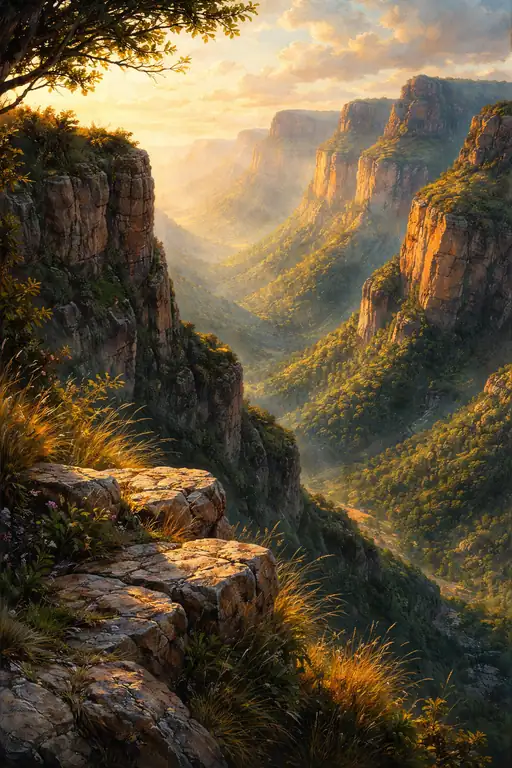 The Ethereal Glow of the Great Canyon
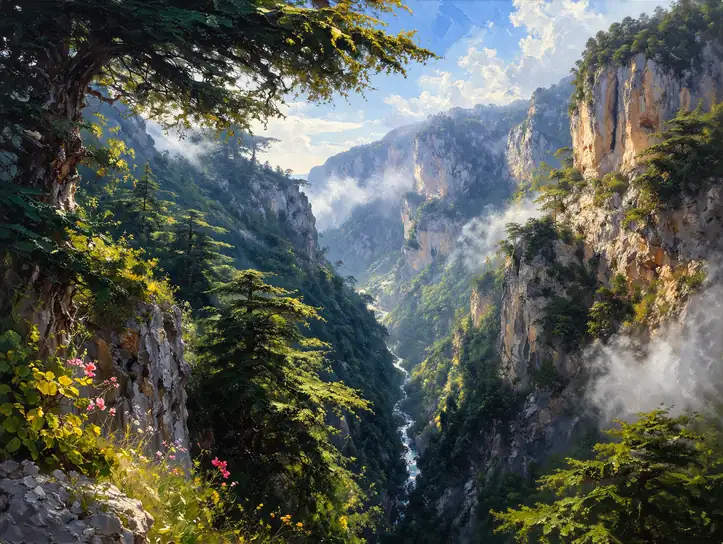 A Solitary Pause
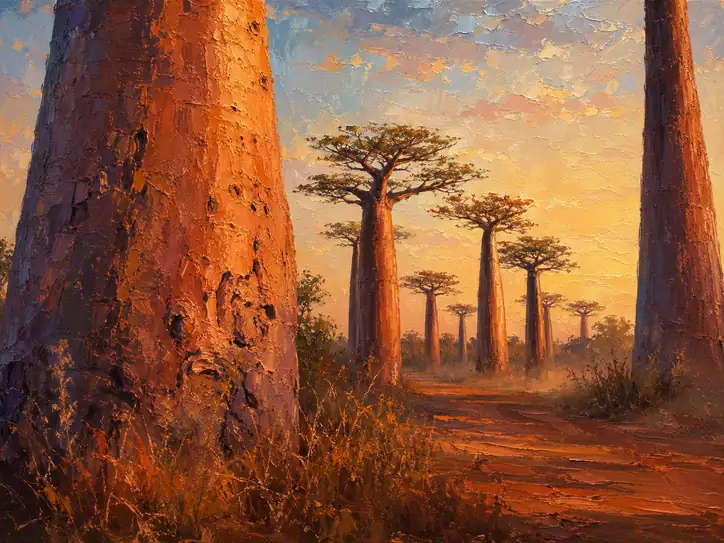 Standing Tall in the Glow of Ages