
Watching the World Fade to Gold
Critique
Introduction This oil painting depicts a majestic medieval castle perched atop a sheer rocky cliff during the sunset hours. The architectural grandeur of the fortress, characterized by its slender turrets and formidable stone walls, serves as the central focal point of the composition. Through a rich application of color and dramatic lighting, the work evokes a sense of historical romance and architectural endurance. Description The composition features a large, complex castle with multiple spires and crenelated walls, situated on a rugged precipice that overlooks a distant valley. In the foreground, the dark, detailed silhouette of a pine tree frames the scene on the left, providing a sense of scale and depth. The setting sun illuminates the castle's stone facade with a brilliant orange glow, while the sky is filled with swirling clouds of pink, purple, and gold. The brushwork is expressive and textured, with thick impasto applied to the sunlit areas of the stone and the clouds. Analysis The artist effectively utilizes a high-contrast lighting scheme to define the three-dimensional form of the castle and the underlying rock. The warm tones of the illuminated surfaces are balanced by deep, cool shadows in the crevices of the cliff and the shaded parts of the architecture. The vertical lines of the turrets are echoed by the upward growth of the foreground tree, creating a strong sense of upward movement and stability. The texture of the paint itself adds a tactile quality, mimicking the rough surface of the weathered stone and the organic foliage of the pine. Interpretation and Evaluation This work successfully captures the romantic allure of medieval history, presenting the castle not just as a structure, but as a sentinel of time. The technical execution is exceptional, particularly in the artist's ability to convey the luminosity of the sunset without losing the structural integrity of the architecture. The choice to frame the scene with a dark foreground element is a classical compositional technique that effectively pulls the viewer into the dramatic landscape. The balance between the detailed stone work and the more abstract, painterly sky creates a dynamic visual tension. Conclusion In conclusion, the painting is a powerful and atmospheric tribute to historical architecture and the transformative power of natural light. The initial impression of monumental strength gradually gives way to an appreciation for the subtle atmospheric effects and the richness of the painterly surface. It stands as a masterful example of how a familiar subject can be rendered with fresh energy and emotional depth through skillful handling of medium and light.
Same Subcategory
 Eternal Glow over the Sentinel's Shore
 The Castle's Twilight Vigil
Similar Artworks
 Majesty on the Sunlit Crag
 Twilight's Embrace on the Castle Walls
 Whispers from the Ancient Bastion
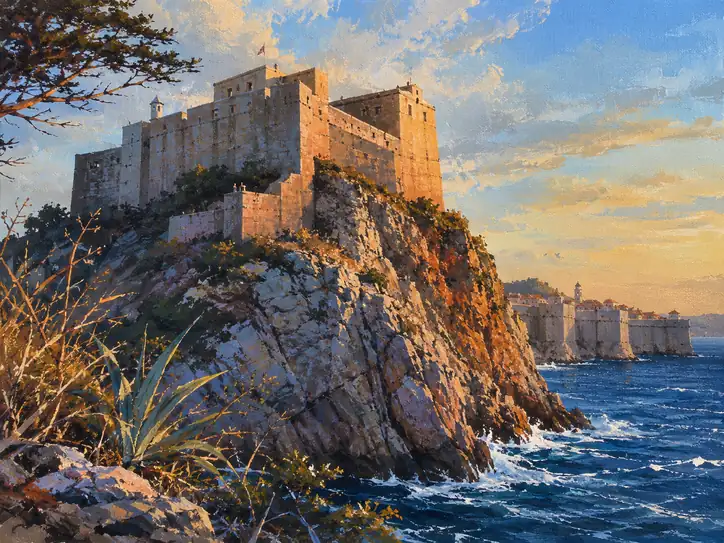 Bastion of the Sunlit Memories
 Remnants of a Forgotten Glory
 Golden Legacy of the Hilltop Citadel
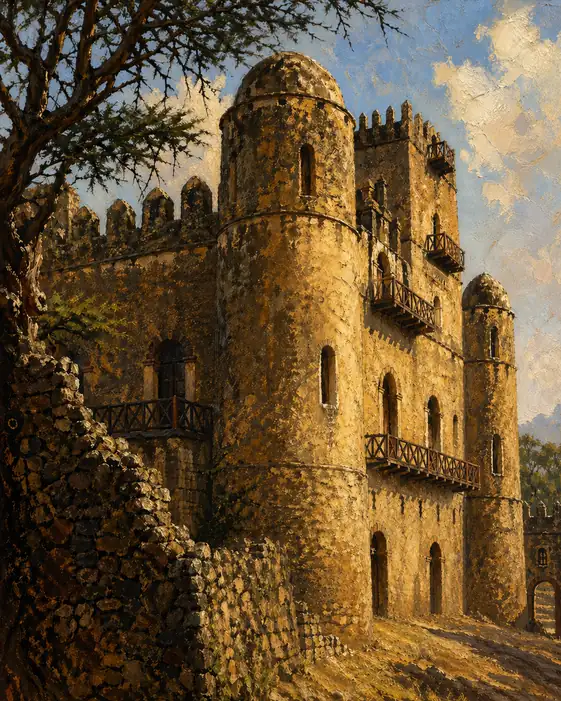 The Golden Echo of Ancient Kings
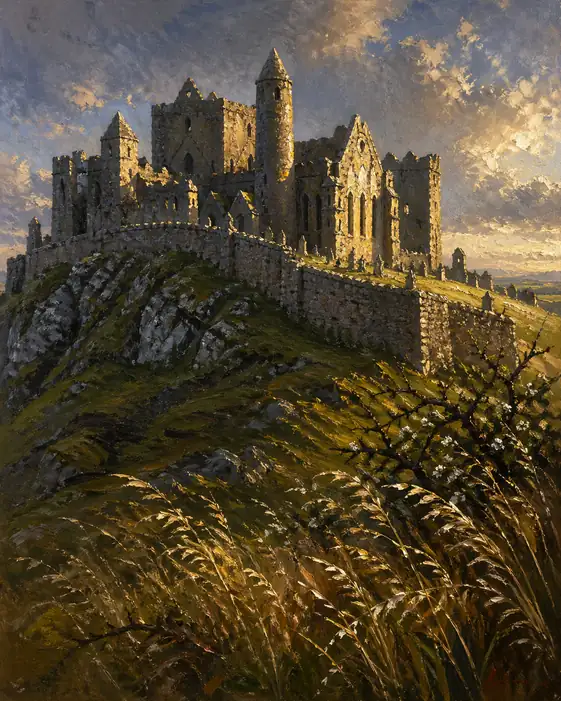 Majestic Castle Ruins at Sunset
 Slumbering Giants of Stone
 Golden Sentinel of a Fading Era