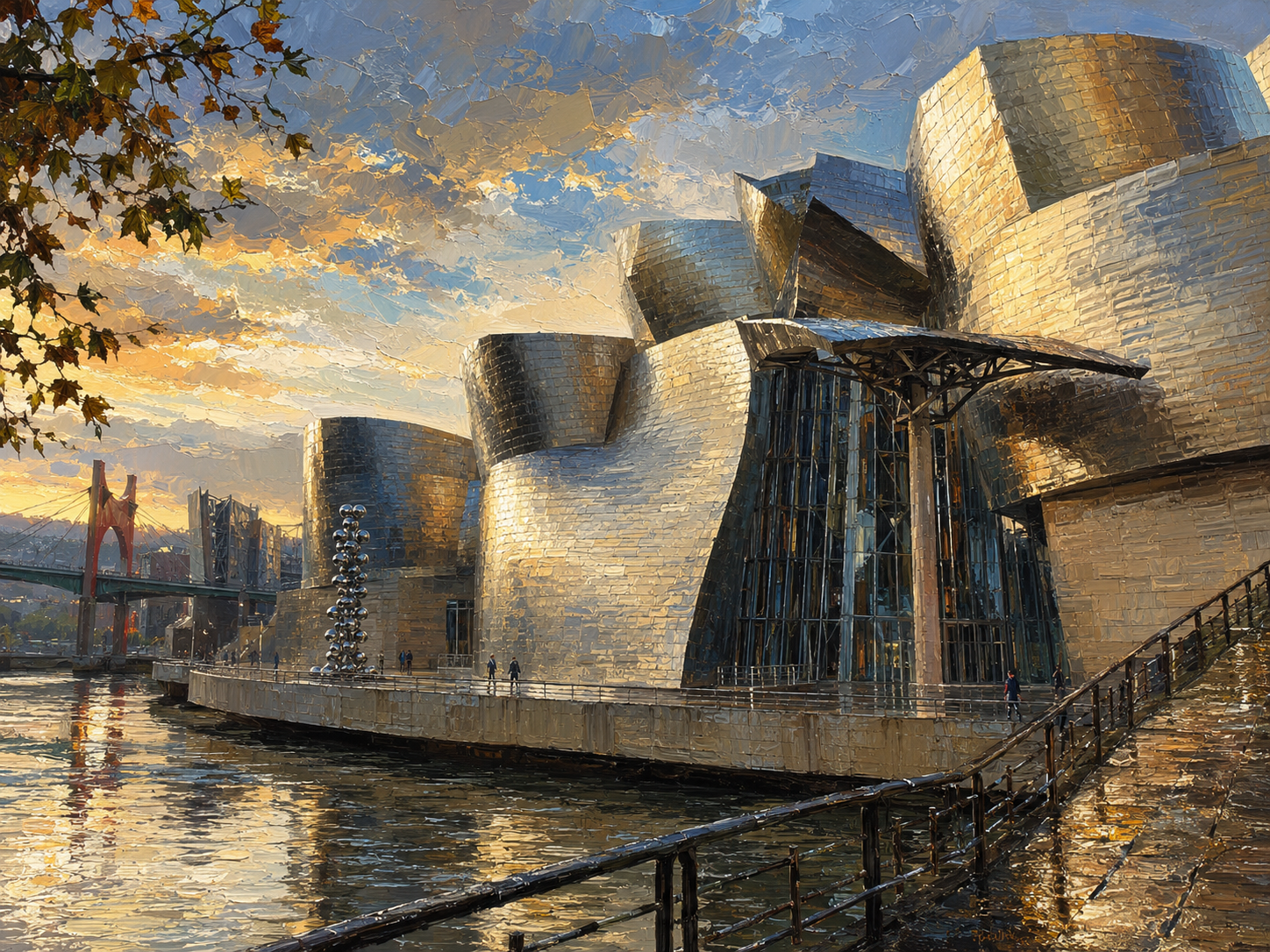
Steel Wings and Golden Dreams
Critique
Introduction This painting captures a monumental modern architectural structure situated along a serene waterfront at dusk. The scene is dominated by a series of dynamic, metallic curves that characterize a world-renowned museum, set against a vibrant evening sky. Through a blend of architectural precision and expressive brushwork, the work explores the intersection of man-made forms and natural light. Description The composition features the curvilinear volumes of a titanium-clad building, reflecting the warm, golden hues of a setting sun. To the left, a tall, red-framed bridge spans the water, while a metallic, spherical sculpture stands near the museum's walkway. The sky is filled with broad, textured strokes of orange, yellow, and soft blue, mirrored in the undulating surface of the river below. Thick impasto applications are evident throughout, particularly on the building's facade and the water's surface. Analysis The artist utilizes a complex palette of gold, silver, and deep ochre to define the building's reflective surfaces, contrasted with the cool grays of the shadows. The diagonal lines of the foreground walkway and the distant bridge create a sense of depth, drawing the viewer’s eye toward the architectural center. The heavy texture created by the palette knife adds a tactile quality that breaks the rigidity of the steel and glass, giving the structure a more organic appearance. Light serves as the primary unifying element, binding the sky, architecture, and water together. Interpretation and Evaluation This work interprets industrial materials through a traditional, painterly lens, softening the coldness of modern architecture with the warmth of an impressionistic atmosphere. The technical execution is highly proficient, demonstrating a masterful control over both form and texture. By emphasizing the reflective properties of the building, the artist successfully conveys the play of light on complex geometries. The contrast between the detailed bridge in the distance and the bold, expressive strokes of the museum creates a compelling visual hierarchy. Conclusion Ultimately, the painting achieves a remarkable harmony between the stillness of the water and the energetic forms of the museum. The initial impression of overwhelming metallic scale transitions into a deeper appreciation for the subtle gradations of light and color. It stands as a powerful testament to how artistic interpretation can breathe life and warmth into contemporary urban landscapes.
Same Subcategory
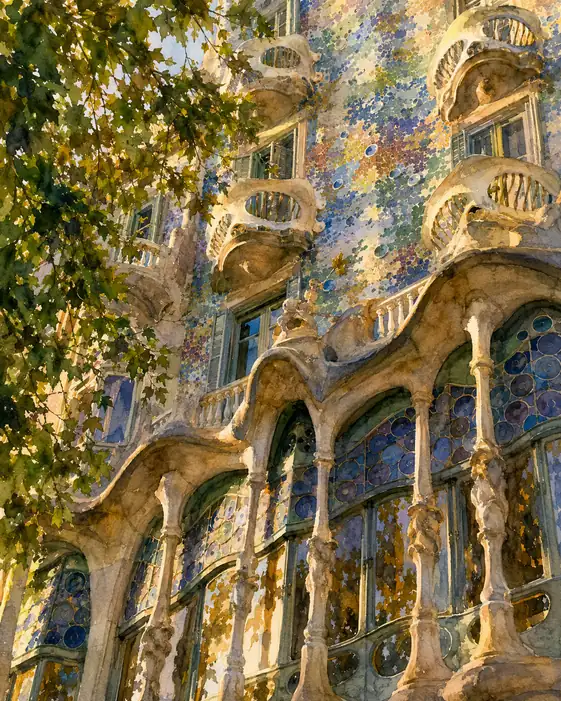 Casa Batllo: Gaudi's mosaic mask balconies shimmer in a Barcelona afternoon sun.
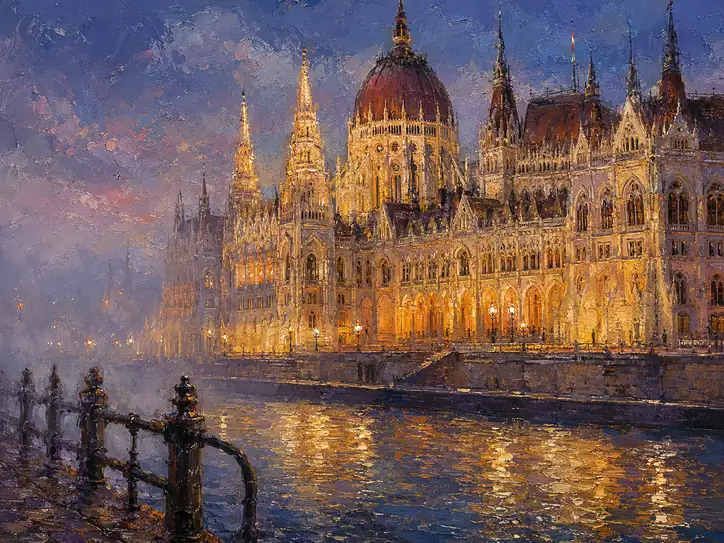 A Nocturne of Golden Spires
Similar Artworks
 Sunset's Embrace on Titanium
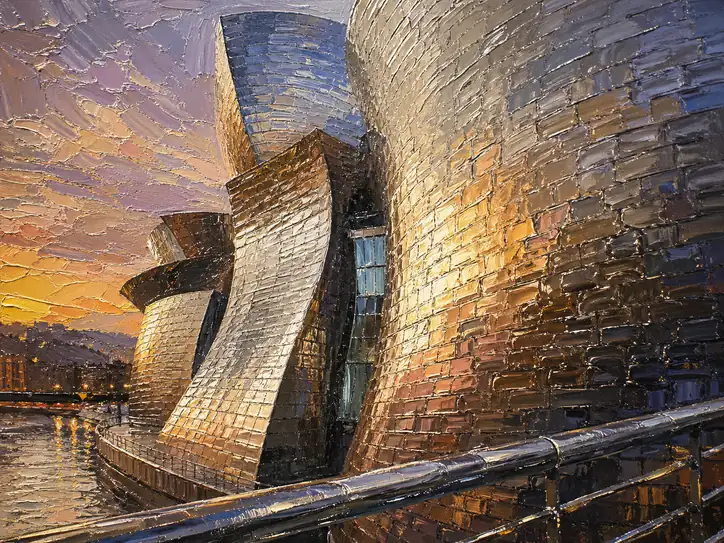 The Titanium Muse in Gilded Light
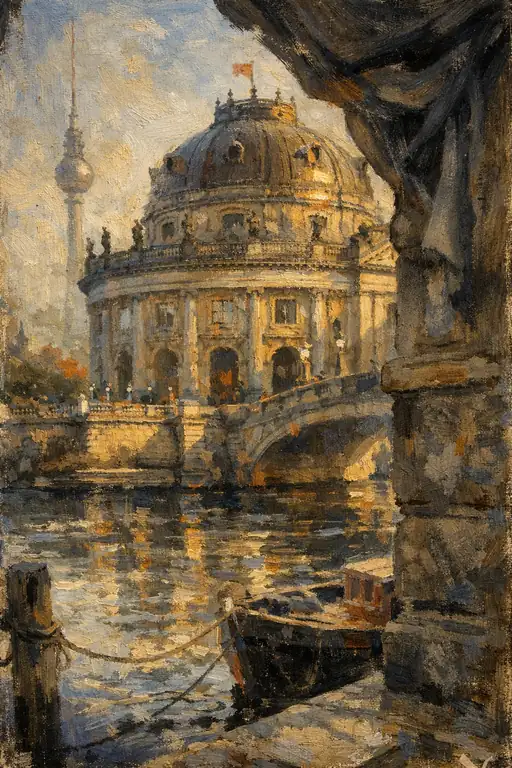 Golden Glow Upon the Riverfront Dome
 Twilight Serenade at the Sapphire Bay
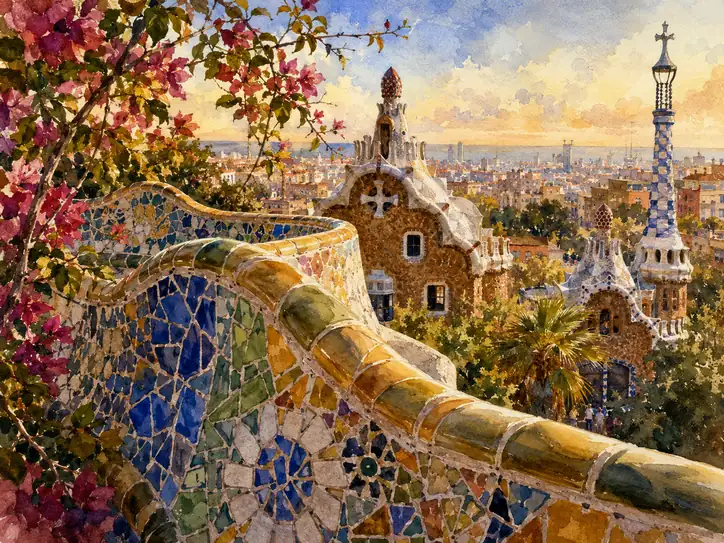 Gaudi's dream in Park Guell, where golden light and mosaics meet the sea breeze.
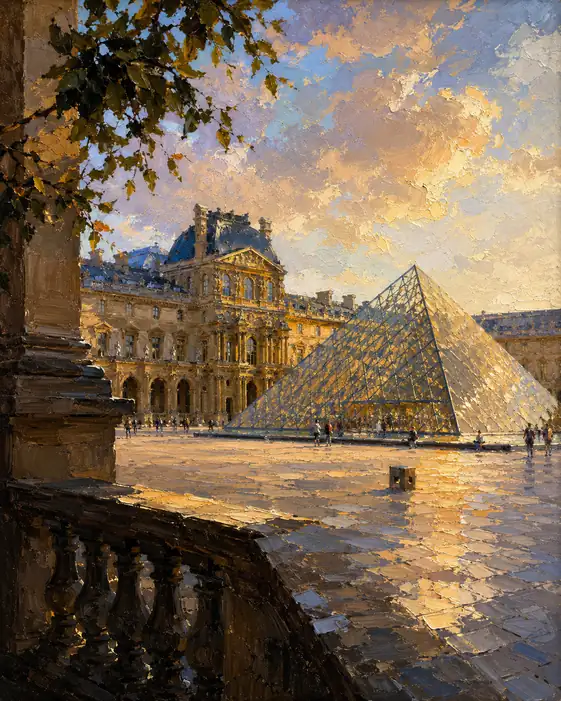 Intersection of Ages at the Golden Court
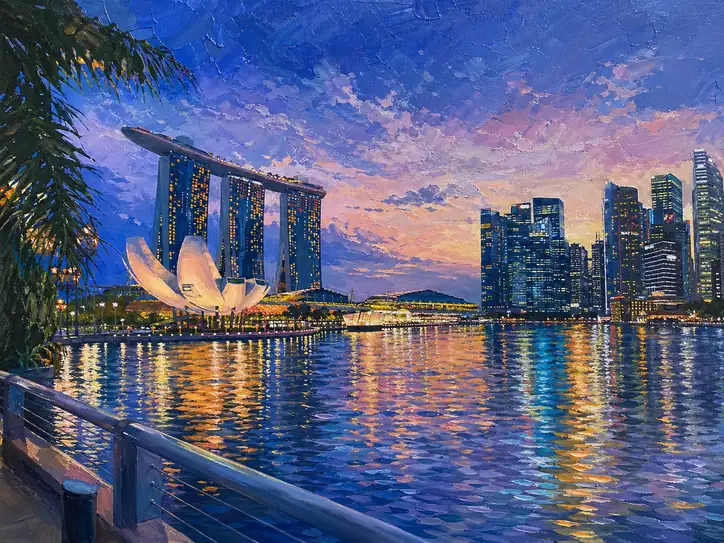 Mirrored Dreams of the Metropolis
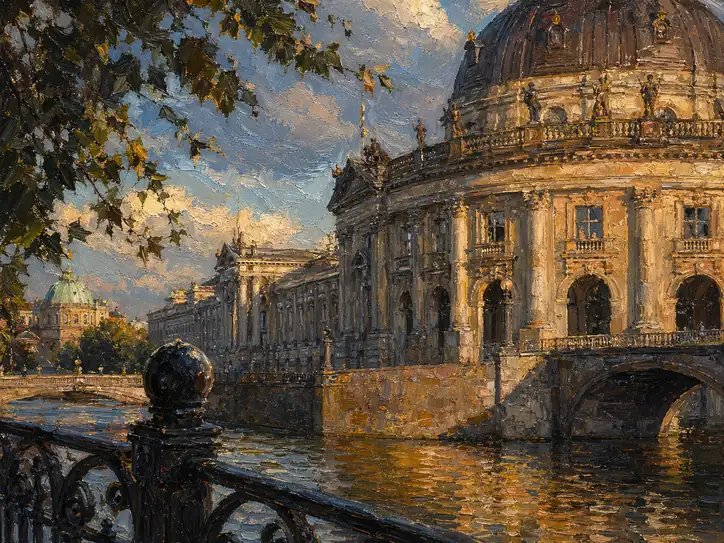 Golden Grandeur: Museum by the River
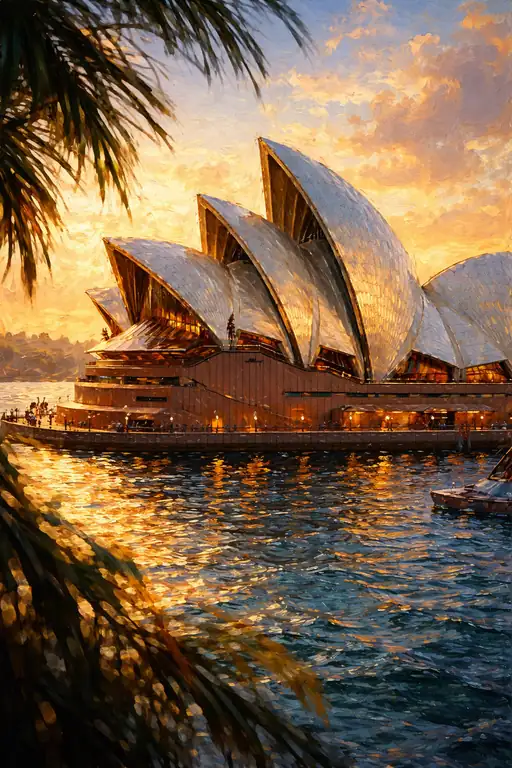 Golden Sails of the Urban Symphony
 Golden Glow over the Danube River, Budapest