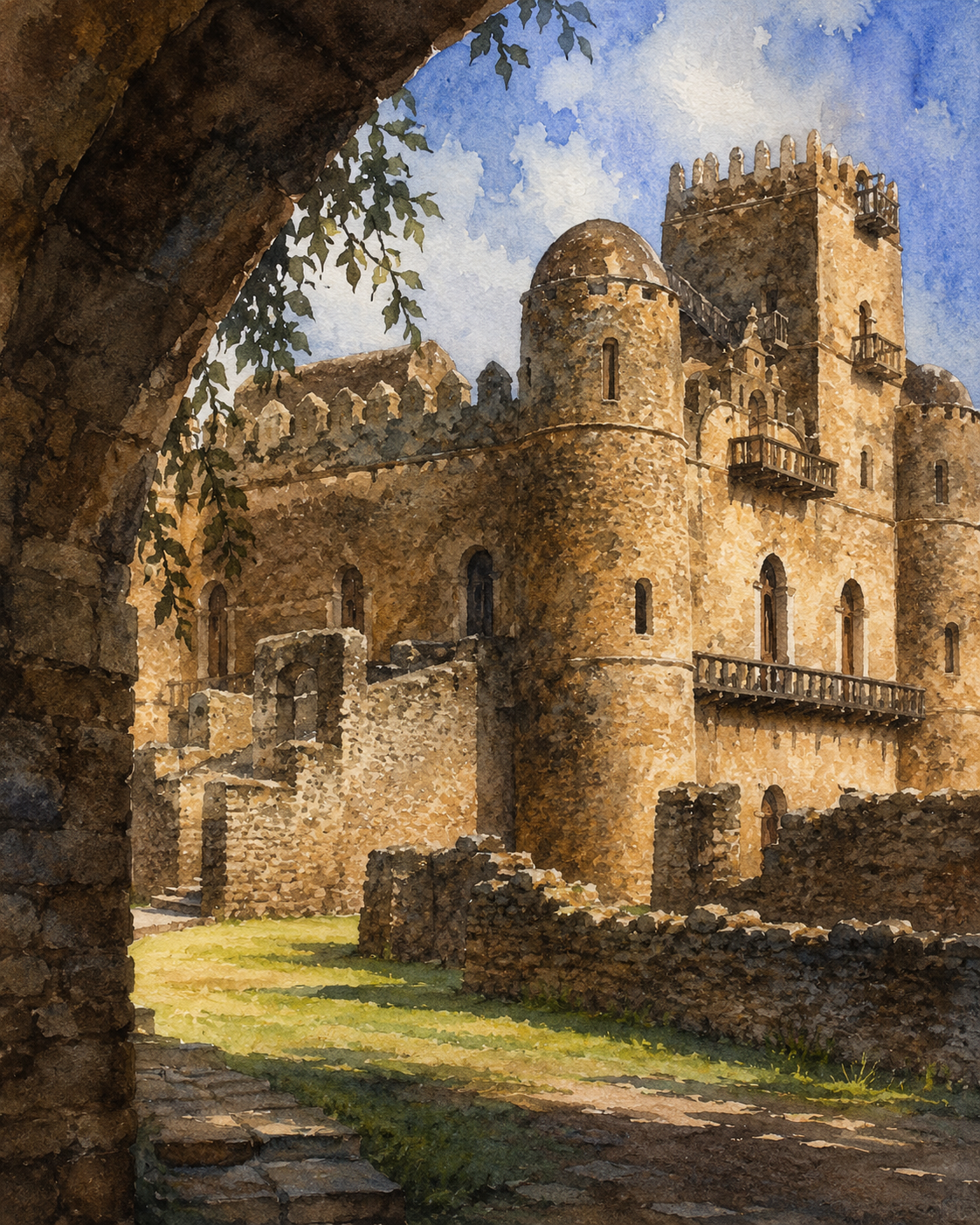
Golden Echoes of an Ancient Kingdom
Critique
1. Introduction This watercolor painting depicts a formidable stone fortress, reminiscent of the unique architectural styles found in historical East African citadels. The structure, characterized by its sturdy round towers and crenellated battlements, stands as a testament to past architectural ingenuity. Viewed through a dark stone archway, the castle is bathed in bright sunlight, creating a striking contrast between the immediate shadows and the illuminated historical monument. 2. Description The composition is framed on the left by the rough-hewn edge of a stone arch, from which a few green leaves dangle. In the center, the castle features multiple levels, including a prominent square tower and rounded turrets with domed tops. Wooden balconies and narrow windows punctuate the golden-brown stone walls. Below, a path of irregular stone steps leads across a sun-dappled lawn, where sharp, diagonal shadows stretch from unseen structures. 3. Analysis The artist effectively uses the "framing" technique to provide depth and focus, drawing the viewer's eye through the foreground arch toward the castle. The texture of the stone is rendered with sophisticated watercolor techniques, utilizing pigment granulation to mimic the weathered surface of ancient masonry. The color palette is dominated by warm earth tones—ochre, sienna, and umber—which contrast vividly with the brilliant blue of the sky and the fresh green of the grass. 4. Interpretation and Evaluation This work successfully captures the dignity and permanence of historical architecture. The attention to specific structural details, such as the balconies and the varied shapes of the towers, suggests a deep appreciation for the subject's cultural heritage. The interplay of light and shadow on the grass adds a sense of time and place, elevating the painting from a mere architectural study to an evocative scene that feels both solid and ethereal. 5. Conclusion In conclusion, the painting is a masterful exploration of architectural form and light. The contrast between the dark, intimate foreground and the bright, expansive middle ground creates a powerful visual narrative about discovery and historical continuity. It is a refined example of how watercolor can be used to convey the heavy, enduring nature of stone while maintaining a sense of atmospheric lightness and clarity.
Same Subcategory
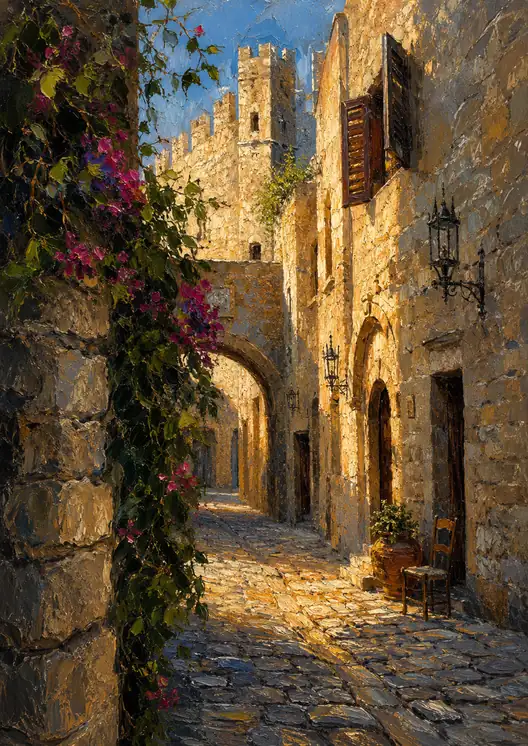 The Quiet Sentinel: Gold and Shadows
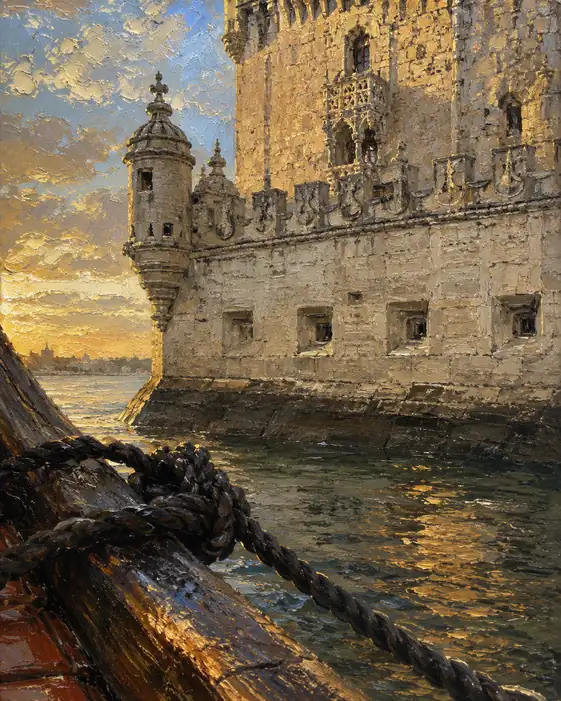 The Gilded Sentinel of Belém
Similar Artworks
 Impenetrable Solitude in Stone
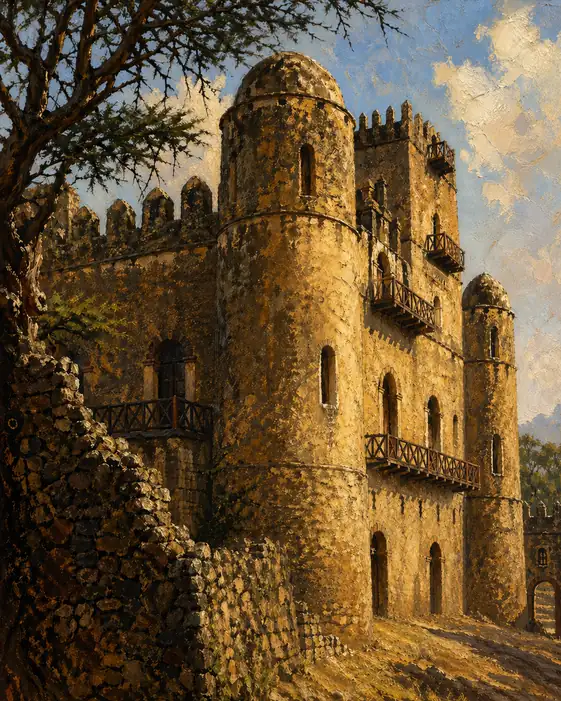 The Golden Echo of Ancient Kings
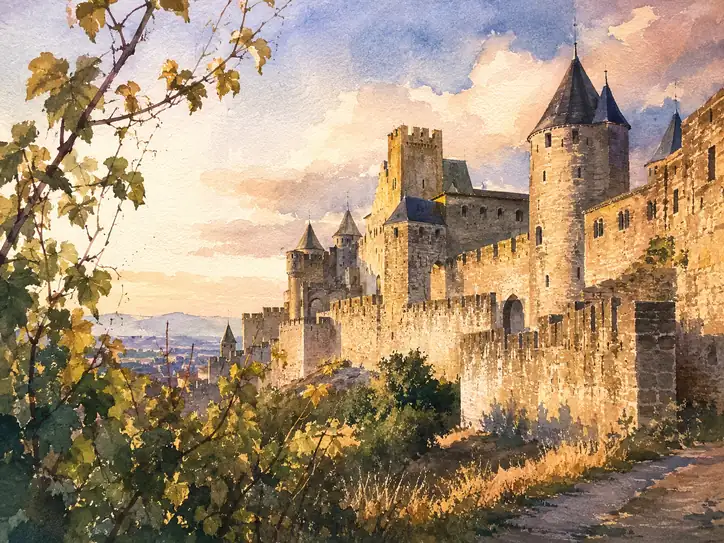 Golden Echoes of the Stone Sentinel
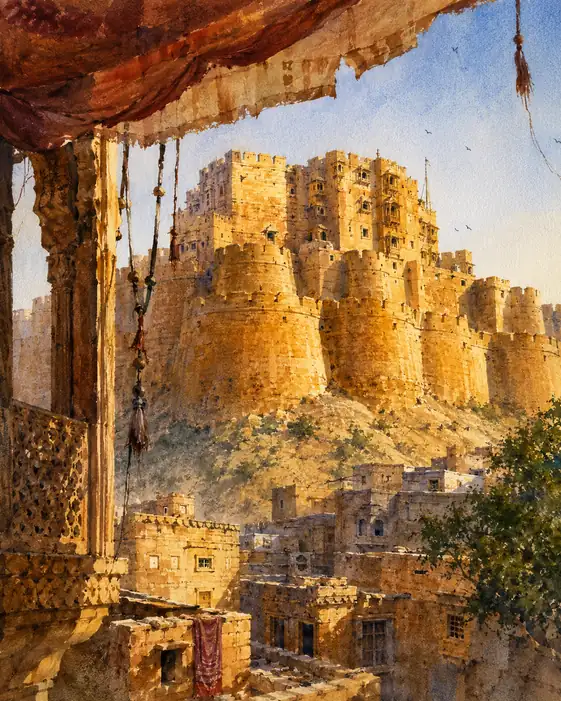 Eternal Watcher of the Sands
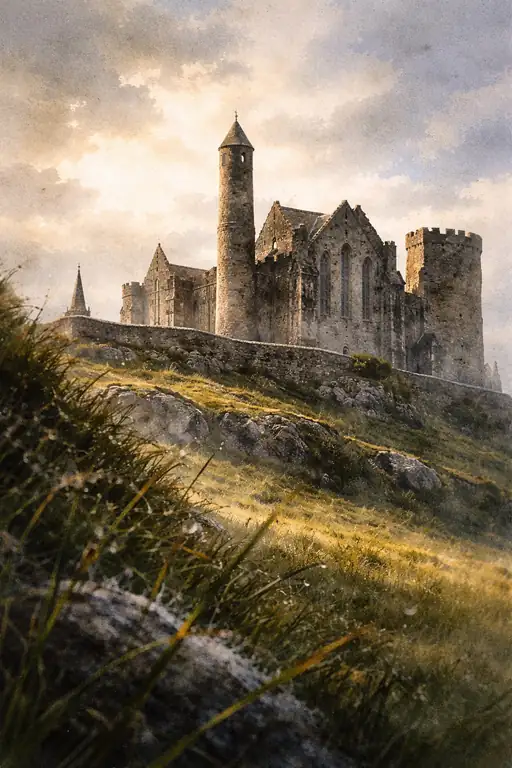 Silence of the Forgotten Abbey
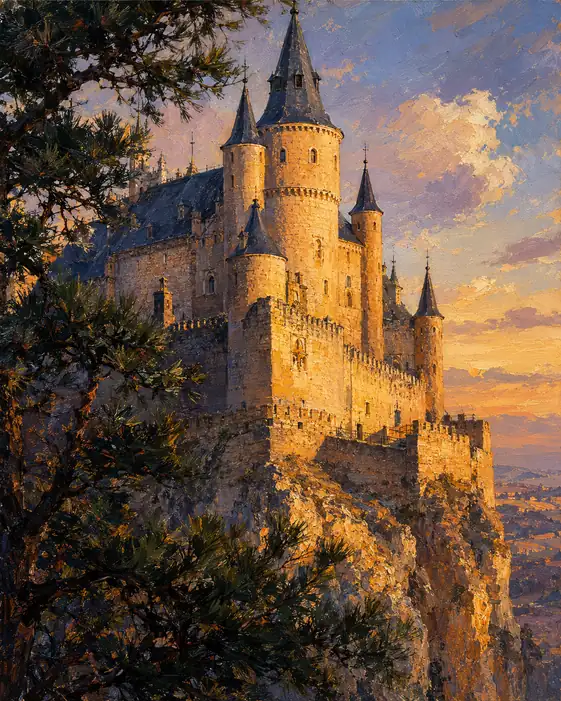 Watching the World Fade to Gold
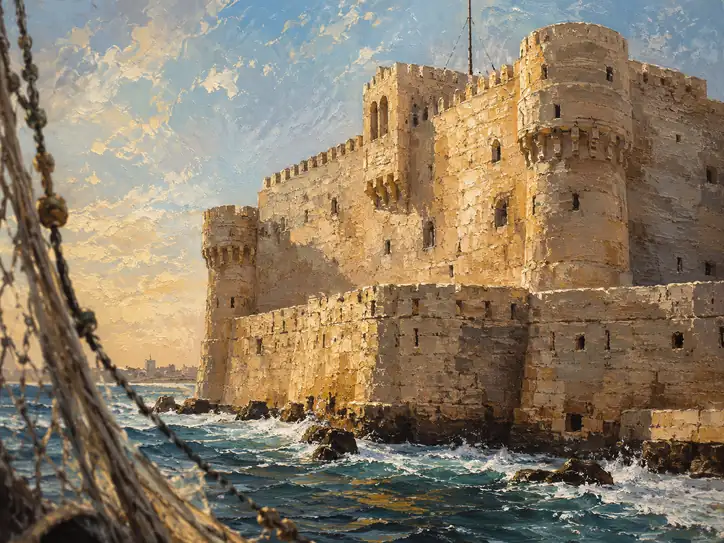 Eternal Sentinel of the Crashing Tide
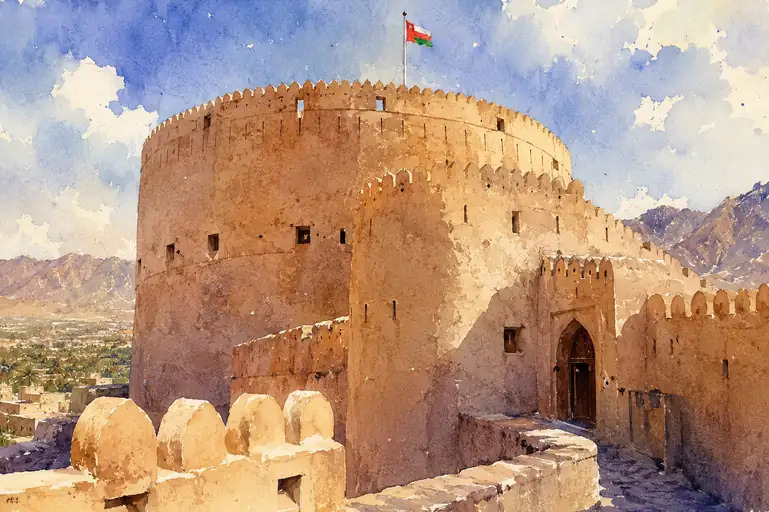 Bastion of the Golden Horizon
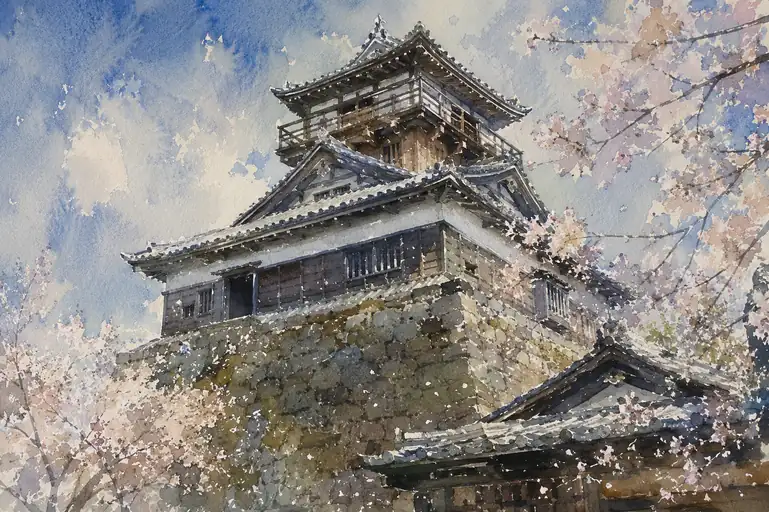 Eternal Stones, Dancing Petals
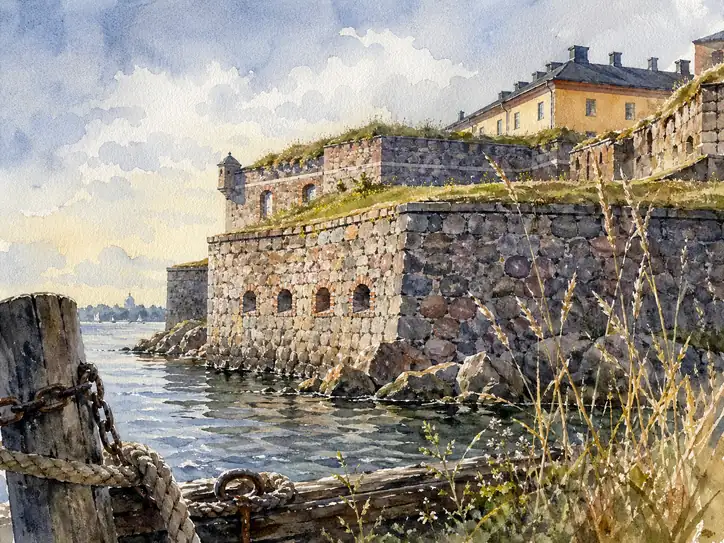 The Historic Stone Fortress by the Sea