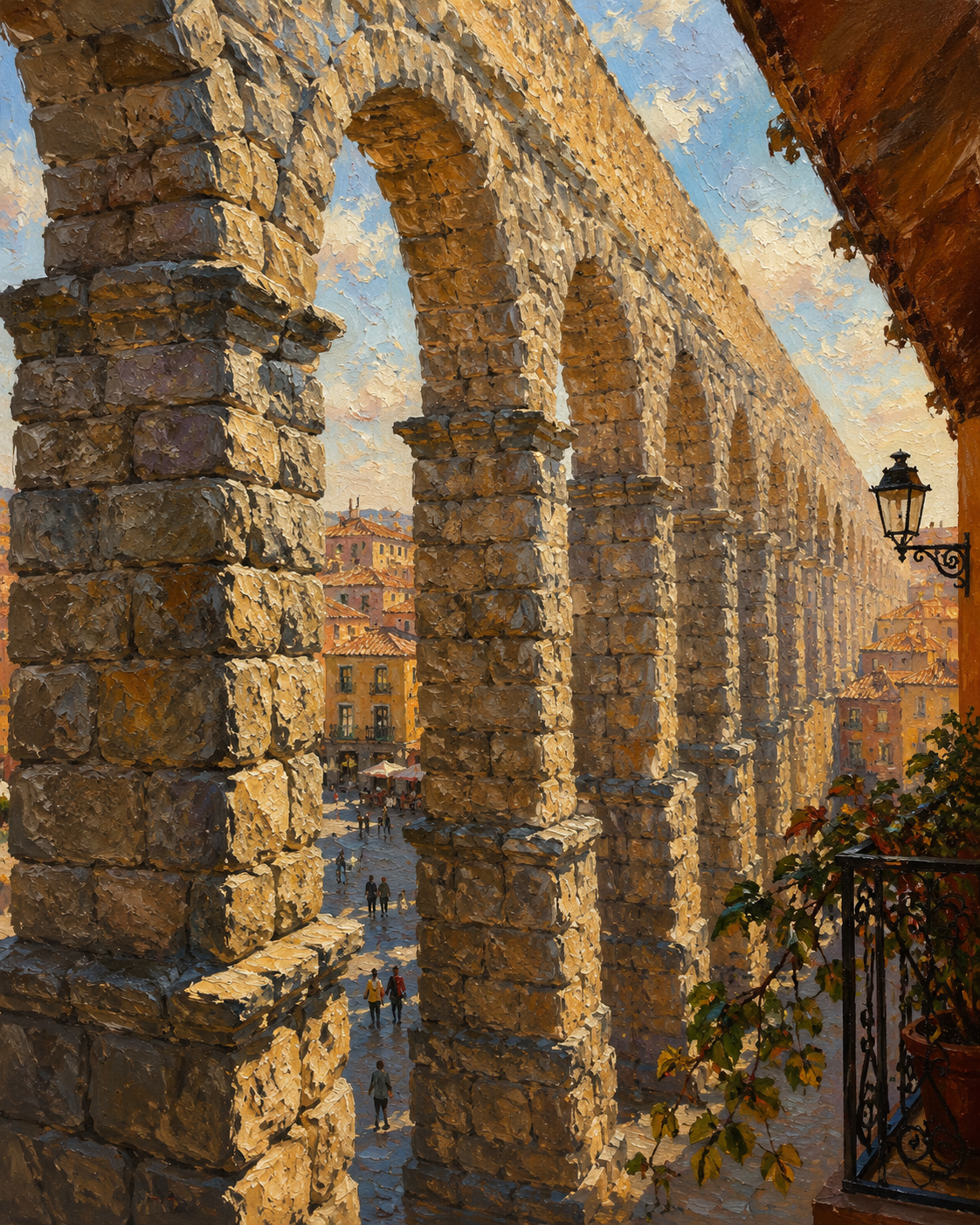
The Timeless Arches of Segovia
Critique
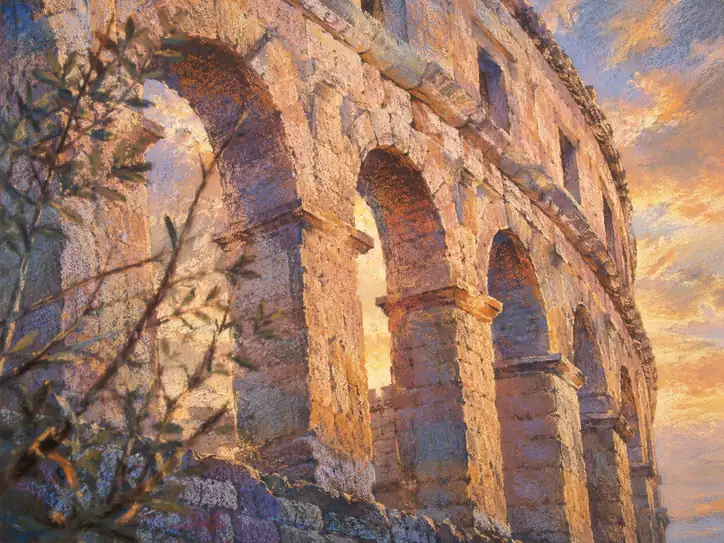
1. Introduction This oil painting presents a dramatic, low-angle perspective of a monumental Roman aqueduct, towering over a historic town square. The composition emphasizes the repetitive rhythm of the massive stone arches as they recede into the distance, showcasing the grandeur of ancient engineering. It captures a moment where the past and present converge in a sun-drenched, vibrant urban environment. 2. Description The left side of the frame is dominated by the weathered stone pillars of the aqueduct, rendered with heavy texture and golden highlights. Through the tall arches, a bustling plaza is visible, filled with small figures of people and multi-story buildings with terracotta roofs. To the right, a wrought-iron balcony and a traditional street lamp provide a domestic foreground element that anchors the viewer's position. 3. Analysis The artist utilizes a strong diagonal perspective to create a powerful sense of depth and architectural scale. The technique is characterized by expressive, impasto brushwork that gives a tactile quality to the rough-hewn granite blocks of the aqueduct. The lighting is bright and direct, casting soft shadows that define the structural volumes while emphasizing the warmth of the sunlit stone and the clarity of the sky. 4. Interpretation and Evaluation The work serves as a celebration of enduring architectural achievement and its ongoing role in the life of a modern city. The balance between the massive, immobile structure and the small, fleeting movements of the people below is handled with great sensitivity. The artist's mastery of light and texture successfully conveys both the physical weight of the monument and the ephemeral beauty of the atmosphere. 5. Conclusion Through its bold composition and rich application of paint, the artwork offers a compelling and immersive view of a world-famous landmark. It avoids the clichés of travel illustration by focusing on the material presence and spatial dynamics of the structure. The initial impression of overwhelming scale eventually transforms into a nuanced appreciation for the harmony between the monumental and the everyday.
Same Subcategory
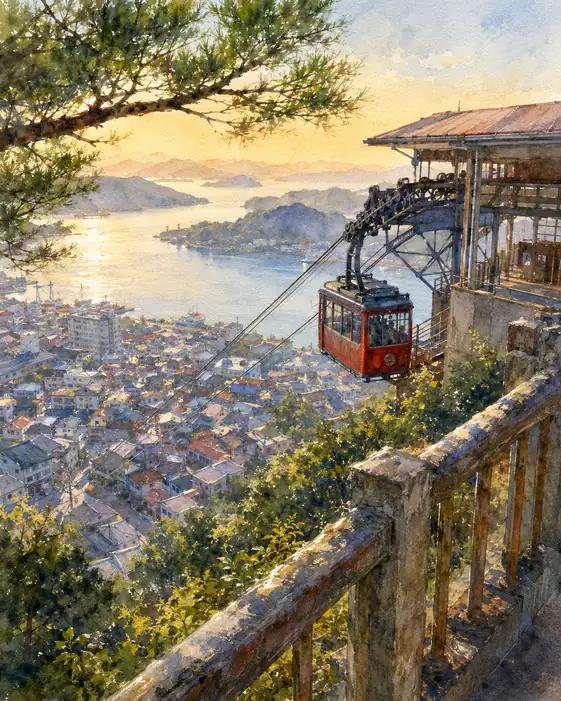 Where the Red Bird Flies Over a Sea of Light
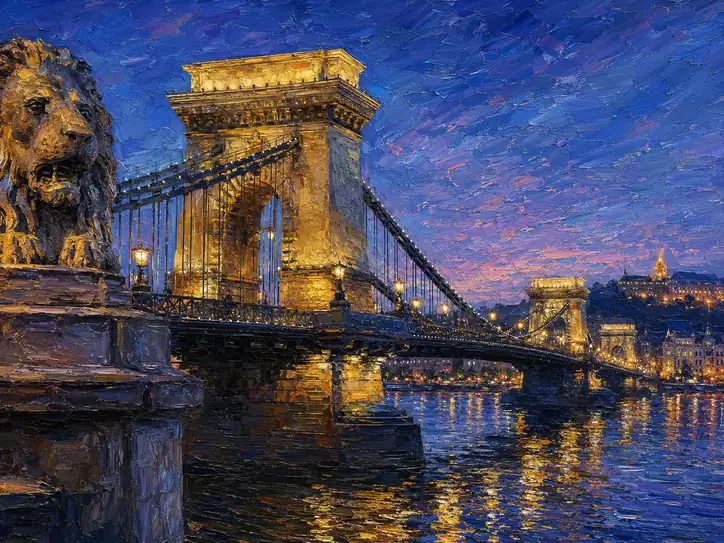 Guardian of the Golden Night
Similar Artworks
 Golden Monument in Stone
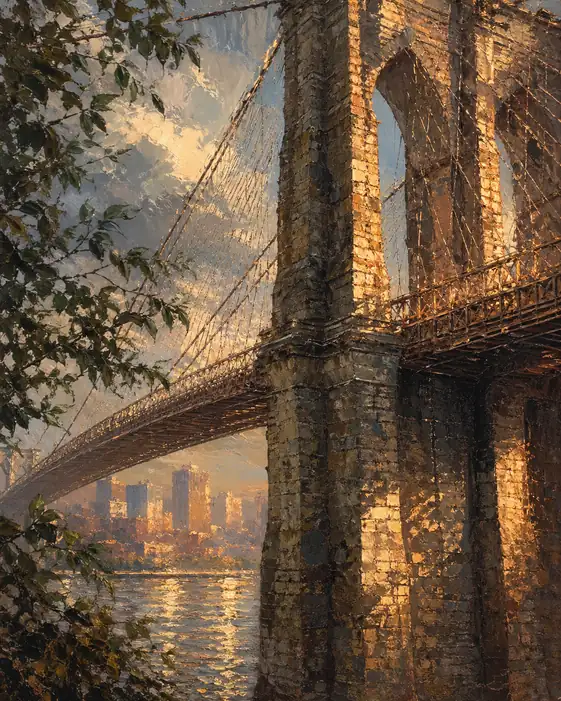 Eternal Gateway to the Golden City
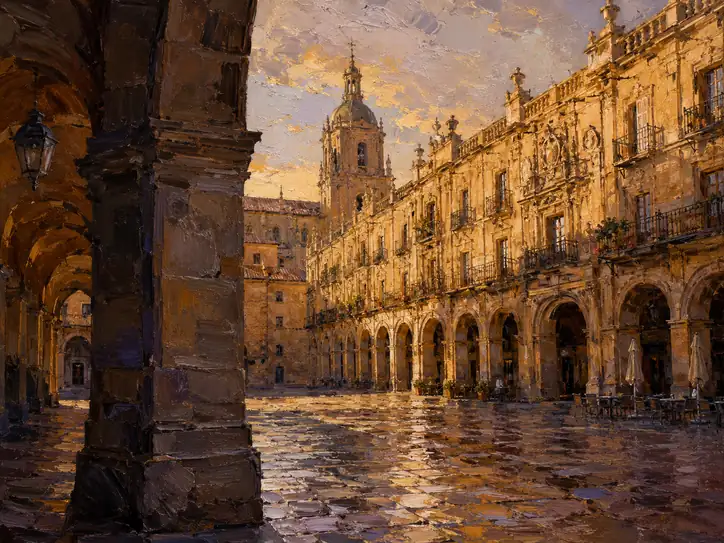 The Golden Solace of Salamanca
 Under the Eternal Roman Echoes
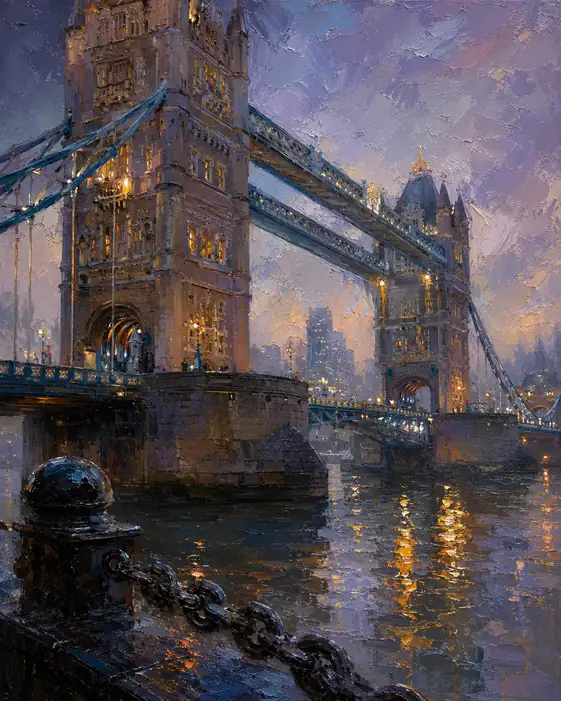 The Gilded Chains of the Thames
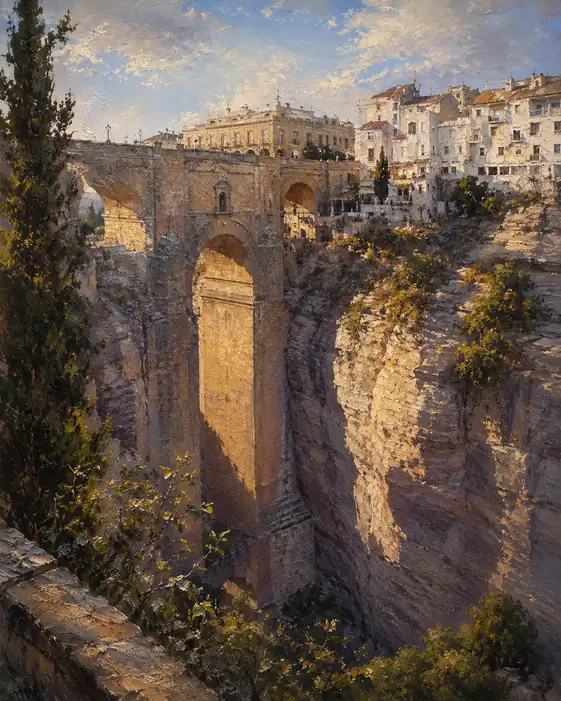 Stone Bridge at the Edge of the Abyss
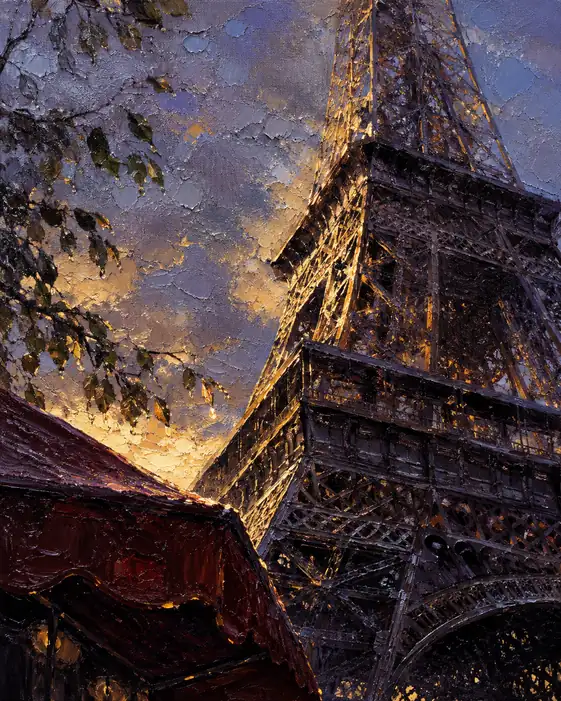 Iron Majesty in the Golden Twilight
 Gold Spilled on Ancient Stone
 Golden Reflections under the Stone Arch
 Golden Silence of the Square