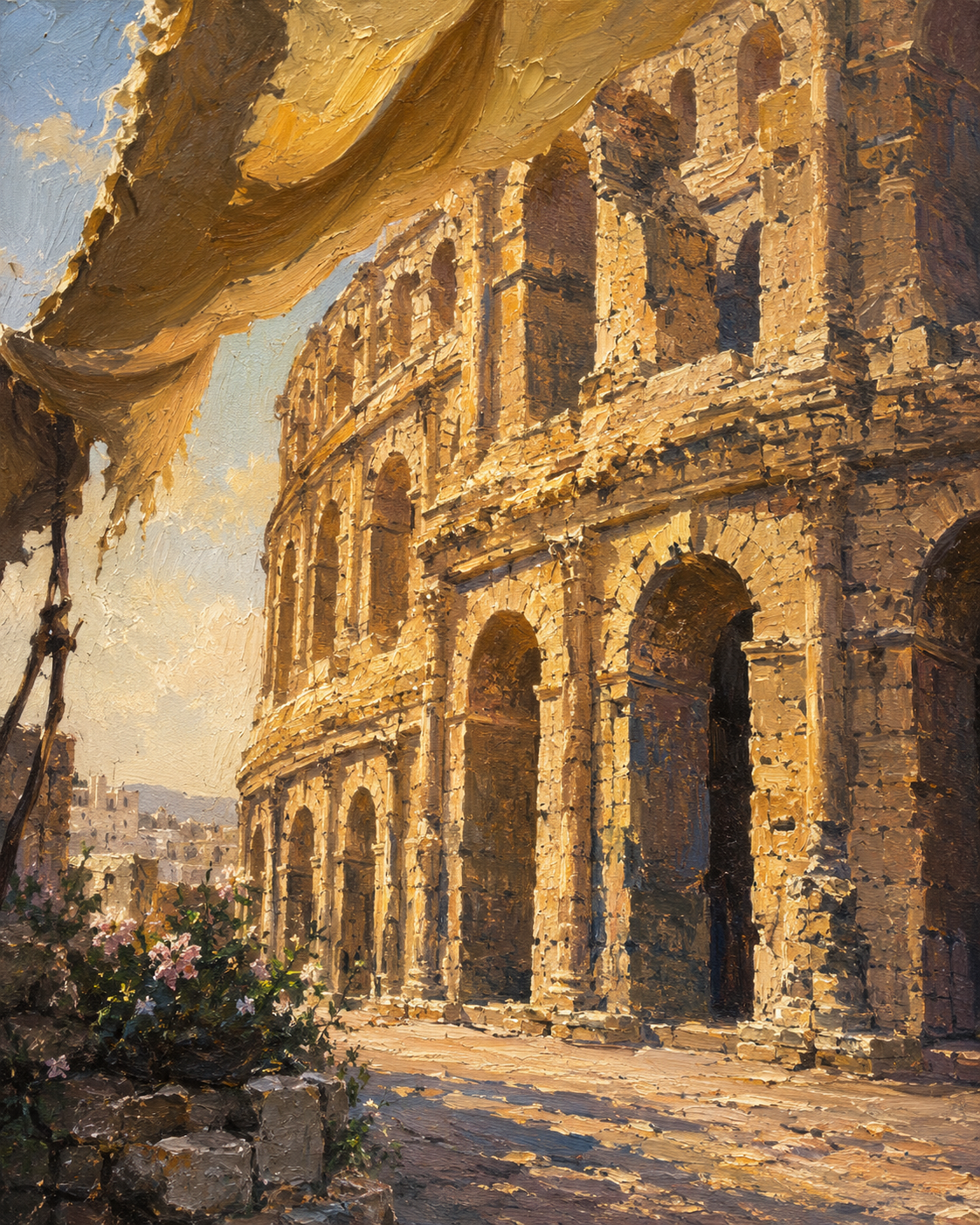
Stone's Silence in the Mediterranean Glow
Critique
1. Introduction This painting presents a powerful vision of the Roman Colosseum, rendered with a dramatic impasto technique that emphasizes the physical substance of the ancient ruins. The work captures the iconic curved facade of the amphitheater, bathed in the bright, unforgiving light of a Mediterranean afternoon. The artist uses thick, sculptural layers of paint to convey the weathered texture of the stone, creating a piece that is as much about the material of paint as it is about the historical subject. 2. Description The composition is dominated by the multi-layered arches of the Colosseum, which sweep across the canvas from the center to the right. In the upper left corner, a tattered, yellowish canvas awning hangs from a wooden support, casting a cooling shadow over the lower foreground. At the base of the scene, a cluster of small pink flowers and dark green foliage adds a touch of organic life against the backdrop of massive, broken stones and the dusty path that leads into the distance. 3. Analysis A palette of sun-drenched ochres, creams, and siennas defines the architecture, contrasted sharply by the deep, cool shadows within the arches and the pale, hazy blue of the sky. The application of paint is exceptionally bold, with visible ridges and peaks created by a palette knife that mimic the rugged, uneven surface of the ancient travertine. The play of light is handled with high contrast, effectively separating the illuminated exterior from the dark, mysterious voids of the interior galleries. 4. Interpretation and Evaluation The heavy texture serves as an excellent surrogate for the passage of time, with each stroke of paint suggesting the erosion and history embedded in the stone. This approach successfully breathes new life into a frequently depicted landmark by focusing on its raw, elemental presence rather than mere topographical accuracy. The inclusion of the delicate flowers and the temporary awning provides a human scale and a sense of the ephemeral, contrasting beautifully with the enduring monumentality of the ruins. 5. Conclusion This work is a masterful exploration of how texture and light can converge to evoke the spirit of a historic site. The initial impact of the massive architecture is supported by a deeper technical achievement in the handling of the oil medium. It invites the viewer to experience the heat and the silence of the ancient arena, making the distant past feel tangibly present through its rich, tactile surface.
Same Subcategory
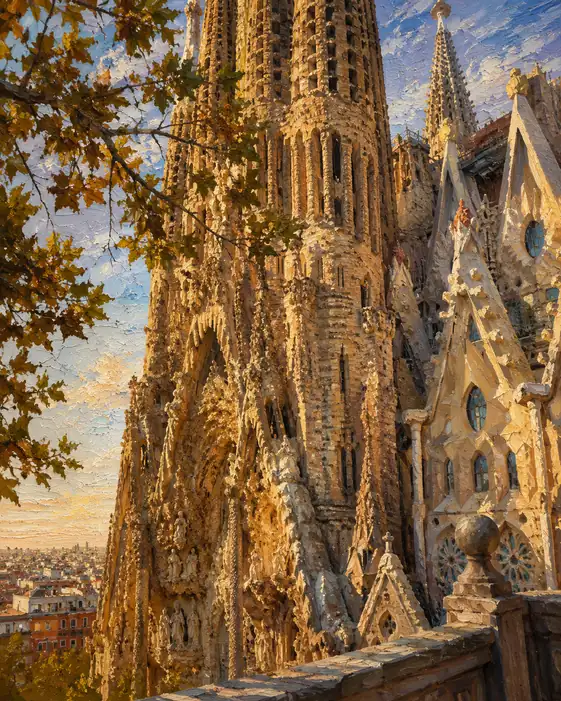 Gilded Whispers of the Rising Spire
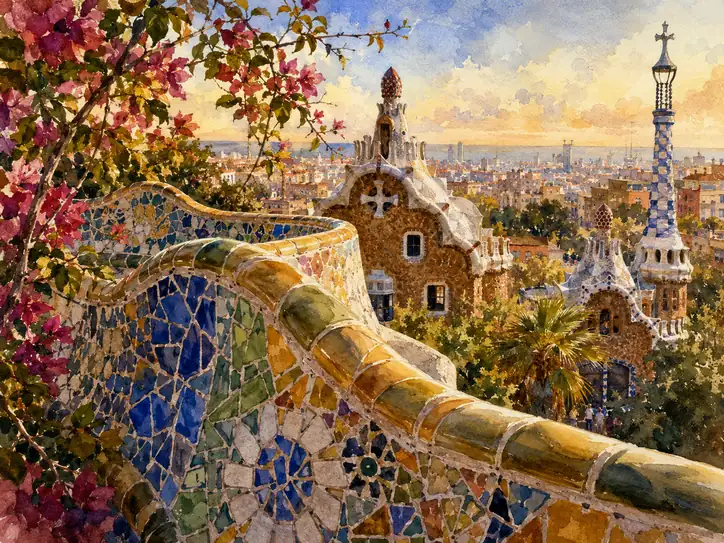 Gaudi's dream in Park Guell, where golden light and mosaics meet the sea breeze.
Similar Artworks
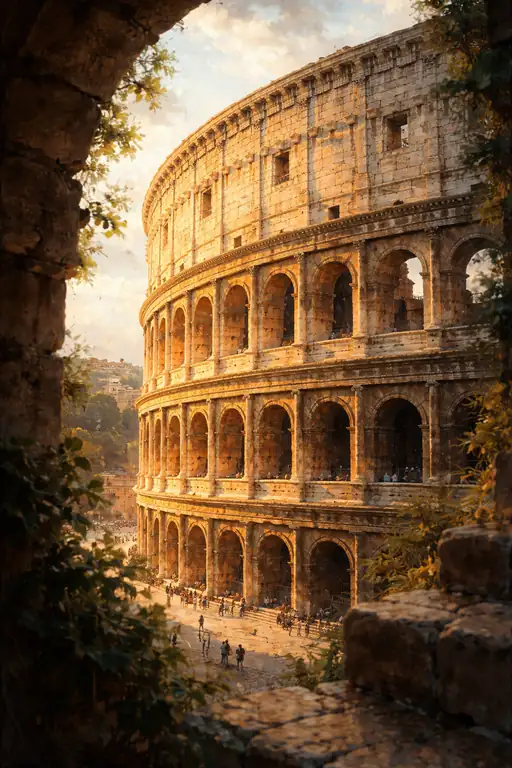 Golden Echoes of Empire
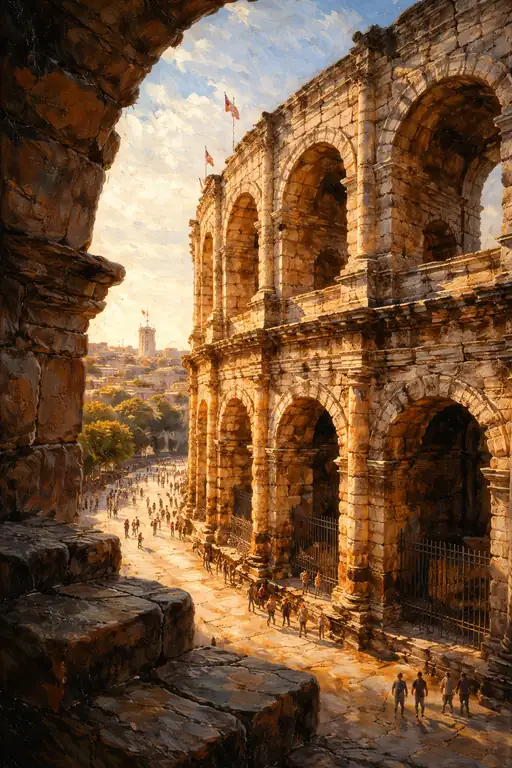 Echoes of Empire at Sunset
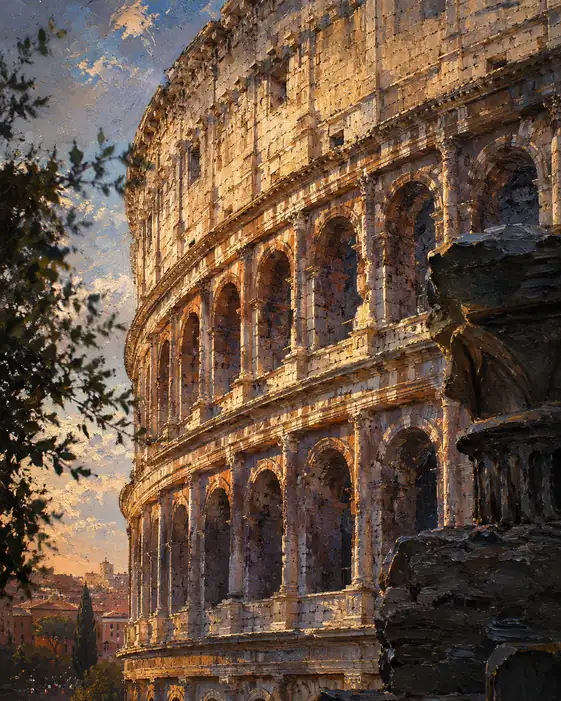 The Stone That Remembers the Sun
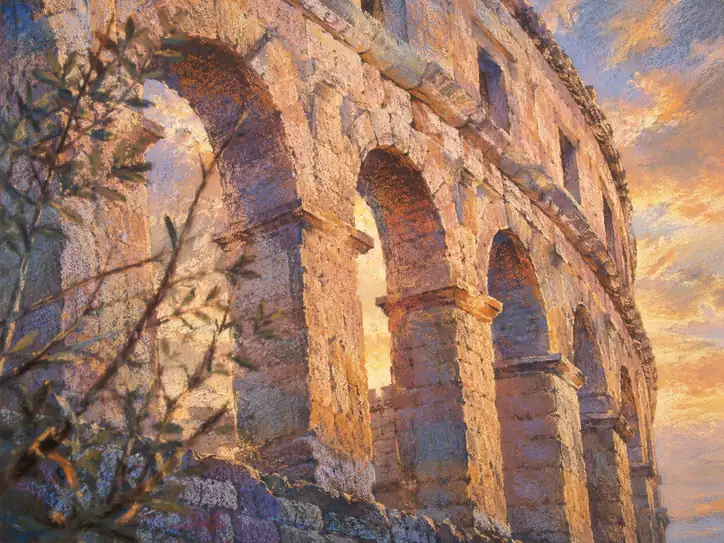 Gold Spilled on Ancient Stone
 Under the Eternal Roman Echoes
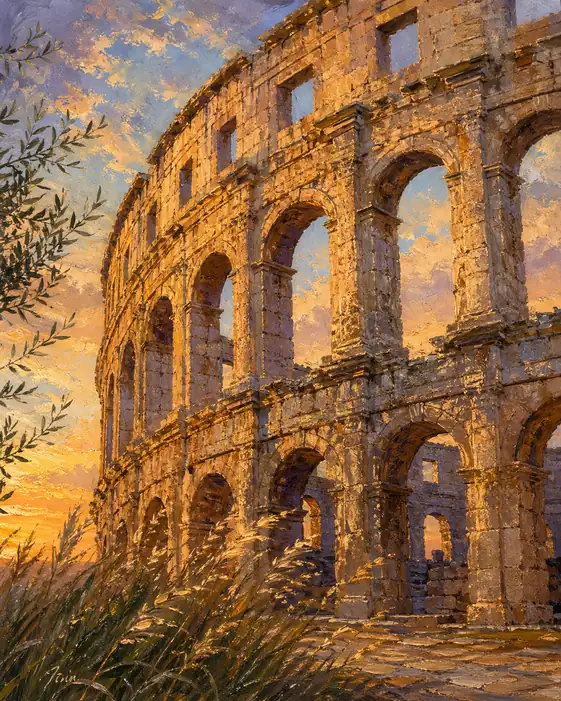 Echoes of Empire in the Golden Hour
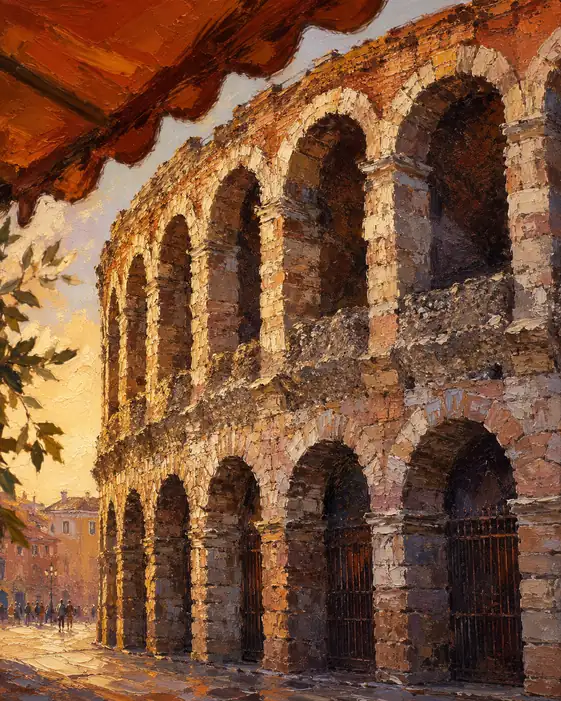 Where Stones Remember the Sun
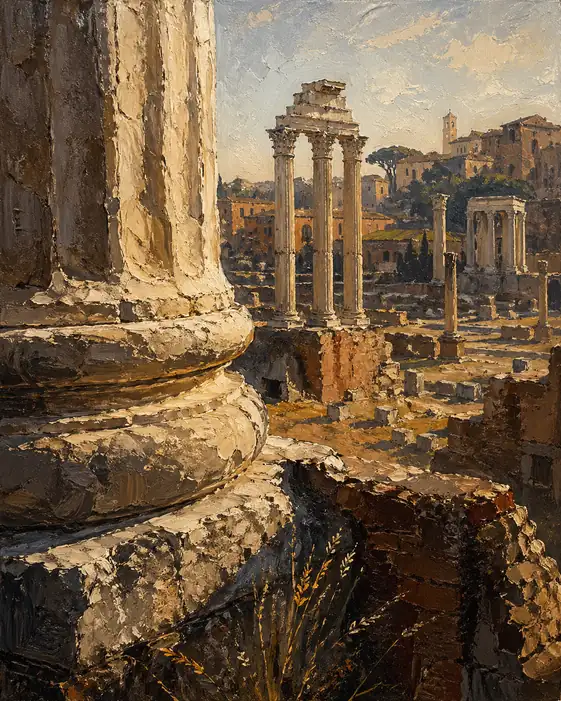 Whispers of the Gilded Forum
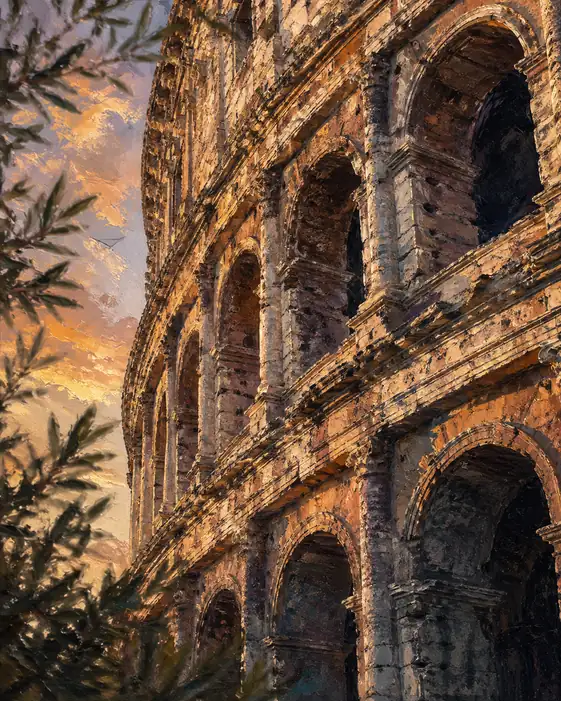 Stone of the Ages, Light of the Moment
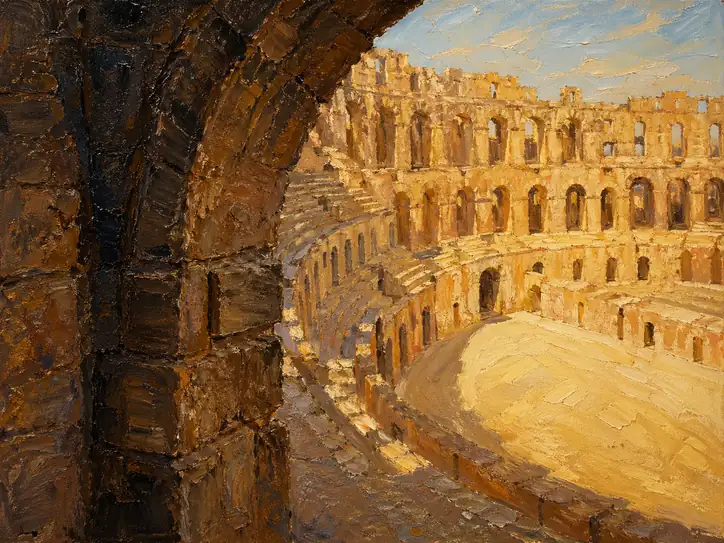 A Requiem of Light for Eternal Stone