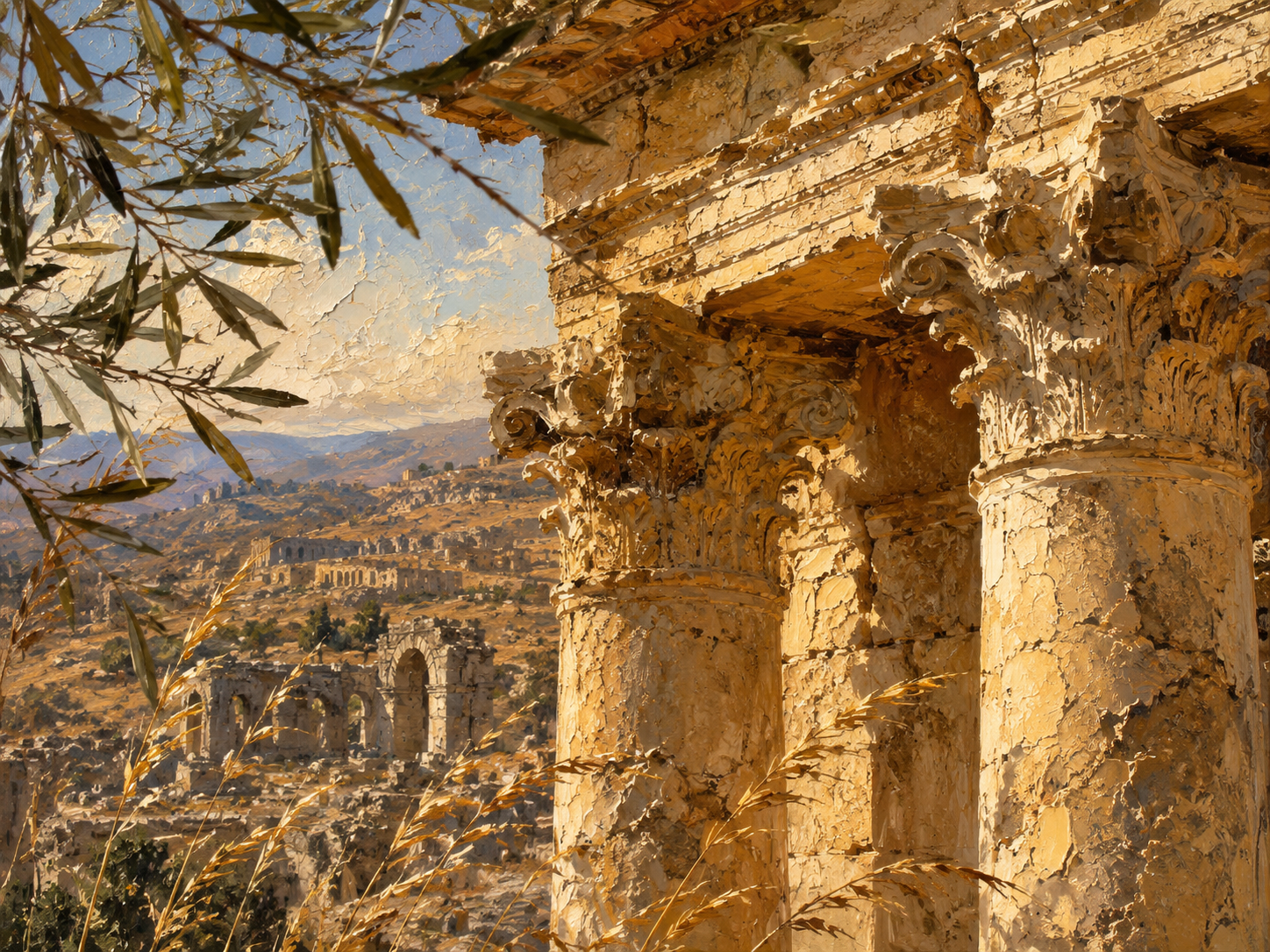
Majesty in the Dust of Time
Critique
1. Introduction This oil painting presents a study of ancient Roman remains, captured with powerful brushwork. Two massive Corinthian columns dominate the foreground, overlooking a vast landscape of ruins. The work explores the material presence of stone and the aesthetics of decay, inviting contemplation on the grandeur of a lost civilization. 2. Description The foreground columns are rendered with a heavy impasto technique, conveying the weathered texture of aged stone. Intricate acanthus carvings emerge under warm sunlight, while cracks and fissures are meticulously detailed. In the background, a valley of ruined arches extends toward hazy hills, framed by olive branches and dry grasses. 3. Analysis The palette is dominated by warm earth tones, recreating the arid Mediterranean atmosphere. A strong contrast between sun-drenched surfaces and deep shadows emphasizes the structural weight of the architecture. The thick application of paint provides a tactile quality, while the composition balances vertical columns with the sweeping horizontal landscape. 4. Interpretation and Evaluation The work is evaluated for re-envisioning the theme of ruinous beauty through an emphasis on materiality. By highlighting crumbling details, the artist exposes the fragility of human achievement against the enduring classical past. The vegetation symbolizes life persisting amidst history, demonstrating exceptional skill in synthesizing texture and light. 5. Conclusion A close examination reveals that the tactile memory of ancient stones is transformed into a vivid visual experience. Beyond the overwhelming scale, a focused view reveals the immense accumulation of time in every surface. This accomplished work successfully blends historical respect with a sophisticated understanding of oil paint.
Same Subcategory
Similar Artworks
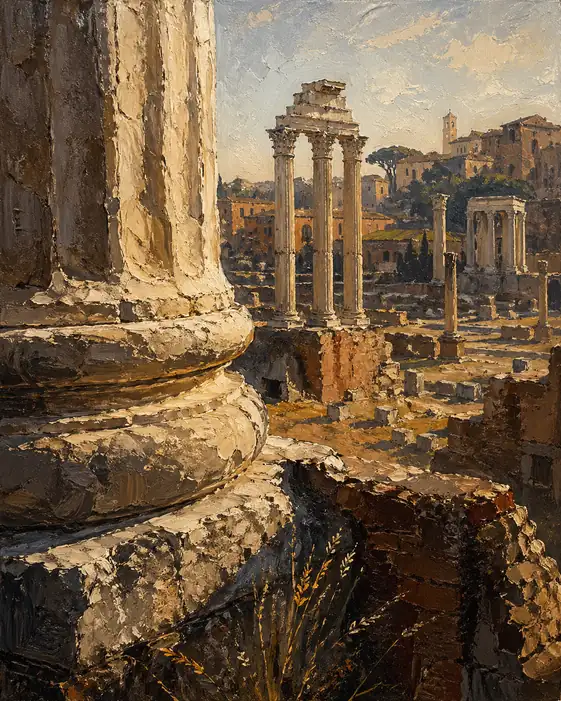 Whispers of the Gilded Forum
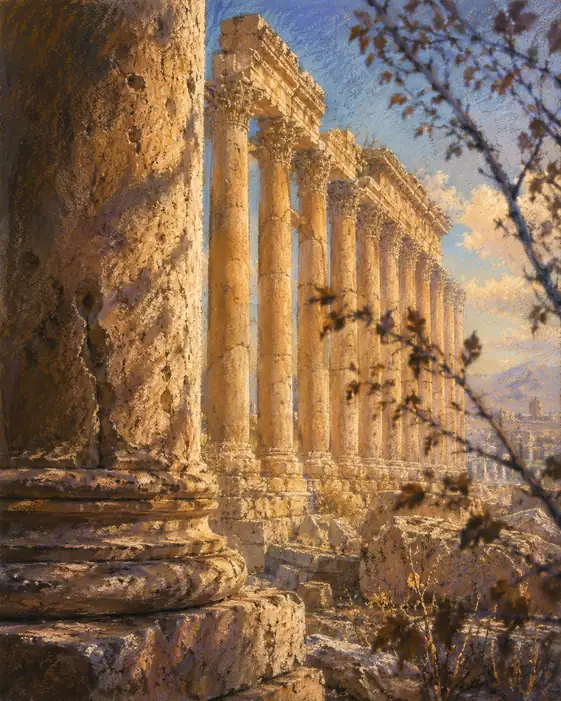 Whispers of the Eternal Sun
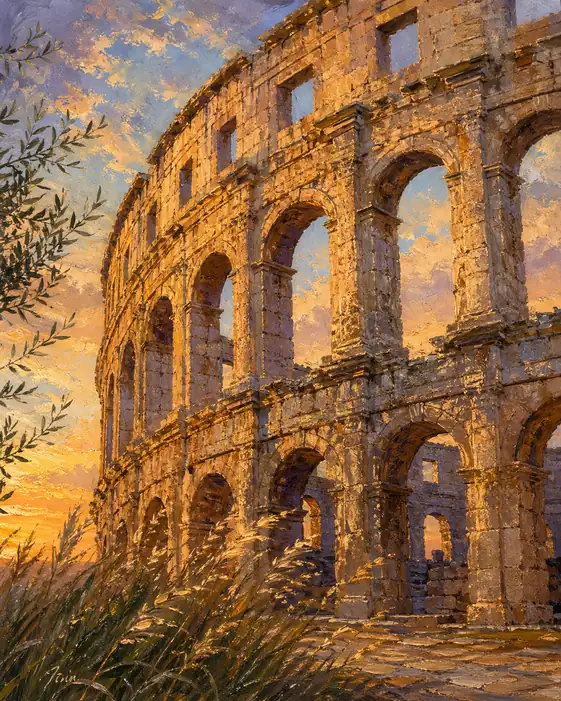 Echoes of Empire in the Golden Hour
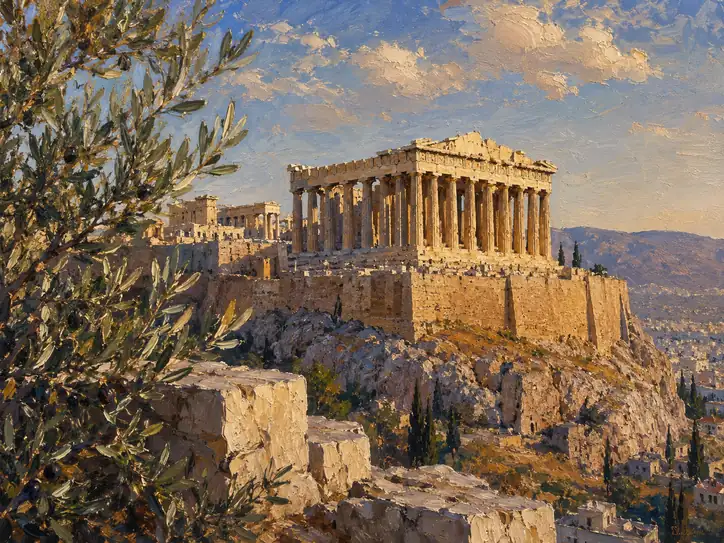 The Spirit of Ancient Gold
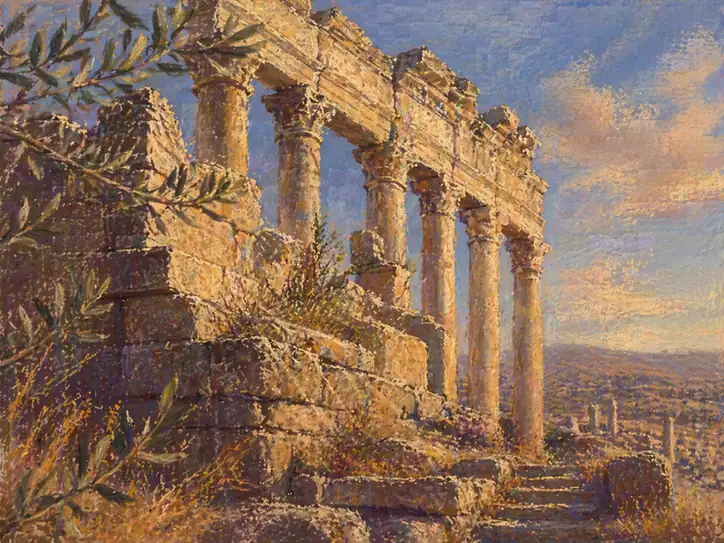 The Last Light on Sacred Pillars
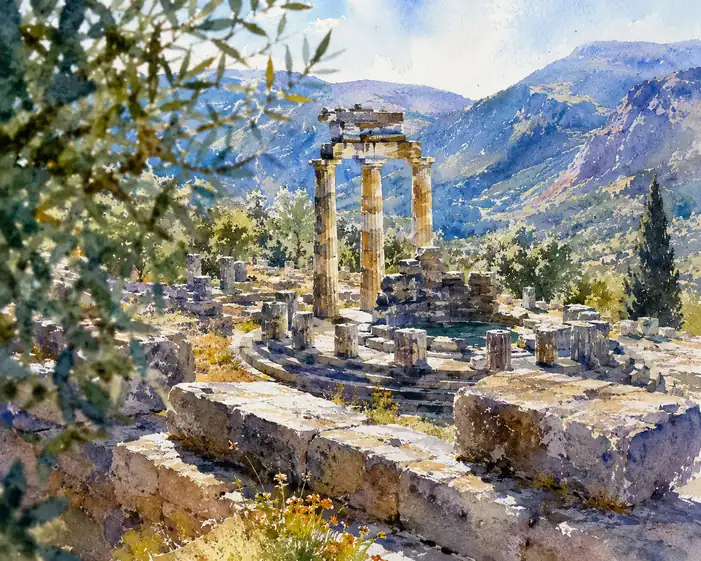 Eternity Within a Sacred Circle
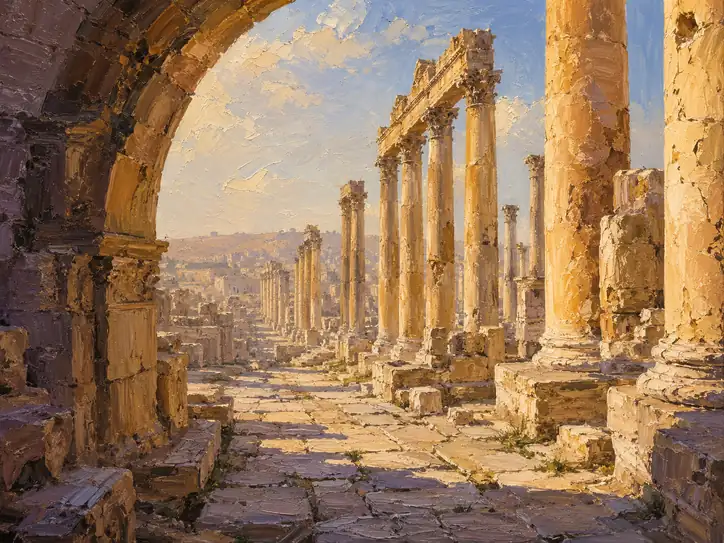 Whispers of Stone and Golden Light
 Sentinels of the Eternal Sunset
 Echoes of Eternity: Where Stone and Sea Unfold
 Whispers of Eternal Stone