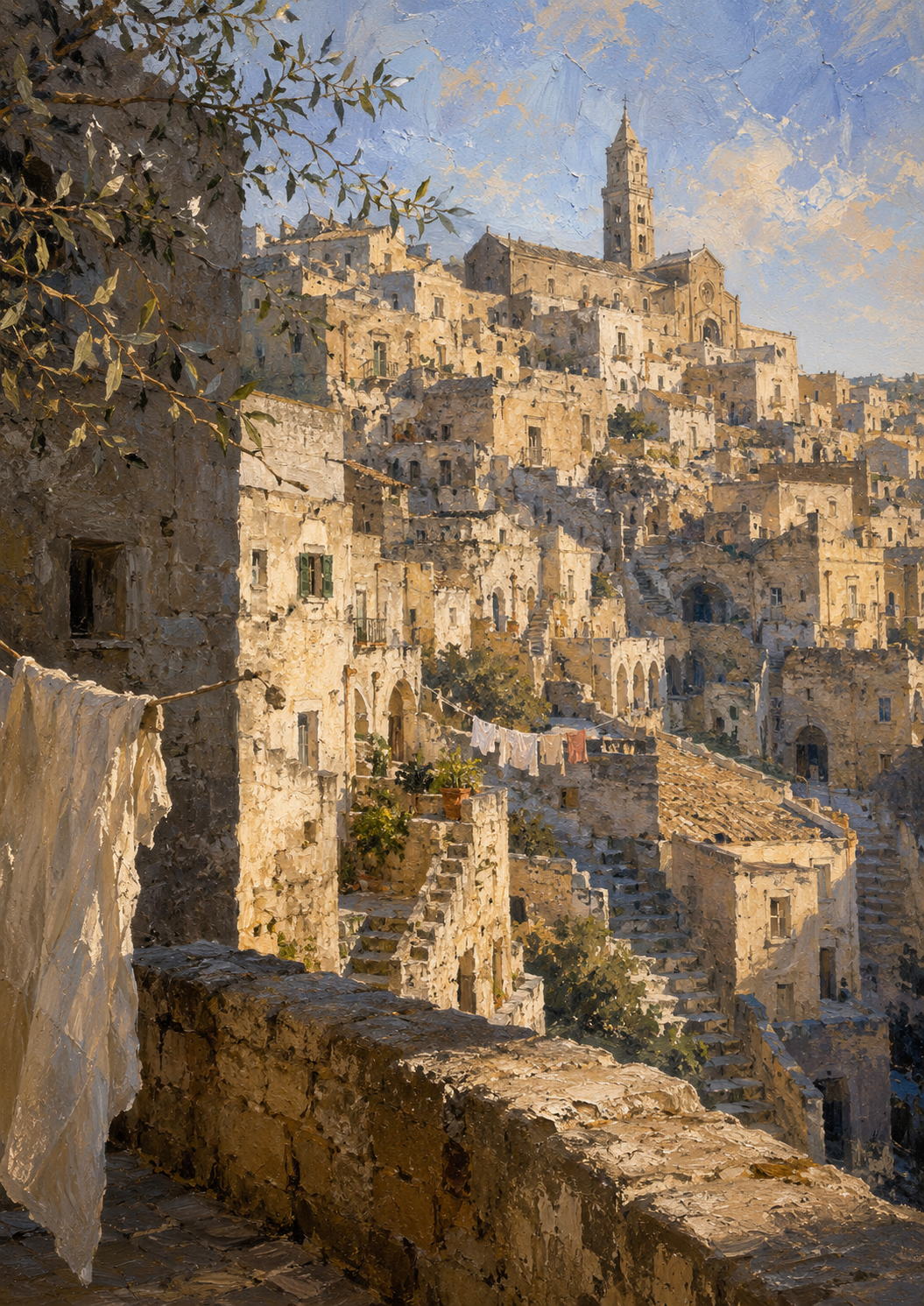
Matera: A Symphony in Golden Stone
Critique
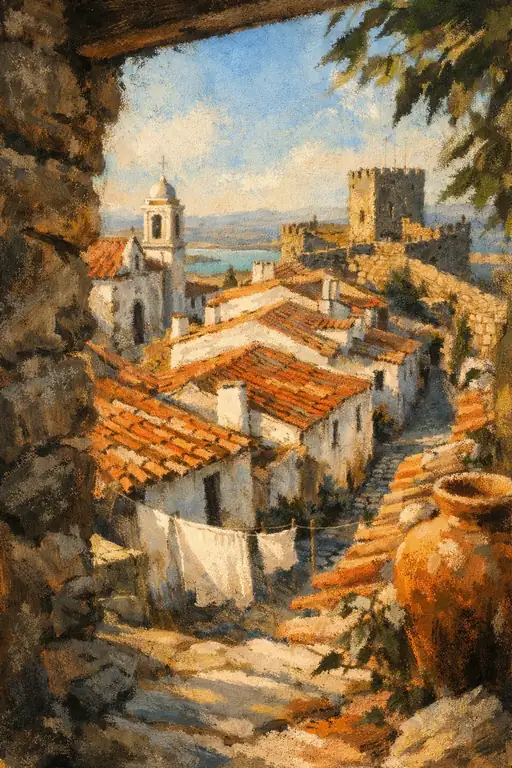
1. Introduction This painting depicts a sun-drenched ancient hillside town, likely inspired by Mediterranean architecture. The overall atmosphere is warm and inviting, characterized by a harmonious palette of golden hues and a clear blue sky. The artist presents a vertical view that leads the eye from the intimate details of the foreground up to the grand architecture at the peak. 2. Description Densely packed stone buildings climb the steep hillside toward a prominent church tower at the summit. In the foreground, a large piece of white laundry hangs on a line, catching the bright sunlight and adding a sense of daily life to the historic setting. The buildings are rendered in various shades of cream, ochre, and tan, with small windows and arched doorways scattered across their facades. 3. Analysis The artist employs heavy impasto techniques, creating a rich, tactile texture that effectively mimics the rugged surface of aged stone. The sharp contrast between the brilliantly lit facades on the left and the deep shadows on the right enhances the three-dimensional quality of the urban landscape. The brushwork is deliberate and expressive, contributing to a vibrant energy that pulses through the static architecture. 4. Interpretation and Evaluation The work successfully combines traditional landscape elements with a vigorous, modern brushwork style. The balanced vertical composition creates a sense of aspiration, while the masterful handling of golden hour light evokes a feeling of nostalgia and timelessness. This piece demonstrates a high level of technical skill in capturing complex light effects and architectural depth through a limited yet effective color palette. 5. Conclusion While initially appearing as a simple scenic vista, closer inspection reveals a profound sense of tranquility and the enduring spirit of the community. The interplay of light and shadow ultimately transforms a static architectural study into a living, breathing portrait of a place where history and modernity coexist.
Same Subcategory
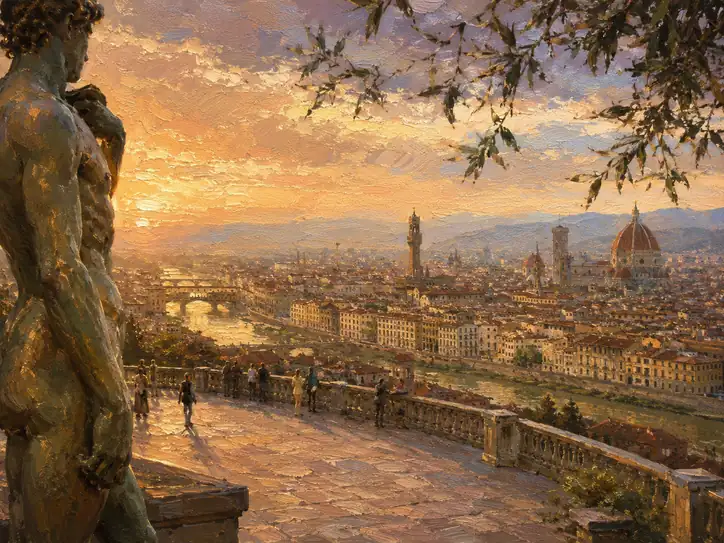 Florence: A Golden Legacy at Twilight
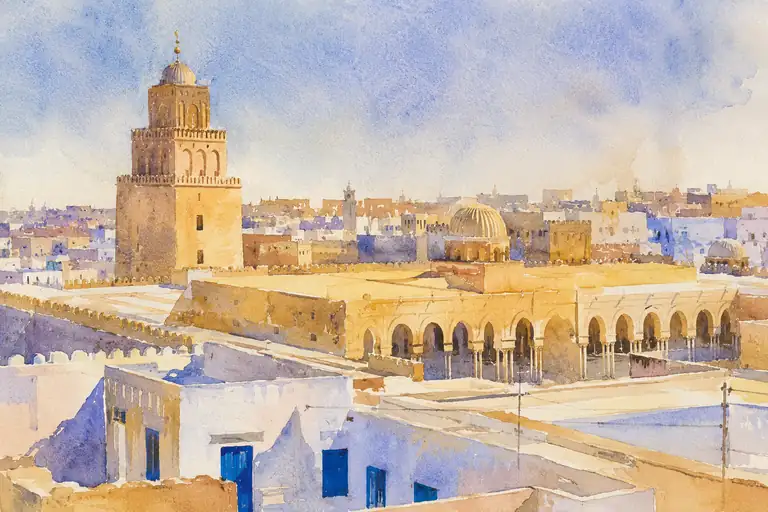 The Golden Prayer of the Medina
Similar Artworks
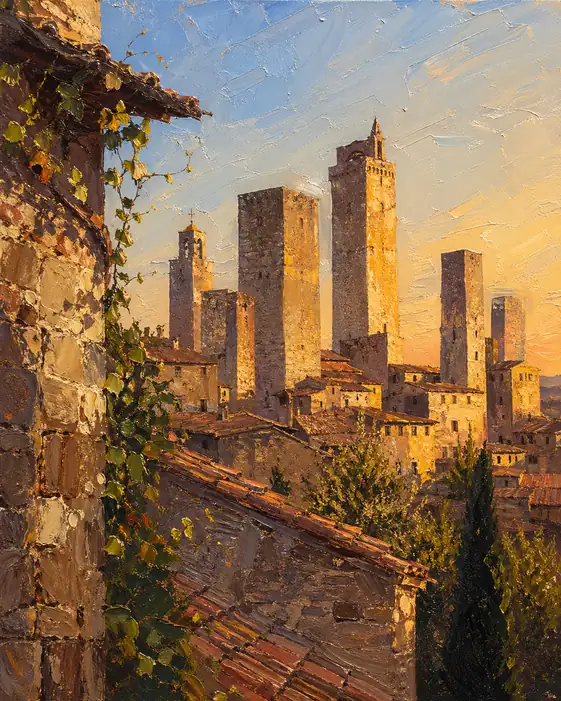 Golden Spires of the Eternal Town
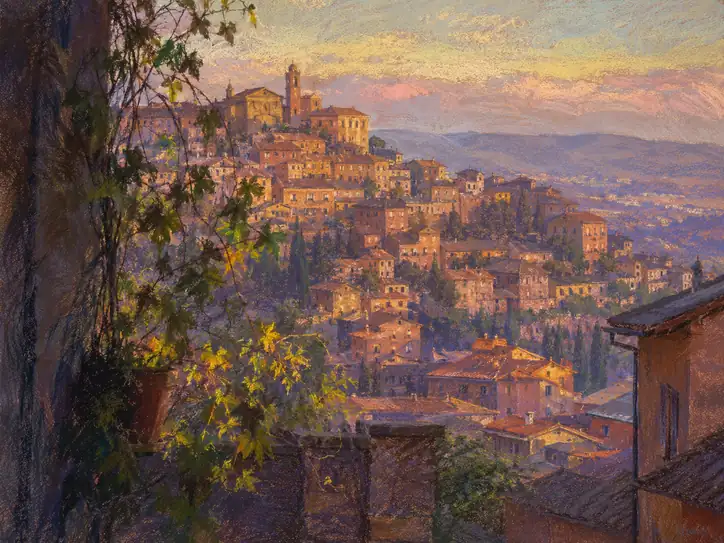 Resonance of the Golden Hillside
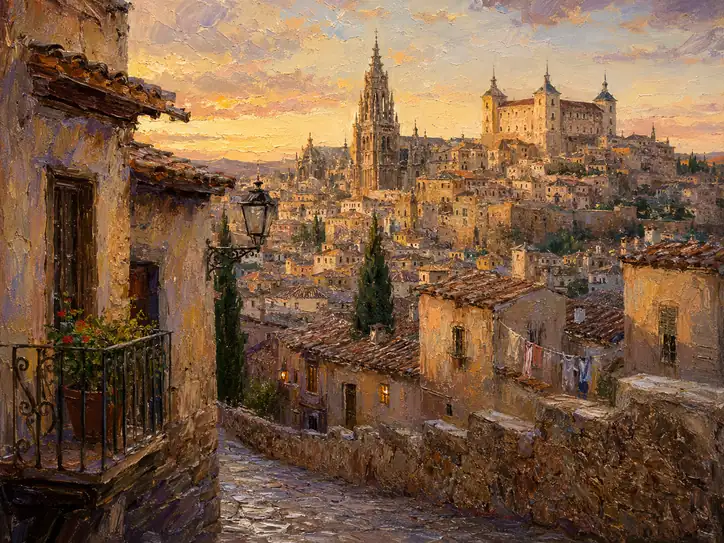 Eternal Toledo: A City Bathed in Gold
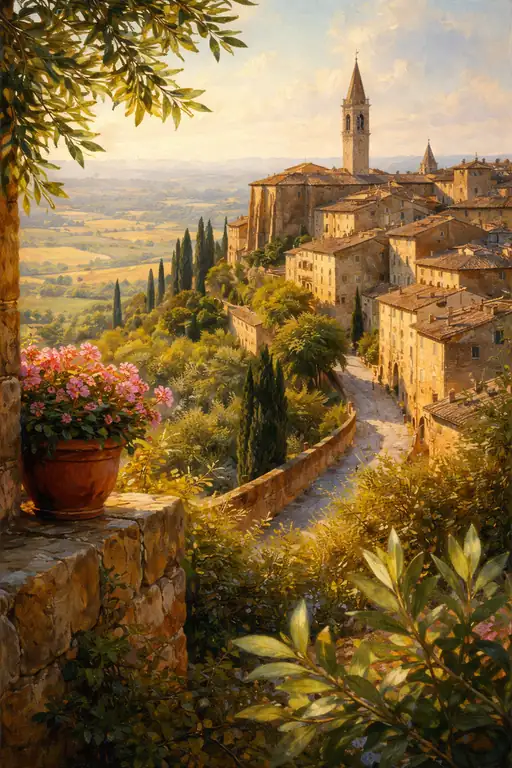 Mediterranean Heritage
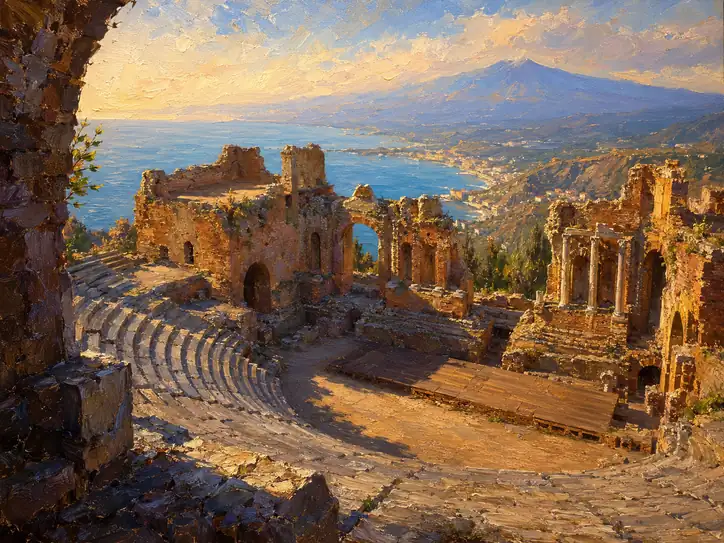 Taormina: The Golden Stage of Antiquity
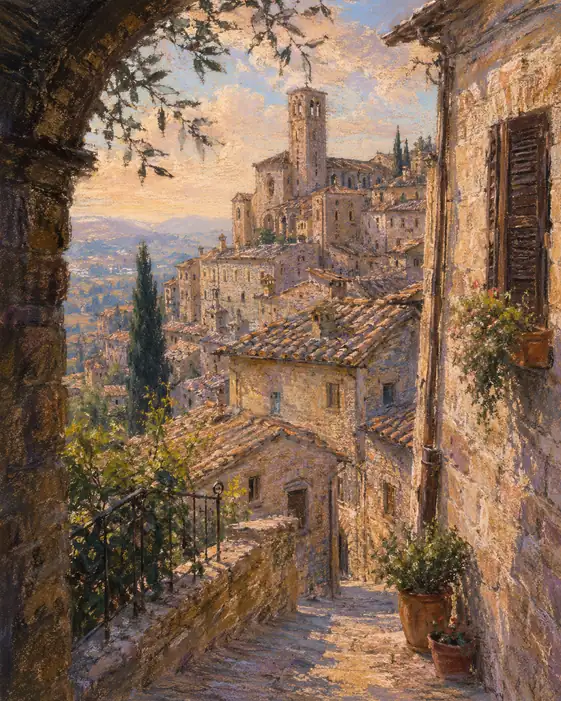 The Golden Gate to Assisi
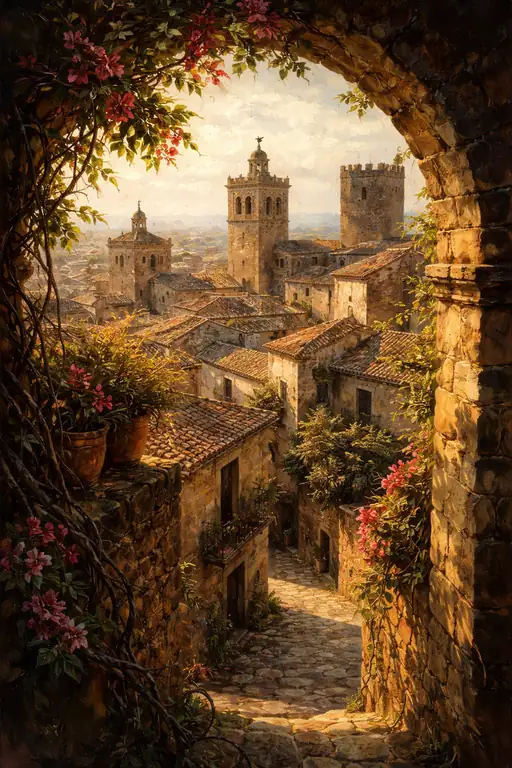 Beyond the Bloom: The Silent Sentinels of Time
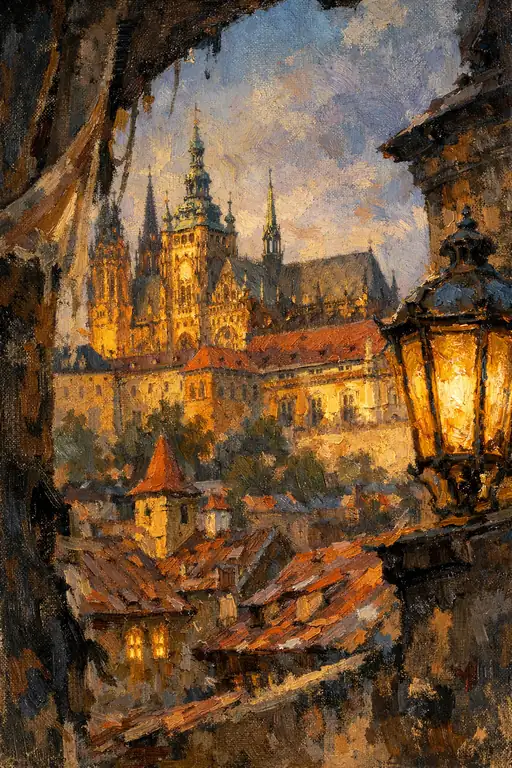 The Thick Impasto of Twilight
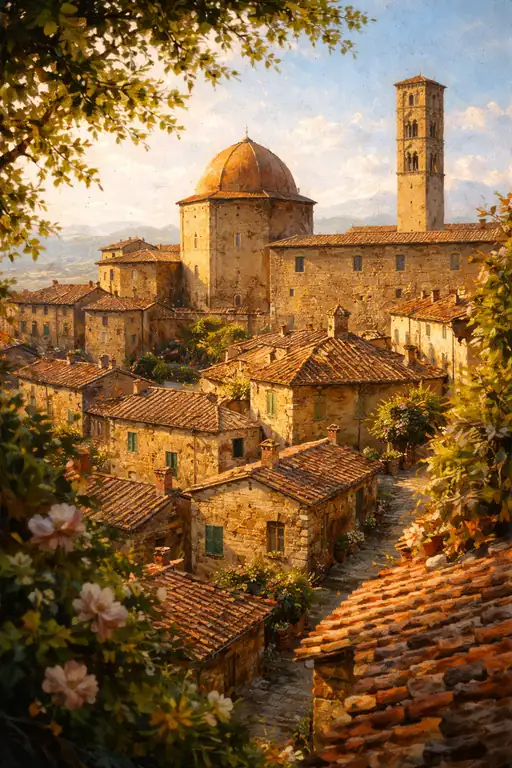 Sienna and Sunbeams
 The Timeless Village