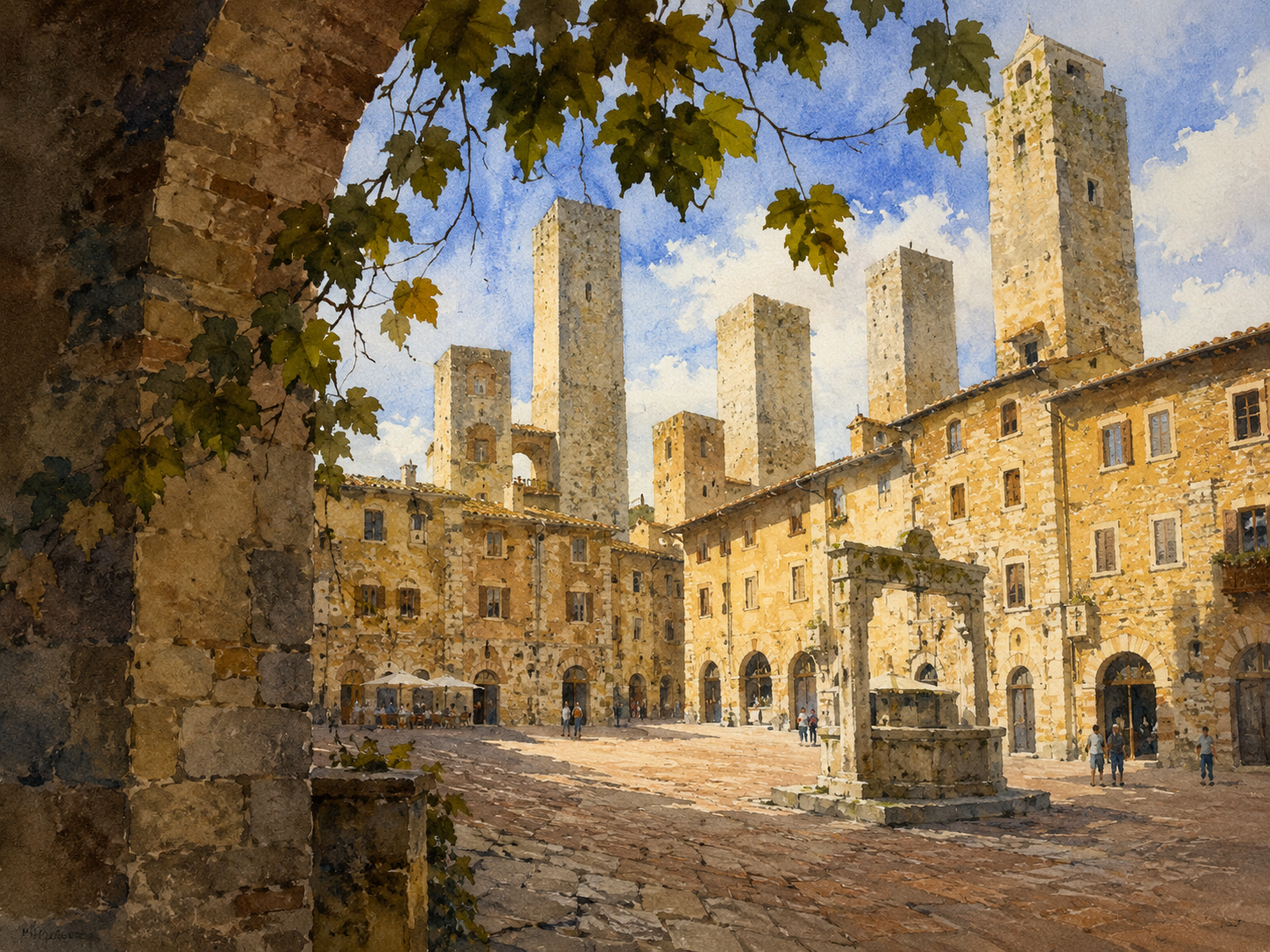
Towers of Time: A Tuscan Afternoon
Critique
1. Introduction This painting presents a masterful watercolor interpretation of a medieval Italian square, characterized by iconic towers and ancient stonework. A stone archway in the left foreground serves as a dramatic frame, guiding the viewer’s eye toward the historical depth of the scene. The verticality of the numerous towers reaching toward the sky creates a powerful sense of architectural grandeur, grounding the composition in a specific sense of place and heritage. 2. Description At the center of the sunlit plaza sits a classic stone cistern, surrounded by buildings of warm, ochre-colored stones that radiate the afternoon heat. The sky above is a brilliant, clear blue with scattered white clouds, enhancing the atmosphere of a peaceful day. From the foreground arch, lush vine leaves extend into the frame, their detailed green textures providing a sharp organic contrast to the weathered surfaces of the surrounding medieval structures. 3. Analysis Formally, the work utilizes a contrast between the shadowed interior of the foreground arch and the luminous open space of the square to establish depth. The artist employs layered brushwork to capture the irregular textures of the masonry walls, emphasizing the physical presence and historical weight of the architecture. Furthermore, the interplay between the rigid vertical lines of the towers and the soft curves of the arch creates a balanced visual structure. 4. Interpretation and Evaluation The work transcends a simple depiction of a historic site, instead capturing the intersection of permanence and the transience of daily life. The towers stand as silent witnesses to centuries of history, while the contemporary figures in the square represent the ongoing vitality of the city. The artist’s control over light and color is remarkable, imbuing the scene with a clarity that elevates the subject matter into a poetic reflection on time. 5. Conclusion While the painting follows the traditions of landscape art, it distinguishes itself through a sensitivity to atmospheric light and spatial organization. The marriage of historical reverence with an appreciation for the subtle beauties of the natural world results in a deeply evocative image. Ultimately, the work succeeds in using the transformative quality of light to invite the viewer into a contemplative experience, confirming its status as an accomplished urban landscape.
Same Subcategory
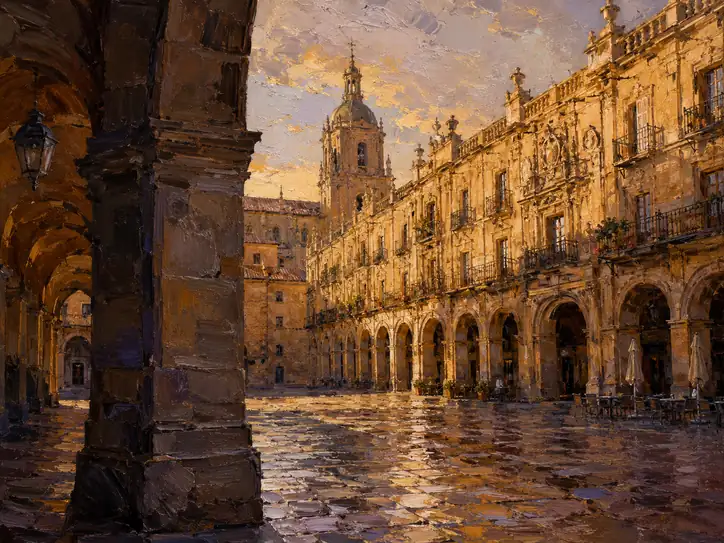 The Golden Solace of Salamanca
Similar Artworks
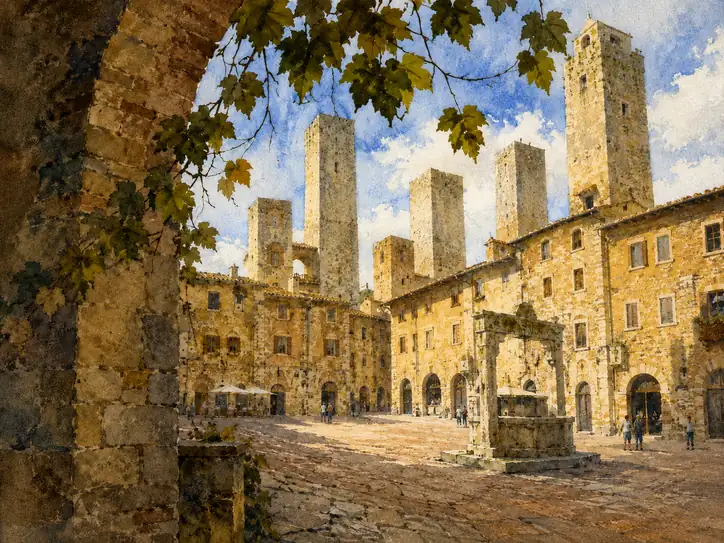 The Golden Piazza: Where History Reaches the Sky
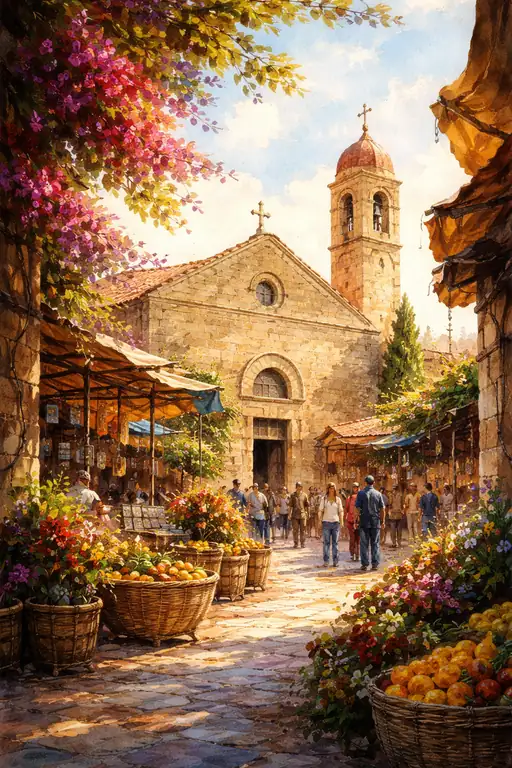 Bustling Marketplace Beside an Old Stone Church
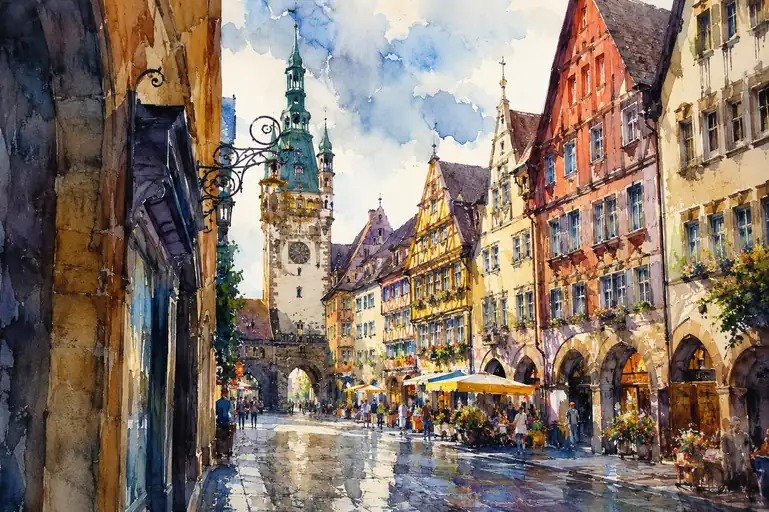 The Timeless Pulse of the Sunlit Plaza
 A Radiant Hymn to the Valley's Heart
 The Golden Pulse of a Forgotten Square
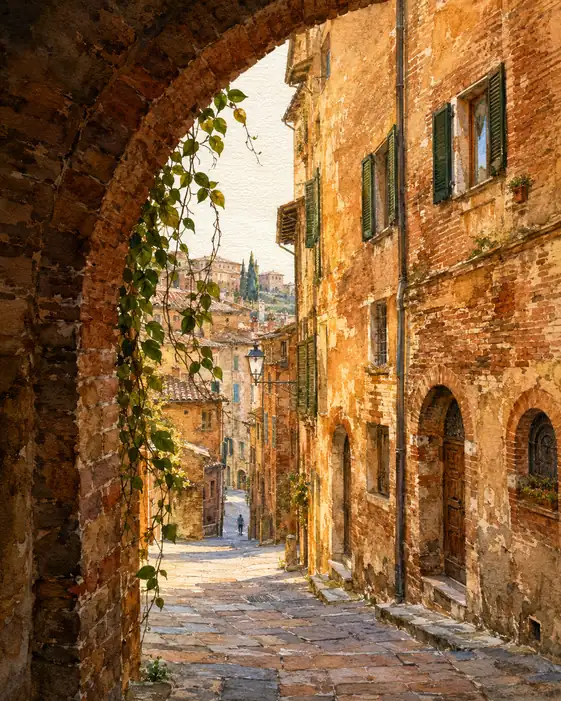 Through the Arch of Time
 Luminous Echoes on the Rain-Washed Square
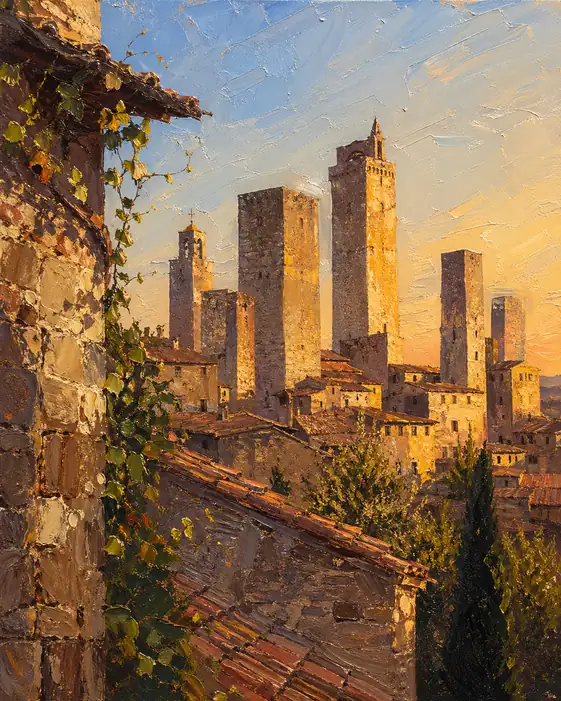 Golden Spires of the Eternal Town
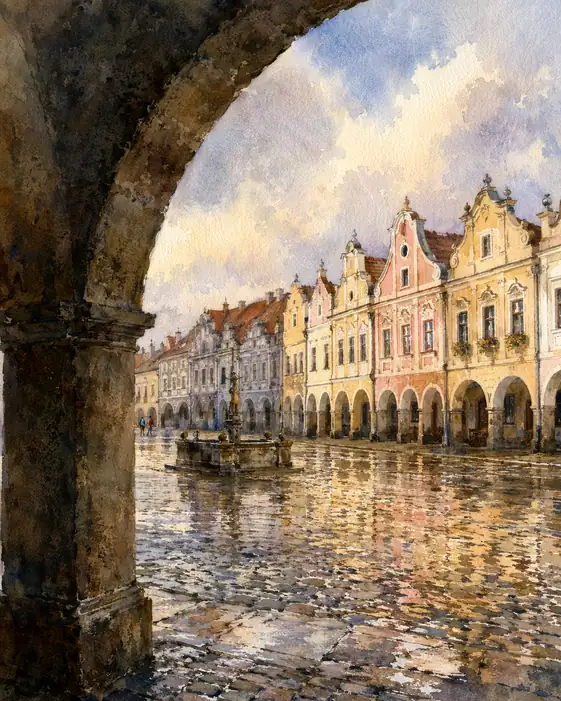 The Last Dance
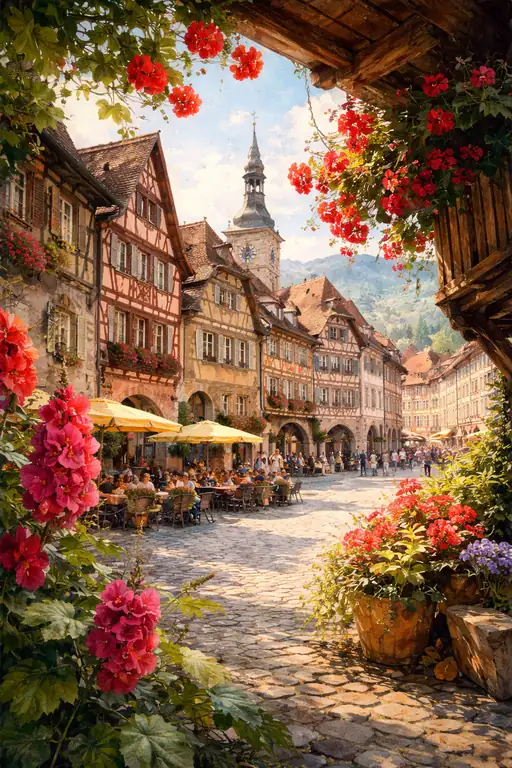 Summer Afternoon in the Square: Flowers and Timbers