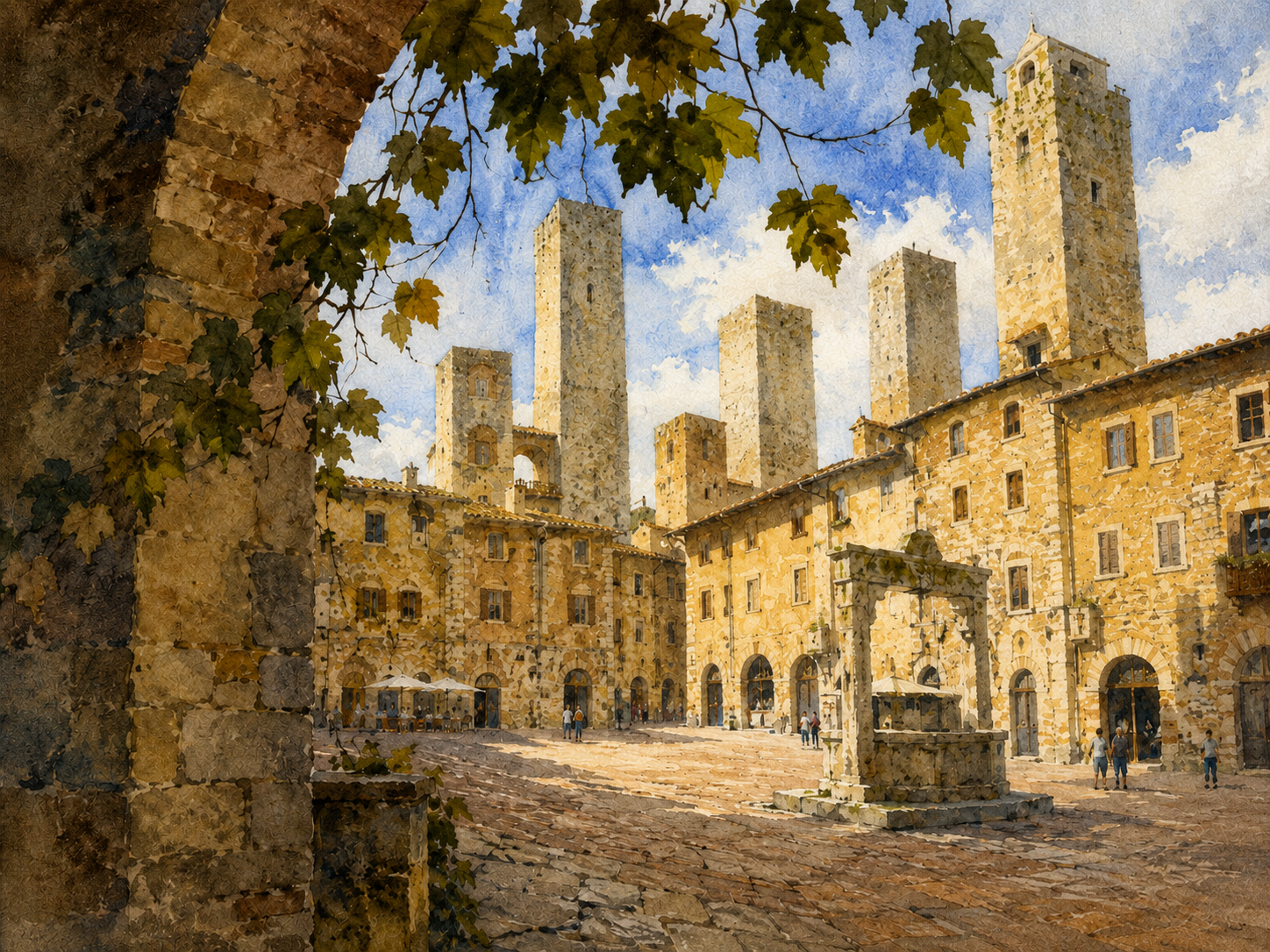
The Golden Piazza: Where History Reaches the Sky
Critique
1. Introduction This watercolor-style painting captures a historic Italian cityscape, where medieval architecture meets a vibrant, sun-drenched atmosphere. The composition centers on a spacious square, dominated by soaring stone towers that define the region’s distinctive skyline. By positioning a vine-covered archway in the foreground, the work creates a layered perspective that invites the viewer directly into this timeless Mediterranean scene. 2. Description At the heart of the plaza sits a traditional stone well, surrounded by multi-story buildings finished in warm ochre masonry. Above, a brilliant blue sky with soft clouds allows intense sunlight to illuminate the textured architecture and the expansive cobblestone ground. To the left, lush green ivy cascades from the dark stones of the foreground arch, providing a vivid organic contrast to the weathered structural elements of the city. 3. Analysis The color palette relies on a balance between the radiant, warm tones of the stonework and the cooling influence of the sky. Strong vertical lines from the towers are offset by the sweeping curves of the foreground arch, generating a dynamic sense of depth and rhythm. Small, deliberate brushstrokes capture the play of light across the uneven pavement and the translucency of the leaves, grounding the ephemeral qualities of sunlight in physical reality. 4. Interpretation and Evaluation This work successfully reconciles the weight of historical permanence with the fleeting beauty of a clear afternoon. The towers, symbols of ancient prestige, stand in quiet dialogue with the contemporary figures in the square, suggesting a continuity of human experience across centuries. The artist’s command over composition and the luminous quality of the pigments are exceptional, transforming a classical subject into a compelling study of light and atmosphere. 5. Conclusion While the initial impression is one of idyllic charm, closer inspection reveals a sophisticated handling of spatial layers. The painting serves as a bridge between the physical reality of a historic site and the emotive power of a memory-like interpretation. Ultimately, it becomes clear that the work transcends mere documentation, using the transformative power of light to elevate a familiar landscape into a lasting visual experience.
Same Subcategory
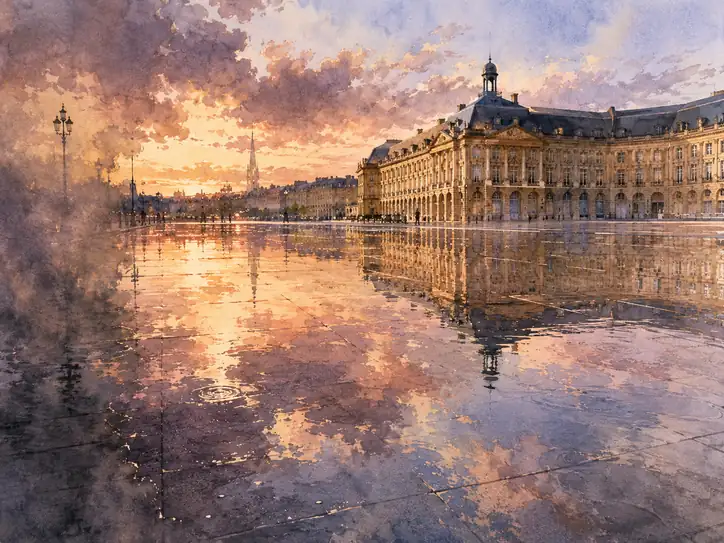 The Mirror of a Fiery Twilight
Similar Artworks
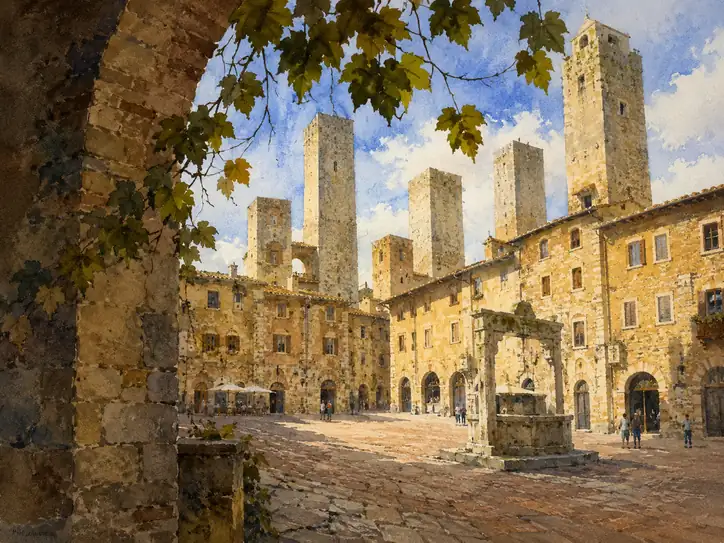 Towers of Time: A Tuscan Afternoon
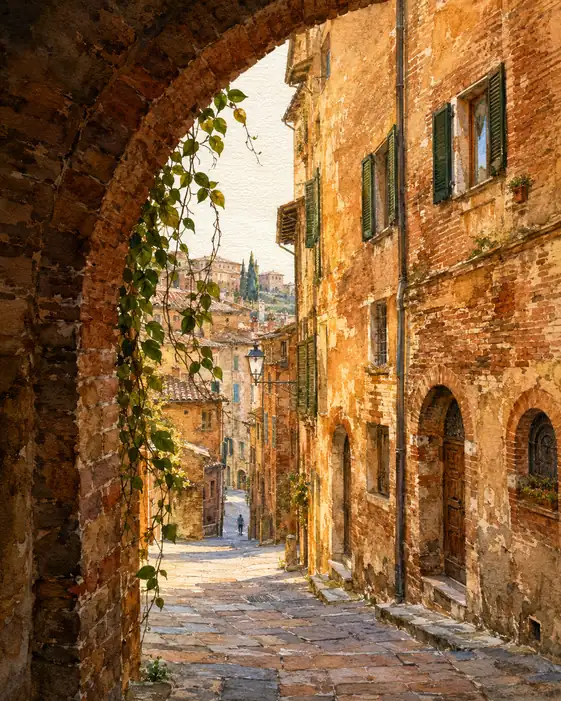 Through the Arch of Time
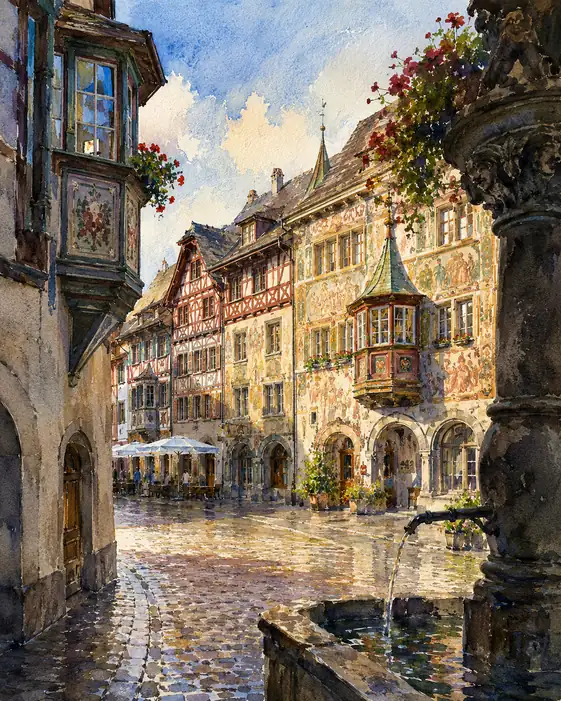 Golden Echoes through the Frescoed Square
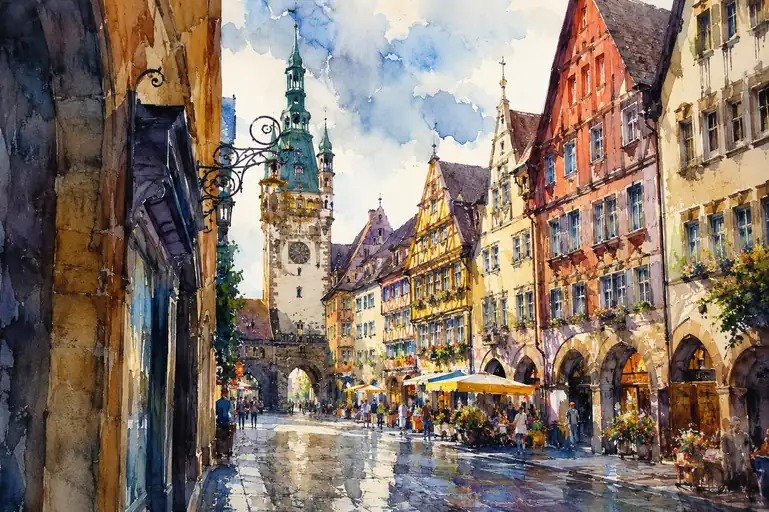 The Timeless Pulse of the Sunlit Plaza
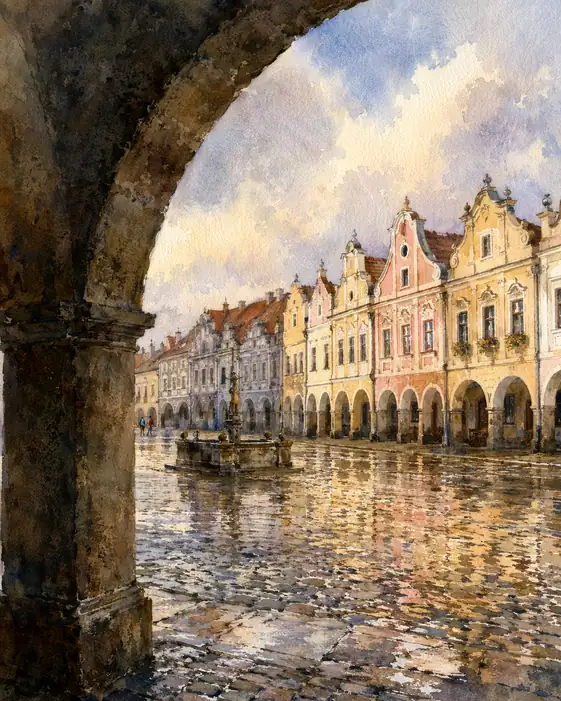 The Last Dance
 The Dying Town's Last Light
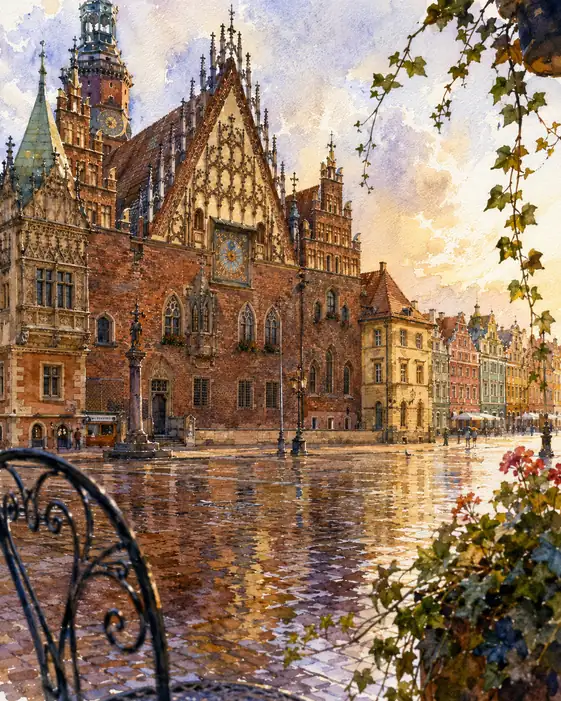 Glisten of History
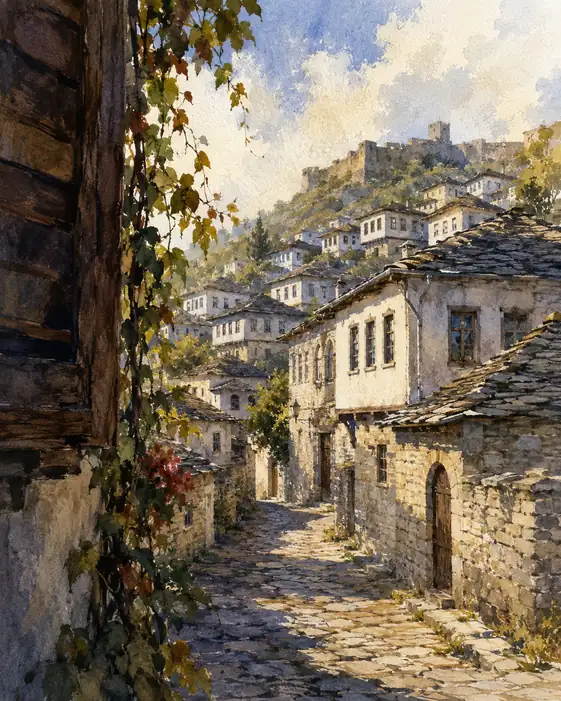 Ascent of the Stone Memories
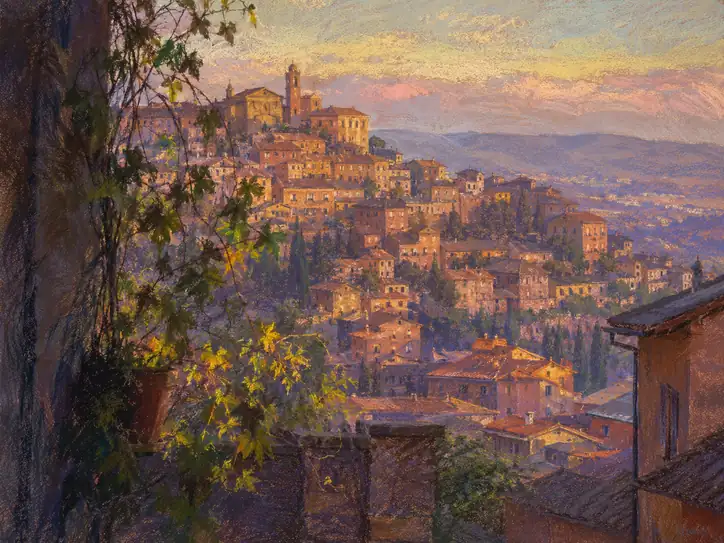 Resonance of the Golden Hillside
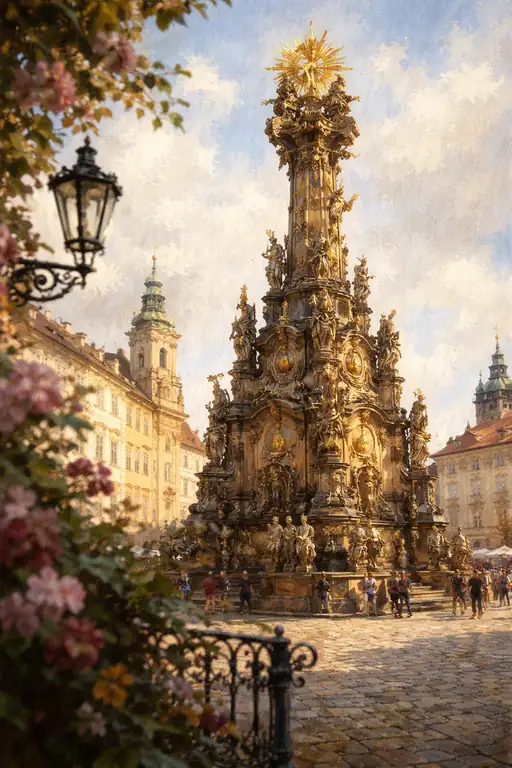 Baroque Whispers in the Sunlit Square