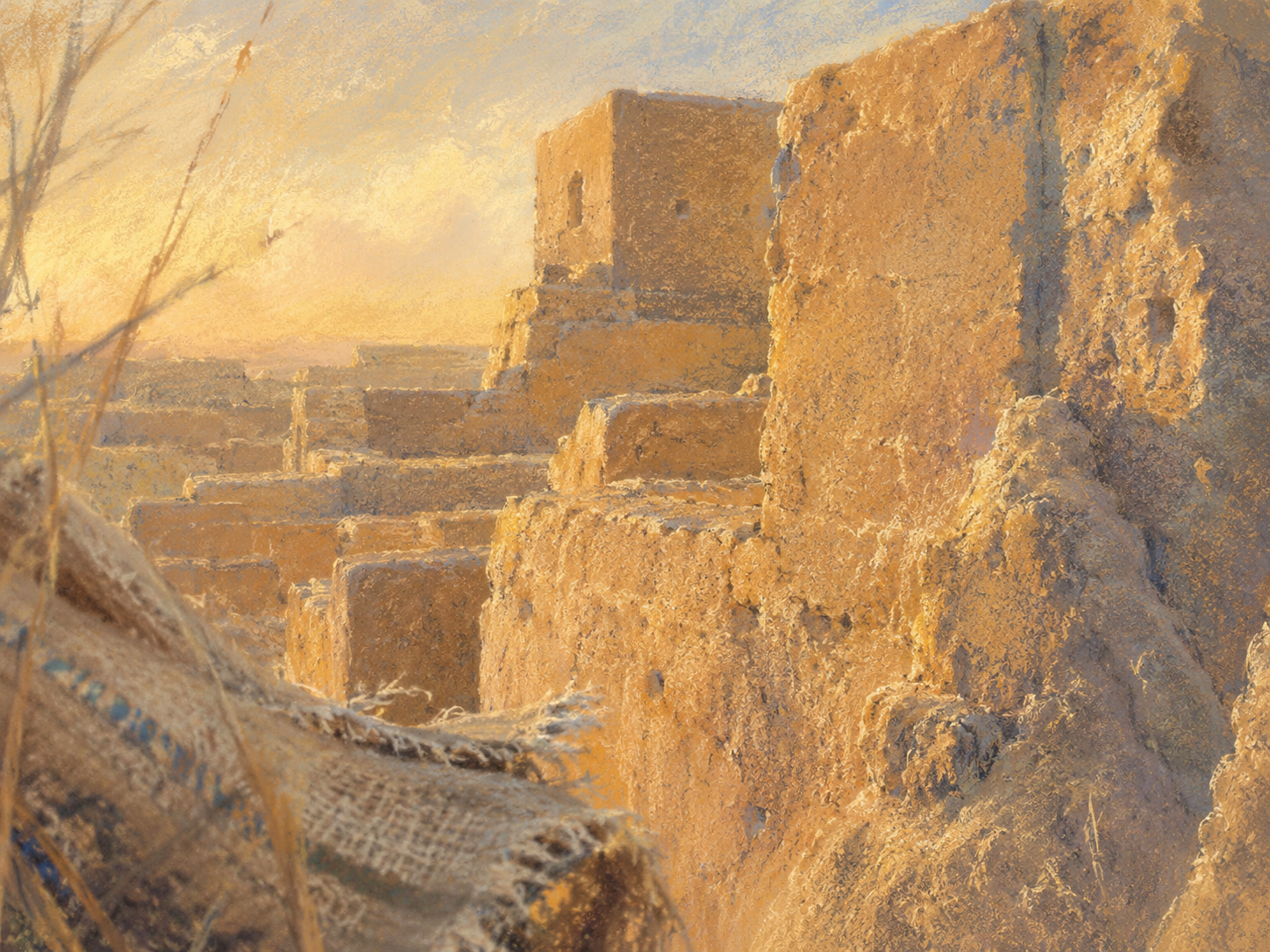
The Light That Lingers in Dust and Time
Critique
1. Introduction This painting presents a luminous view of ancient, sun-baked structures, likely a desert settlement or archaeological site, bathed in the soft glow of a low sun. The work focuses on the weathered textures of earthen walls, capturing a sense of enduring stillness in a landscape defined by history and heat. It invites the viewer to appreciate the quiet beauty of simple, ancient forms under the transformative power of natural light. 2. Description The composition is centered on several massive, cubic structures that rise in tiers, their surfaces heavily textured and uneven. In the immediate foreground, frayed fabric or sacks with a coarse weave add a tactile, intimate detail to the scene. The middle ground features a series of receding walls that guide the eye toward a hazy, golden horizon. The sky is a pale, luminous wash of yellow and soft orange, suggesting the early hours of morning or the final moments of the day. 3. Analysis The artist employs a vigorous impasto technique, creating a thick, physical layer of paint that mimics the crumbly, sun-dried quality of mud-brick or stone. This emphasis on texture is balanced by a sophisticated use of color, where warm ochre and gold highlights are offset by cool lavender and pale blue shadows. The atmospheric perspective is effectively rendered through the softening of details and contrast in the background, which creates a vast sense of space despite the close-up focus. 4. Interpretation and Evaluation The painting successfully conveys the feeling of intense heat and the weight of time through its choice of palette and brushwork. The technical execution of the varied textures—from the rough walls to the frayed textile in the foreground—is particularly noteworthy. The composition feels organic and unforced, capturing a slice of a larger environment with a focus on its material reality. This work is a compelling study of light and form, demonstrating a deep sensitivity to the character of ancient places. 5. Conclusion At first glance, the painting seems to be a simple study in warm tones, but further observation reveals a complex interplay of light and shadow that gives the structures a monumental presence. The tactile quality of the paint brings the viewer into direct contact with the subject matter, making the ancient walls feel remarkably present. It is a masterfully executed piece that celebrates the timeless beauty of the desert's architectural heritage.
Same Subcategory
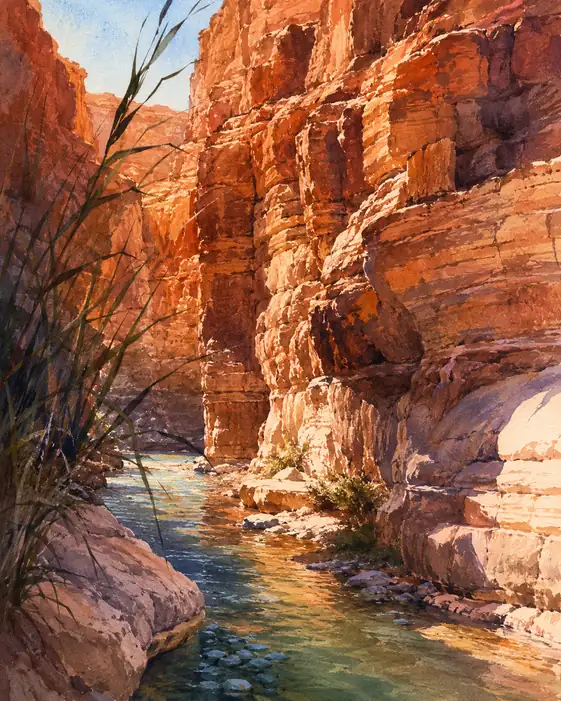 Whispers of the Sunlit Gorge
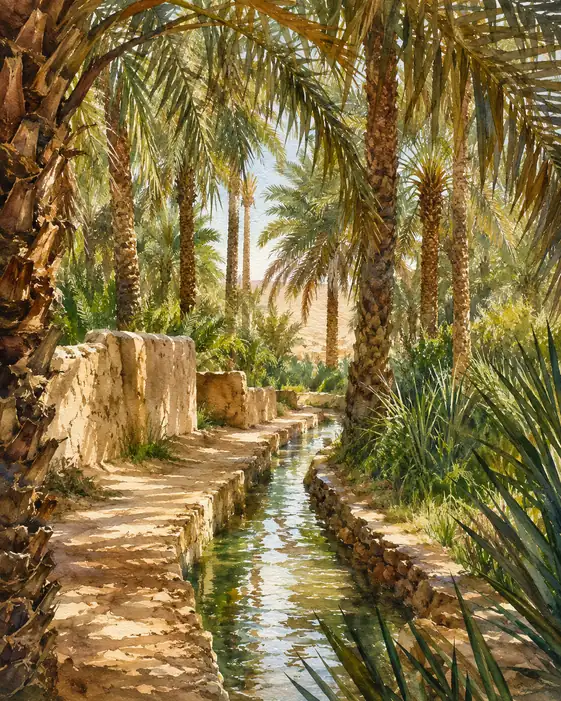 A Prayer Carried by the Cool Waters
Similar Artworks
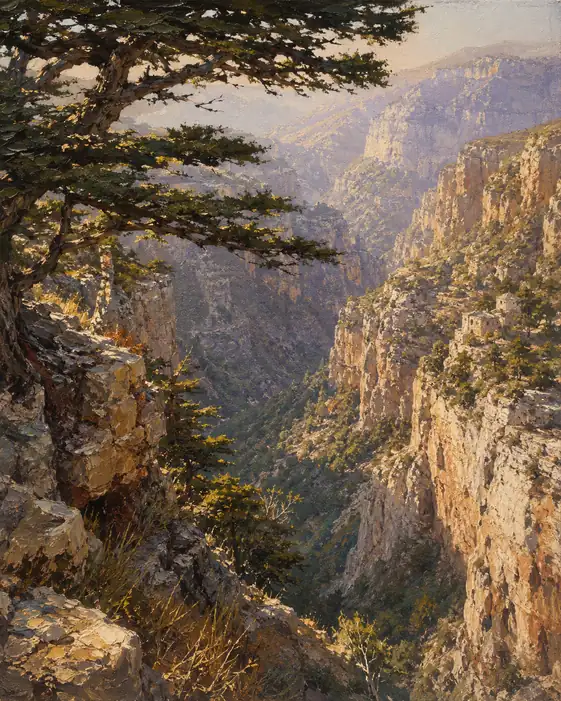 Sanctuary in the Ravine's Embrace
 The Silent Watchers: A Village in the Sun
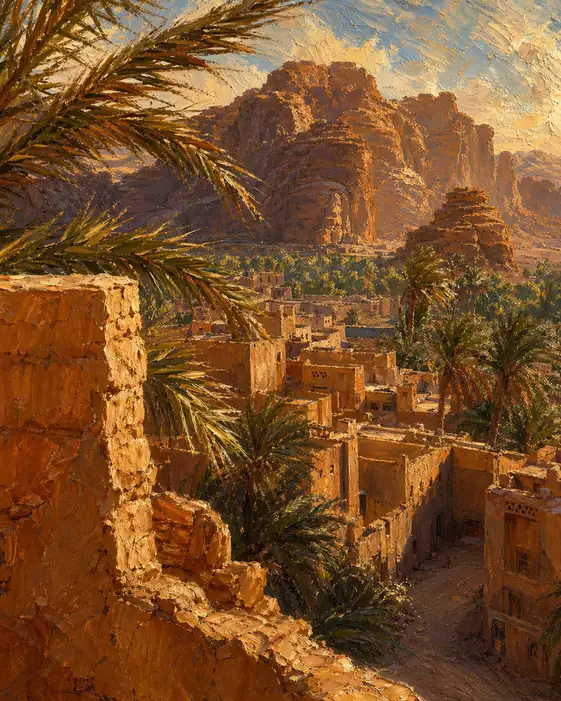 The Breath of the Oasis: A Golden Stronghold
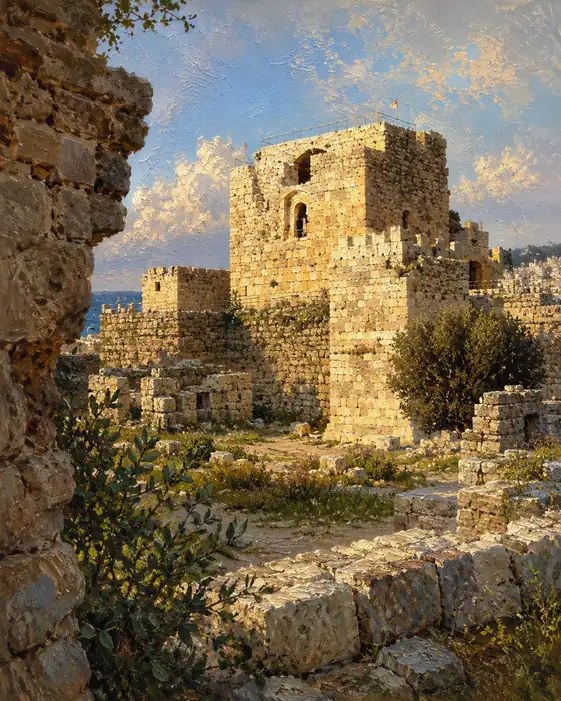 Where the Stone Remembers the Sea
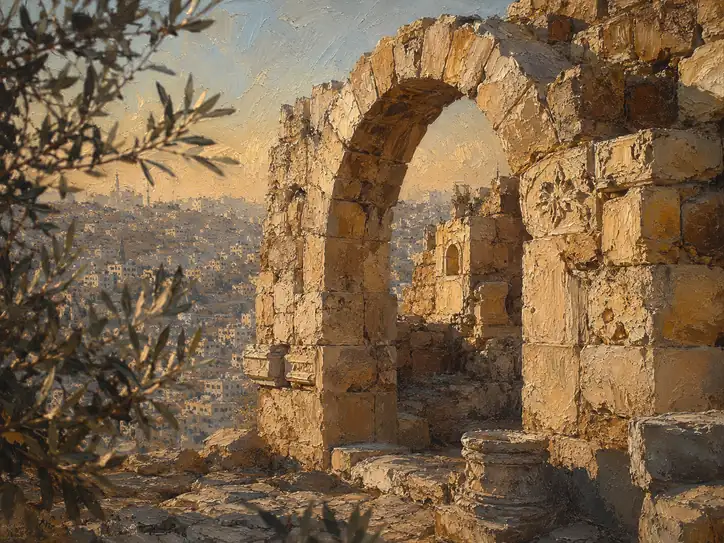 Legacy of Light: The Arch overlooking the Eternal City
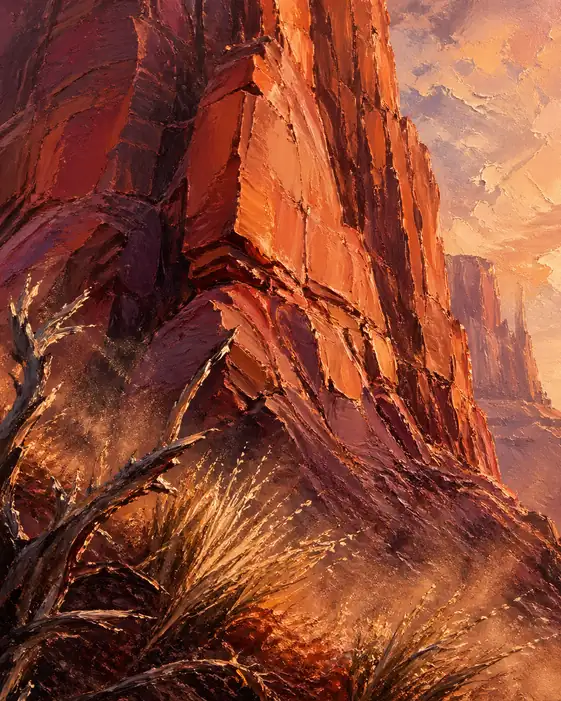 The Weight of Thousand Sunsets
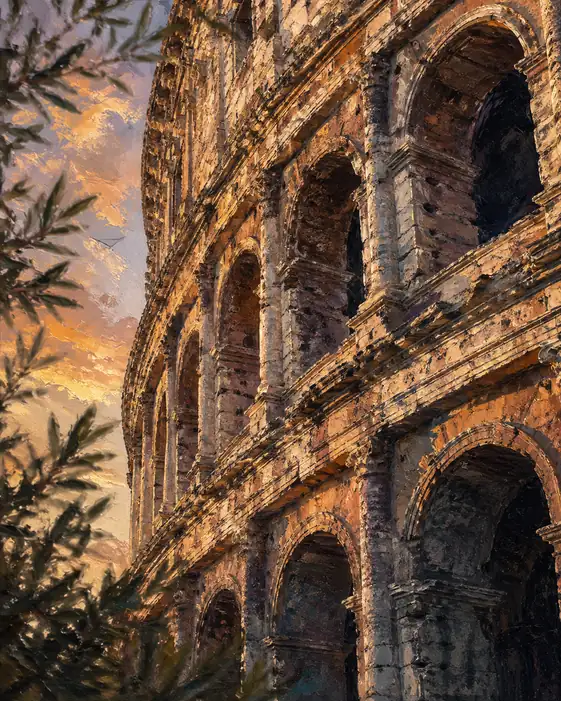 Stone of the Ages, Light of the Moment
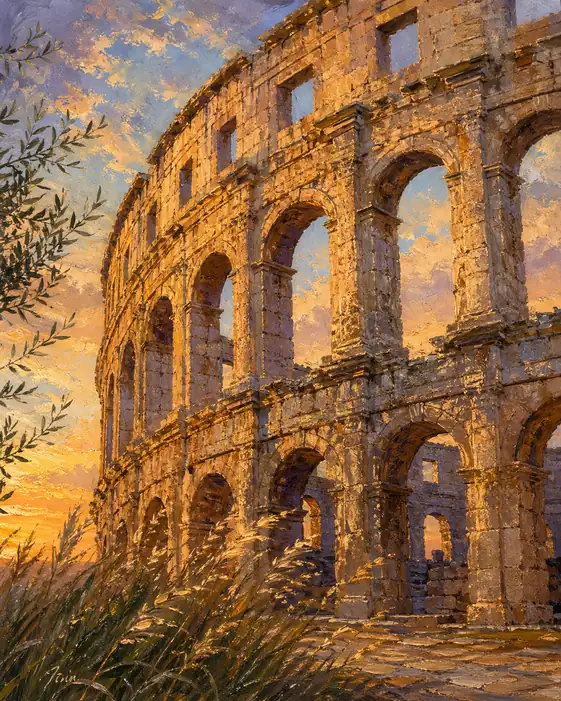 Echoes of Empire in the Golden Hour
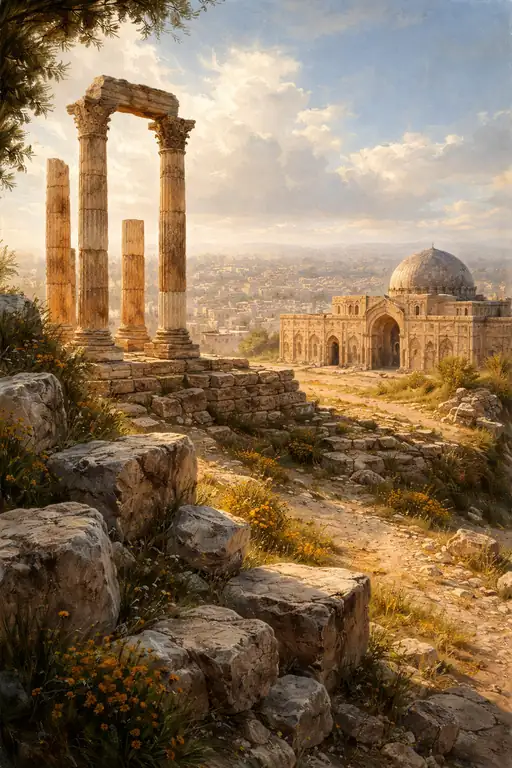 Golden Hour Over Majestic Ancient Ruins
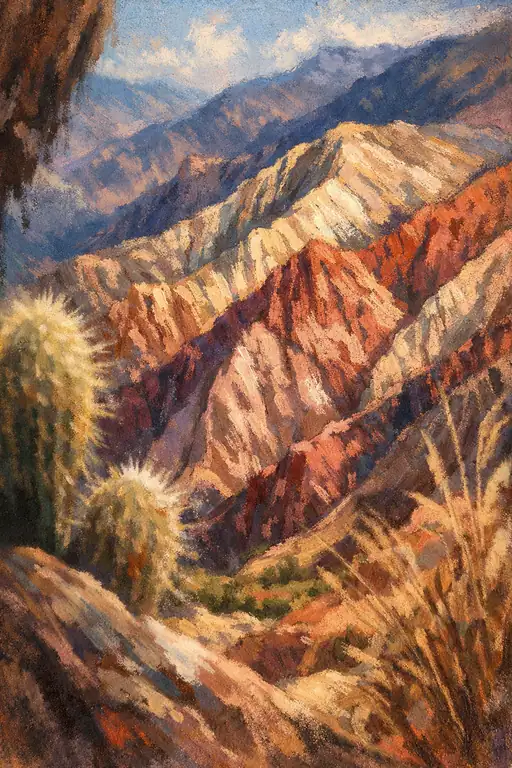 Canyon of Enduring Power: Cacti Flourishing in the Desert's Golden Light