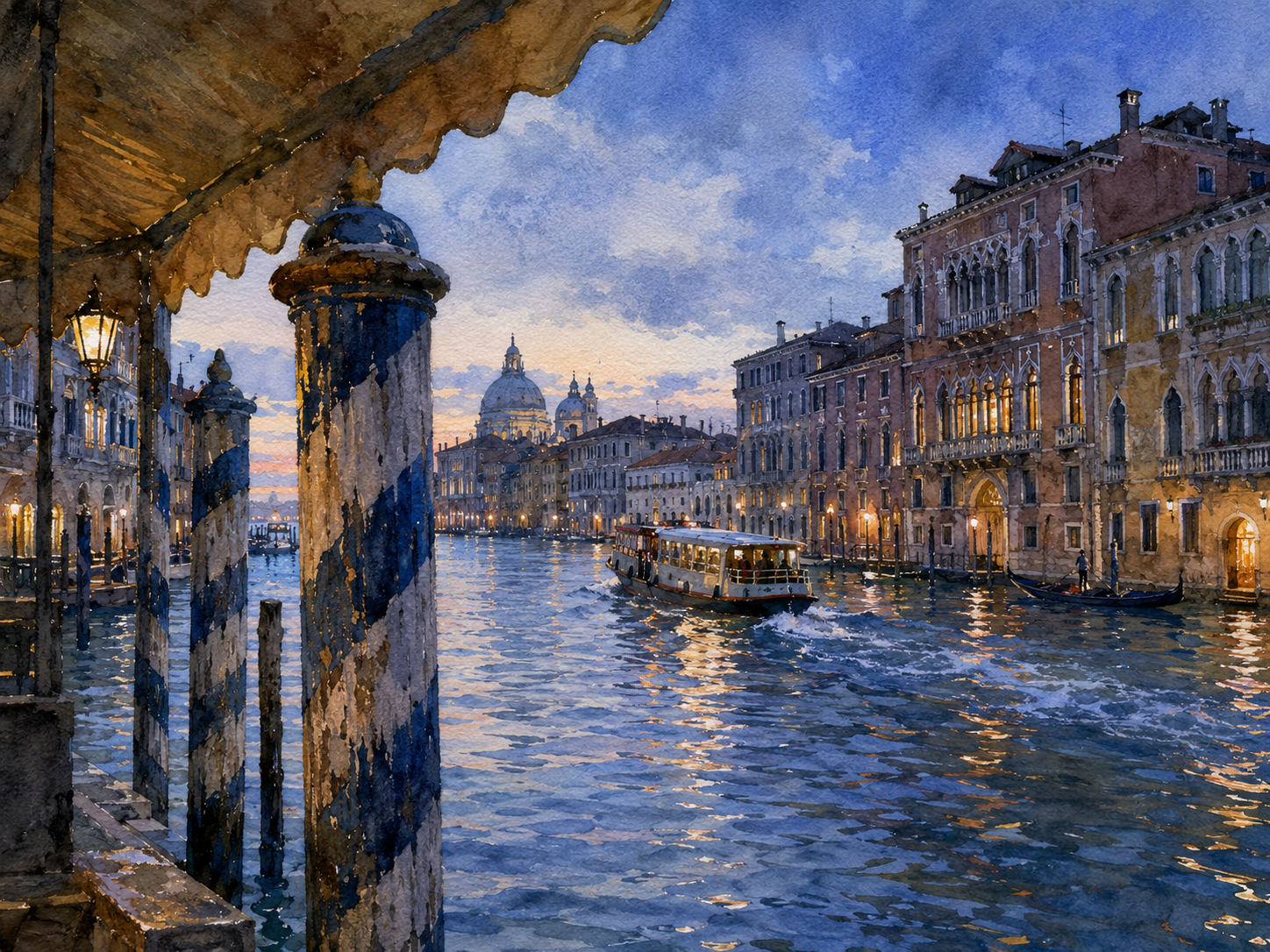
Whispers of the Blue Hour on the Grand Canal
Critique
1. Introduction This watercolor painting presents a serene evening scene of the Grand Canal in Venice, capturing the transitional light of dusk. The composition is framed by traditional striped mooring poles in the foreground, leading the eye toward the distant architectural landmarks. The work exemplifies a sophisticated blend of architectural precision and the fluid, transparent qualities inherent to the watercolor medium. Through a careful balance of warm and cool tones, the artist evokes a specific atmospheric moment that defines the city's unique maritime character. 2. Description The artwork features a wide waterway populated by a water bus and a gondola, with historic Venetian palazzos lining the right side of the frame. In the far distance, the iconic dome of Santa Maria della Salute is silhouetted against a sky filled with soft, twilight clouds. The foreground is dominated by large, weathered mooring poles with blue and white stripes, situated under a dark canopy on the left. The buildings are illuminated by warm interior lights that create shimmering golden reflections on the rippling blue surface of the water. 3. Analysis The artist utilizes a strong linear perspective, where the receding lines of the palazzos and the water bus guide the viewer's gaze toward the focal point of the distant dome. A clear contrast exists between the solid, textural representation of the foreground poles and the ethereal, hazy rendering of the background sky. The color palette is primarily composed of deep blues and oranges, creating a complementary color harmony that enhances the luminosity of the twilight. The brushwork varies from precise, fine lines in the architectural details to broad, wet-in-wet washes in the sky and water. 4. Interpretation and Evaluation This painting successfully captures the timeless allure of Venice through a meticulous technical execution and a keen sense of atmosphere. The high level of detail in the palace facades demonstrates remarkable control over the medium, while the light effects show a deep understanding of color theory. The choice of a low-angle viewpoint creates an immersive experience, making the viewer feel as though they are standing on a pier overlooking the canal. The composition is well-balanced, and the use of the mooring poles as a framing device adds depth and structural stability to the scene. 5. Conclusion The initial impression of a picturesque tourist scene evolves into an appreciation for the complex layering of light and texture upon closer inspection. The artwork serves as a testament to the artist's ability to translate a familiar landscape into a poetic visual narrative through the delicate nuances of watercolor. Ultimately, the piece stands as a refined evocative study of light, water, and history, successfully merging realistic depiction with atmospheric expression.
Same Subcategory
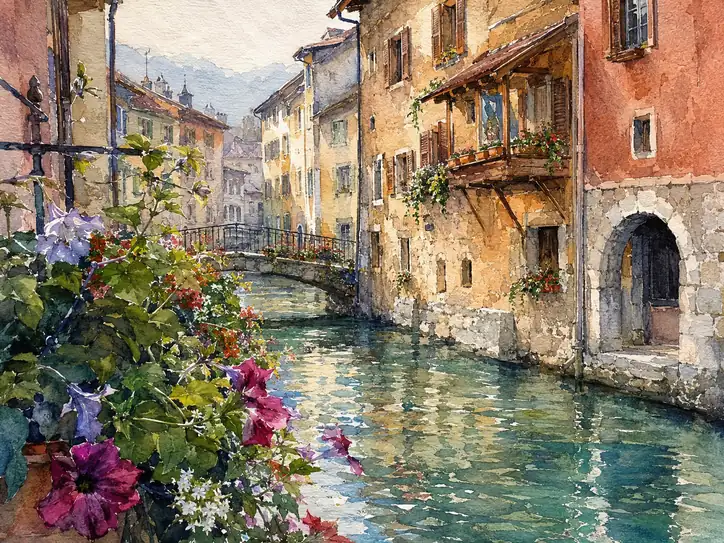 Whispers from a Sun-Drenched Canal
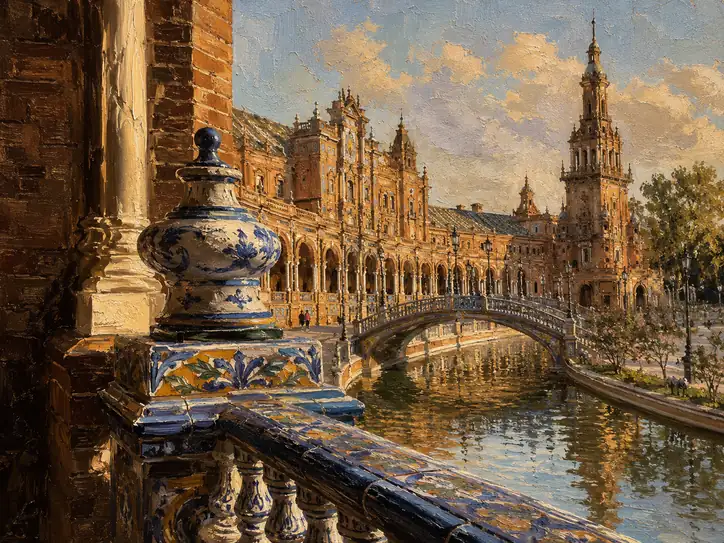 Echoes of a Sun-Drenched Seville
Similar Artworks
 Golden Sunset over the Grand Canal
 The Golden Pulse of the Grand Canal
 Twilight Serenade on the Grand Canal
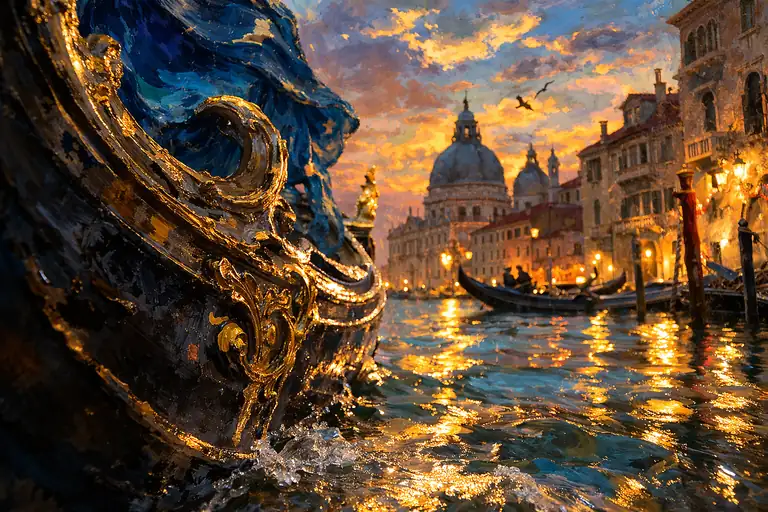 Golden Hour on the Grand Canal
 Luminous Whispers on the Grand Canal
 Golden Echoes of the Grand Canal
 Sunlit Memories of a Floating City
 Canal of Lost Dreams
 Dusk Whispers to the Rippling Canal
 A Golden Flow of the Evening