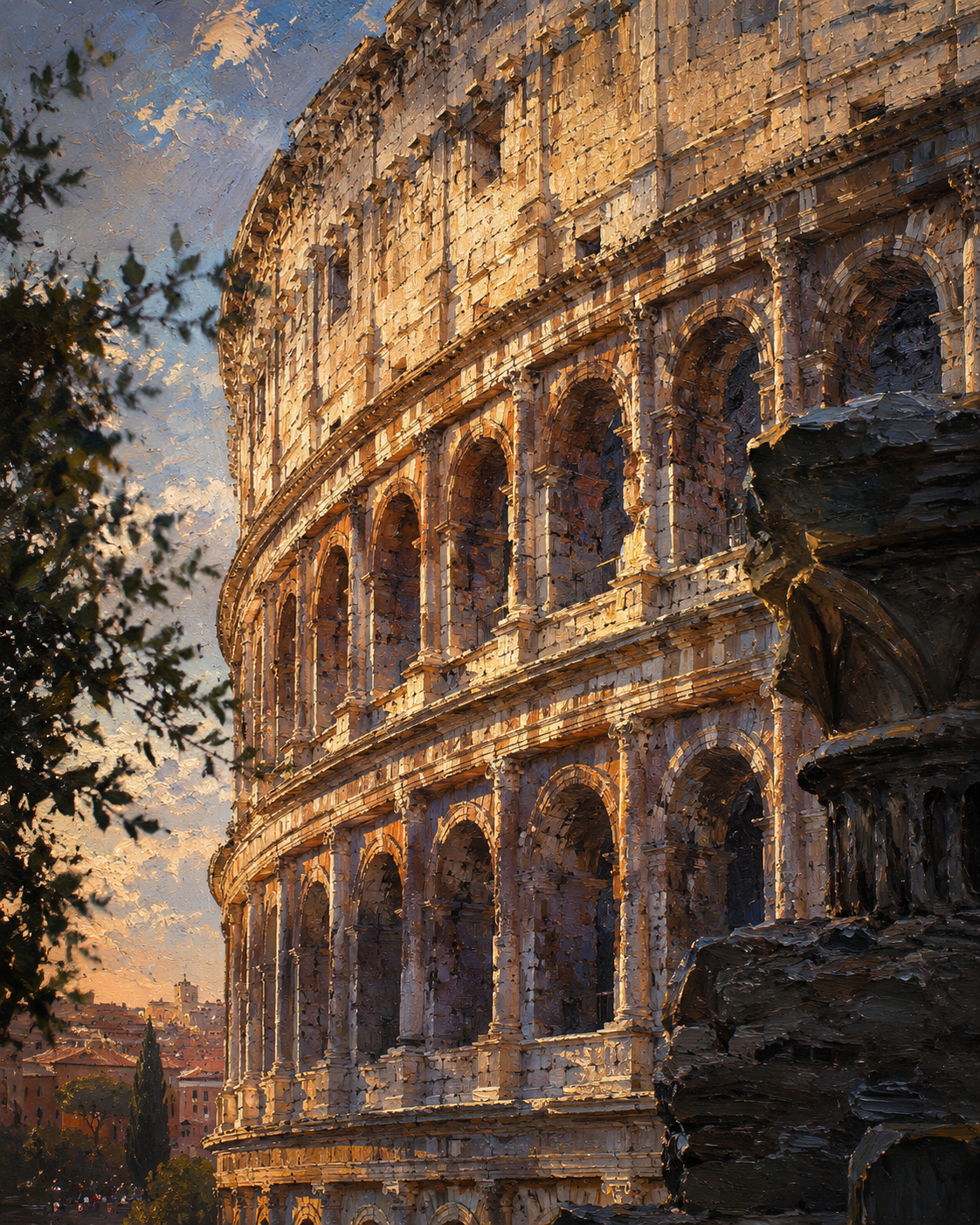
The Stone That Remembers the Sun
Critique
1. Introduction This oil painting presents a dramatic and highly textured close-up of the Roman Colosseum, bathed in the warm, golden light of a setting sun. The artist employs a low-angle perspective that emphasizes the monumental scale of the ancient amphitheater, with its iconic tiers of arches curving majestically across the frame. A dark, sculptural element in the immediate right foreground and delicate tree branches on the left provide a sense of depth and frame the central subject. The work captures the enduring grandeur of Roman architecture through a bold, expressive style. 2. Description The facade of the Colosseum is rendered with heavy impasto, creating a tactile surface that mimics the weathered travertine stone. Each archway is defined by deep shadows that contrast sharply with the sun-drenched outer walls, which glow in shades of ochre and burnt sienna. In the lower left, a glimpse of the modern city of Rome can be seen, with its rooftops and a solitary cypress tree under a sky that transitions from pale orange to deep twilight blue. The foreground structure on the right is almost silhouetted, its complex, ruined form adding a layer of historical mystery to the scene. 3. Analysis The core of the work lies in its exceptional use of texture and light. The thick application of paint, likely using a palette knife, gives the architecture a physical, three-dimensional presence. The composition is dynamic, using the sweeping curves of the amphitheater to lead the eye through the architectural layers. Light is used as a narrative tool, highlighting the textures of the stone while leaves the interior of the arches in mysterious darkness. The contrast between the rugged, textured monument and the soft, mottled clouds in the sky creates a balanced and visually engaging surface. 4. Interpretation and Evaluation The painting successfully conveys the sense of awe and timelessness associated with one of the world's most famous landmarks. The technical mastery of the impasto technique is particularly noteworthy, as it moves the work beyond mere representation into a more visceral, sensory experience of the stone's age and weight. While the subject is familiar, the artist's bold execution and the dramatic choice of lighting offer a fresh and powerful perspective. The overall evaluation is very high, as the piece harmonizes structural solidity with an energetic and modern painterly approach. 5. Conclusion This architectural landscape is a masterful tribute to classical antiquity, captured with a modern sensibility that celebrates the material quality of oil paint. The initial impression of overwhelming scale is reinforced by the intricate textures and the sophisticated play of light and shadow. It stands as a compelling example of how a well-known historical site can be reimagined through a lens of expressive abstraction and technical rigor. The final result is a work that is as enduring and powerful as the monument it depicts, leaving a lasting impression of Roman majesty.
Same Subcategory
Similar Artworks
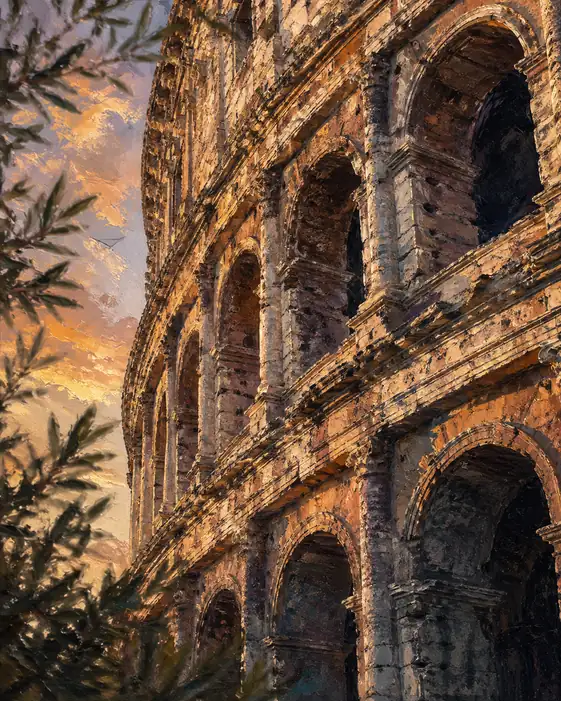 Stone of the Ages, Light of the Moment
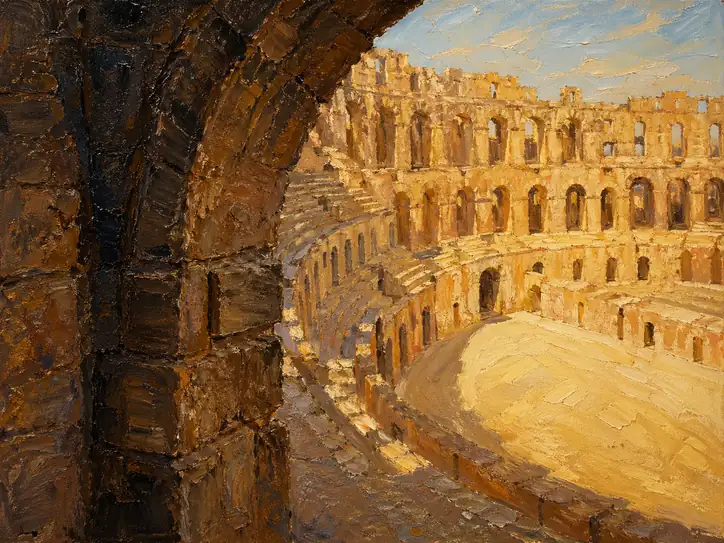 A Requiem of Light for Eternal Stone
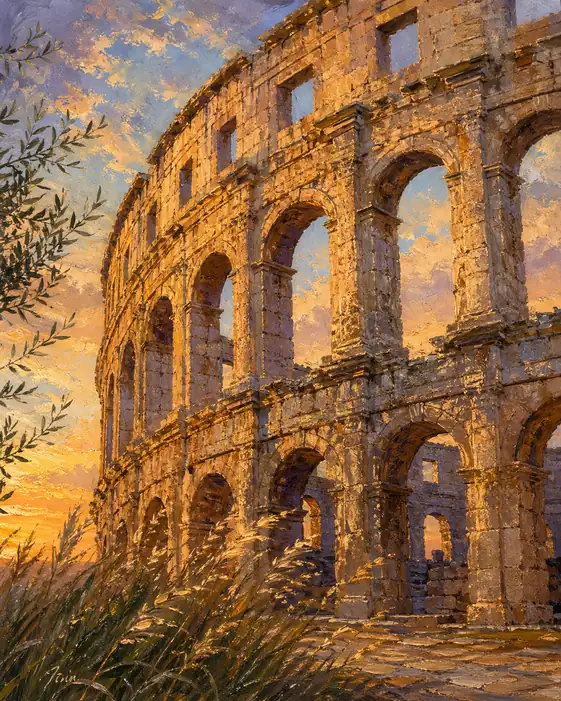 Echoes of Empire in the Golden Hour
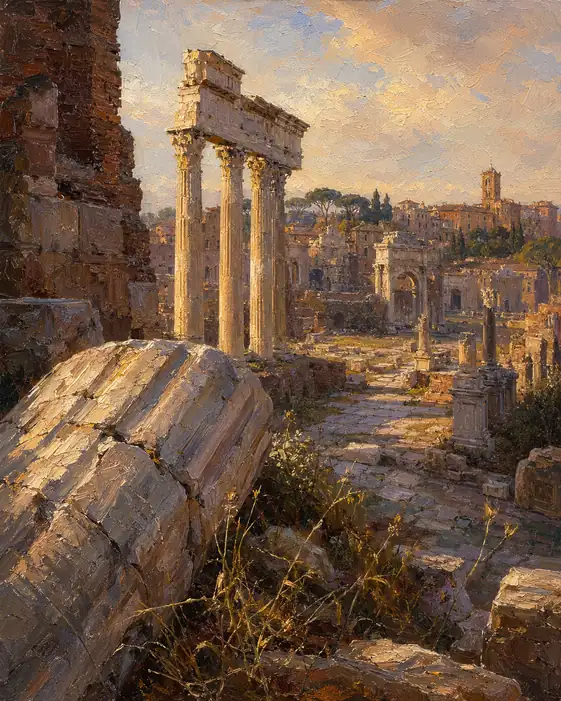 Where Time Rests Its Weary Head
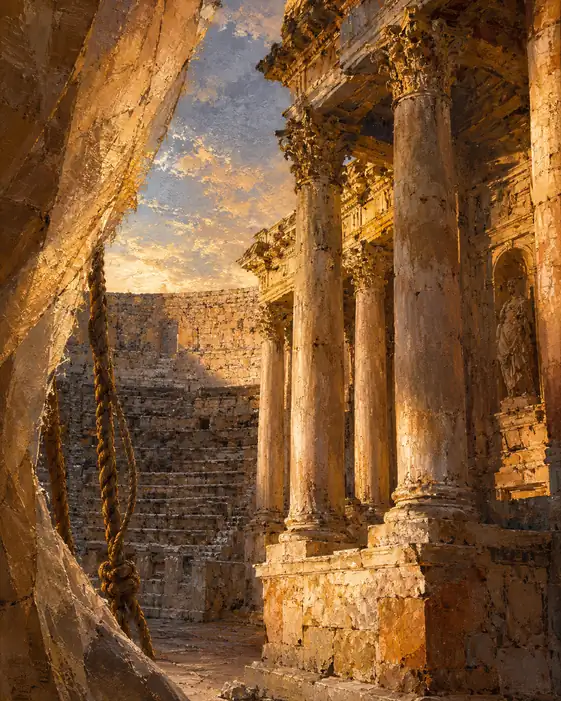 Echoes of the Eternal Theater
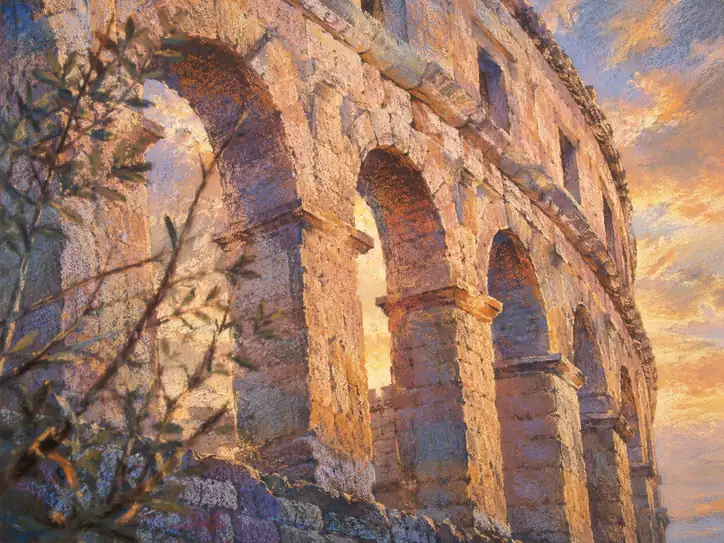 Gold Spilled on Ancient Stone
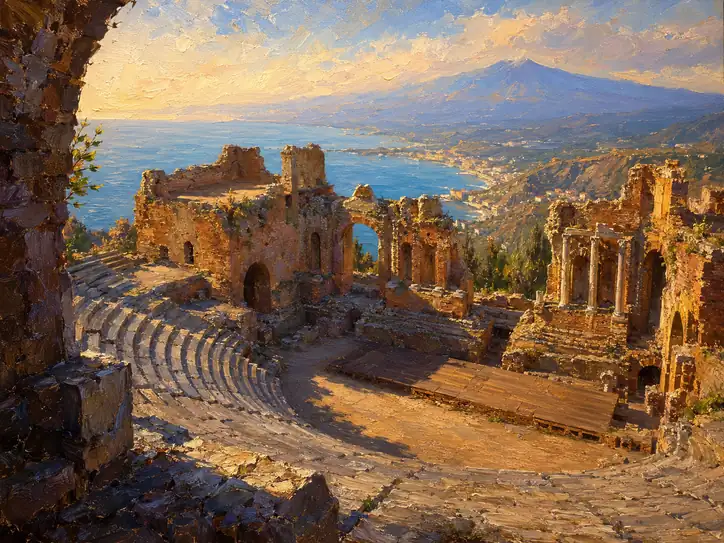 Taormina: The Golden Stage of Antiquity
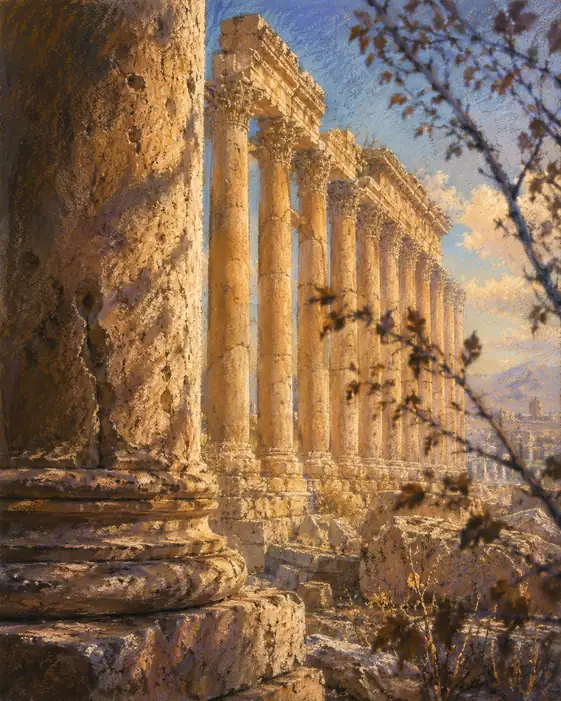 Whispers of the Eternal Sun
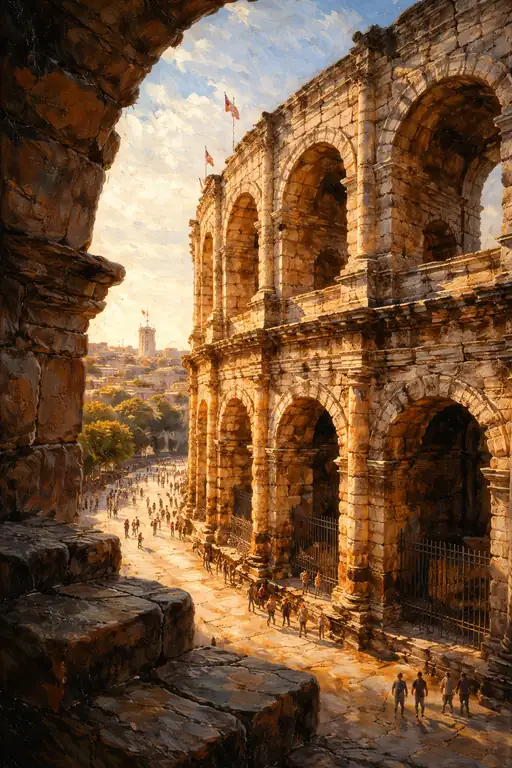 Echoes of Empire at Sunset
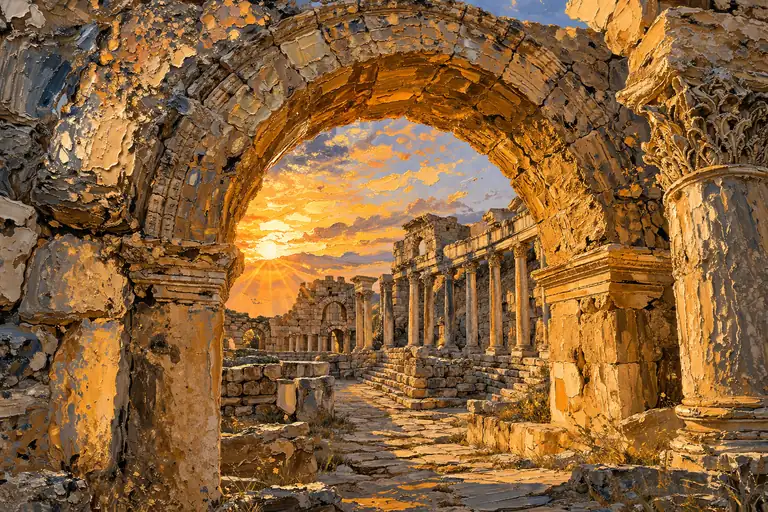 Eternal Sun Through Ancient Arches