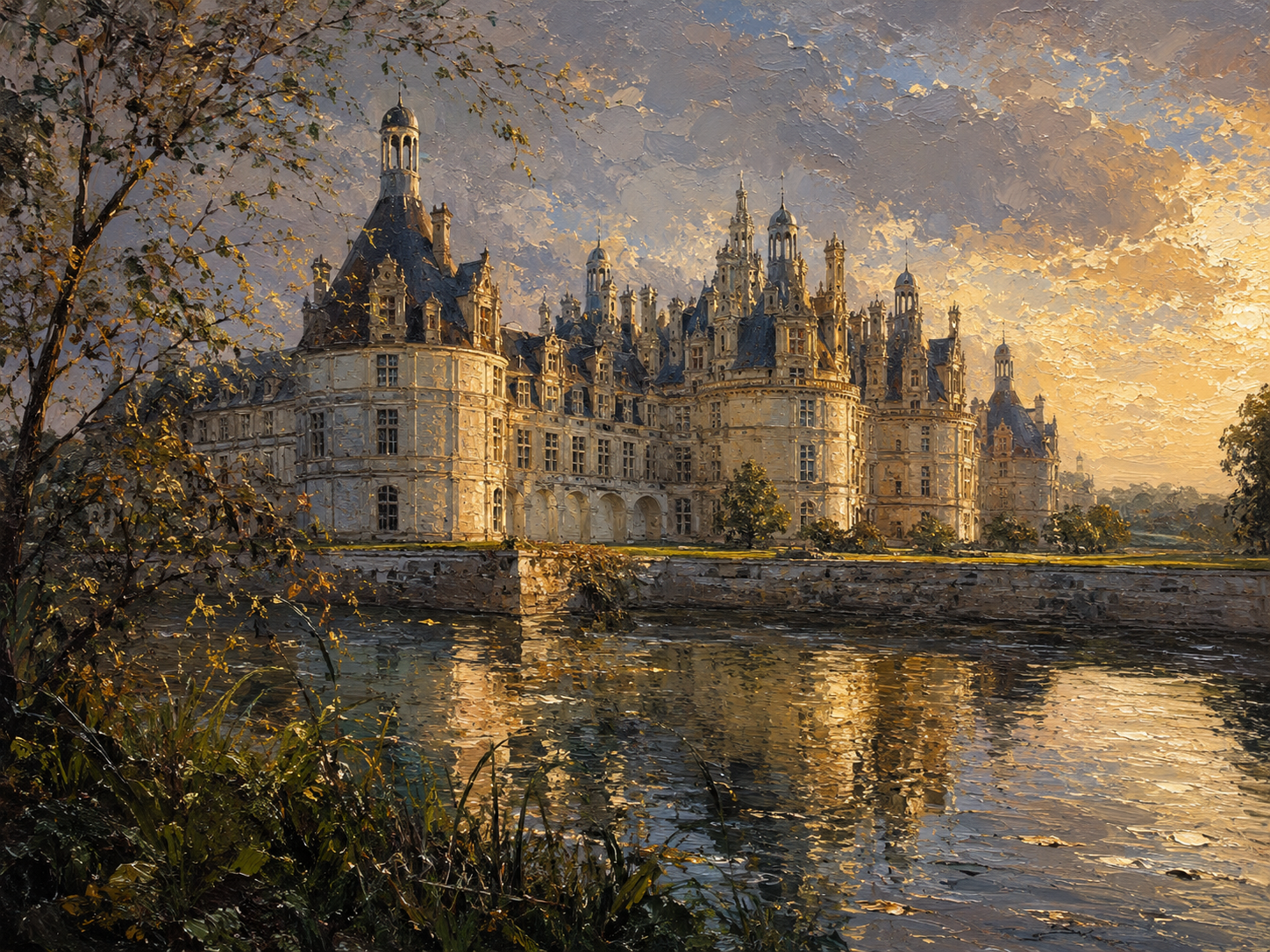
Citadel of the Eternal Sunset
Critique
1. Introduction This architectural oil painting depicts a grand, multi-towered castle standing majestically beside a tranquil body of water. The work is characterized by a strong emphasis on light and a highly textured surface, suggesting a contemporary approach to classical landscape subjects. It captures a moment of atmospheric brilliance, likely during the golden hour of sunset or sunrise. 2. Description The central subject is a complex structure featuring numerous spires, domed towers, and intricate stonework that resembles French Renaissance architecture. In the foreground, dark foliage and aquatic plants frame the left side, while the lower half of the composition is occupied by the reflective surface of the water. The sky above is filled with thick, swirling clouds that catch the intense golden light from the right. 3. Analysis The artist employs a rich impasto technique, where heavy layers of paint create a tactile, three-dimensional quality across the canvas. The color palette is dominated by warm ochres, golds, and creamy whites, which are balanced by deep blues and cool shadows in the building's recesses. The reflection in the water is rendered with broken, horizontal strokes that effectively mimic the movement of light on a rippling surface. 4. Interpretation and Evaluation This piece successfully bridges the gap between meticulous architectural detail and expressive, emotional brushwork. The use of light is not merely descriptive but serves as the primary emotional driver, evoking a sense of romanticism and historical grandeur. The technical execution of the impasto sky is particularly noteworthy, as it provides a dynamic energy that contrasts with the static permanence of the stone castle. 5. Conclusion Through the masterful application of texture and a keen understanding of luminosity, the painting elevates a traditional scenic view into a vibrant sensory experience. The interplay between the solid stone walls and the fluid elements of water and light leaves a lasting impression of timeless beauty. It stands as a compelling example of how classical themes can be revitalized through bold, tactile techniques.
Same Subcategory
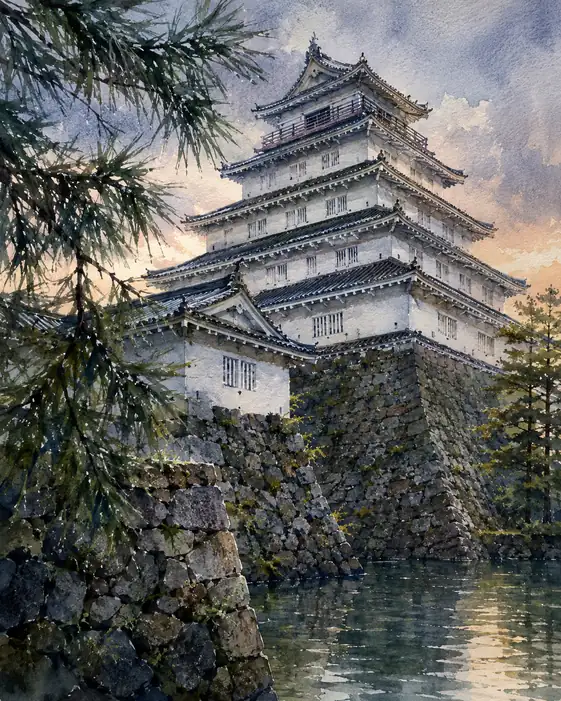 The Citadel of Sunsets
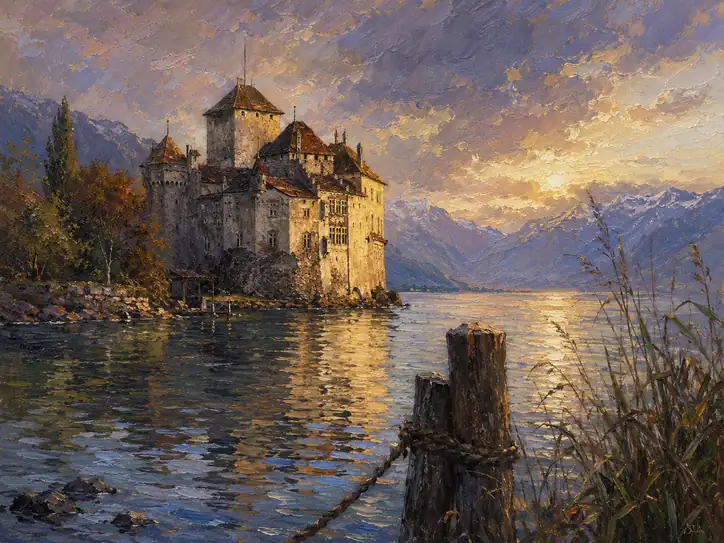 The Golden Bastion on the Glassy Deep
Similar Artworks
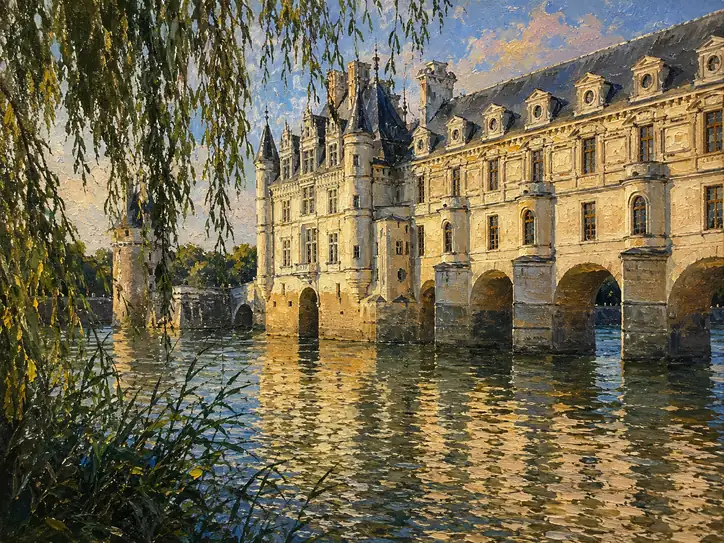 Grace Bound by the Gilded River
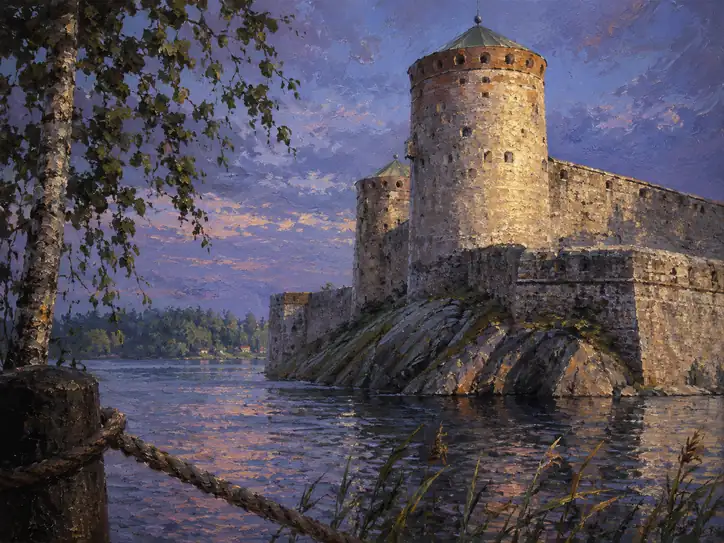 Sentinel of the Eternal Afterglow
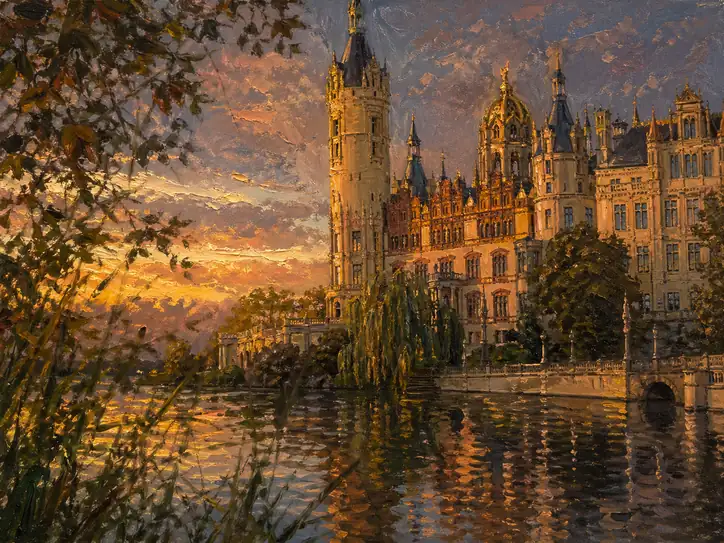 Echoes of a Golden Era
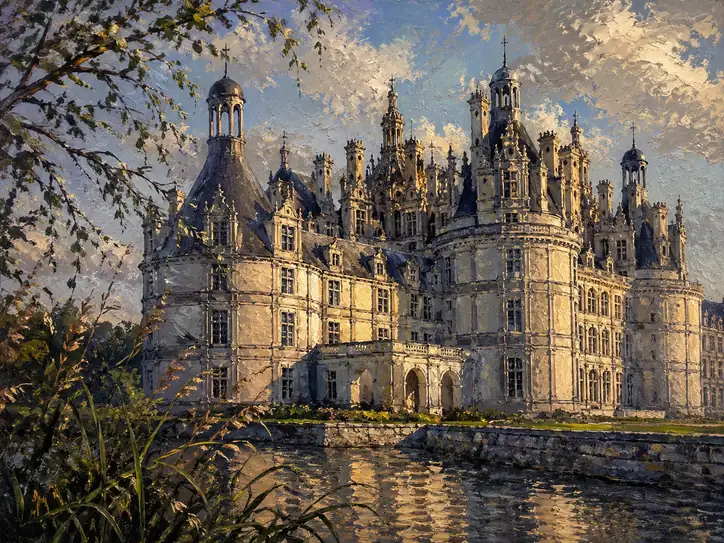 Mirror of a Vanished Romance
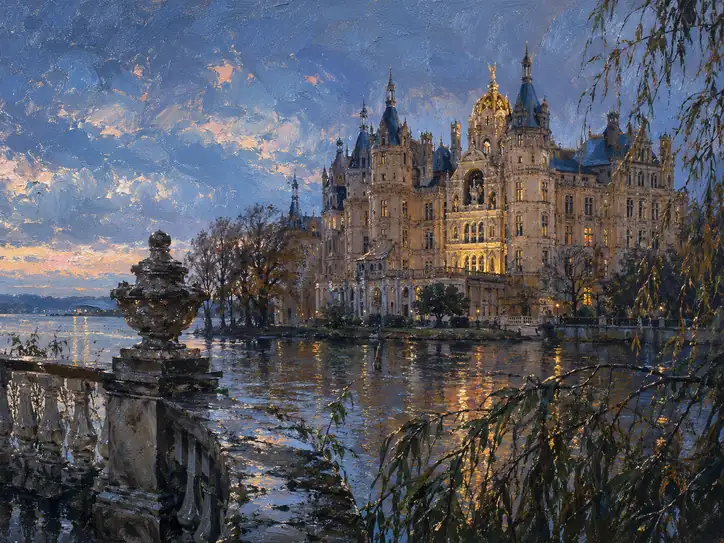 Eternal Reflection
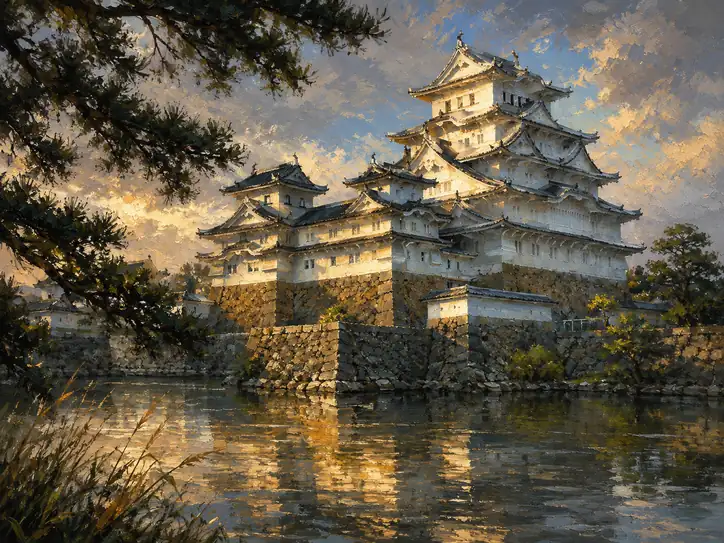 Eternal Gaze in the Amber Sunset
 Twilight Embrace of the Stones
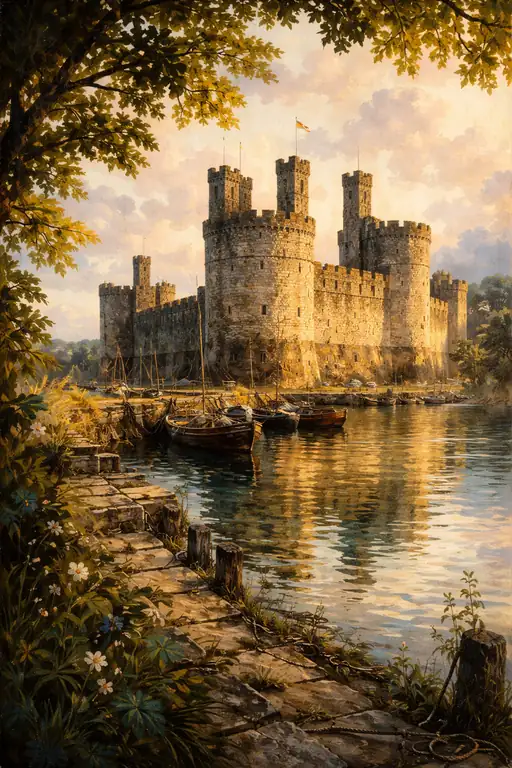 A Golden Lullaby for the Old Fortress
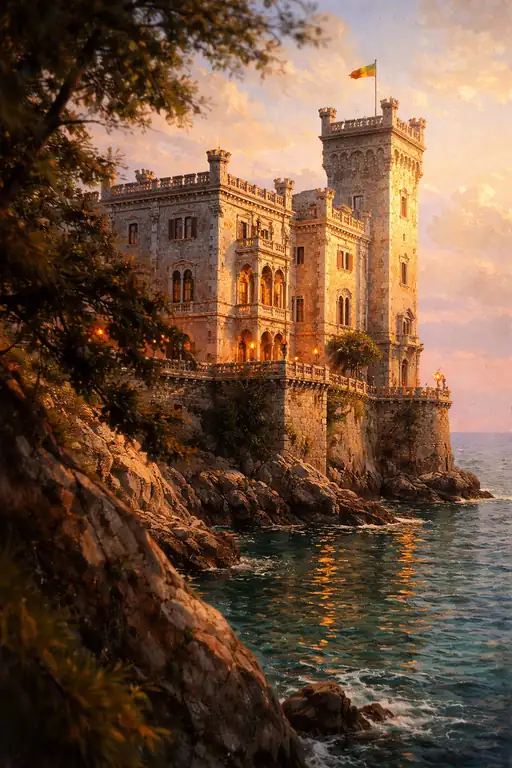 The White Guardian of the Azure Horizon
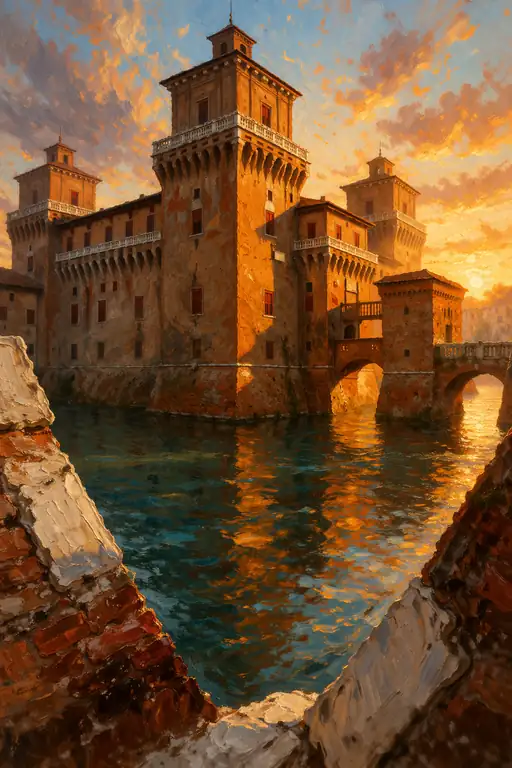 Golden Echoes on the Fortress Moat