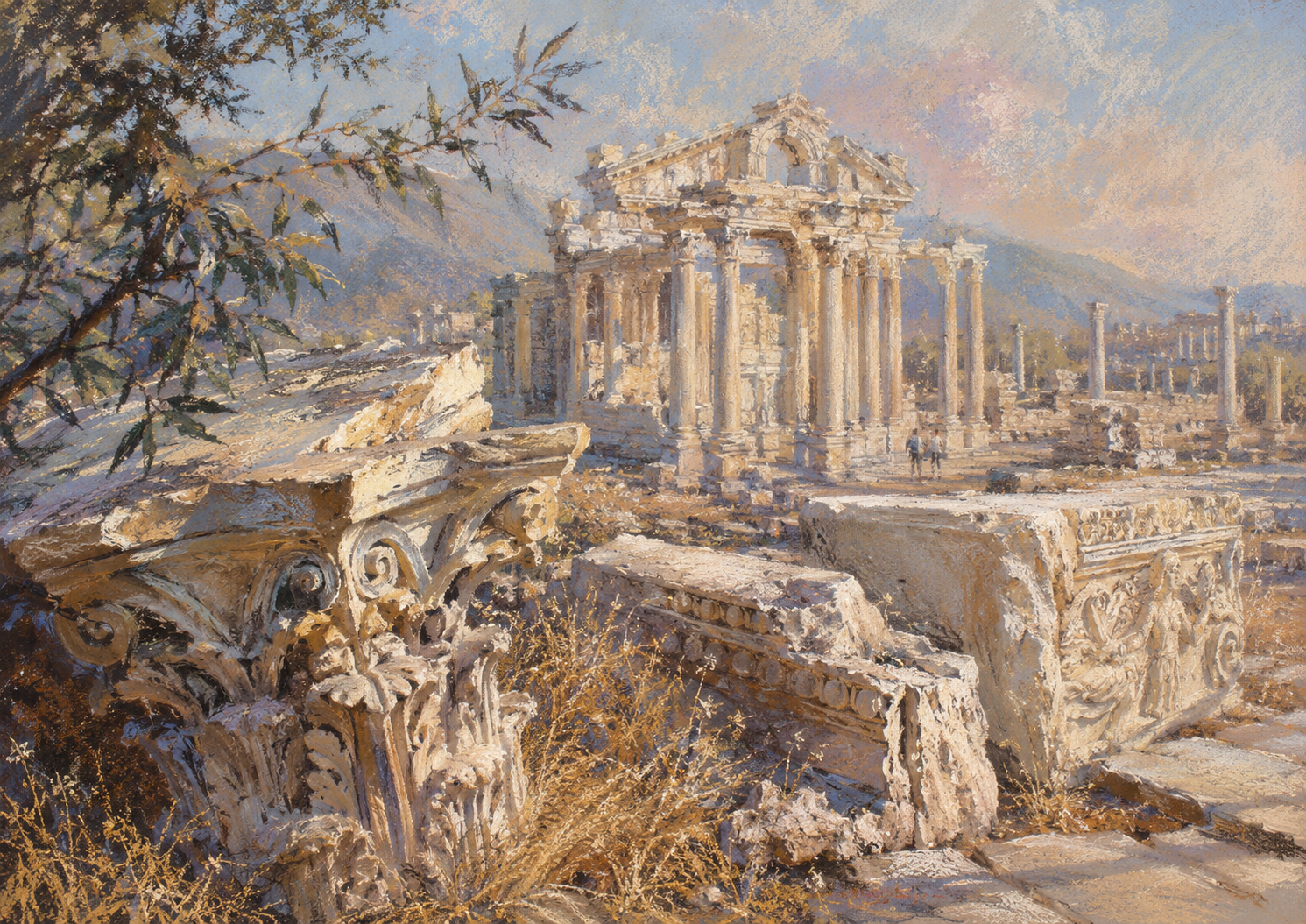
Echoes in the Dust of Time
Critique
1. Introduction This landscape painting depicts the poignant beauty of ancient ruins, bathed in a soft, ethereal light that suggests the passage of vast stretches of time. The work captures the skeletal remains of a classical civilization, where weathered columns and intricate carvings stand in a landscape of quiet desolation. It evokes a profound sense of nostalgia and contemplation, blending historical grandeur with the delicate transience of the natural world. 2. Description The foreground is scattered with massive fragments of antiquity, including an ornately carved Corinthian capital and a large stone block featuring bas-relief figures. In the middle ground, a more intact temple structure with a prominent arch and a row of stately columns rises against a background of misty, purple-hued mountains. Two small figures walk near the base of the ruins, emphasizing the monumental scale of the architecture. The dry, golden grass and the pale, multi-hued sky contribute to an atmosphere of heat and stillness. 3. Analysis The artist employs a delicate color palette dominated by sun-bleached whites, warm ochre, and soft beiges, offset by subtle lavender and blue tones in the shadows and sky. The application of paint is remarkably soft, almost reminiscent of pastel work, which blurs sharp edges and enhances the sense of atmospheric haze. Technically, the contrast between the sharp details of the foreground carvings and the diffused forms of the distant landscape creates a strong sense of spatial depth and focus. 4. Interpretation and Evaluation This work succeeds in transforming a historical site into a lyrical meditation on the concept of ruins. The shattered architectural elements in the immediate foreground serve as memento mori, reminding the viewer of the inevitable decay of all human endeavors. However, the standing columns and the enduring beauty of the carvings suggest a triumph of artistic spirit over time. The masterful handling of light provides a unified, dreamlike quality that elevates the scene to a state of idealized, romantic beauty. 5. Conclusion With its harmonious composition and refined sensitivity to light, the painting invites the viewer to pause and reflect on the layered narratives of history. While the initial impression is one of visual splendor, the underlying themes of permanence and change gradually reveal a deeper, more philosophical resonance. It is a masterful achievement that combines technical excellence with a profound, poetic vision of the past.
Same Subcategory
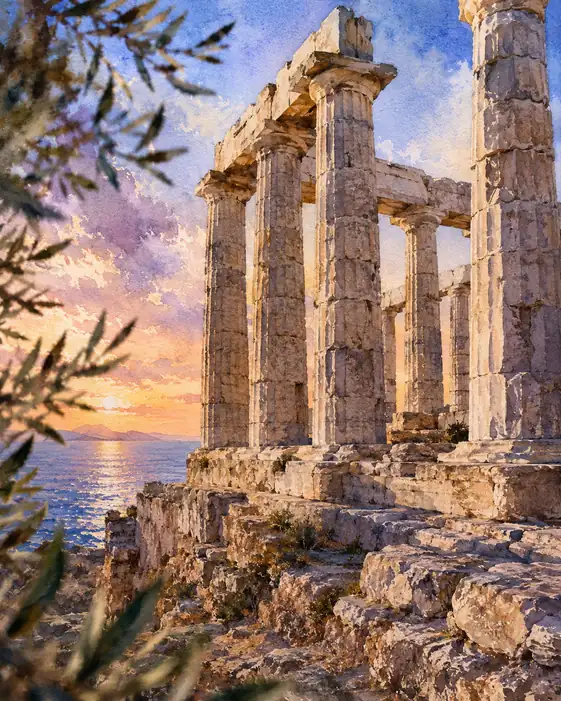 Poseidon's Last Golden Gaze
Similar Artworks
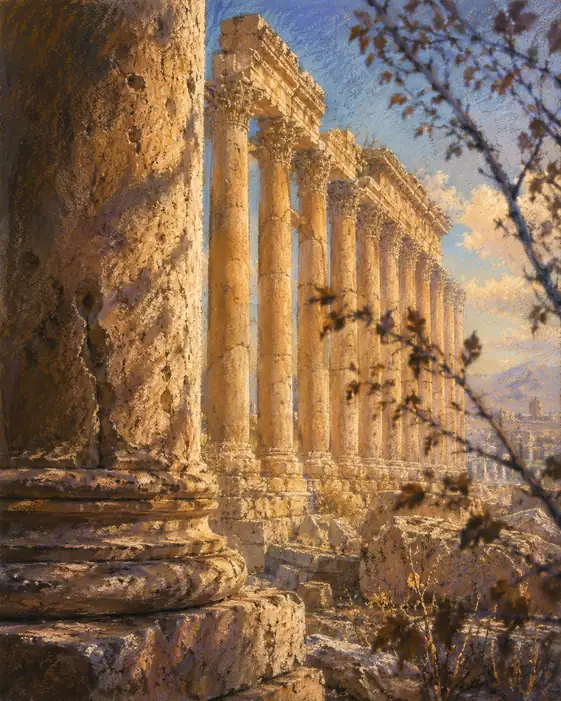 Whispers of the Eternal Sun
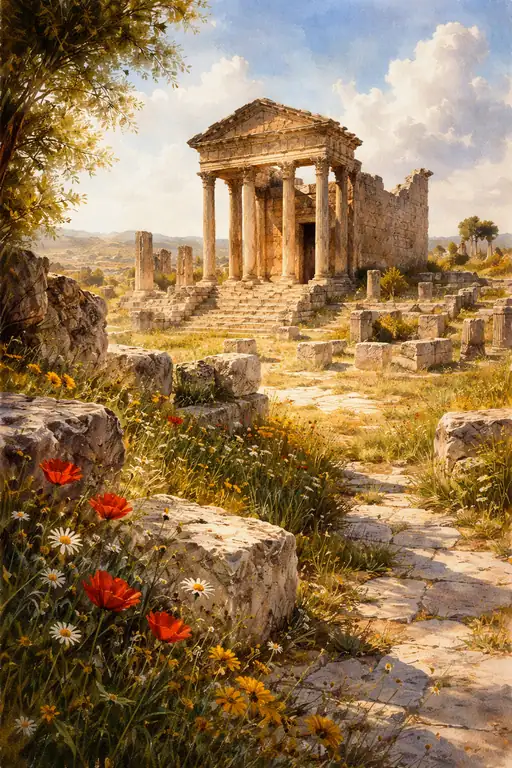 Where Time Sleeps Among the Ruins
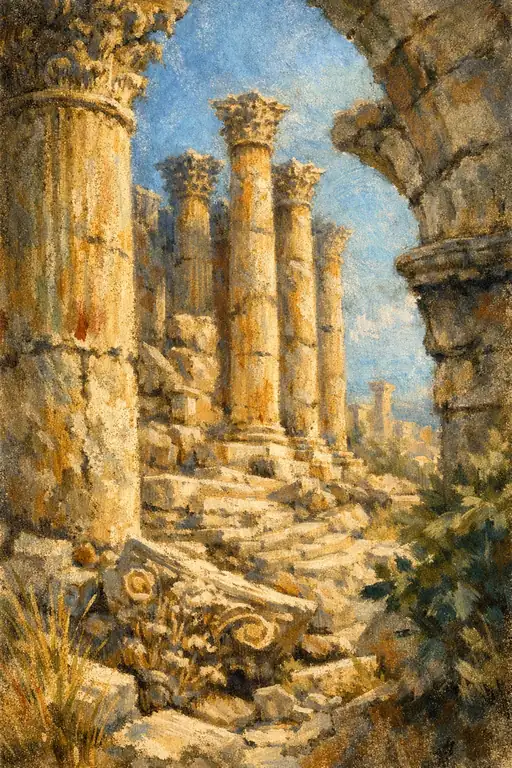 Timeless Grandeur: Weathered Corinthian Columns
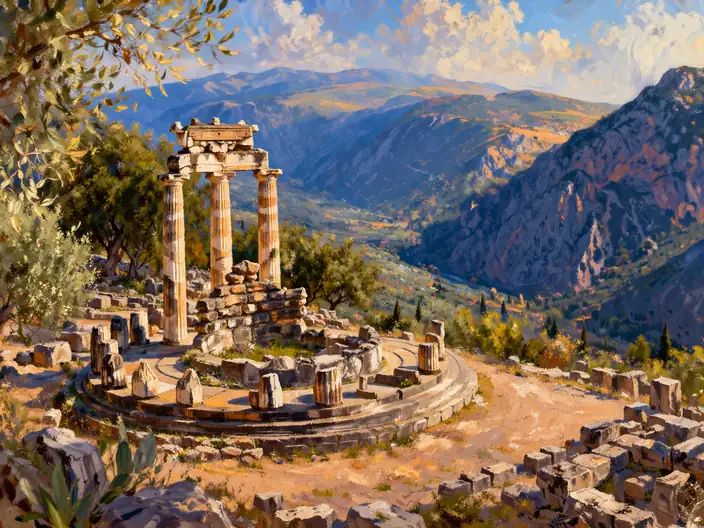 Timeless Pillars of the Mountain Sanctuary
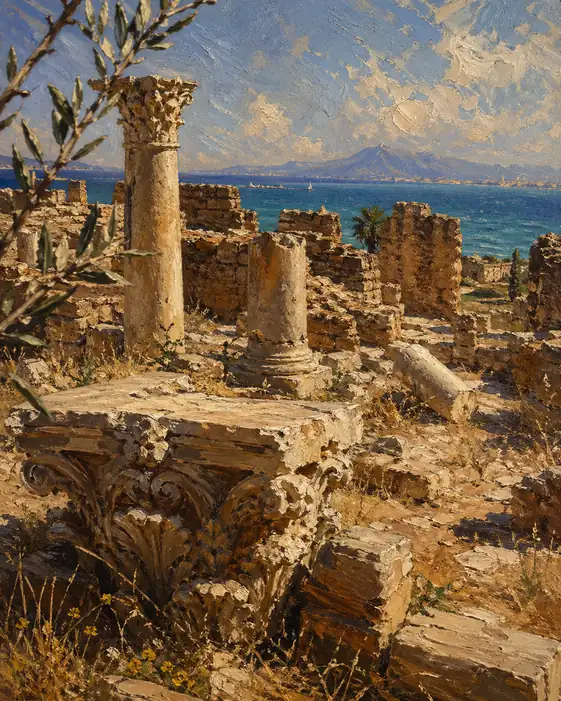 Echoes of Eternity: Where Stone and Sea Unfold
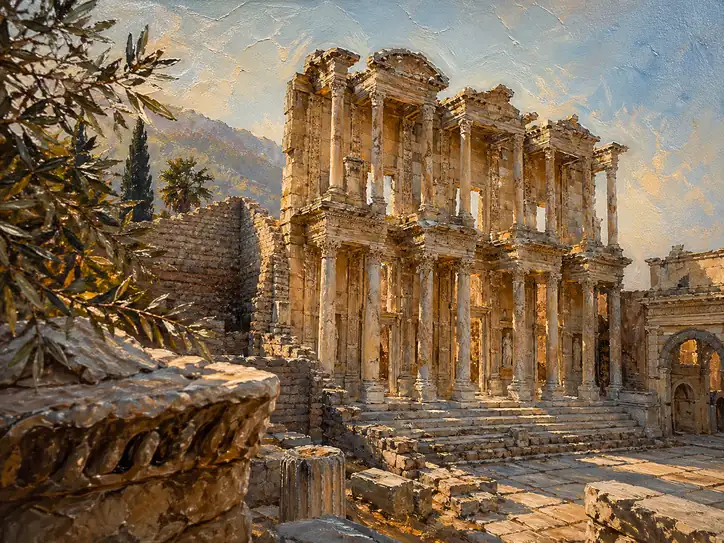 The Eternal Glow of Forgotten Wisdom
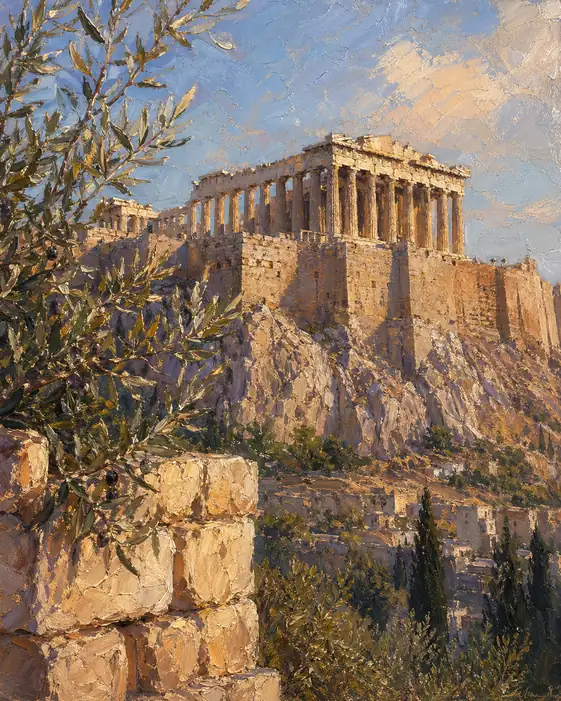 Whispers of Eternal Stone
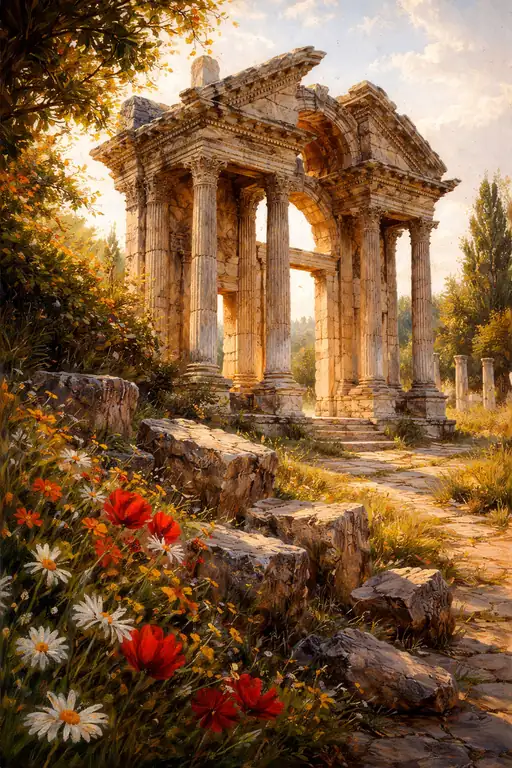 Timeless Pillars Among the Poppies
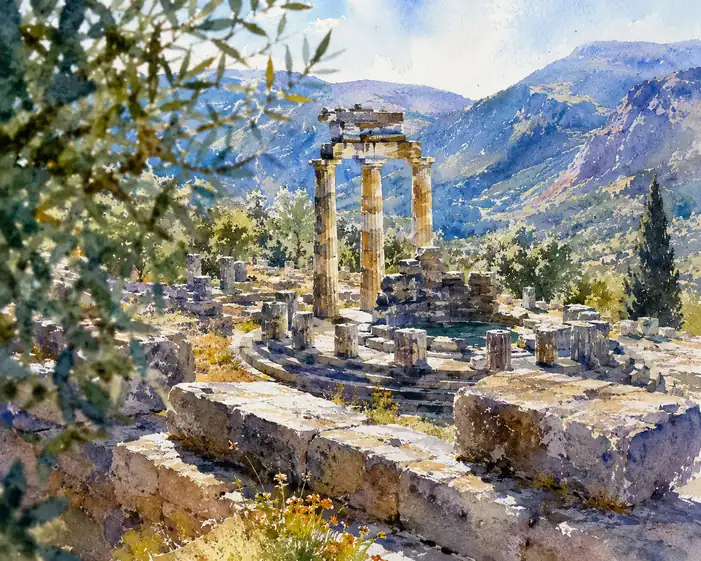 Eternity Within a Sacred Circle
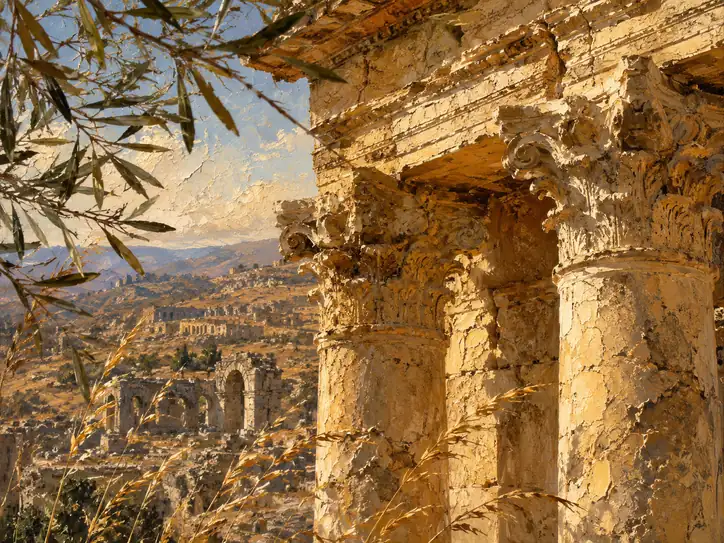 Majesty in the Dust of Time