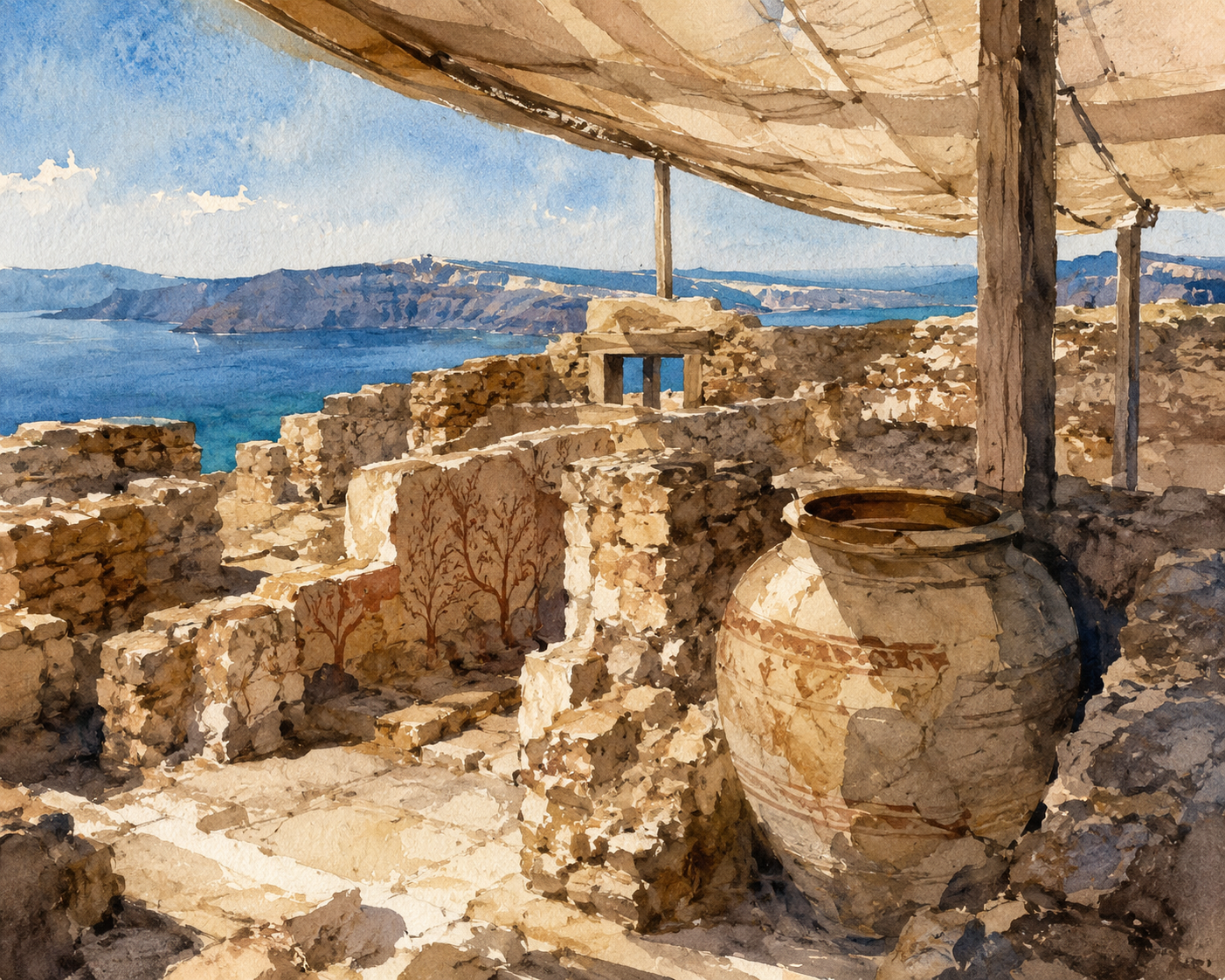
Where Time Sleeps in Blue
Critique
1. Introduction This watercolor painting presents a serene and luminous view of an archaeological excavation site overlooking a vast, crystalline sea. The composition balances the rugged, earthy textures of ancient stone ruins with the ethereal blue of the Mediterranean horizon. Captured under the bright, clear light of a coastal day, the artwork evokes a sense of timelessness and the quiet dignity of historical preservation. 2. Description The foreground is dominated by the remnants of stone walls, some of which feature delicate, sun-faded frescoes depicting stylized trees. A large, bulbous ceramic jar, known as a pithos, stands partially buried among the ruins on the right, its surface decorated with simple geometric bands. A makeshift canvas awning stretches across the top of the frame, supported by wooden posts, providing shade over the site. In the background, the deep blue sea meets a rugged coastline under a pale, cloudless sky, creating a stark contrast with the warm ochre tones of the ruins. 3. Analysis The artist demonstrates a sophisticated command of the watercolor medium, utilizing its inherent transparency to capture the brilliance of Mediterranean sunlight. The shadows are rendered with cool, layered washes that suggest the heat and intensity of the environment without sacrificing clarity. The composition uses the overarching awning as a framing device, drawing the viewer's attention toward the details of the frescoes and the pottery. The juxtaposition of the rough-hewn stone and the smooth surface of the sea creates a pleasing textural variety that enhances the overall visual interest. 4. Interpretation and Evaluation The work serves as a meditation on the intersection of human history and the enduring forces of nature. The inclusion of the frescoes and the pithos points to a sophisticated ancient culture, while the protective awning suggests the ongoing effort to understand and preserve this heritage. Technically, the painting is highly successful in its use of a high-key palette to convey a sense of atmosphere and light. The artist's ability to suggest complex textures with minimal, confident strokes is a testament to their technical proficiency and observational skill. 5. Conclusion An initial gaze at the piece reveals a beautiful coastal landscape, but a deeper inspection highlights the artist's sensitive portrayal of archaeological significance. The balance between the physical weight of the ruins and the lightness of the watercolor technique creates a compelling and evocative image. It is a masterful depiction of a site where the past and present coexist in a state of quiet, sun-drenched harmony.
Same Subcategory
 Sentinels of the Dying Light
 Where Time Rests Its Weary Head
Similar Artworks
 Golden Sun on Ancient Pillars
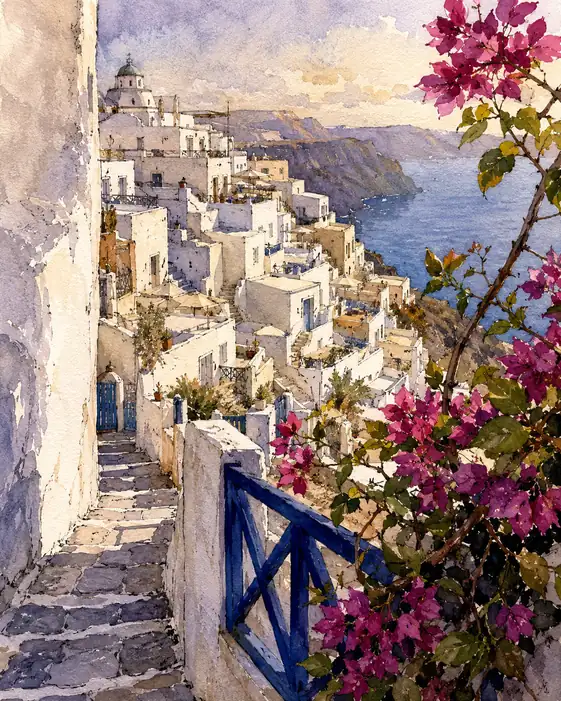 Pathway to the Aegean Soul
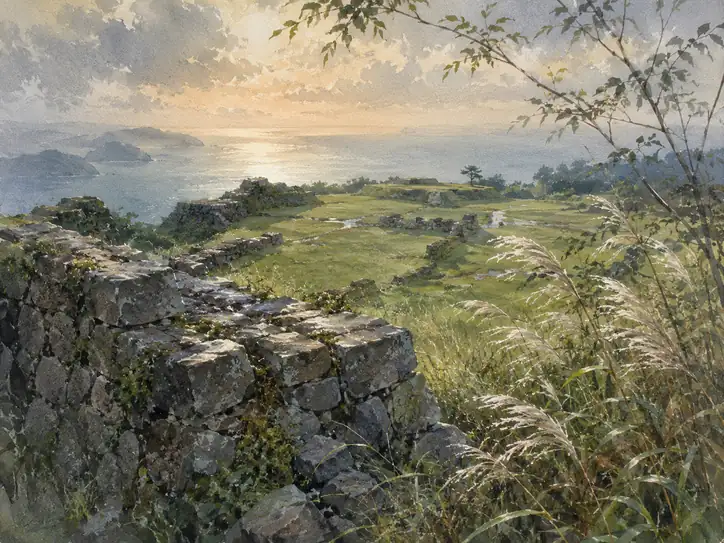 The Shore of Forgotten Dreams
 Whispers of the Sun-Drenched Grove
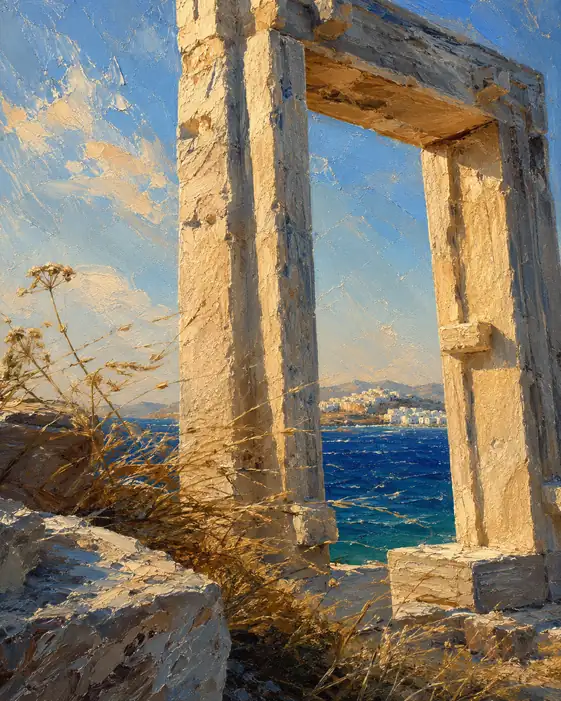 Echoes of Apollo: Gateway to the Aegean Sun
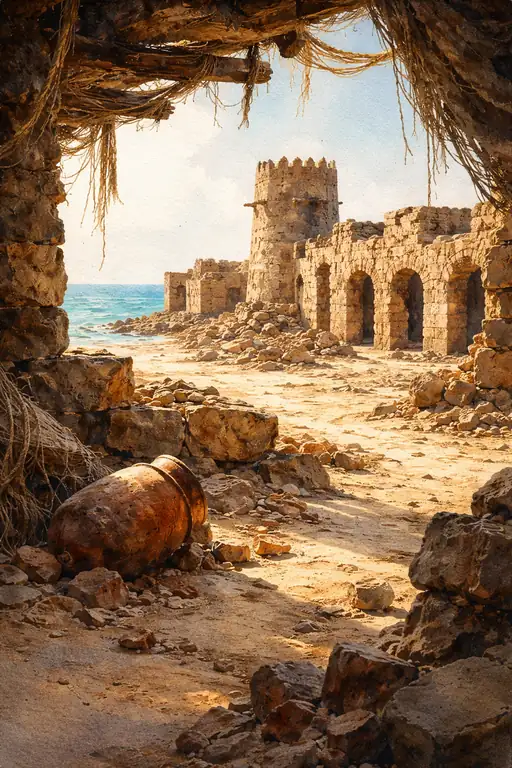 Lifeblood of the Sunlit Sands
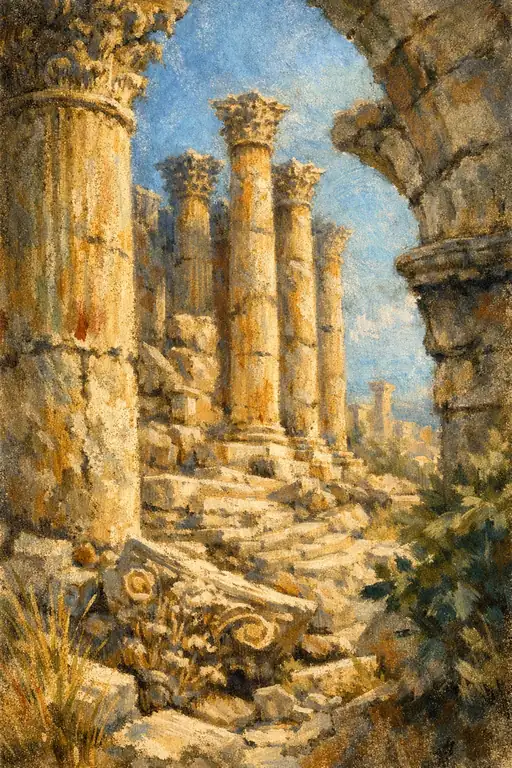 Timeless Grandeur: Weathered Corinthian Columns
 Oia's Timeless Serenity
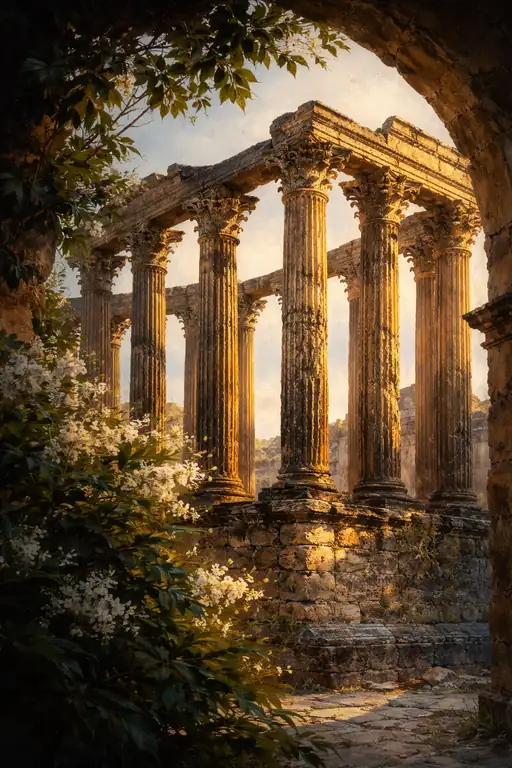 Echoes of Antiquity
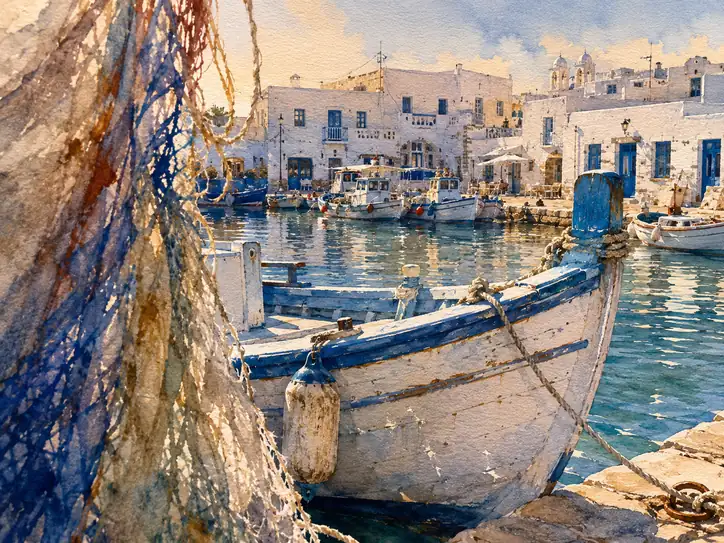 Luminous Lullaby of the White Island