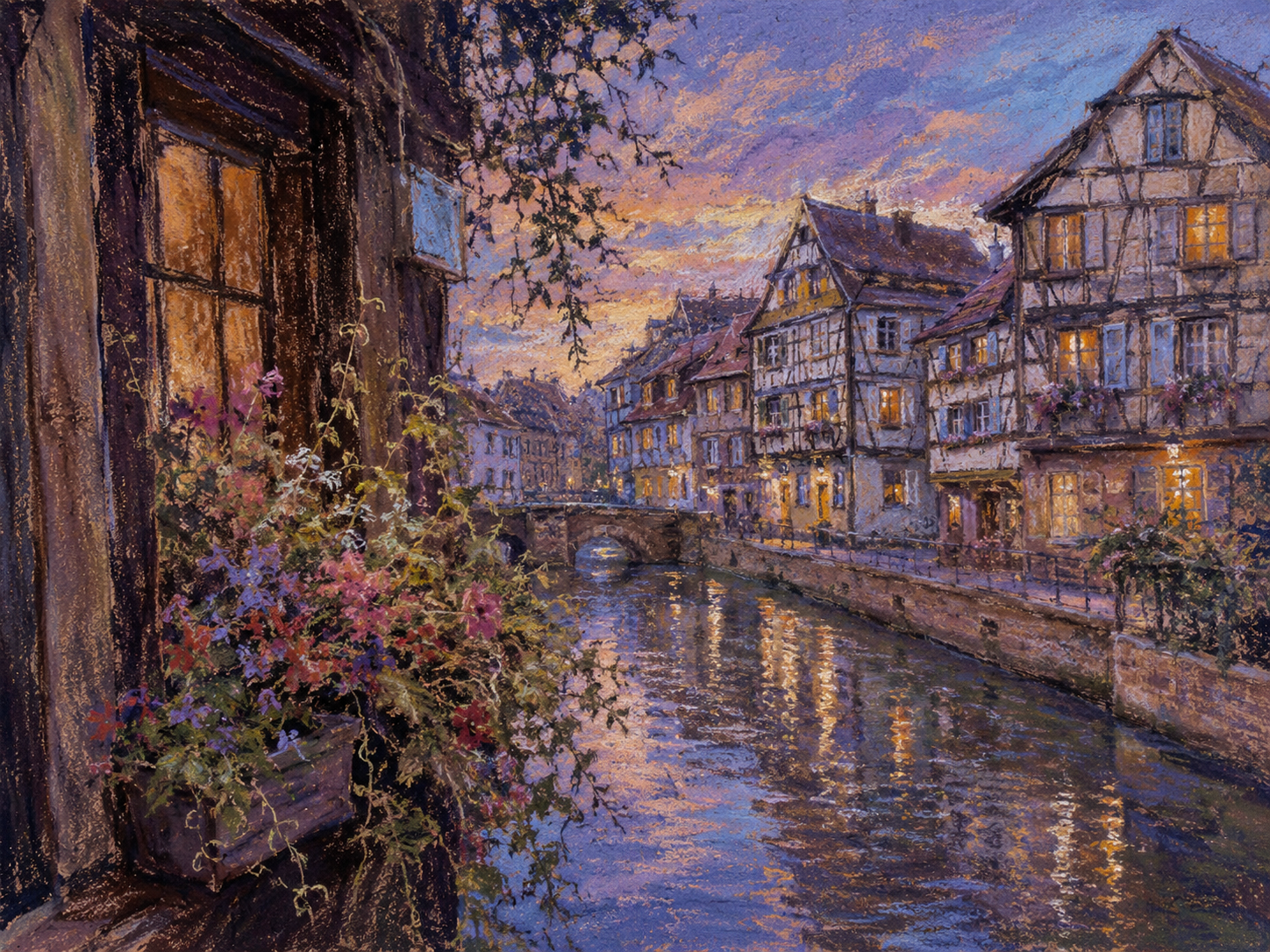
Beyond the Window's Glow
Critique
1. Introduction This artwork depicts a charming canal scene in a European town during the transition from dusk to night. The composition is framed by a foreground window adorned with vibrant flowers, leading the viewer's eye down a tranquil waterway lined with historic timber-framed buildings. The artist utilizes a rich, textured medium to capture the romantic and nostalgic atmosphere of a quiet evening in an old-world setting. 2. Description In the foreground, a wooden window frame with a lush flower box filled with pink and purple blooms occupies the left side of the canvas. Beyond the window, a narrow canal reflects the darkening sky and the glowing lights from the windows of the houses that flank it. The buildings feature classic half-timbered architecture, their facades rendered in soft whites, yellows, and browns. In the distance, a small stone arched bridge crosses the water, further enhancing the picturesque quality of the urban landscape. 3. Analysis The painting is notable for its heavy, expressive texture, suggesting the use of oil pastels or thick impasto oil paint. This tactile quality adds a sense of depth and vibrancy to the scene, particularly in the rendering of the clouds and the shimmering reflections on the water's surface. The color palette centers on a striking contrast between the cool violets and deep blues of the twilight sky and the warm, golden light emanating from the interior spaces. The perspective is handled skillfully, with the receding lines of the canal and buildings creating a strong sense of spatial recession. 4. Interpretation and Evaluation The work evokes a strong sense of tranquility and domestic warmth, contrasting the vastness of the evening sky with the intimate glow of human habitation. The choice of a foreground window as a framing device invites the viewer to experience the scene as if looking out from a cozy interior. Technically, the artist demonstrates mastery in balancing detail with atmospheric effect, allowing the textured strokes to suggest form rather than defining it with rigid lines. The emotional resonance of the piece lies in its ability to transport the viewer to a place of quiet beauty and historical continuity. 5. Conclusion While the initial impression is one of a classic travel scene, a closer examination reveals a sophisticated interplay of light and texture that elevates the work beyond mere illustration. The artist successfully captures a fleeting moment of temporal beauty, grounding it in the enduring presence of the town's architecture. It is a compelling example of how a familiar subject can be transformed through a unique stylistic approach and a keen sensitivity to atmospheric conditions.
Same Subcategory
 Whispers from a Sun-Drenched Canal
Similar Artworks
 Canal of Lost Dreams
 Heartbeats of a Sun-Kissed Village
 Twilight Echoes of Ghent
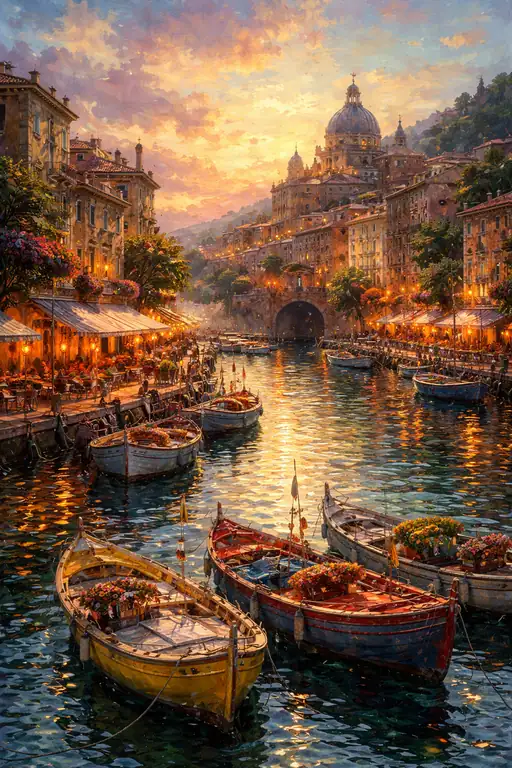 Golden Echoes of the Grand Canal
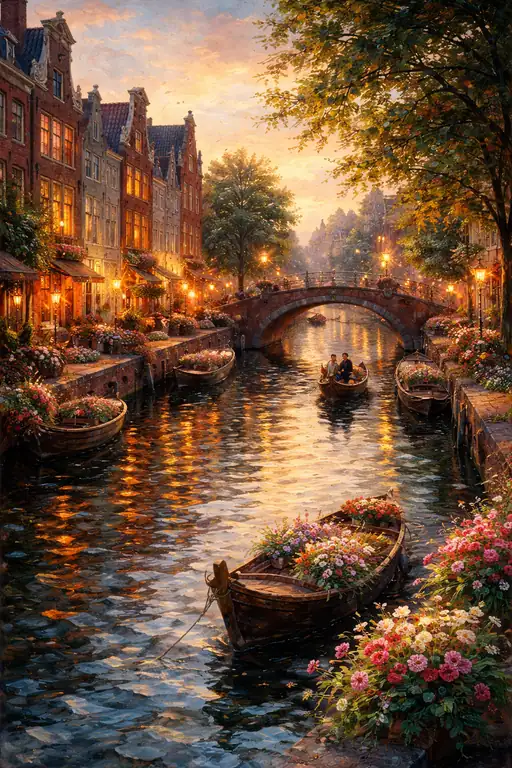 Golden Hour on the Tranquil Waters
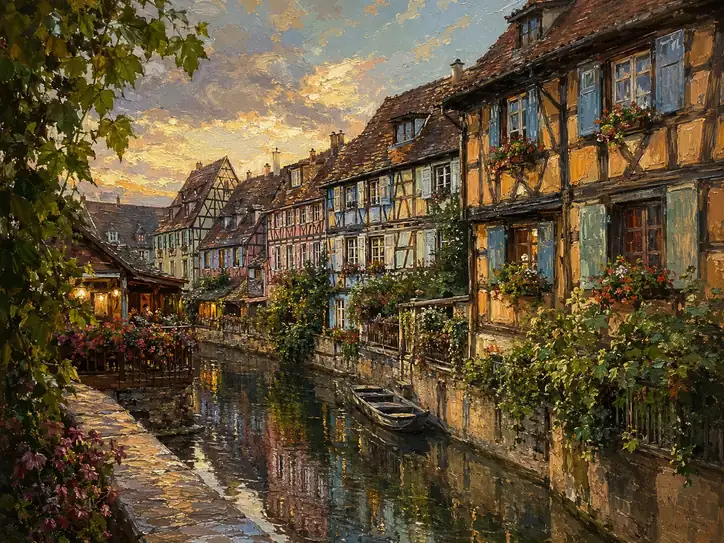 Sunset Serenade on the Canal
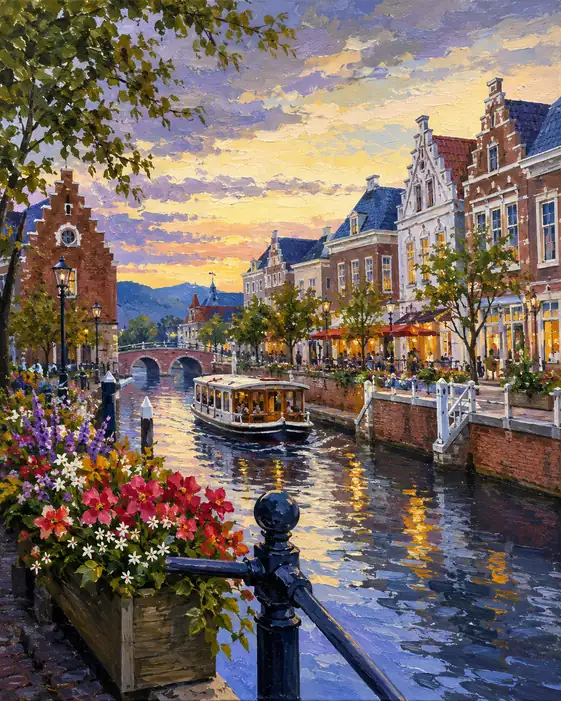 Twilight Glow along the Amsterdam Canal
 Golden Silence of the Canal
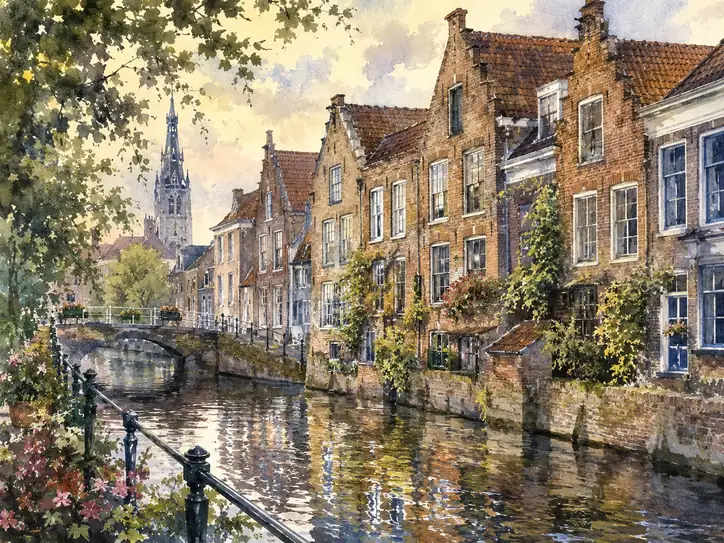 The Spire’s Silent Reflection
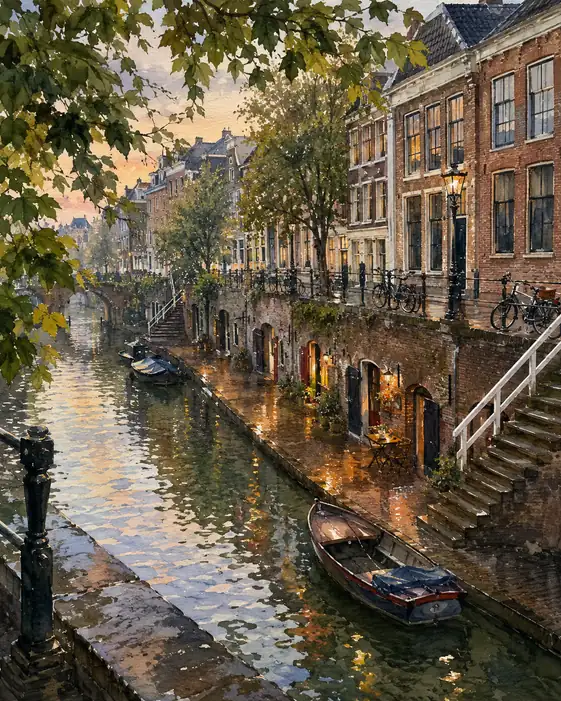 Gilded Dusk on the Ancient Canal