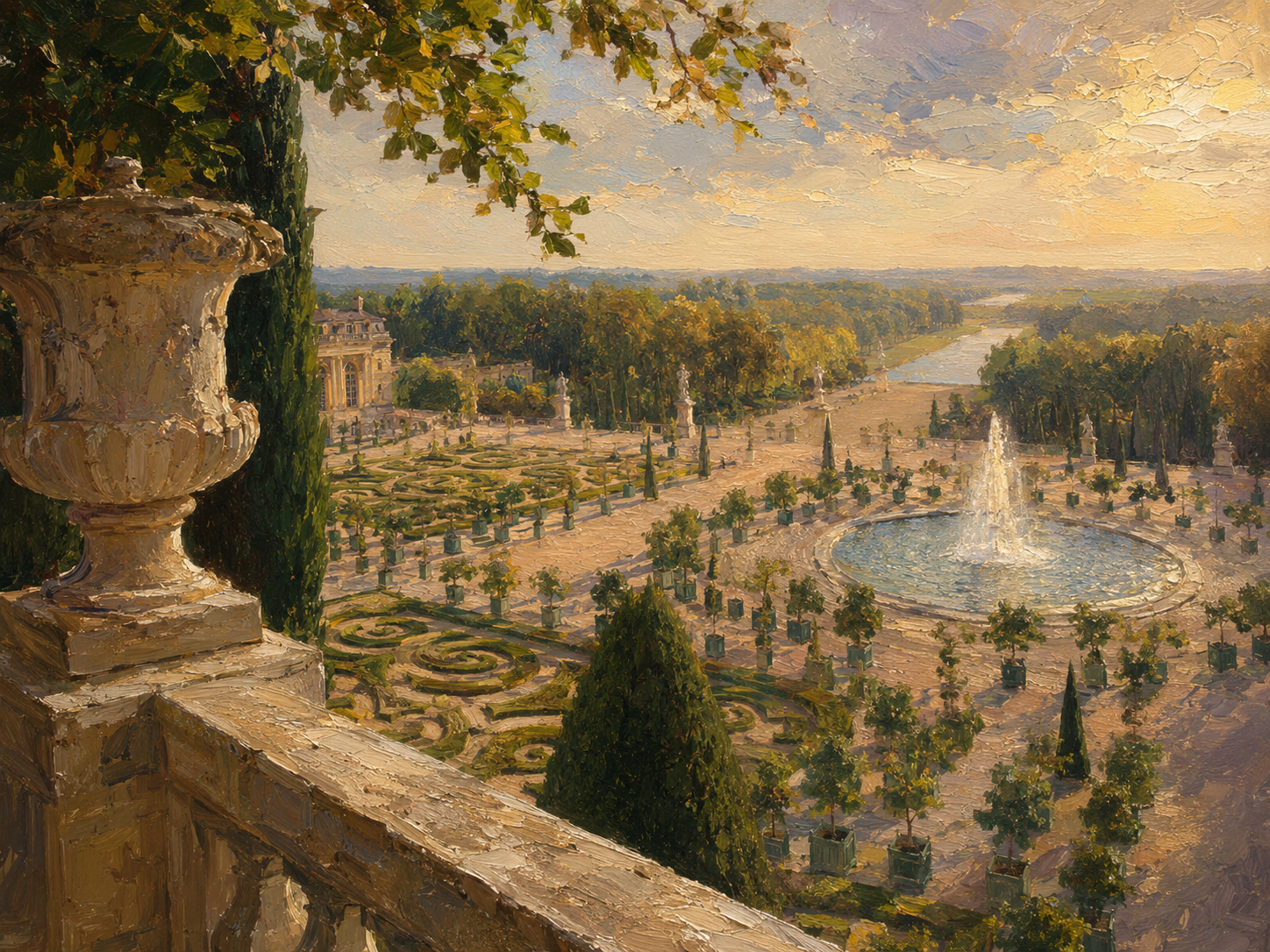
Eternal Golden Waltz
Critique
1. Introduction This oil painting presents a grand, sweeping view of a classical formal garden, likely inspired by European palace grounds. The composition is established from an elevated vantage point on a stone balcony, featuring a decorative urn in the immediate foreground that anchors the scene. Through a vigorous application of the impasto technique, the artist captures the fleeting qualities of light and atmosphere. The work balances traditional landscape subject matter with a modern, expressive handling of the medium. 2. Description In the center-right, a circular fountain erupts with a plume of white water, serving as a focal point within the meticulously manicured grounds. The garden itself is divided into intricate, geometric parterres and lined with rows of potted topiary trees that stretch toward the horizon. A stately palace building sits to the left, while a long, straight canal recedes into the distant background. The sky is filled with soft, textured clouds illuminated by the warm, golden glow of a setting sun. 3. Analysis The composition is structured in three distinct depths: the architectural elements of the foreground, the rhythmic patterns of the mid-ground garden, and the atmospheric perspective of the distant canal. Diagonal lines created by the garden’s layout and the stone railing provide a dynamic sense of spatial recession. The color palette is dominated by warm yellows and ochres in the sky, contrasted with the deep, cool greens of the foliage. The heavy texture of the paint creates a physical presence that catches the light. 4. Interpretation and Evaluation The artist demonstrates significant skill in synthesizing complex architectural and natural forms into a unified visual experience. The bold use of the foreground urn effectively frames the vista, providing a sense of human presence and scale. The color choices successfully evoke the nostalgic, tranquil mood of the golden hour, while the original brushwork adds a layer of contemporary energy. Technically, the mastery of light through thick paint application is the painting's greatest strength, elevating a familiar scene into a sensory exploration. 5. Conclusion This work achieves a harmonious balance between the rigid order of classical landscaping and the spontaneous vitality of impressionistic painting. While the initial impression is one of breathtaking scale, a closer look reveals a sensitive treatment of light and texture that rewards extended observation. The piece serves as a powerful testament to the enduring beauty of man-made nature and the transformative power of the painted surface.
Same Subcategory
 The Rhythms of Raked Silence
Similar Artworks
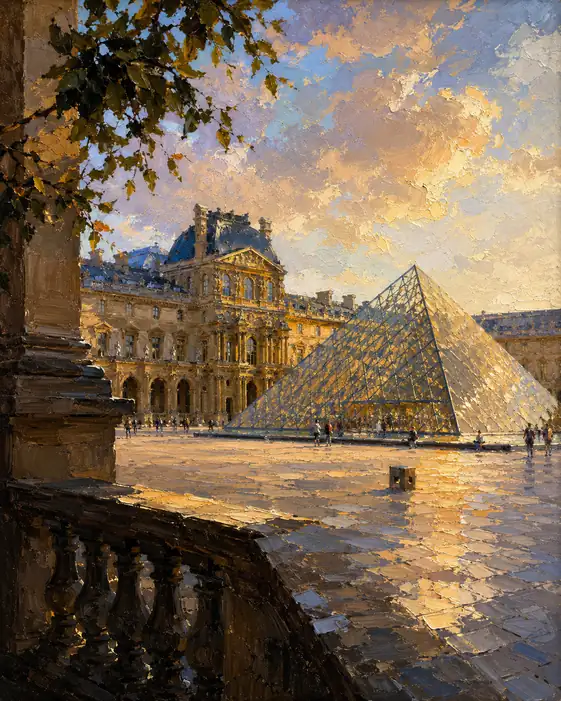 Intersection of Ages at the Golden Court
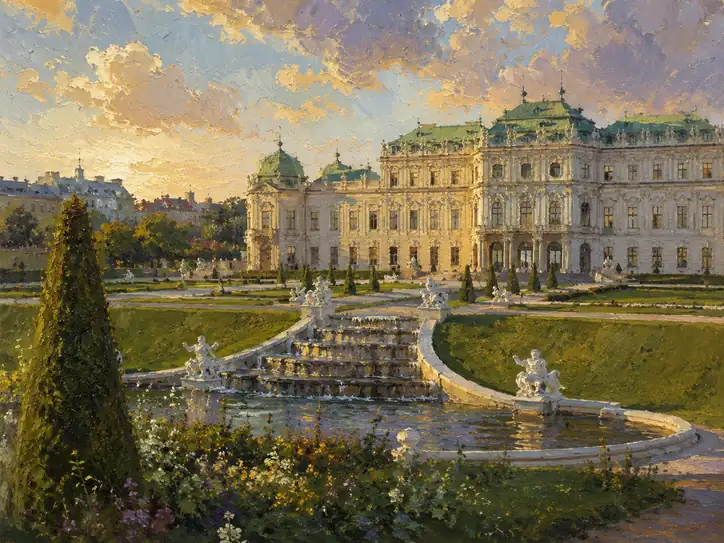 Gilded Waters of the Palace Gardens
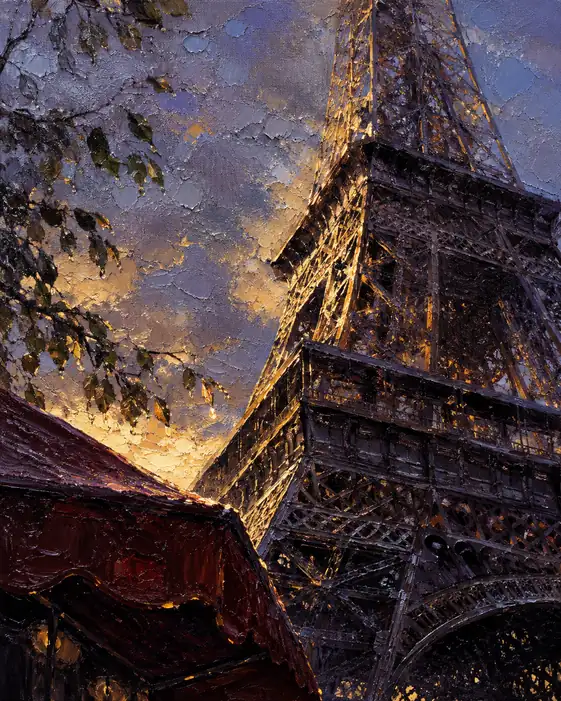 Iron Majesty in the Golden Twilight
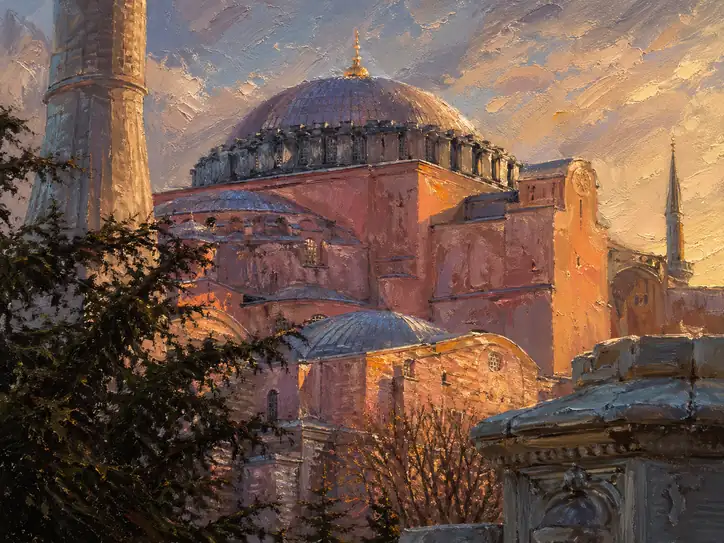 Hymn to the Eternal Light
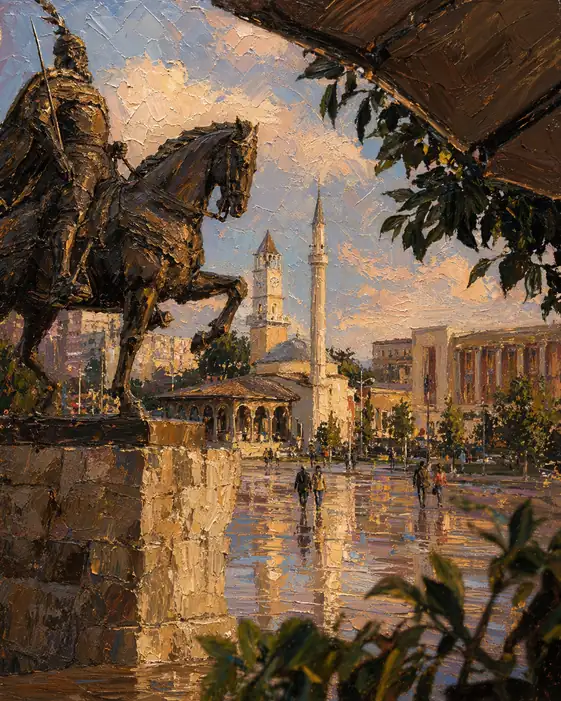 Golden Hour at Skanderbeg Square
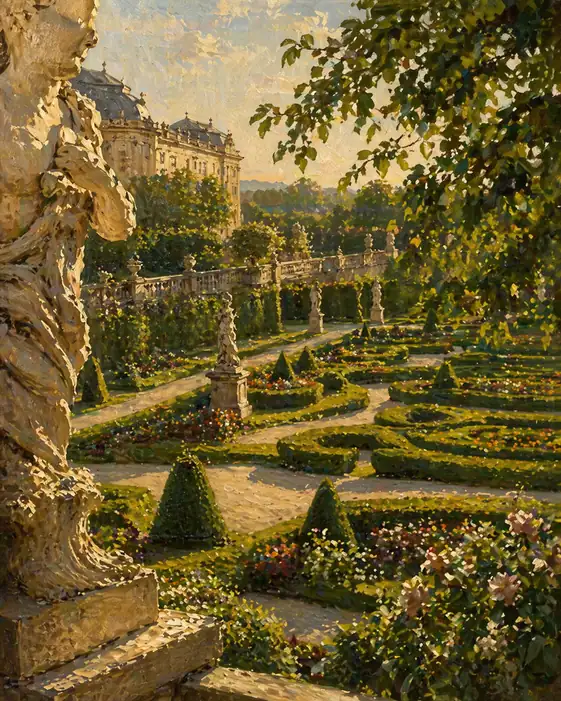 The Golden Hour Formal Garden
 Sunlight Bathing the Classical Plaza
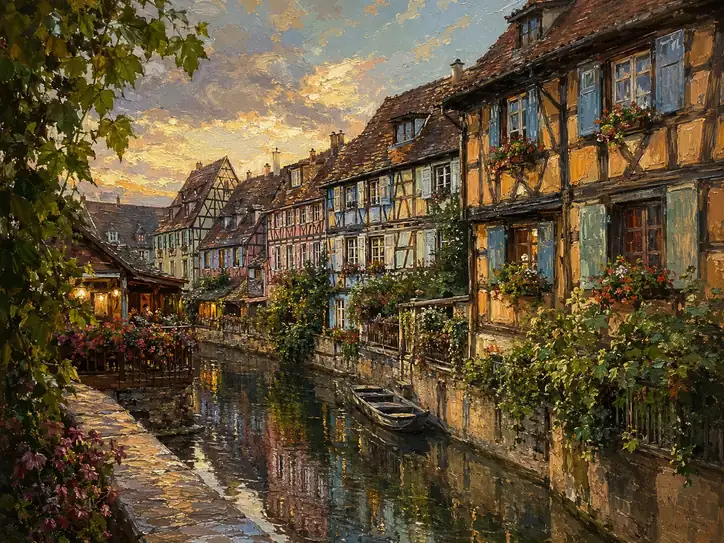 Sunset Serenade on the Canal
 Where Time Dissolves in Golden Light
 Symphony of the Silver Fountain