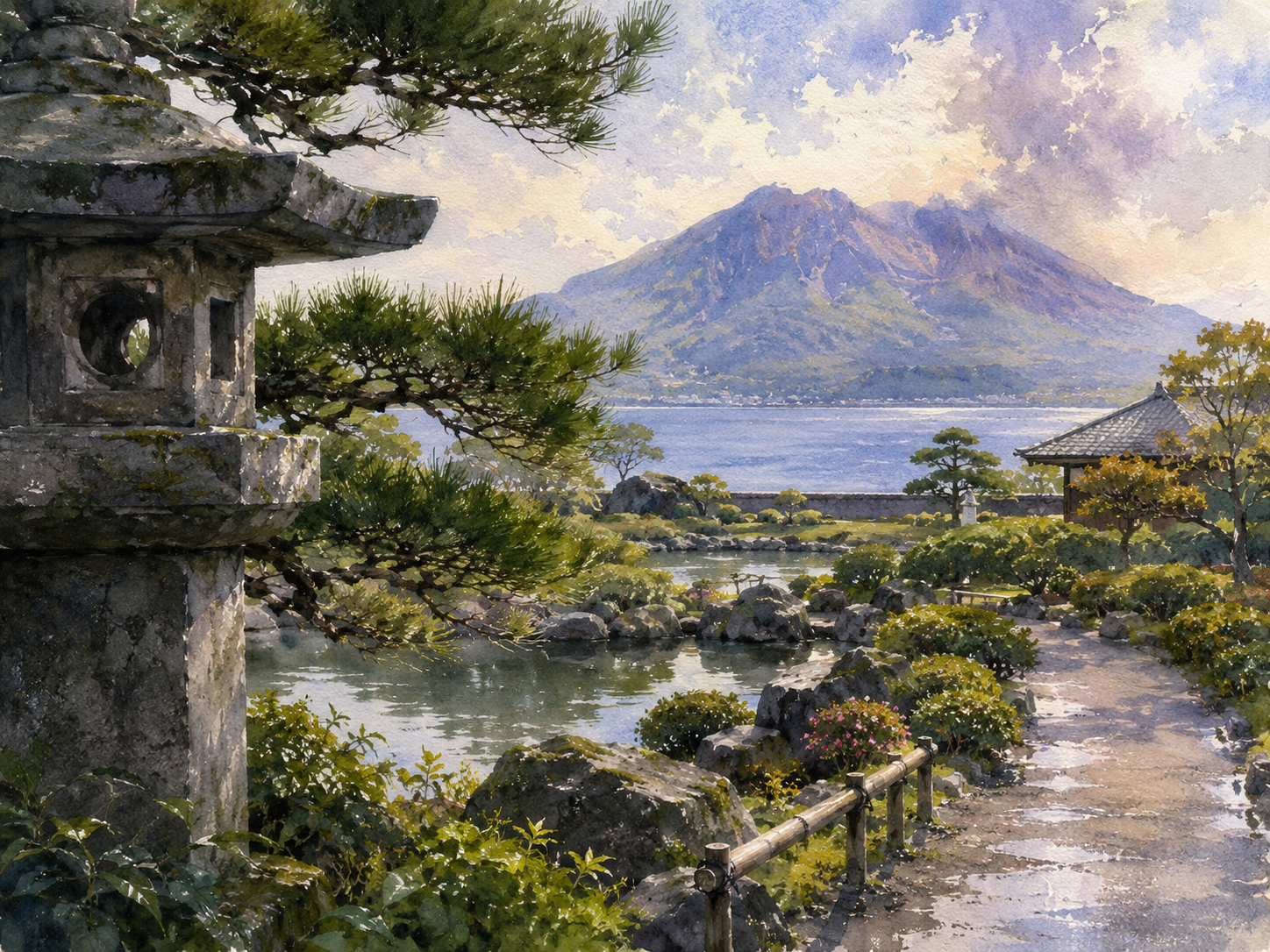
The Sleeping Giant across the Garden
Critique
1. Introduction This watercolor painting depicts a classic Japanese garden that offers a breathtaking view of a volcanic mountain across a calm bay. The work celebrates the meticulous artistry of traditional landscaping and its harmonious integration with the grander, untamed scale of the natural world. 2. Description In the left foreground, a massive, moss-covered stone lantern stands as a silent sentinel. A stone path, wet with recent rain, winds along a bamboo railing toward a traditional pavilion on the right. The center of the composition features a tranquil pond surrounded by carefully placed rocks and pine trees, while a towering, purple-hued mountain dominates the background beyond the shimmering blue water. 3. Analysis The artist effectively employs a multi-layered composition to create a strong sense of depth, leading the eye from the textured stone of the lantern to the distant, atmospheric peaks. The color palette is rich and naturalistic, with the lush greens of the garden contrasting beautifully with the cool blues of the bay and the hazy sky. The watercolor technique is particularly evident in the soft, blended tones of the clouds and the fluid rendering of the water's surface. 4. Interpretation and Evaluation The painting successfully conveys the "borrowed scenery" (shakkei) concept often found in Japanese garden design, where distant natural elements are integrated into the garden's visual field. The contrast between the human-scale details of the path and lantern and the immense presence of the volcano highlights a profound respect for nature. Technical execution is exceptional, showing a mastery of watercolor that balances intricate detail with broad, expressive washes. 5. Conclusion Overall, the piece is a vibrant and culturally resonant landscape that captures a moment of quiet reflection and natural majesty. The initial impression of a peaceful garden expands into a grander appreciation for the interconnectedness of all elements within the scene. It stands as a superior example of how traditional landscape motifs can be rendered with modern technical precision and emotional depth.
Same Subcategory
Similar Artworks
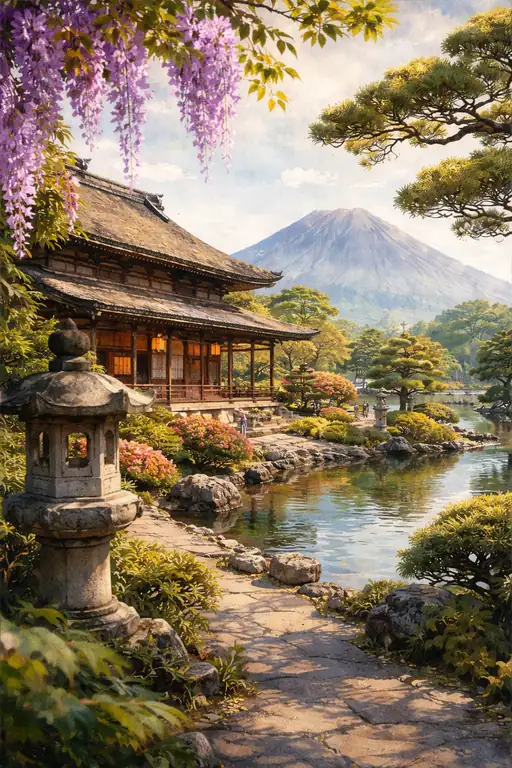 Fuji from the Wisteria Garden
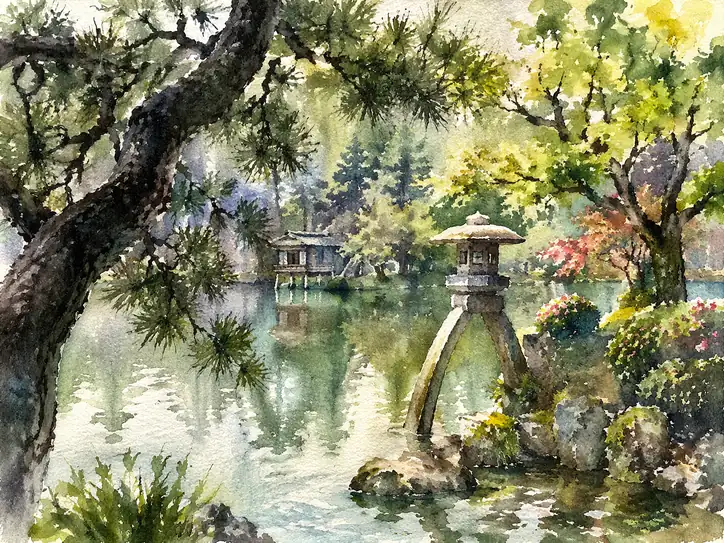 Quiet Reflections by the Stone Guardian
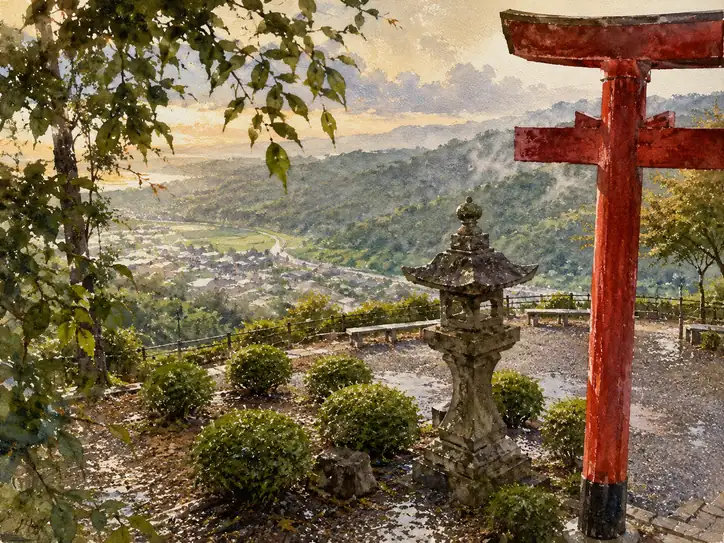 Eternal Peace in the Golden Glow
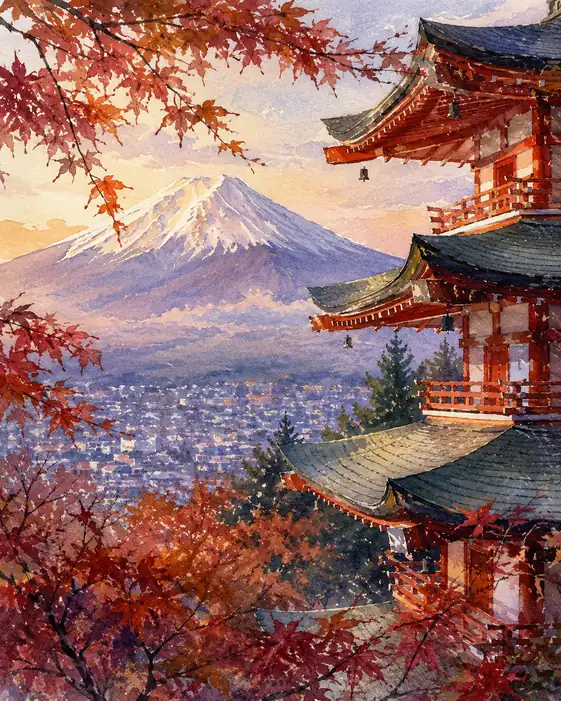 Fleeting Crimson, Eternal Silence
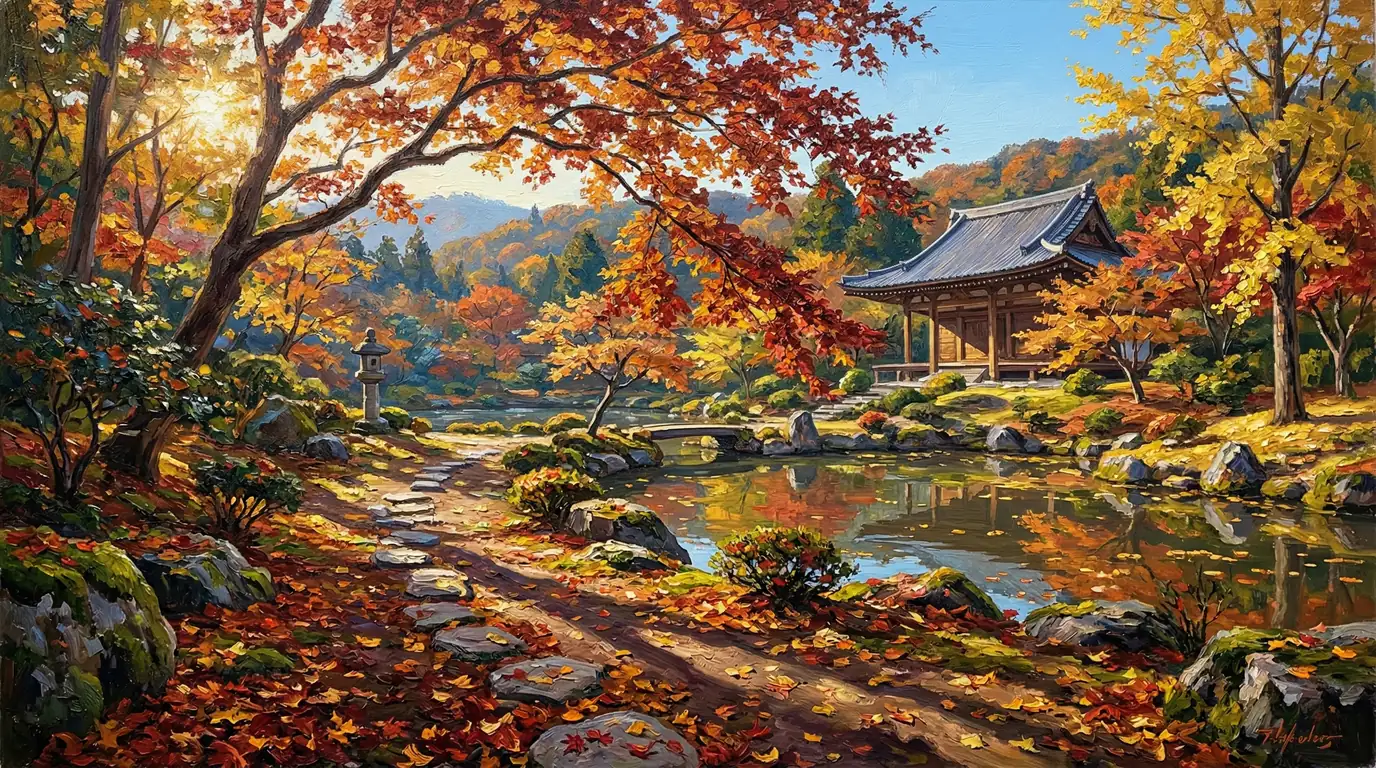 Echoes of Golden Leaves
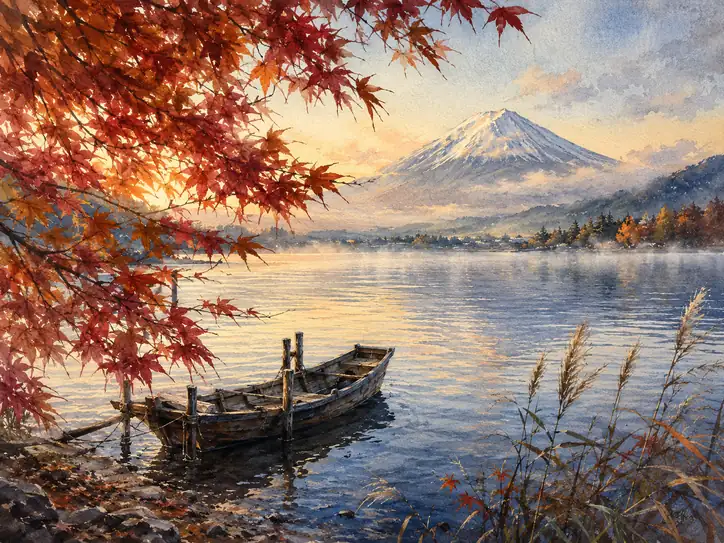 The Silent Journey of Autumn
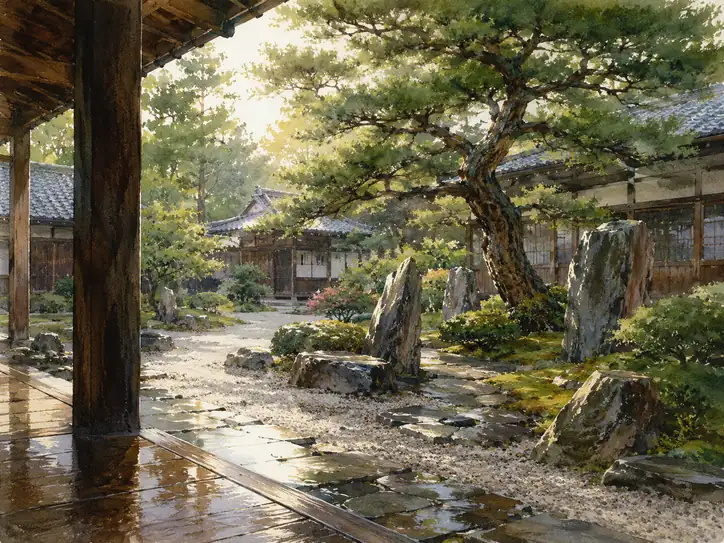 Reflections of Tranquility: Sunlight on the Wet Engawa
 Eternal Silence in a Golden Frame
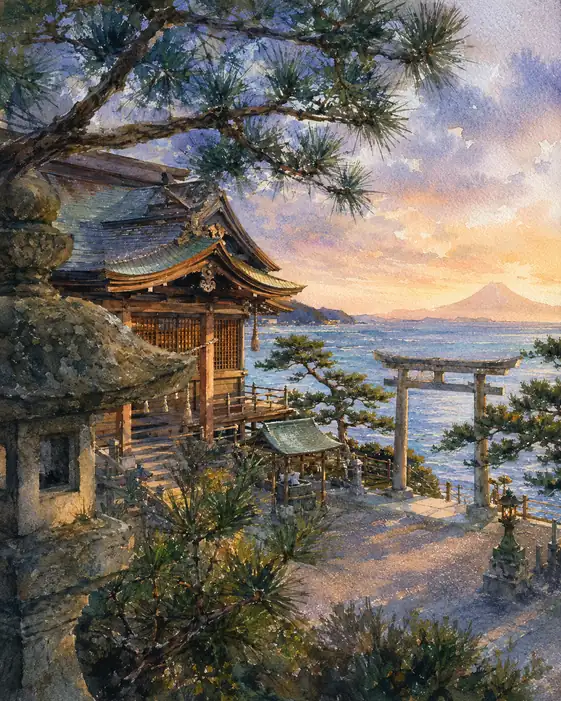 Twilight Prayer Across the Silent Waves
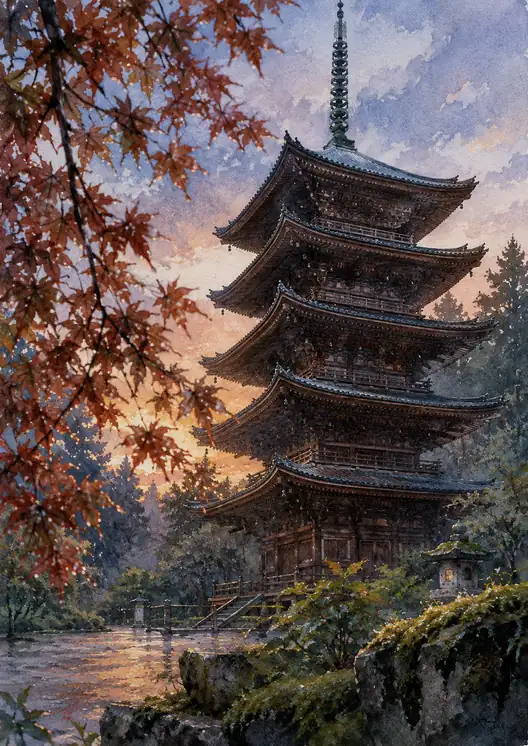 Autumn twilight, the Pagoda’s Silent Prayer