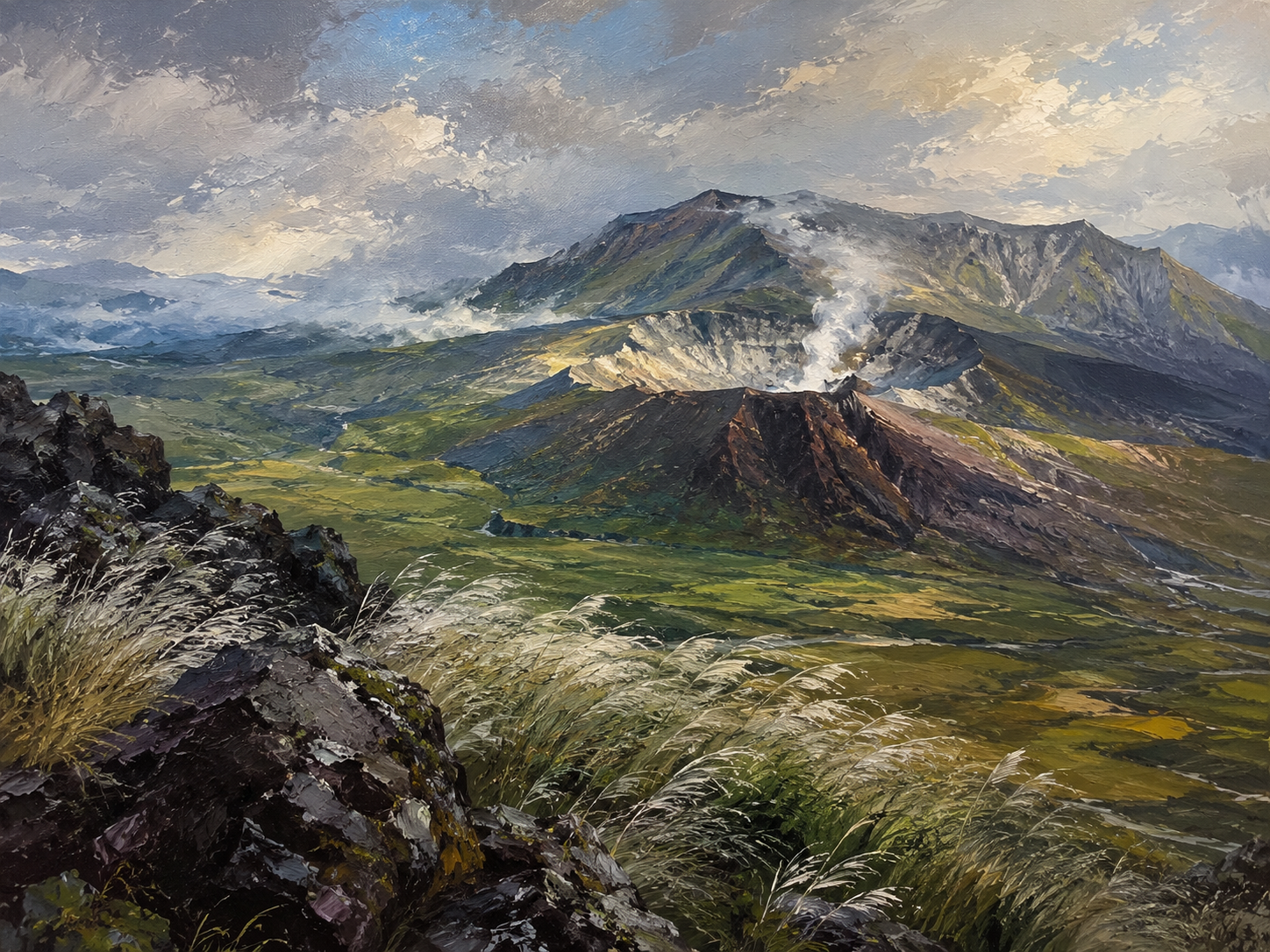
Whisper of the Smoking Earth
Critique
1. Introduction This oil painting captures the raw and dynamic landscape of an active volcanic region, featuring smoking craters, rugged mountain peaks, and a vast caldera sprawling beneath a dramatic sky. Viewed from a high ridge, the composition offers a panoramic perspective that emphasizes the titanic forces of nature and the shifting atmosphere of the highlands. Bold, expressive brushwork defines the scene, imbuing the static landscape with a sense of latent energy and geological history. Rooted in traditional landscape painting but elevated by a passionate, almost expressionistic execution, the work stands as a powerful testament to the sublime beauty and harsh reality of the natural world. 2. Description The focal point of the painting is a central volcanic cone with exposed earth in shades of ochre, sienna, and burnt umber, from which a plume of white steam rises into the air. Surrounding this activity is an expansive green valley, rendered with varying shades of olive and chartreuse to suggest a rich, undulating carpet of vegetation. In the immediate left foreground, dark, craggy rocks are depicted with heavy impasto, while delicate stalks of wild pampas grass sway in the wind. The sky is a turbulent mix of heavy grays and bright whites, with shafts of sunlight breaking through to illuminate sections of the valley floor and the mountainsides. Distant peaks fade into a hazy blue, providing a sense of immense scale. 3. Analysis Technically, the work relies on a stark contrast between the heavy, dark foreground elements and the luminous, distant vistas to create a profound sense of depth. The application of paint is vigorous and tactile; the thick impasto on the foreground rocks and the swirling clouds provides a physical texture that complements the rugged subject matter. The color palette is earthy and grounded, yet punctuated by brilliant highlights where the sun strikes the craters, guiding the viewer's eye through the complex topography. The artist uses strong directional strokes to follow the contours of the land, reinforcing the structural integrity of the mountains and the movement of the clouds. 4. Interpretation and Evaluation The painting successfully explores the theme of the sublime, where nature is seen as both a destructive force and a source of life. The juxtaposition of the fragile grass in the foreground with the monumental, smoking volcano creates a poignant narrative about the transience of life against the backdrop of geological time. The dramatic lighting adds a theatrical quality to the scene, suggesting a moment of revelation or transcendence. The artist’s technical skill is particularly evident in the balance between the broad, gestural strokes and the finer details of the landscape’s anatomy. Overall, it is a highly accomplished work that captures the spirit of the wild with both accuracy and emotion. 5. Conclusion By uniting the physical weight of the earth with the ethereal movement of steam and light, the painting offers a compelling and multi-layered vision of the wilderness. It evokes a deep sense of awe, reminding the viewer of the powerful, silent processes that continue to shape our planet. Ultimately, this piece is a masterfully executed landscape that resonates with both visual grandeur and spiritual depth.
Same Subcategory
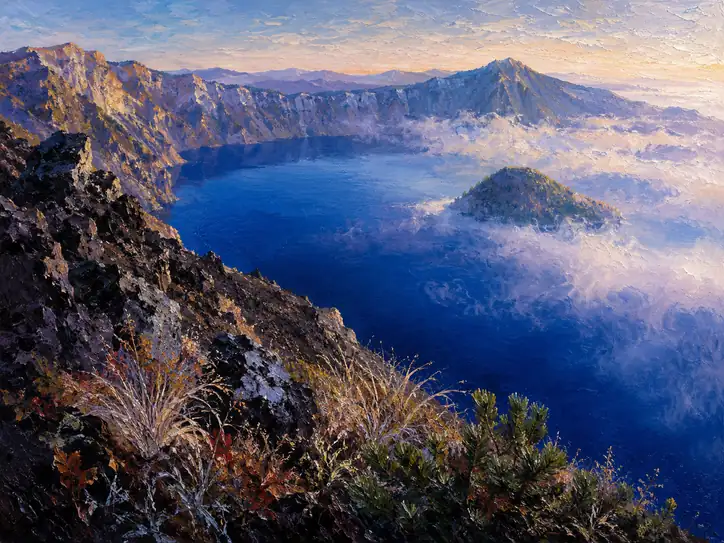 The Abyss of Cobalt Light
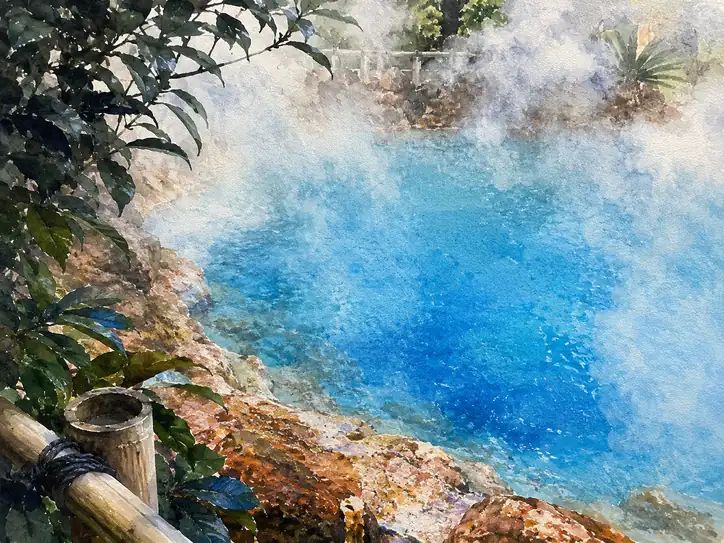 Luminous Depths of the Cobalt Spring
Similar Artworks
 The Unbound Pulse of Earth
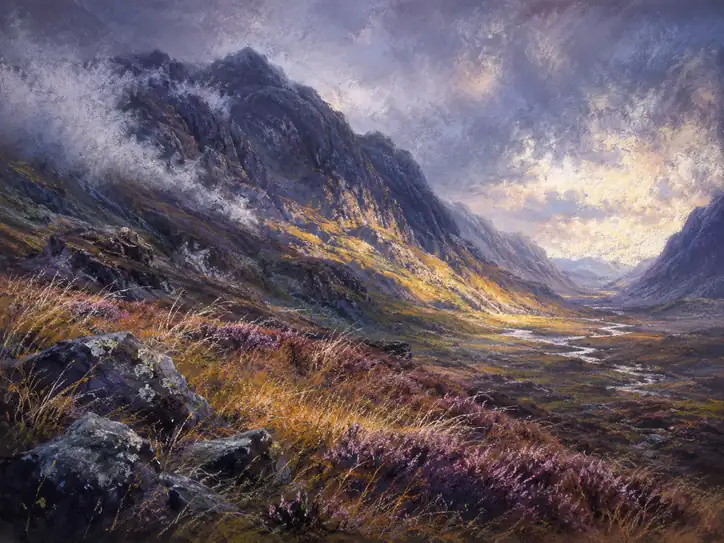 The Spirit of the Misty Glen
 Lament of the Steaming Earth
 Emerald Gaze of the Volcanic Heart
 Watching the Mist Veil the Highlands
 The Silent Roar of Stone
 The Earth's Feverish Breath
 Golden Ridges and the Silent Basin
 Sunlight on the Highland Stones
 Pulse of the Primordial Earth