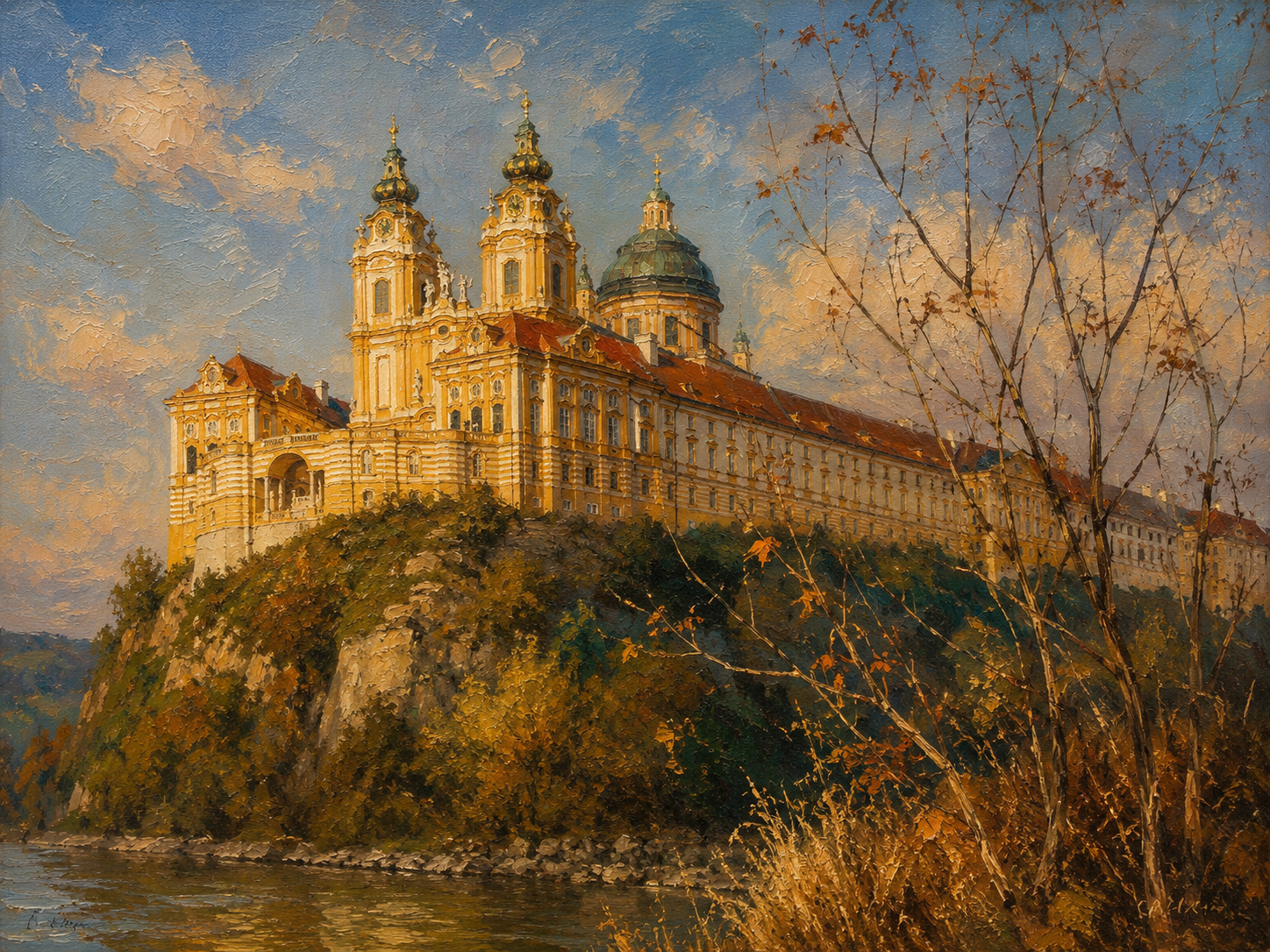
Citadel of the Golden Dusk
Critique
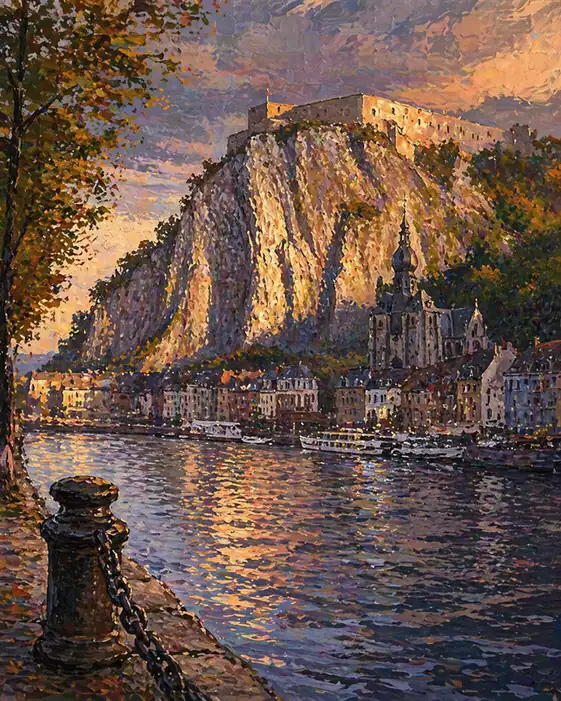
1. Introduction This oil painting presents a magnificent view of a Baroque monastery perched precariously on a rocky cliffside. The composition is dominated by the sprawling architectural complex, which glows with a golden radiance against a late afternoon sky. The work effectively captures the grandeur of European history and the spiritual aspiration embodied in such monumental structures. Through its bold use of texture and light, the painting creates a sense of awe, inviting the viewer to contemplate the intersection of human endeavor and the natural world. 2. Description The primary subject is a massive yellow building featuring a prominent dome and several ornate towers, reminiscent of the famous Melk Abbey. It sits atop a sheer precipice covered in dense, autumnal foliage that transitions from deep greens to fiery oranges. Below the cliff, a calm river reflects the muted tones of the landscape, while slender, bare trees in the immediate foreground frame the view and provide a sense of scale. The sky is a vast expanse of pale blue and soft white clouds, illuminated by the warm, directional light of the setting sun. 3. Analysis The artist employs a dynamic impasto technique, using thick applications of paint to build a tangible surface texture on the building's facade and the rugged cliffs. This tactile quality enhances the sense of physical presence and permanence of the monastery. The color palette is harmoniously centered on warm ochres, siennas, and oranges, which are invigorated by the cool blues of the sky. The perspective, looking up from the river level, emphasizes the soaring verticality of the architecture and its dominance over the surrounding terrain. 4. Interpretation and Evaluation The painting can be interpreted as a celebration of the sublime, where the scale of the monastery reflects the magnitude of the faith it represents. The dramatic lighting serves not only to define form but also to suggest a divine or transcendental quality to the scene. The contrast between the solid, man-made masonry and the transient, shifting clouds creates a poignant narrative about time and endurance. The work is highly successful in its technical execution, particularly in the artist's ability to manipulate light to create a profound atmospheric impact. 5. Conclusion At first glance, the sheer scale of the monastery is overwhelming, yet a closer examination reveals a delicate sensitivity to the play of light and the nuances of the changing seasons. The vigorous brushwork breathes life into the static architecture, making it appear as if it is resonating with the surrounding air. This artwork leaves the viewer with a deep appreciation for the historical and spiritual legacy captured on canvas. Ultimately, it is a powerful portrayal of architectural splendor that resonates with timeless significance.
Same Subcategory
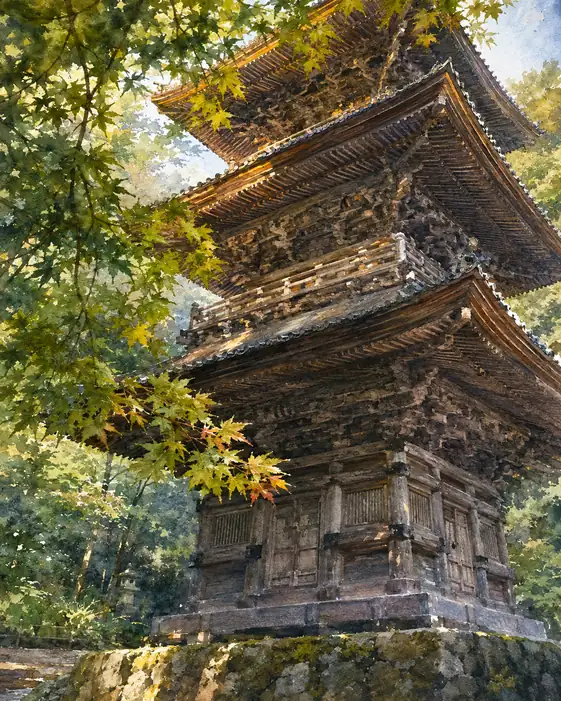 A Forest Three-Story Pagoda Through Maples
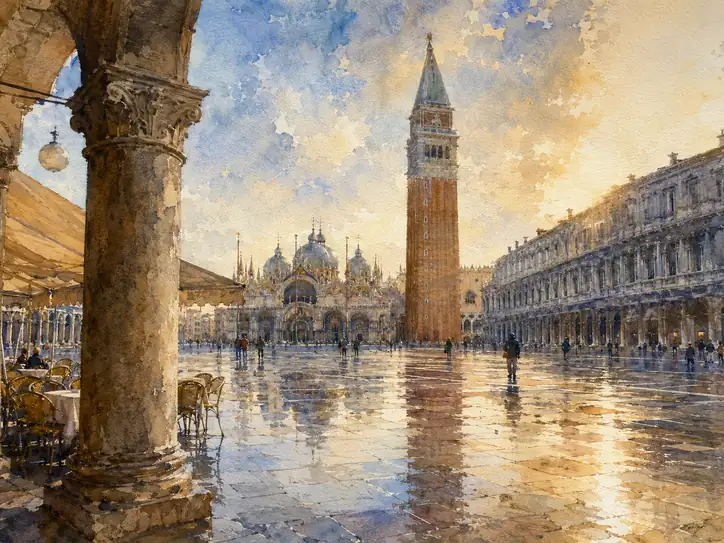 Venice Unveiled: The Mirror of Piazza San Marco
Similar Artworks
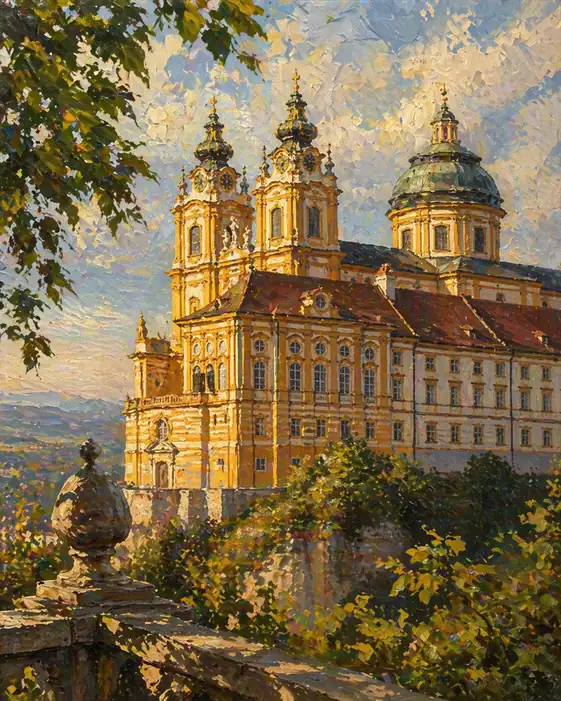 Ascending to the Golden Heights
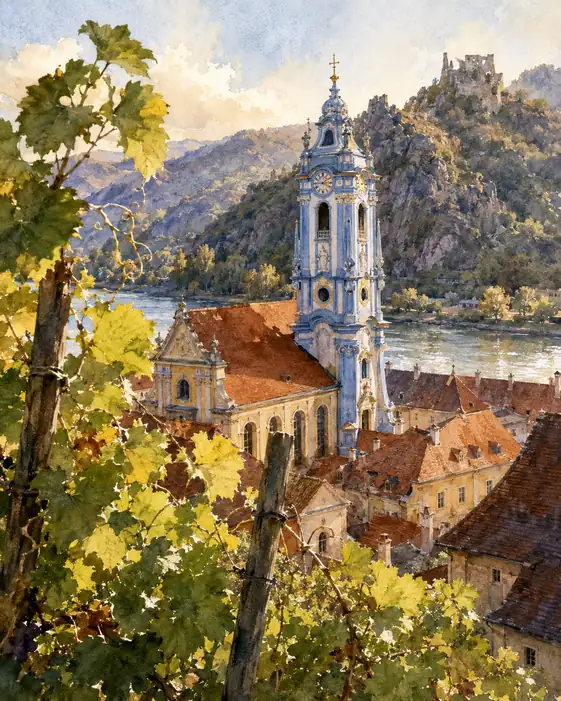 The Azure Spire Over the Danube
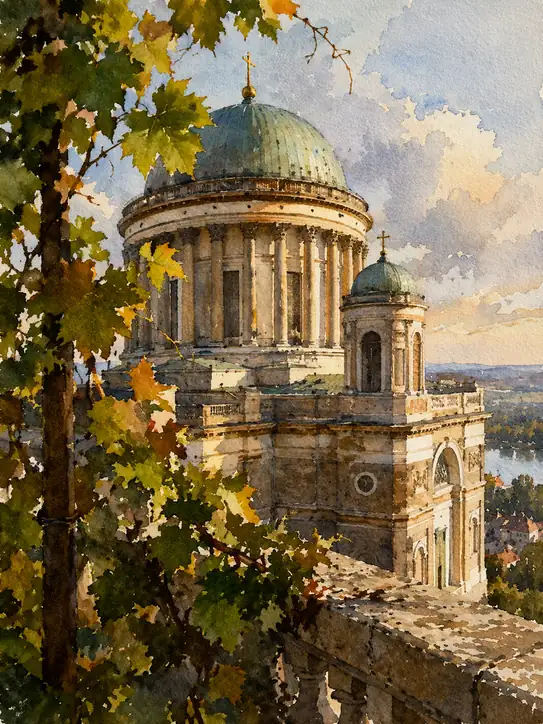 Autumn's Golden Frame: A Cathedral's Grace
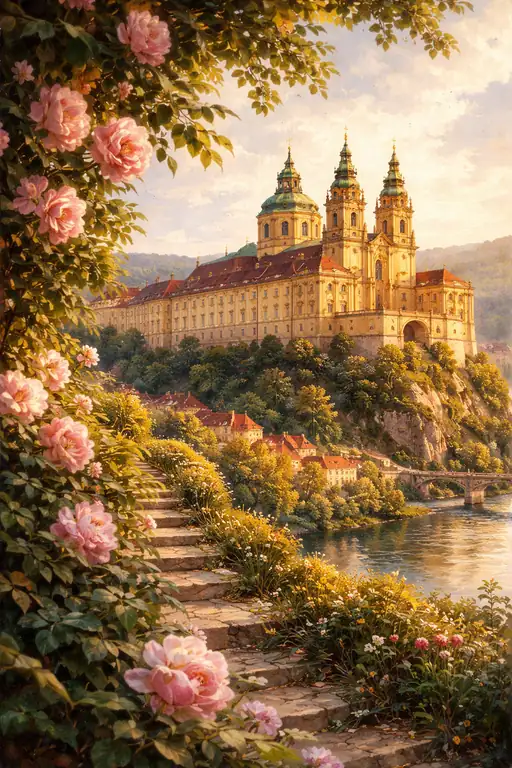 A Walk Through the Gilded Age
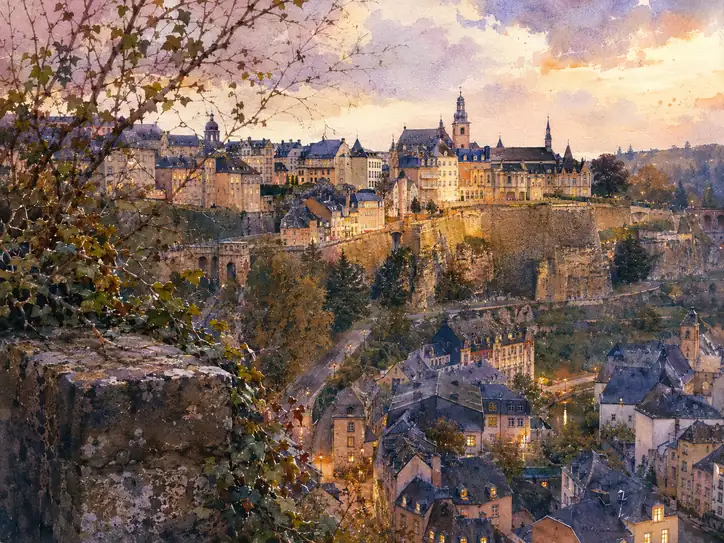 The Golden Breath of the Valley
 Symphony of the Alpine Mist
 Sentinel of the Eternal Afterglow
 The Cathedral's Golden Hymn
 Sacred Autumn in the Heart of London
 Golden Echoes of the Citadel