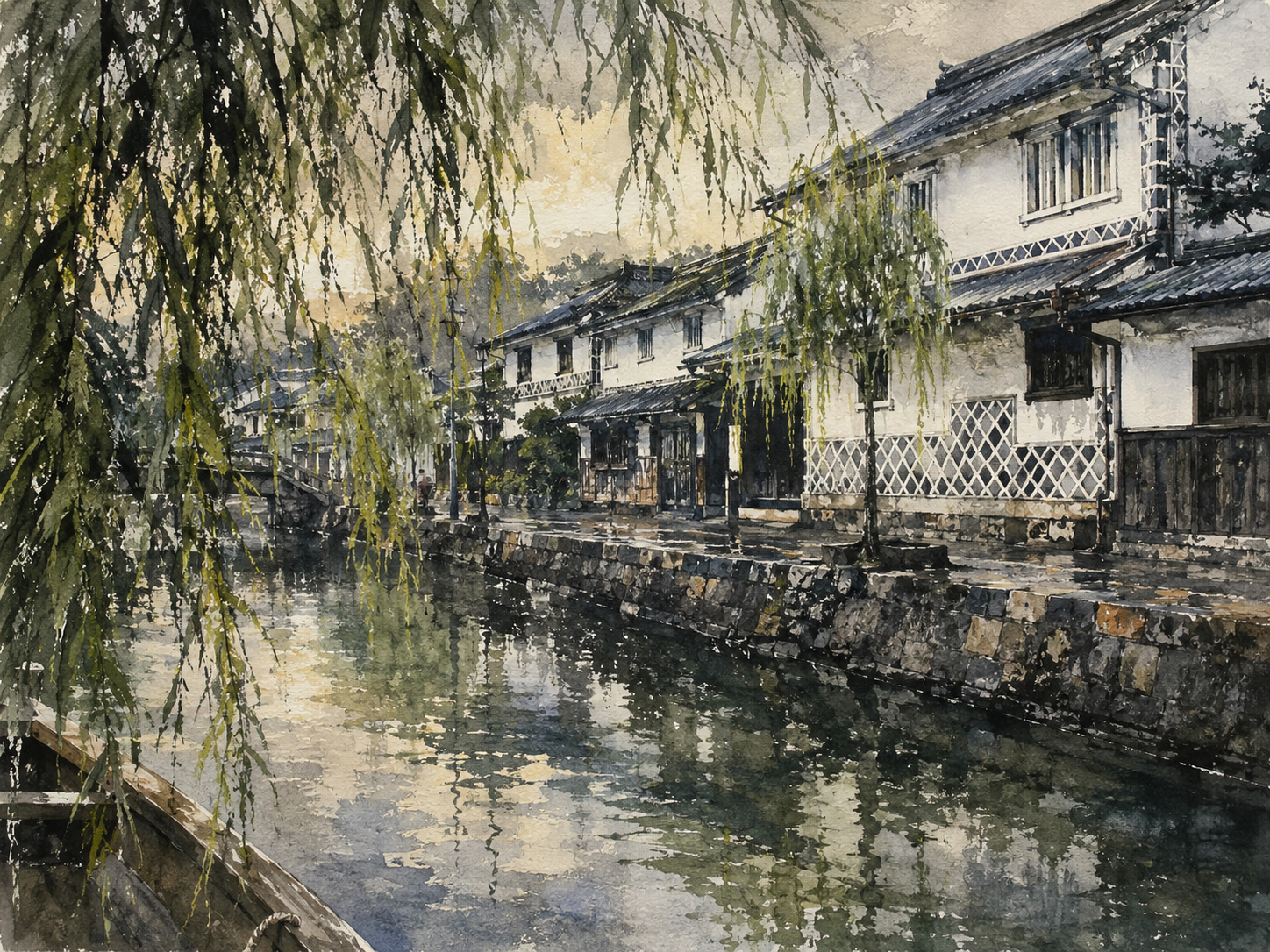
Sigh of the Willow, Mirror of the Ages
Critique
1. Introduction This watercolor painting presents a serene and meticulously detailed view of a traditional Japanese canal district. The composition captures the timeless beauty of a historic town, where architectural heritage and natural elements coexist in perfect harmony. Through a sophisticated use of the medium, the scene conveys a sense of profound tranquility and nostalgia. The work stands as a testament to the enduring appeal of traditional Japanese aesthetics, rendered with a contemporary focus on light and texture. 2. Description The artwork features a row of white-walled storehouses, known as kura, lining the right bank of a peaceful canal. These buildings are characterized by their dark-tiled roofs and intricate diamond-patterned wainscoting. In the foreground, the delicate, weeping branches of a willow tree drape gracefully across the left side of the frame, partially veiling the view. The water below serves as a vibrant mirror, reflecting the soft sky and the surrounding structures with a complex interplay of color and movement. 3. Analysis Technically, the painting excels in its handling of watercolor textures and tonal values. The artist employs a fine brush to define the minute details of the stonework and the individual leaves of the willow. A masterful application of wet-in-wet techniques is evident in the water's surface, where colors bleed together to create a convincing illusion of liquid depth. The contrast between the rigid geometric forms of the architecture and the organic, flowing lines of the vegetation creates a balanced and engaging visual rhythm. 4. Interpretation and Evaluation This piece transcends mere representation by capturing the specific atmospheric quality of a humid, overcast afternoon in Japan. The choice of palette, dominated by muted whites, earthy grays, and lush greens, reinforces the sense of quietude and historical weight. The artist demonstrates exceptional skill in managing the transparency of the paint, particularly in the reflective surfaces and the diffused light of the sky. This work is an outstanding example of modern landscape painting, successfully evoking an emotional connection to a vanishing cultural landscape. 5. Conclusion While the painting initially appears as a conventional scenic view, closer inspection reveals a profound depth of observation and technical mastery. The subtle shift from the sharp focus of the buildings to the impressionistic ripples in the canal enhances the overall sense of immersion. Ultimately, the work invites a meditative state, encouraging the viewer to appreciate the subtle beauty found in the intersection of history and nature. It leaves a lasting impression of a world where time seems to have paused.
Same Subcategory
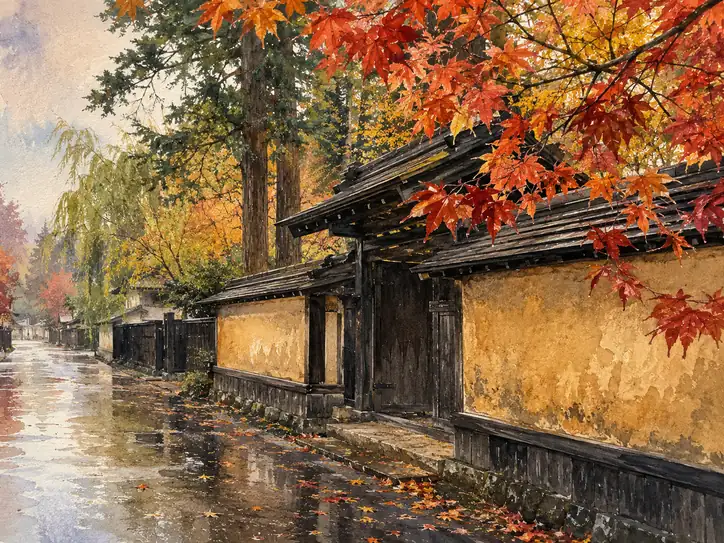 The Rain's Quiet Reflection
Similar Artworks
 The Golden Cradle of Memories
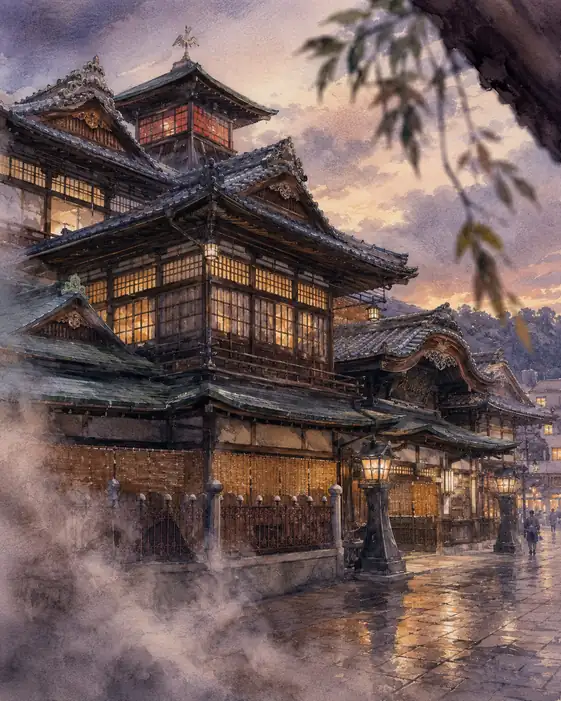 Whispers of the Twilight Spring
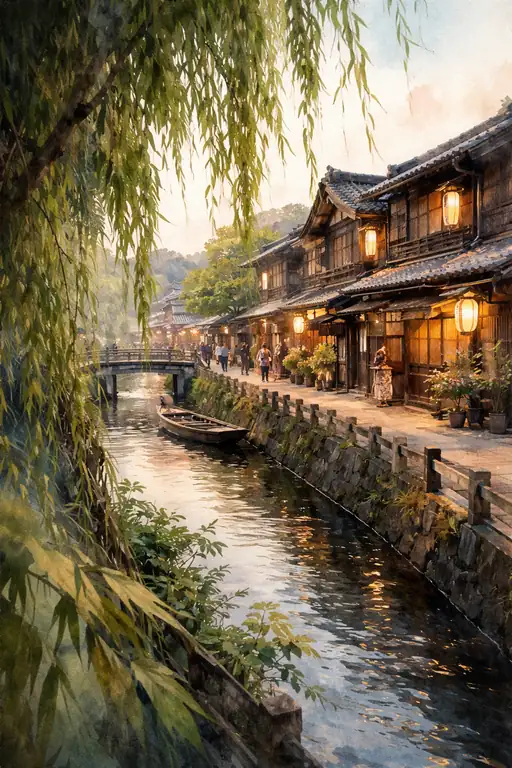 Dusk at the Old Waterway
 Whispers of the Wet Stone Path
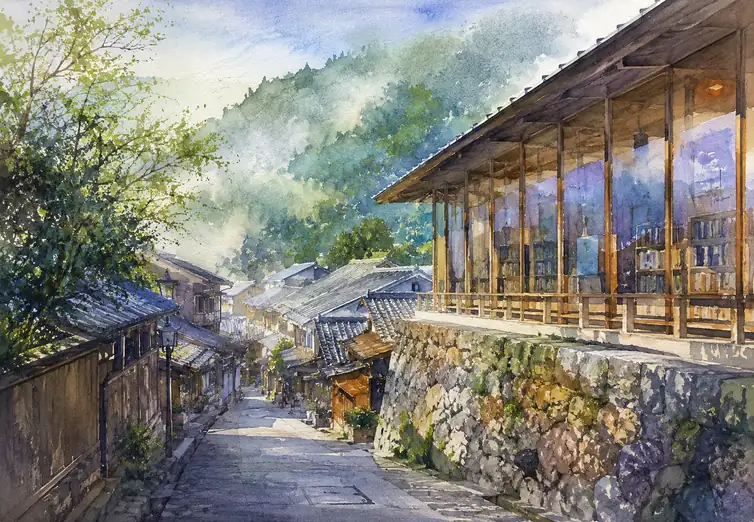 A Dialogue Between Stone and Glass
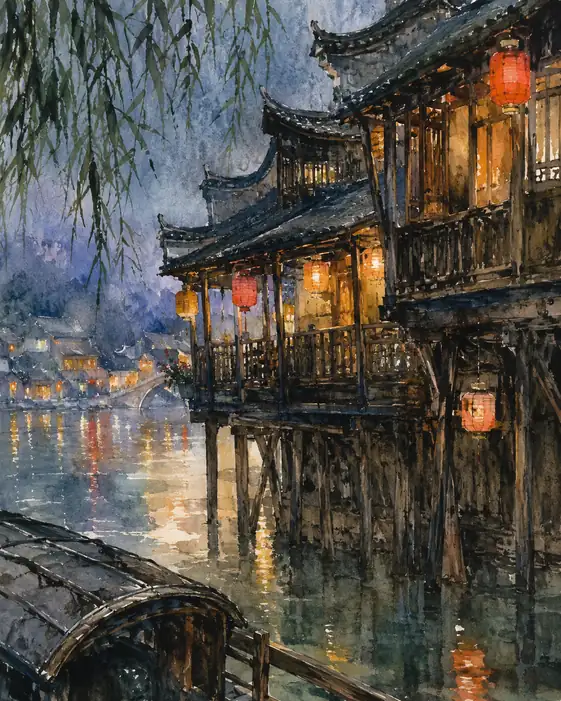 Lantern Whispers on the Water
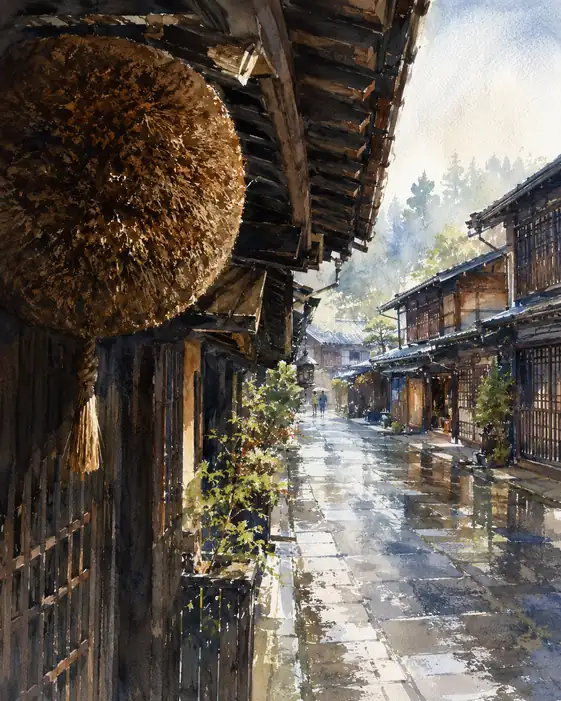 Memory Reflected in the Post-Rain Stone
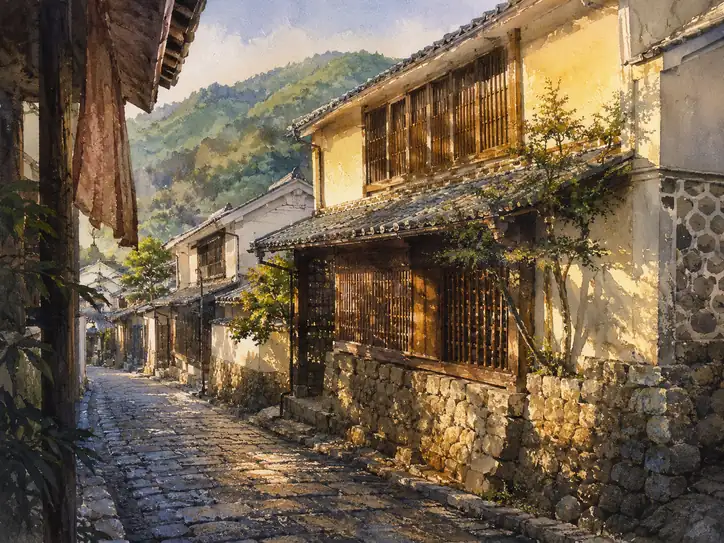 Sun-Drenched Memories of the Old Street
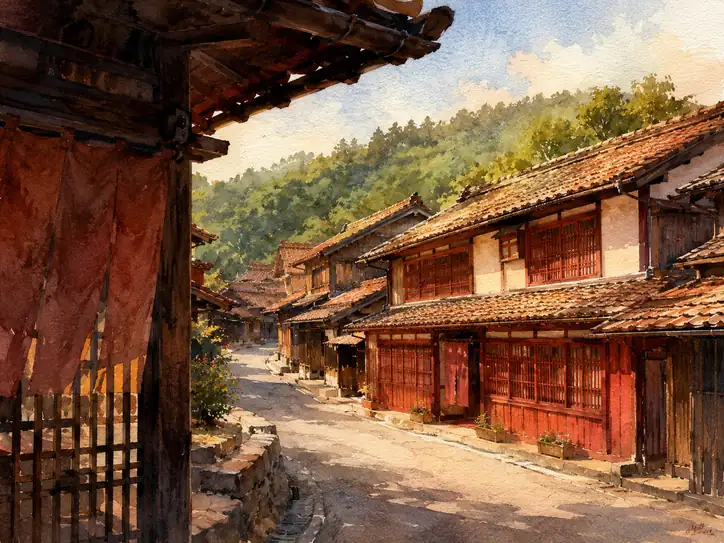 Whispers of the Old Post Town
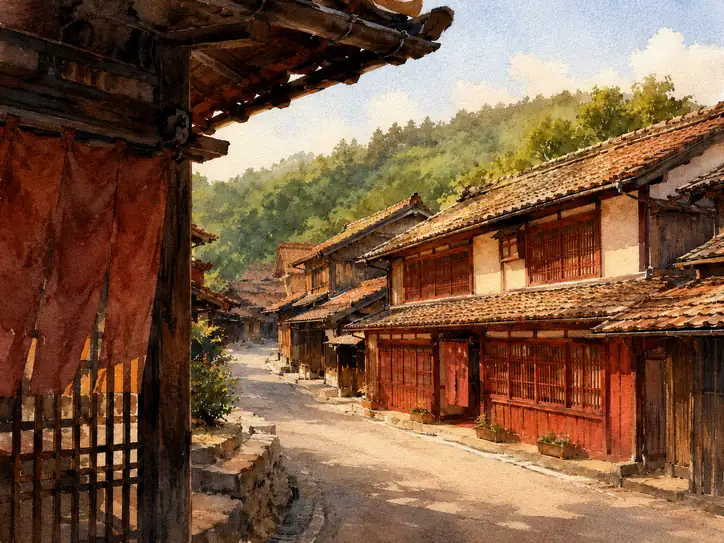 Golden Shadows on the Post Town