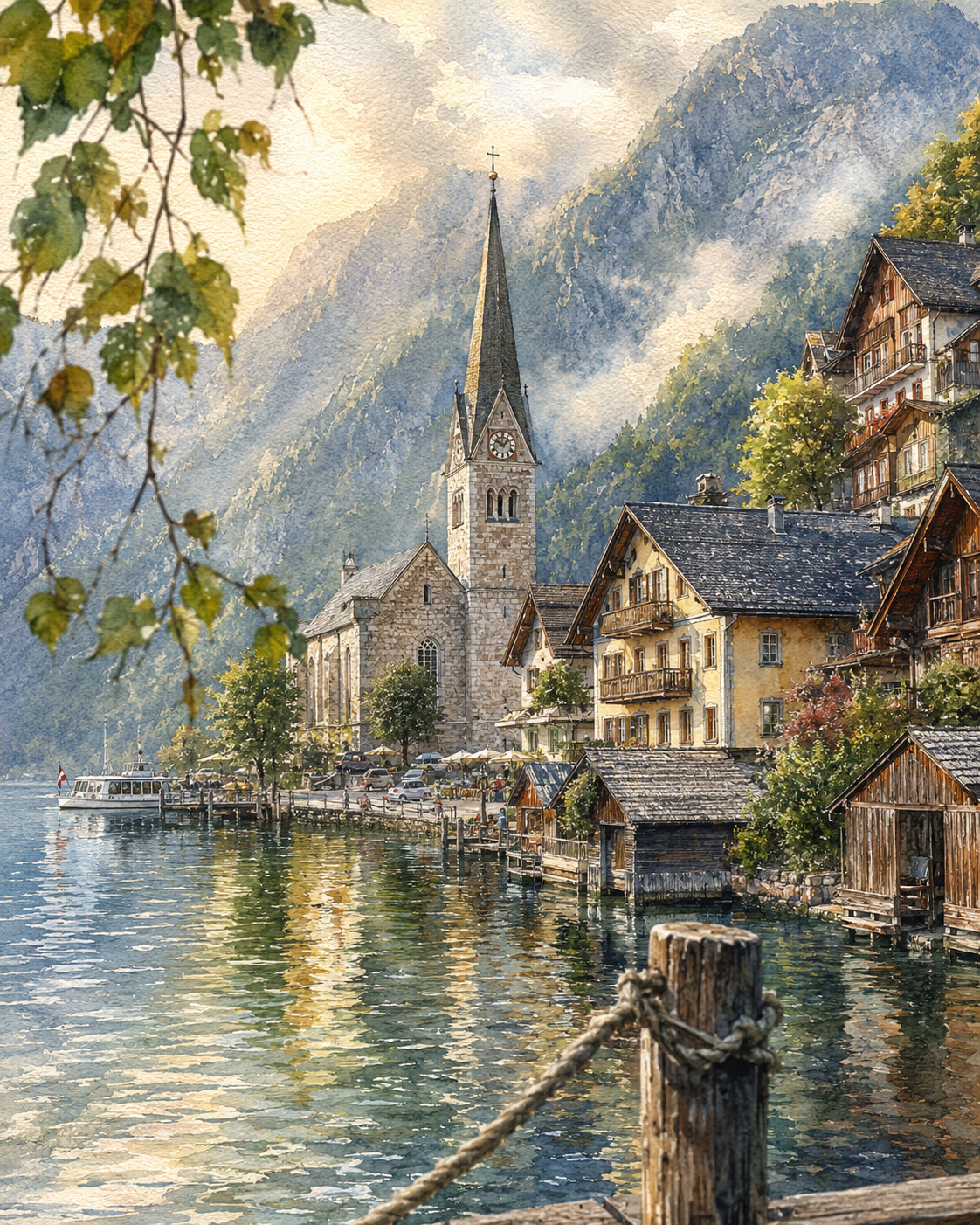
Sanctuary of the Alpine Mirror
Critique
1. Introduction This watercolor painting presents a picturesque Alpine village nestled between steep mountains and a tranquil lake. The composition is defined by the soaring spire of a central church and traditional wooden houses that cascade down the hillside, their reflections shimmering beautifully on the water’s surface. The inherent transparency of the watercolor medium is balanced with meticulous architectural detail, inviting the viewer into a scene of profound stillness. It is a sophisticated work that captures the harmonious relationship between the grandeur of nature and centuries of human habitation. 2. Description Situated slightly left of center is a stone church with a sharp, elegant spire, set against the backdrop of immense, mist-shrouded mountains. To the right, multi-story wooden houses with flower-laden balconies are densely packed along the slope, while rustic boathouses extend over the lake in the foreground. A small ferry is docked at a pier on the left, and the glassy water mirrors the surrounding landscape with soft clarity. A thick wooden post and rope occupy the lower right corner, providing a sense of scale and depth, while leafy branches frame the view from the upper left. 3. Analysis The composition skillfully balances the verticality of the church spire with the diagonal lines of the mountains and the horizontal expanse of the lake, creating a sense of enduring stability. The color palette is thoughtfully arranged, contrasting the neutral tones of the stone masonry and rocky slopes with the warm ochres of the wooden buildings and the cerulean hues of the water. Technically, the artist excels in using the wet-in-wet technique for the atmospheric mountains, while employing precise brushwork for the architectural elements. The rhythmic depiction of ripples on the lake showcases a mastery of light and reflection. 4. Interpretation and Evaluation This work can be interpreted as a celebration of the human environment reimagined as a symbol of peace and integration within a formidable natural setting. The church spire represents a spiritual focal point, while the lakeside dwellings signify the wisdom of a community living in sync with its surroundings. The artist demonstrates superior draftsmanship and a sensitive command of atmosphere, with the spatial organization through aerial perspective being particularly noteworthy. The evocative world created here possesses a significant artistic power that resonates with the viewer’s desire for tranquility and nostalgia. 5. Conclusion Upon close examination of the intricate textures—from the grain of the wood to the subtle movement of the water—the initial idyllic impression evolves into a deeper appreciation for the painting’s spatial complexity. The three core elements of mountain, lake, and town are unified into a single harmonious whole through the medium of light. This piece honors the traditions of landscape art while maximizing the expressive potential of watercolor to articulate the very essence of an Alpine sanctuary. Ultimately, the scene serves as a silent, prayer-like space that offers a lasting refuge from the bustle of modern life.
Same Subcategory
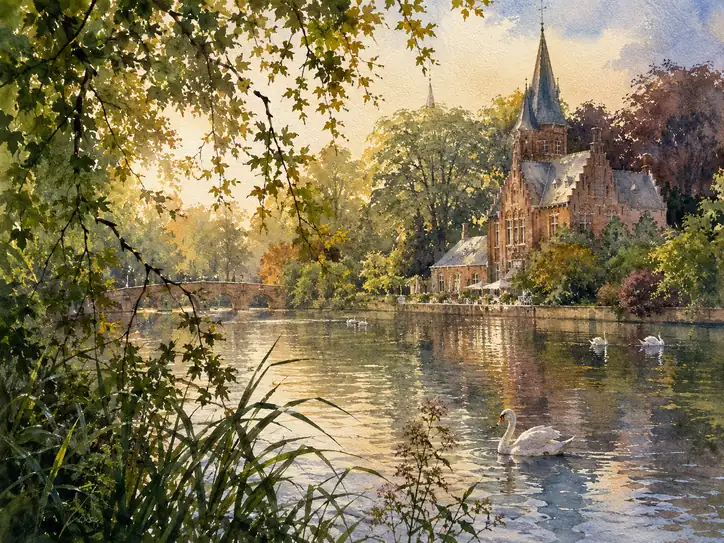 Whispers of the Eternal Lake
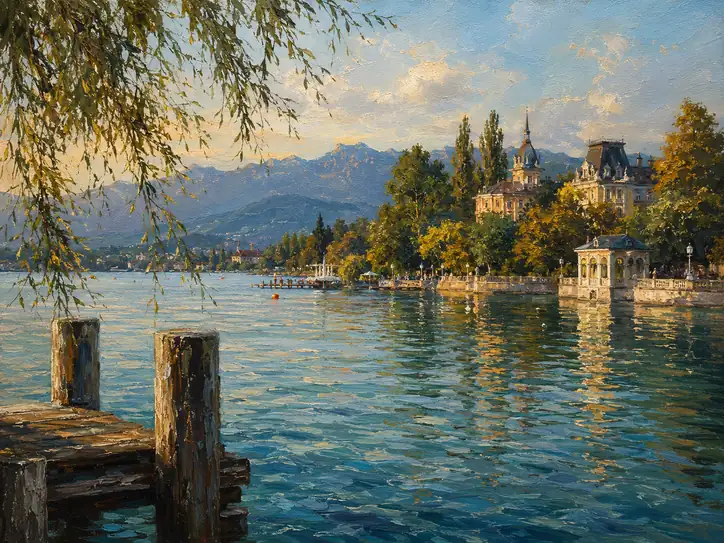 Twilight Reflections by the Lake
Similar Artworks
 The Lake's Eternal Lullaby
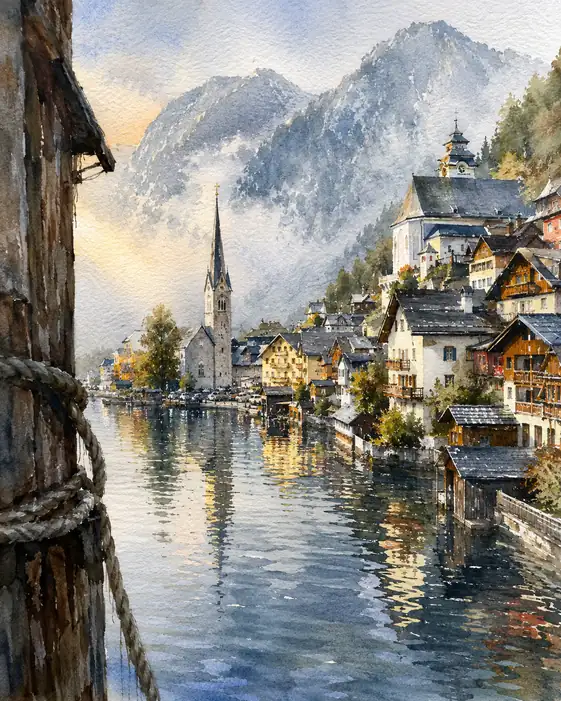 Serenity in the Shadows of Giants
 The Silent Vigil: An Alpine Village at Twilight
 Serenity Reflected in the Alpine Mirror
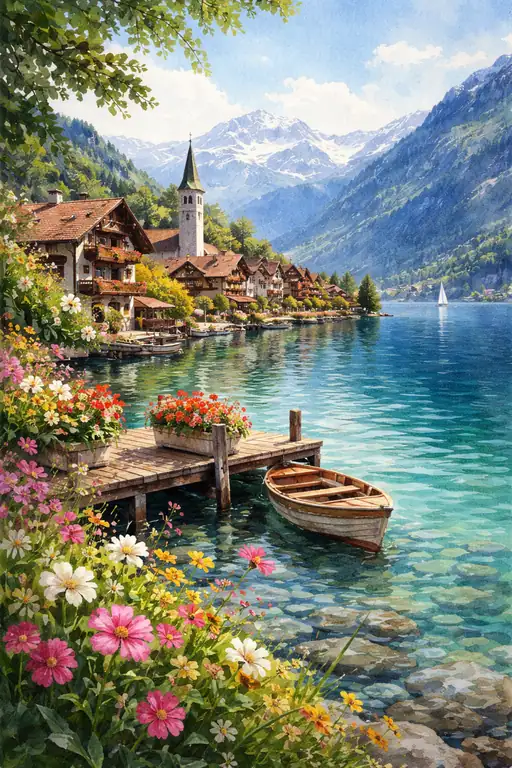 Crystal Serenity of the Lakeside Hamlet
 The Mist-Veiled Serenade
 Serenity Along the Lakeside Spire
 Spring Awakening in the Alpine Valley
 Morning Bloom by the Alpine Spire
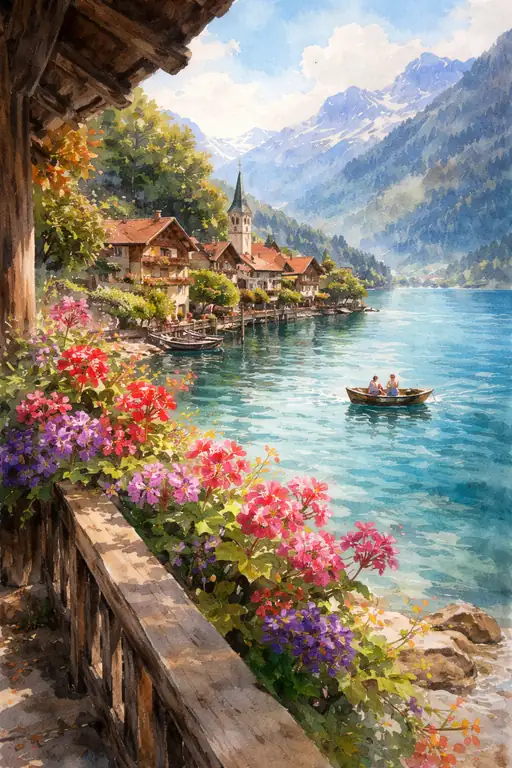 The Floral Chalet in the Sun: A Vibrant Alpine Sanctuary