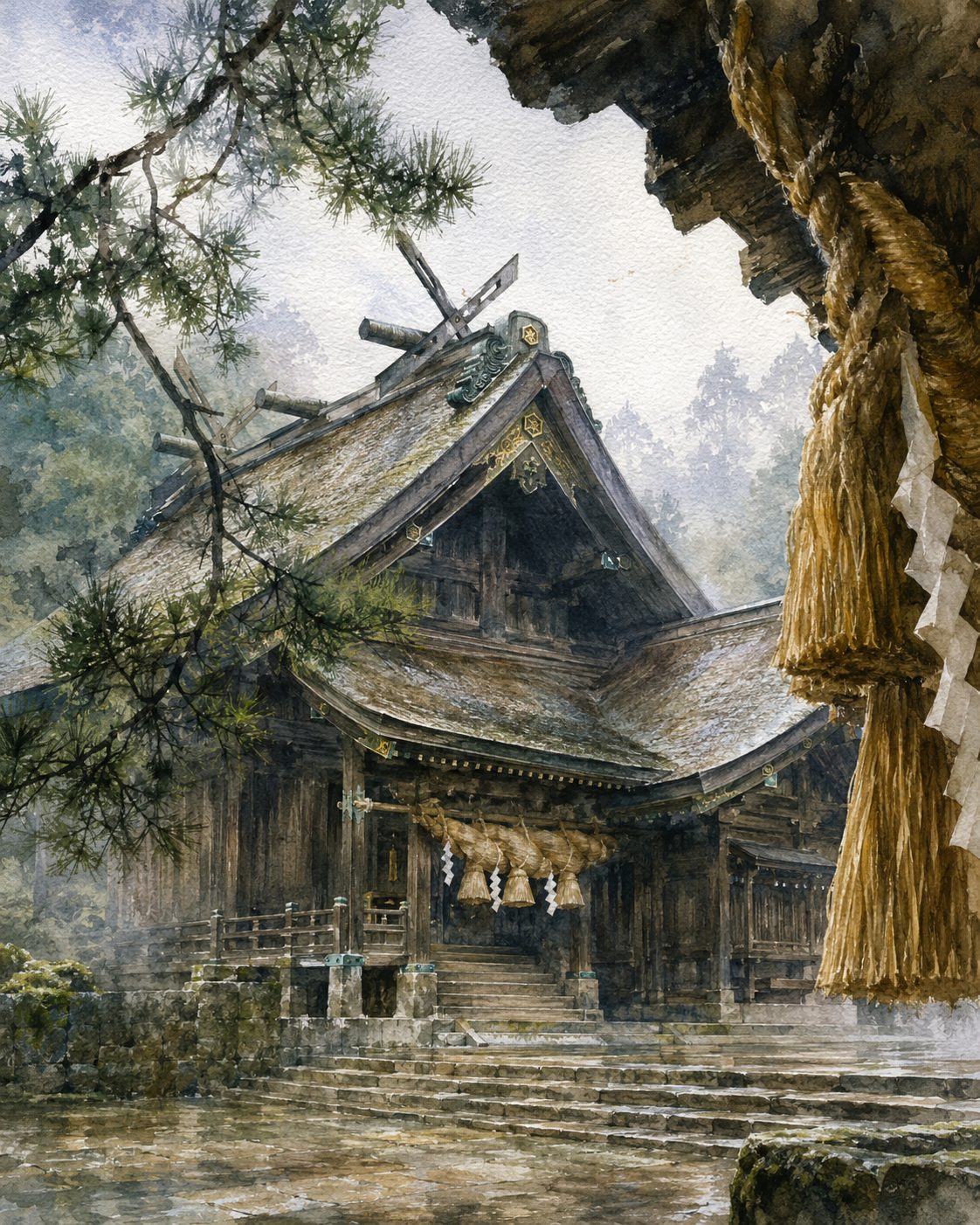
Threshold of the Sacred Mist
Critique
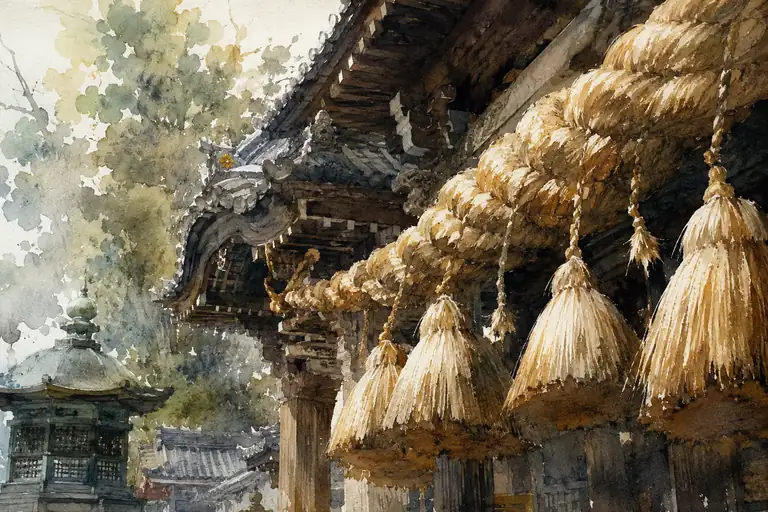
1. Introduction This watercolor painting captures the serene atmosphere of a traditional Japanese Shinto shrine nestled deep within a misty forest. The artwork masterfully depicts the dampness of the air and the weathered texture of ancient timber through a combination of delicate washes and precise detailing. The subdued color palette that dominates the composition strongly conveys the solemnity and quiet dignity inherent to such sacred grounds. It is a work that encapsulates a unique Japanese aesthetic, where historical architecture and the surrounding natural environment exist in perfect harmony. 2. Description The central focus is the main hall of the shrine, featuring a heavy roof with prominent decorative gables (chigi) and ridge-top logs (katsuogi). A large sacred straw rope (shimenawa) with paper tassels (shide) hangs from the eaves, while an even larger rope is depicted in close-up on the right foreground, providing a significant visual impact. Stone steps leading up to the shrine appear slightly damp and reflective, surrounded by towering cedars and pines shrouded in mist. Pine branches extending from the upper left create a natural frame, leading the eye toward the hazy, distant forest. 3. Analysis The composition creates a powerful sense of depth by placing the massive straw rope in the immediate foreground, contrasting it with the recessed main hall. The color strategy is grounded in earthy ochres and browns of the wooden structures and thatched roofs, set against deep forest greens and the ethereal white of the mist. Technically, the use of the wet-in-wet method effectively renders the atmospheric fog, while sharp, detailed strokes are employed to define the individual strands of straw and the structural integrity of the architecture. This balance between soft diffusion and crisp realism provides both density and spatial breadth. 4. Interpretation and Evaluation This work goes beyond a mere architectural record, attempting to capture the spirituality and the sense of presence found within a sacred space. The oversized shimenawa serves as a symbol of the boundary to the holy realm, while the mist-shrouded hall suggests a reality beyond human comprehension. The artist demonstrates exceptional draftsmanship and a sensitive command of light, proving a high level of technical maturity. The creative use of texture, which respects the qualities of the watercolor medium, successfully anchors the quiet vitality of traditional Japanese landscapes, making it an outstanding artistic achievement. 5. Conclusion Upon close inspection of the textural details—from the individual fibers of the straw to the sheen of the wet stone steps—the initial impression of grandeur deepens into a tactile understanding of the space. The moist, silent air sharpens the viewer's senses, drawing them further into the depths of the sanctuary. This painting maximizes the expressive potential of watercolor to revitalize the profound beauty of Japan’s ancestral landscapes. Ultimately, the shrine scene stands as a universal symbol of beauty where unchanging tradition and the cycles of nature are perfectly reconciled, leaving a lasting mark on the viewer’s heart.
Same Subcategory
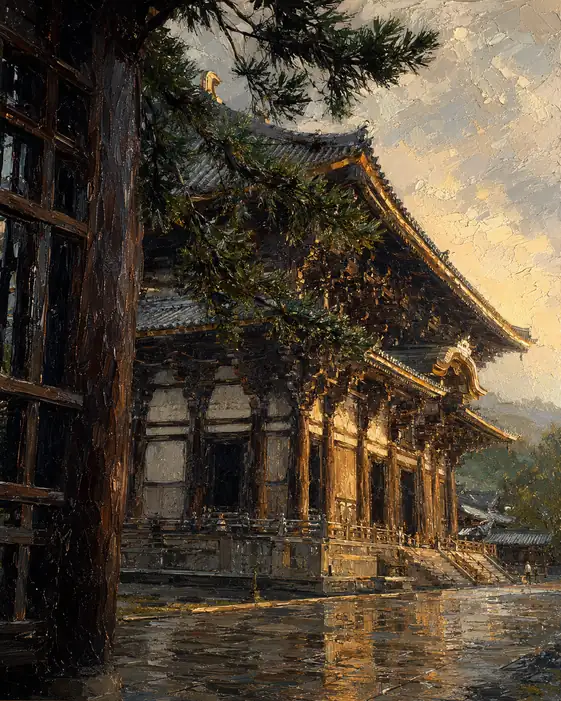 Sanctuary of Shimmering Gold
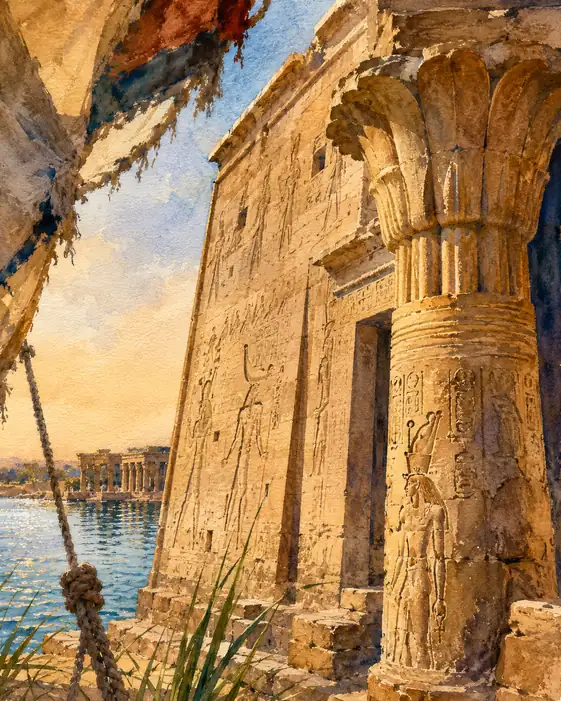 Echoes of Eternity by the Eternal River
Similar Artworks
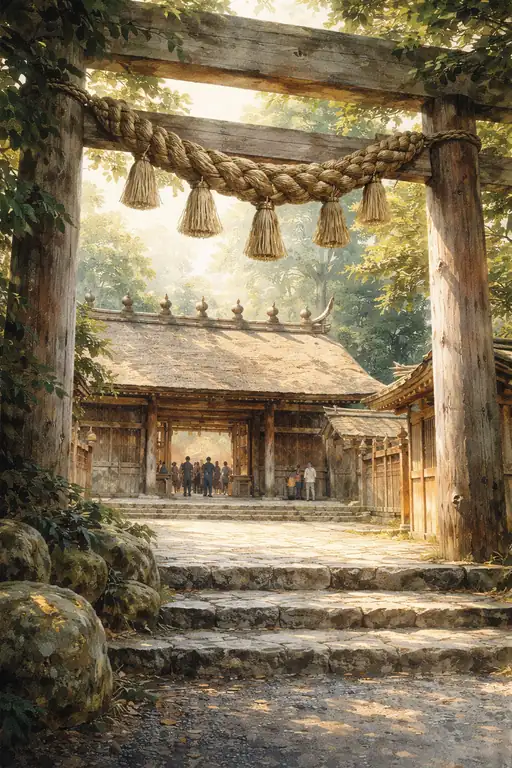 Awakening the Sacred Path
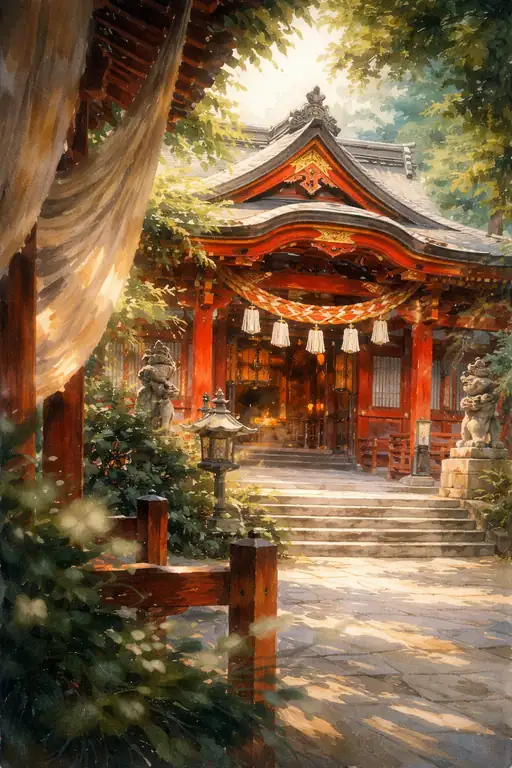 Sunlight Upon the Vermilion Pillars
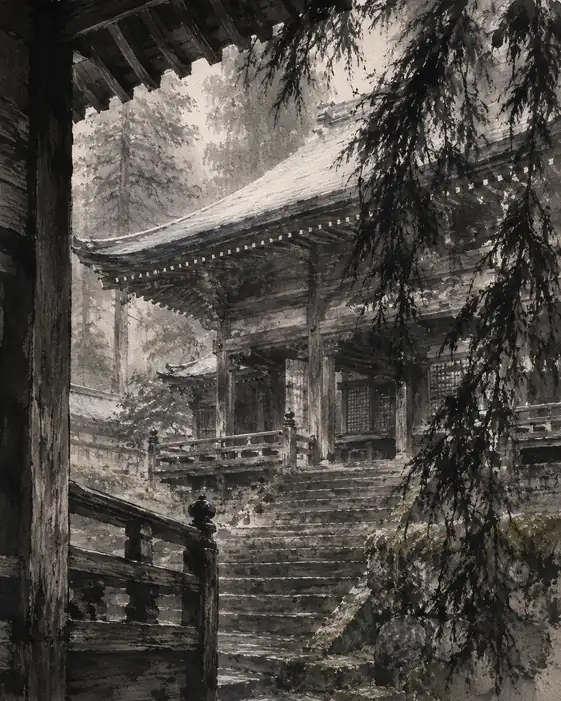 The Sacred Silence of the Mist
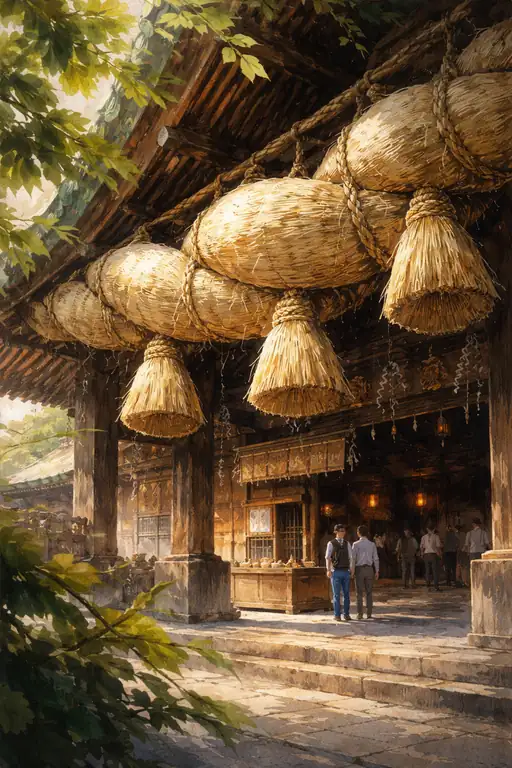 Silent Prayers Under the Sacred Canopy
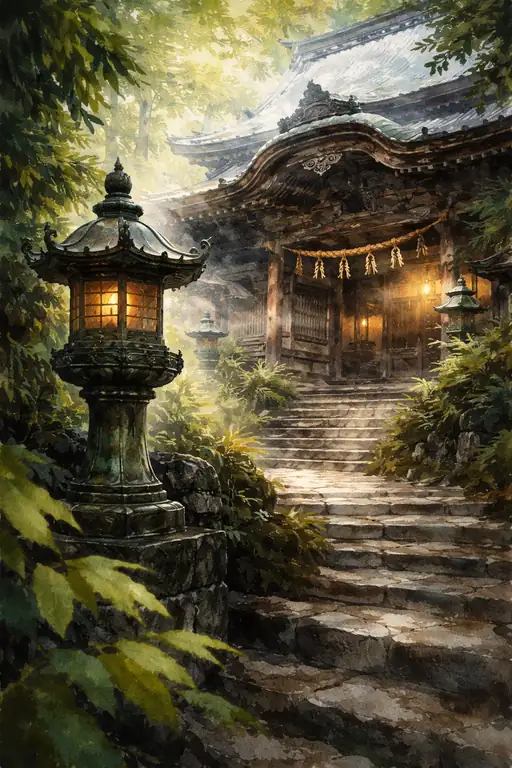 Sanctuary of the Silent Forest
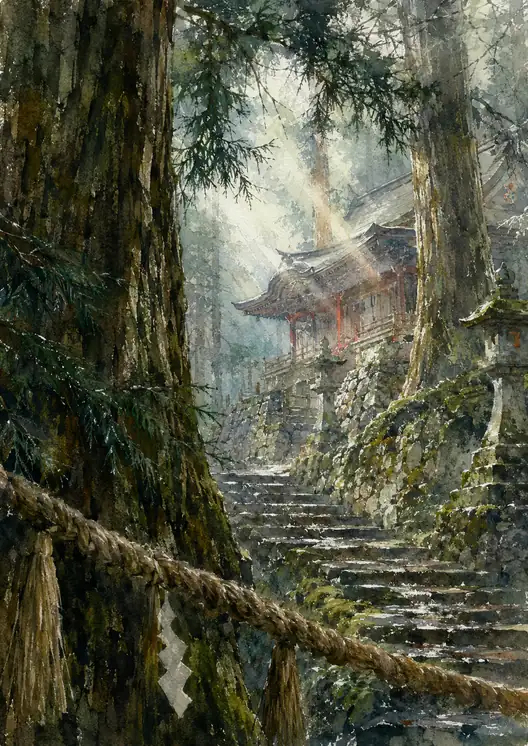 Sanctuary of the Piercing Light
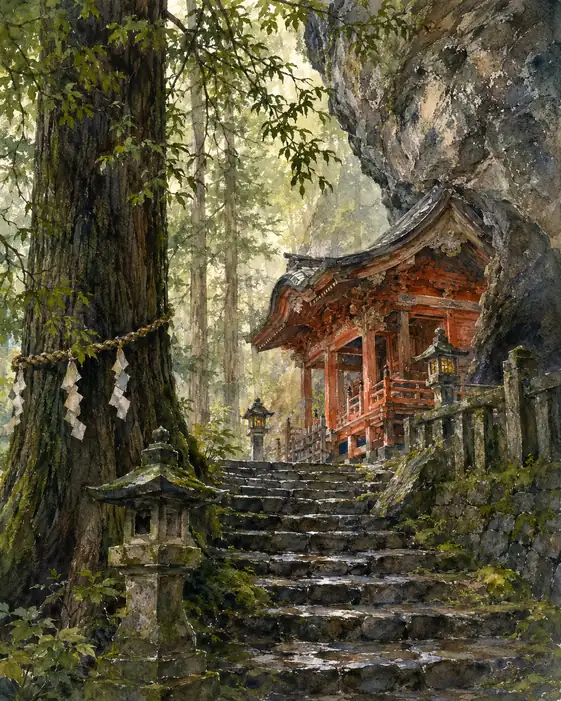 The Ancient Spirit’s Sanctuary
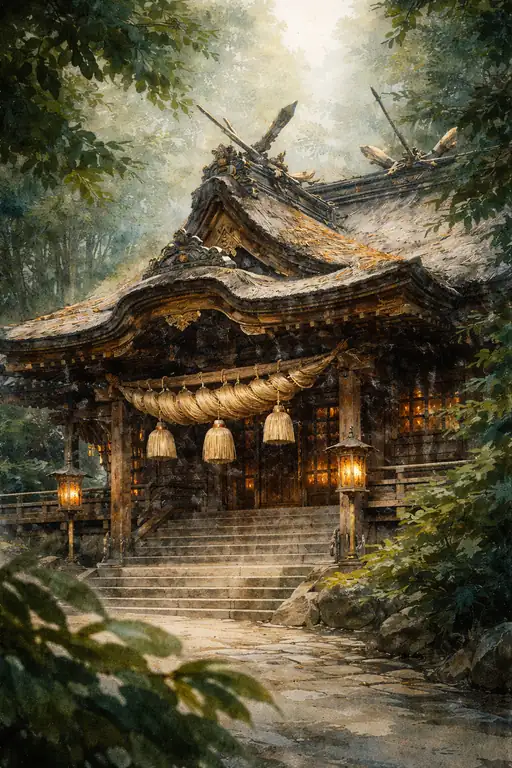 The Sacred Silence of the Moss-Covered Hall
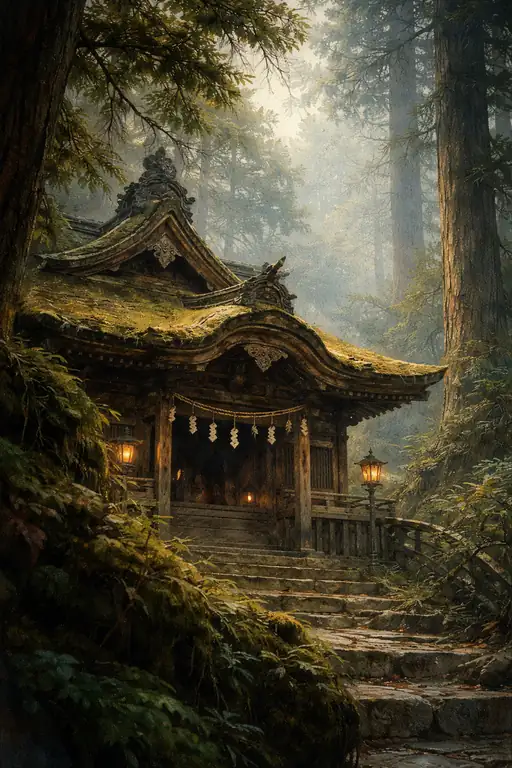 Sanctuary in the Shadows
 Whispers of the Sacred Boundary