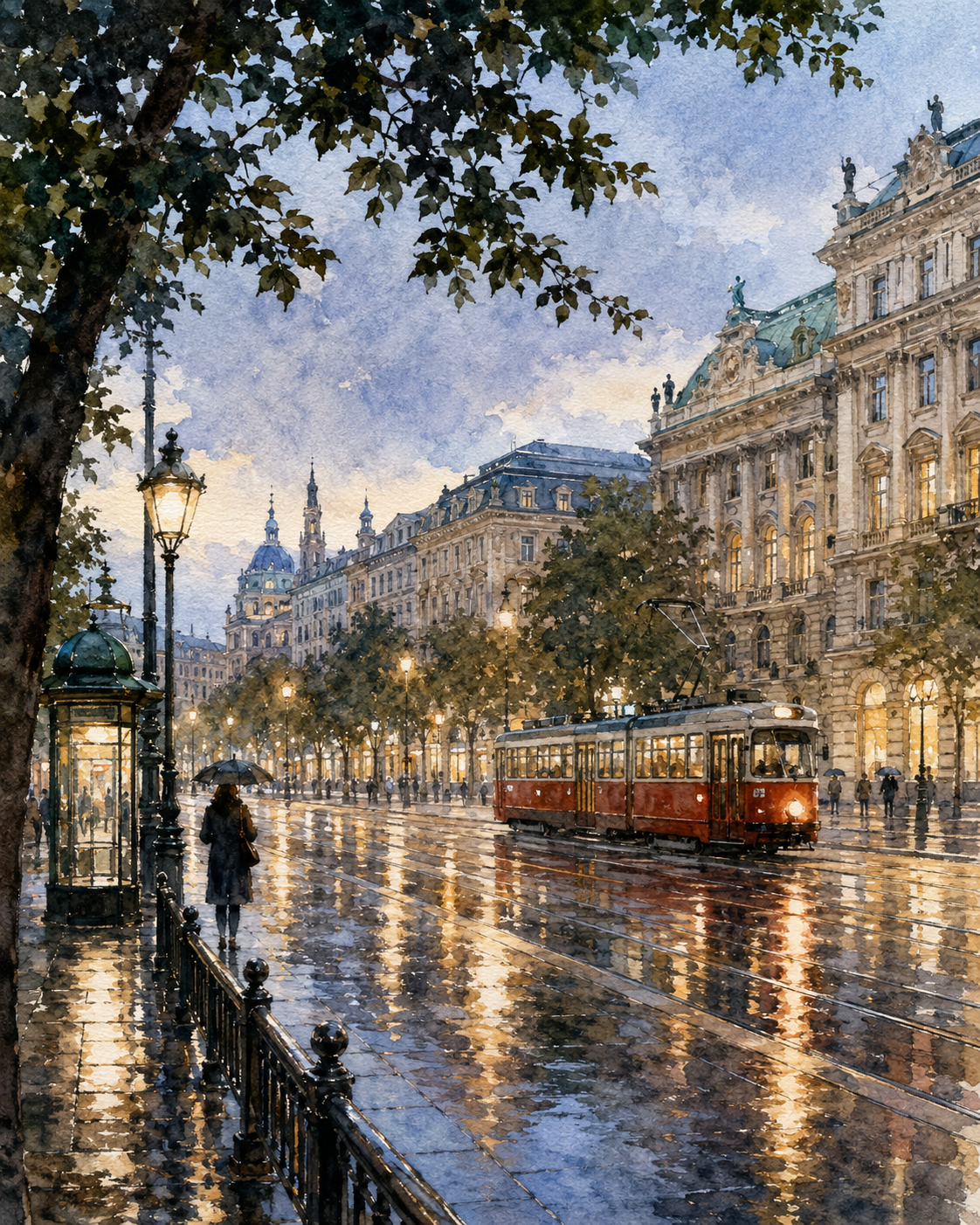
Twilight Waltz on the Rainy Boulevard
Critique
1. Introduction This watercolor painting captures a poignant evening scene of a European boulevard, featuring a vintage tram navigating rain-slicked streets. The artwork masterfully depicts the interplay between the fading twilight and the warm artificial light emanating from grand buildings, all reflected beautifully upon the wet pavement. The inherent transparency of the watercolor medium is utilized to its fullest extent, harmonizing with meticulous detail to transport the viewer to a timeless urban setting. It is a sophisticated piece that successfully encapsulates both the atmosphere of a post-rain city and the quietude found within urban bustle. 2. Description A red and white tram occupies the central right portion of the composition, gliding along tracks that shimmer with reflections. To the right, a line of imposing neoclassical buildings features intricate architectural details and glowing windows that cast a golden light onto the scene. In the lower-left foreground, a person holding an umbrella stands near a streetlamp, adding a narrative element and a sense of scale. The ground acts as a mirror, replicating the city’s lights in elongated streaks of color, while a domed tower is visible in the misty distance under a sky transitioning from blue-grey to soft orange. 3. Analysis The composition employs strong perspective lines created by the tram tracks and the facade of the buildings, drawing the viewer’s eye deep into the urban space. The color palette is exceptionally balanced, contrasting the cool, atmospheric tones of the rainy sky with the vibrant warmth of the interior lights and the tram’s crimson exterior. Technically, the artist excels in the use of the wet-in-wet technique for the sky and reflections, while employing finer strokes for the architectural ornamentation. The strategic use of white space and light washes effectively recreates the dazzling glare of streetlights on the wet asphalt. 4. Interpretation and Evaluation This work can be interpreted as a poetic observation of urban life, where the rain serves as a catalyst for visual transformation. The combination of the traditional tram and historic architecture symbolizes the intersection of progress and heritage, wrapped in a romanticized atmosphere. The artist demonstrates superior draftsmanship and a sensitive command of color, with the innovative rendering of light reflections being particularly noteworthy. The evocative world created here possesses a strong artistic power that resonates with the viewer’s emotions, leaving a lasting impression of beauty and nostalgia. 5. Conclusion Upon close examination, the painting reveals itself to be more than a record of a city; it is a delicate melody of light and shadow. The transformation of a mundane wet street into a fantastical layer of luminous reflections is the most compelling aspect of the work. This piece shows a complete mastery of the watercolor medium, using it to articulate the very soul of the city at dusk. Ultimately, the scene encourages a rediscovery of the beauty hidden in ordinary moments, cementing itself in the observer’s memory as a vivid and enchanting landscape.
Same Subcategory
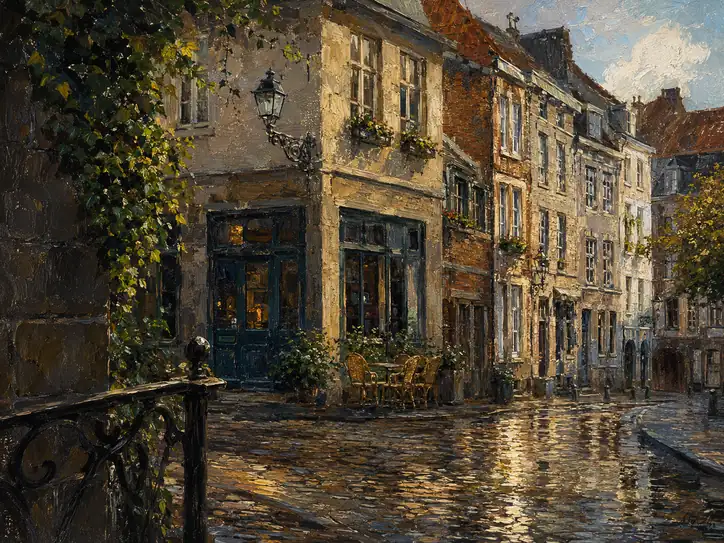 When the Cobblestones Mirror the Sky
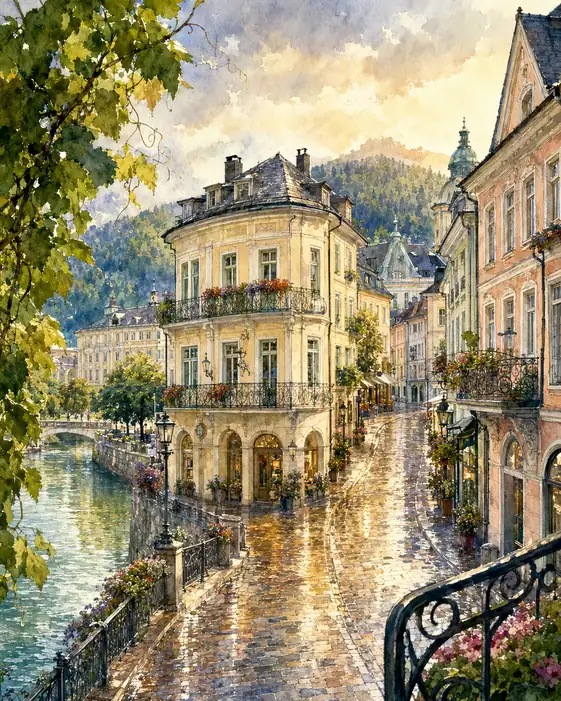 After the Rain in the Ochre City
Similar Artworks
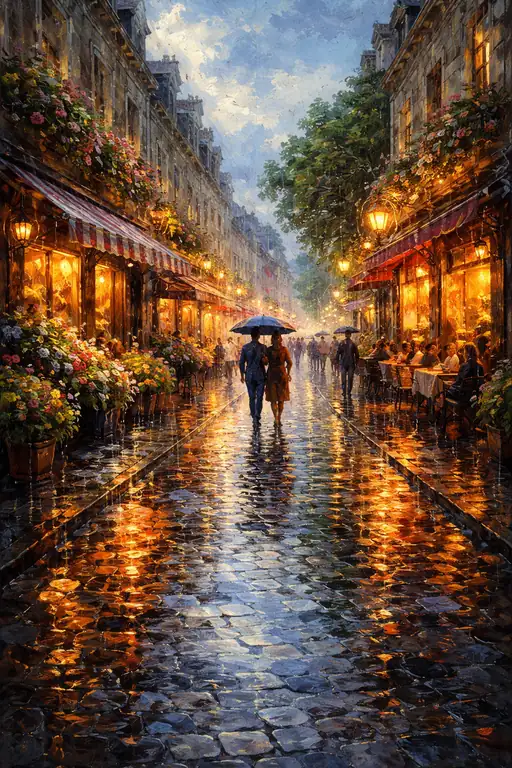 A Dance of Rain and Warmth
 Nostalgia on the Red Line
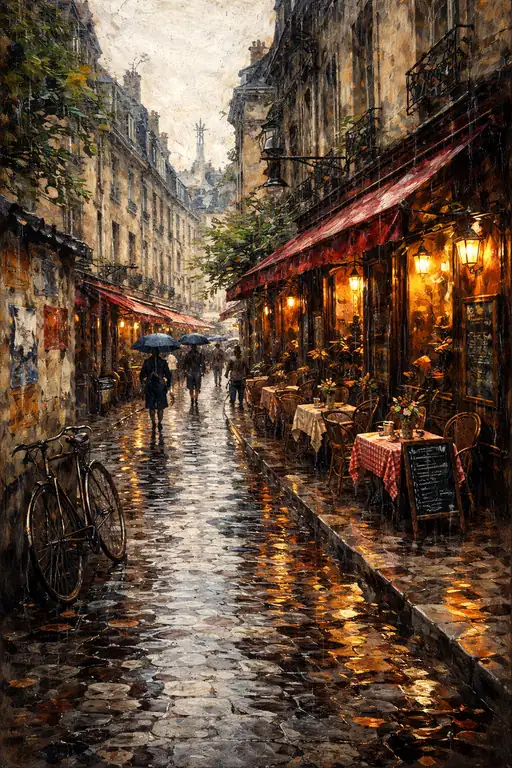 Tears of the Prismatic Night
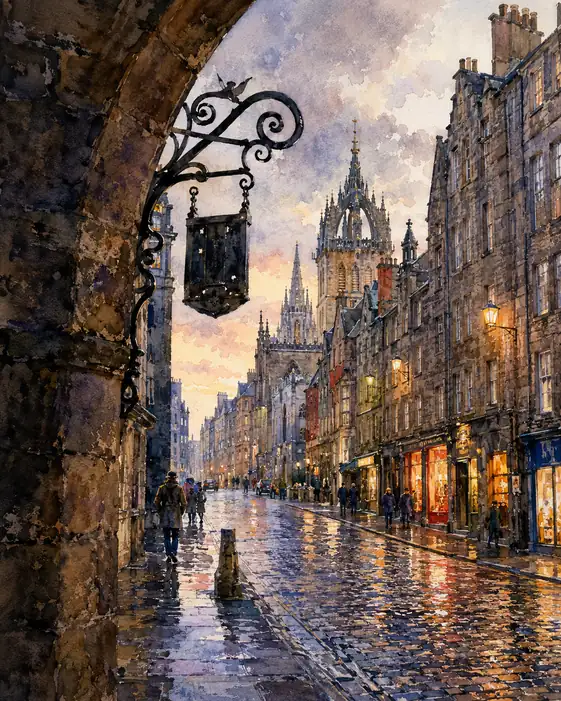 Gleam of the Wet Cobblestones
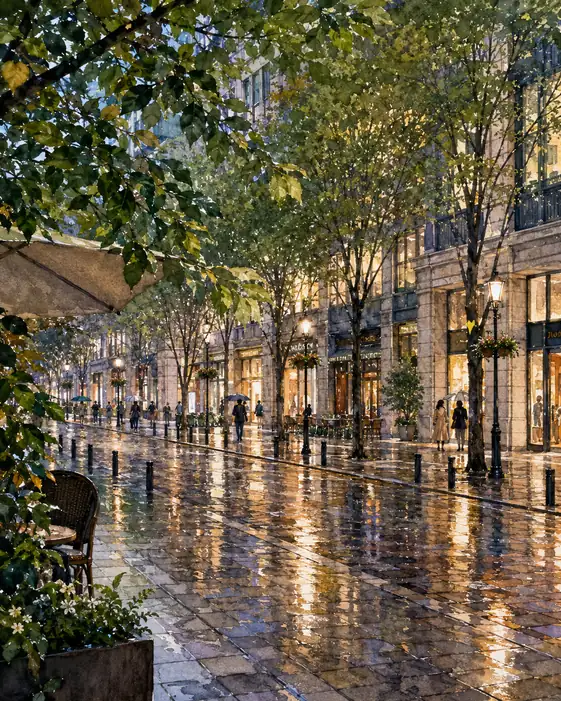 Reflections of Gold: A Stroll Through the Evening Rain
 Midnight Journey Through Lisbon's Golden Veins
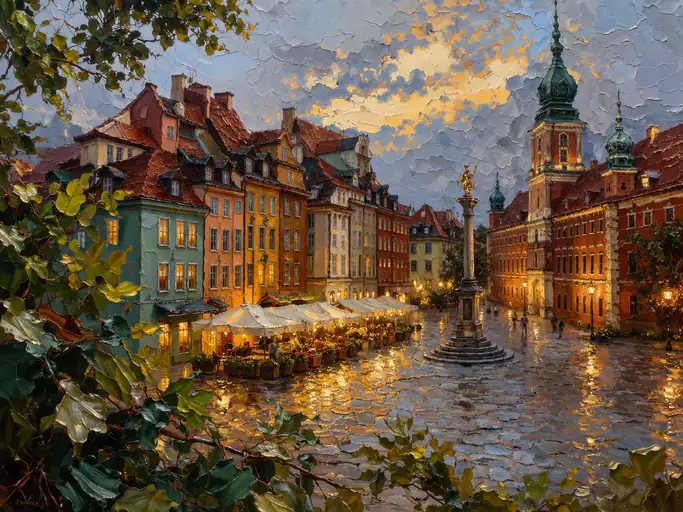 Twilight Reflections: The City's Golden Glow
 Golden Shelter from the Night
 Echoes of a Sunlit Afternoon
 The Vessel of Warmth in a Cooling City