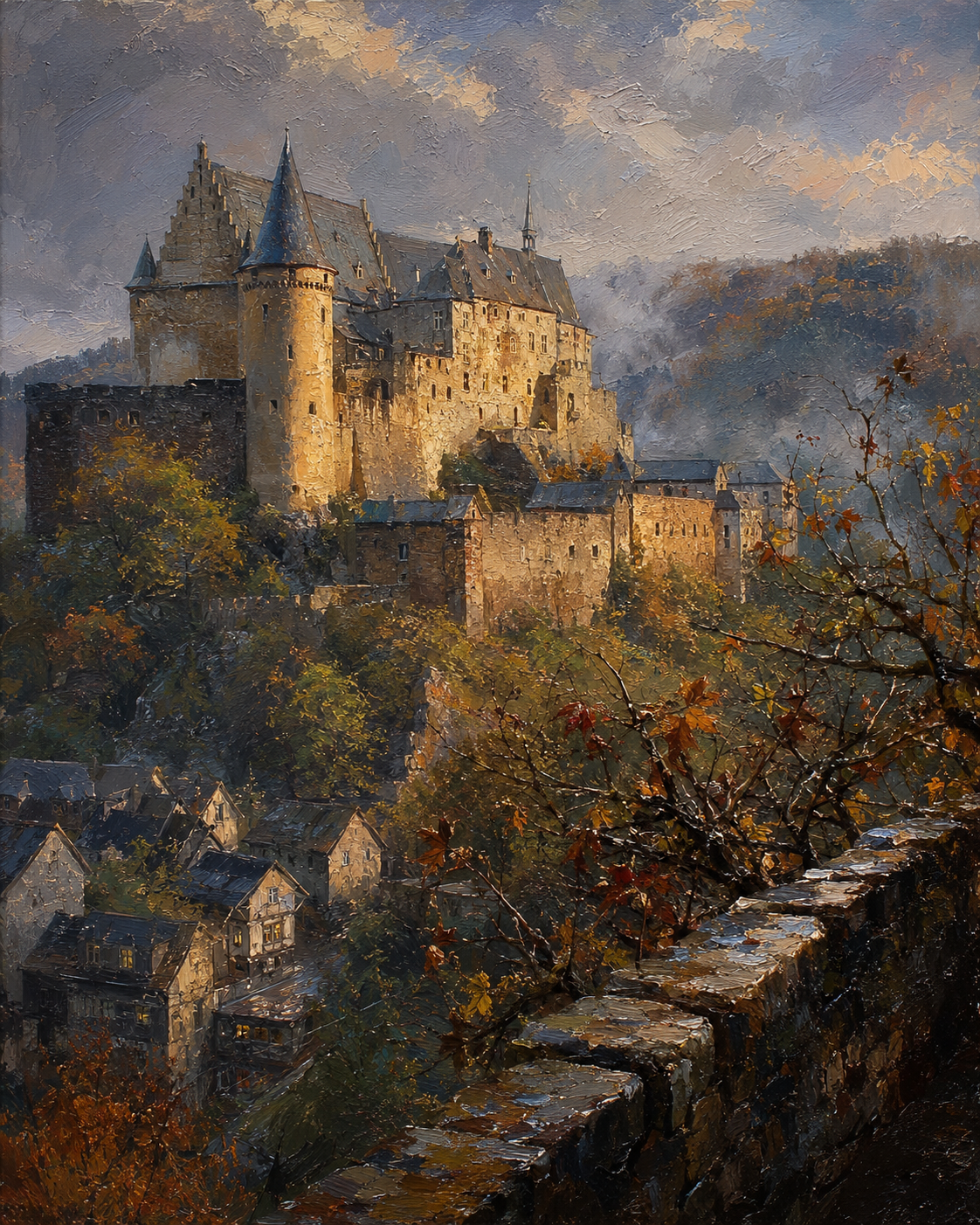
Guardian of the Golden Hour
Critique
1. Introduction This oil painting depicts a majestic medieval castle standing atop a rugged mountain, overlooking a peaceful village. The work features powerful impasto brushwork, effectively blending classical realism with expressive modern techniques. The viewer is immediately captivated by the golden fortification illuminated by a setting sun, which stands in contrast to the cool shadows below. It is a piece that masterfully captures the historical atmosphere and mystery of a highland landscape. 2. Description The central focus is a stone fortress with conical turrets, standing against a swirling sky. Thick layers of paint emphasize the rugged texture of the masonry, reflecting the warm highlights of late afternoon light. Below the castle, subsidiary structures descend into wooded slopes where half-timbered houses are nestled. In the foreground, a stone balustrade frames the view, providing a sense of scale and leading the eye toward the misty, distant mountains. 3. Analysis The composition utilizes a multi-layered approach, establishing a deep perspective that guides the viewer toward the elevated castle. The color palette is sophisticated, centered on the opposition between the brilliant ochre highlights and the deep violet tones of the shadows. The brushstrokes are dynamic and gestural, particularly in the clouds and foliage. This interplay of light and texture reinforces the structural solidity while maintaining a vibrant energy across the entire canvas. 4. Interpretation and Evaluation This work can be interpreted as an exploration of the relationship between permanent monuments and ephemeral light. The castle stands as a symbol of continuity, yet it is visually transformed by the fleeting sunset. The artist demonstrates exceptional skill in composition and the handling of architectural forms. The creative use of texture elevates the scene beyond mere representation, creating an emotionally resonant experience that highlights the artist's unique technical prowess and artistic vision. 5. Conclusion The initial impression of grandeur evolves into a deeper appreciation for the painting's tactile qualities and spatial depth. The contrasting elements of light and shadow find a harmonious resolution within the central symbol of the fortress. This painting honors the traditions of landscape art while infusing the genre with a modern, vigorous energy. Ultimately, the scene serves as a powerful testament to the evocative potential of oil painting in capturing the essence of a place.
Same Subcategory
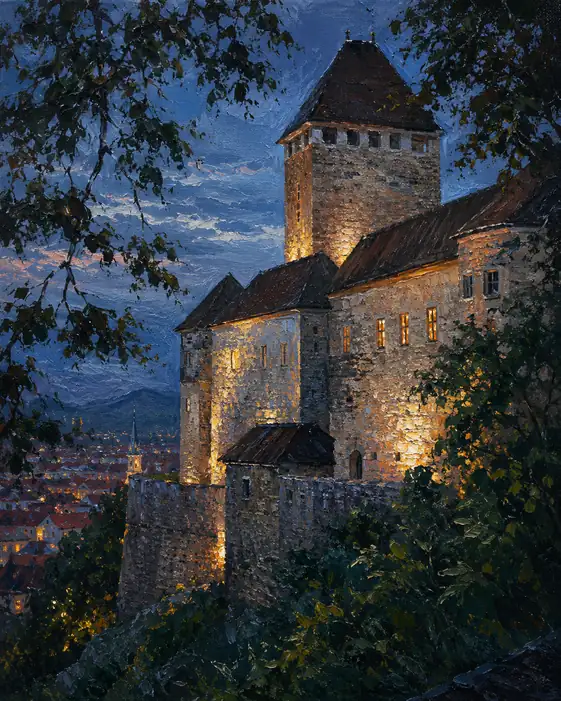 The Sentinel in Golden Light
Similar Artworks
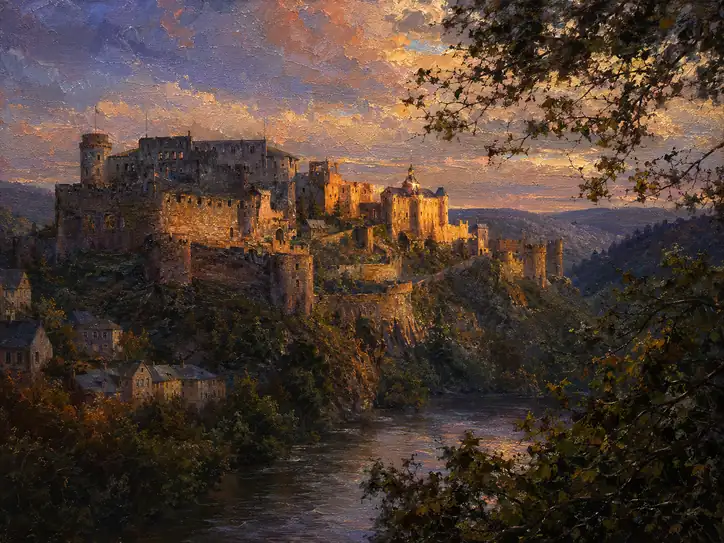 Guardians of the Crimson Sunset
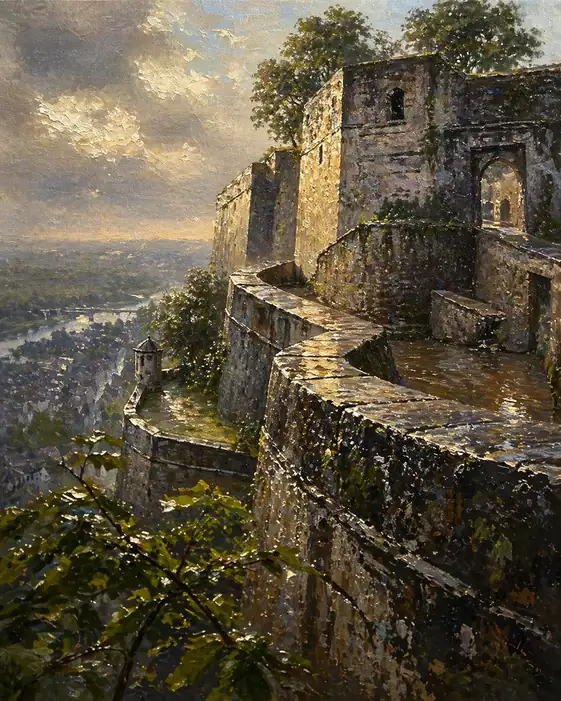 Citadel of Eternal Shadows
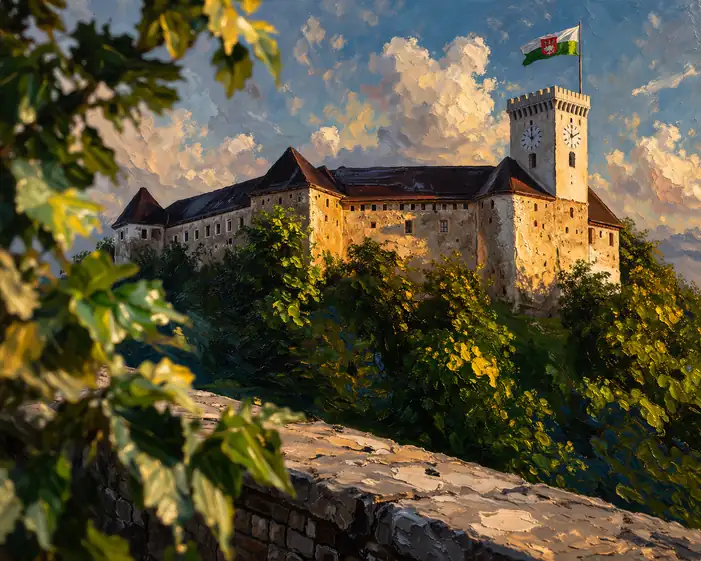 Citadel of the Golden Hour
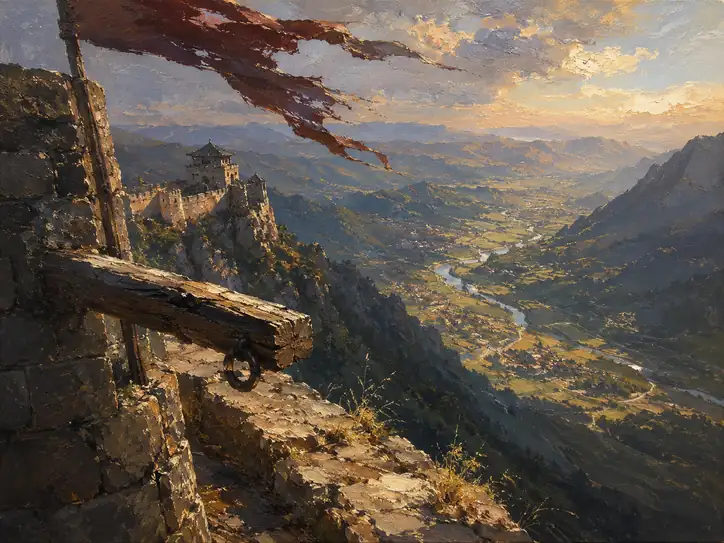 Vigil O'er the Golden Vale
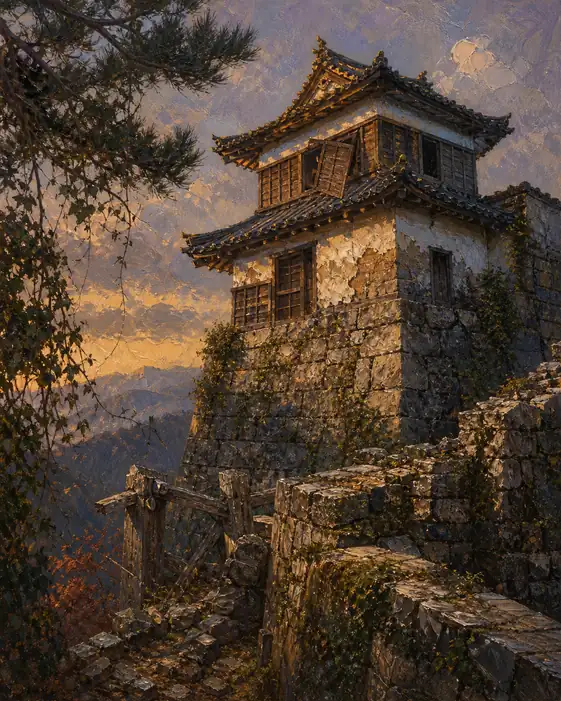 Silent Resilience on the Ancient Ramparts
 Zenith of the Golden Fortress
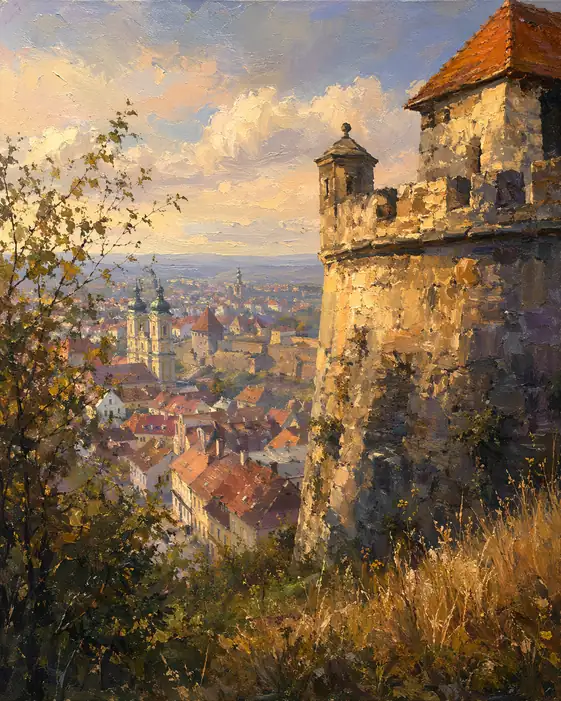 The Golden Fortress: Time and Light
 Golden Legacy of the Hilltop Citadel
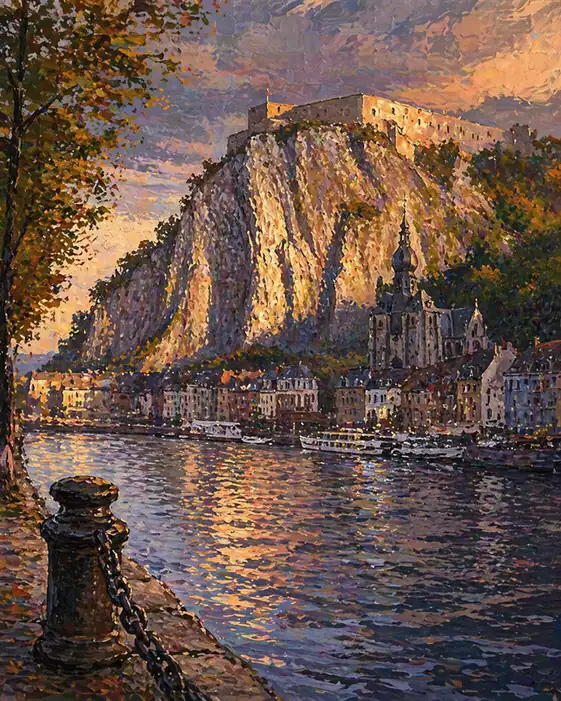 Golden Echoes of the Citadel
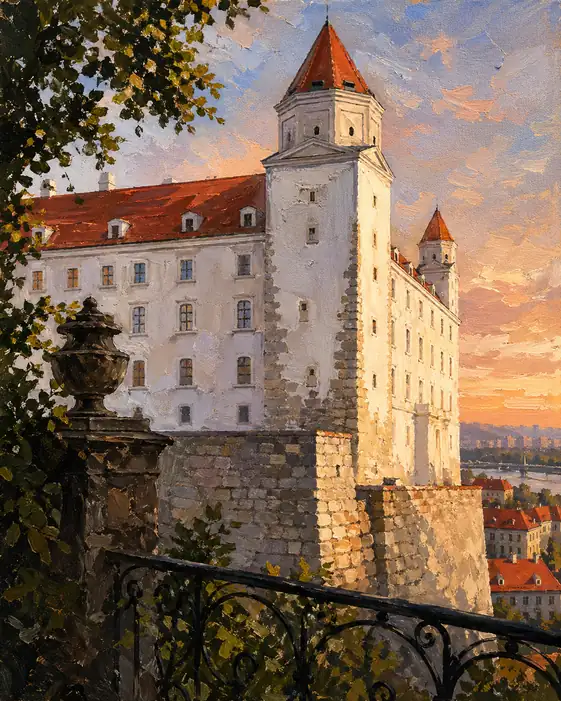 Twilight's Embrace on the Castle Walls