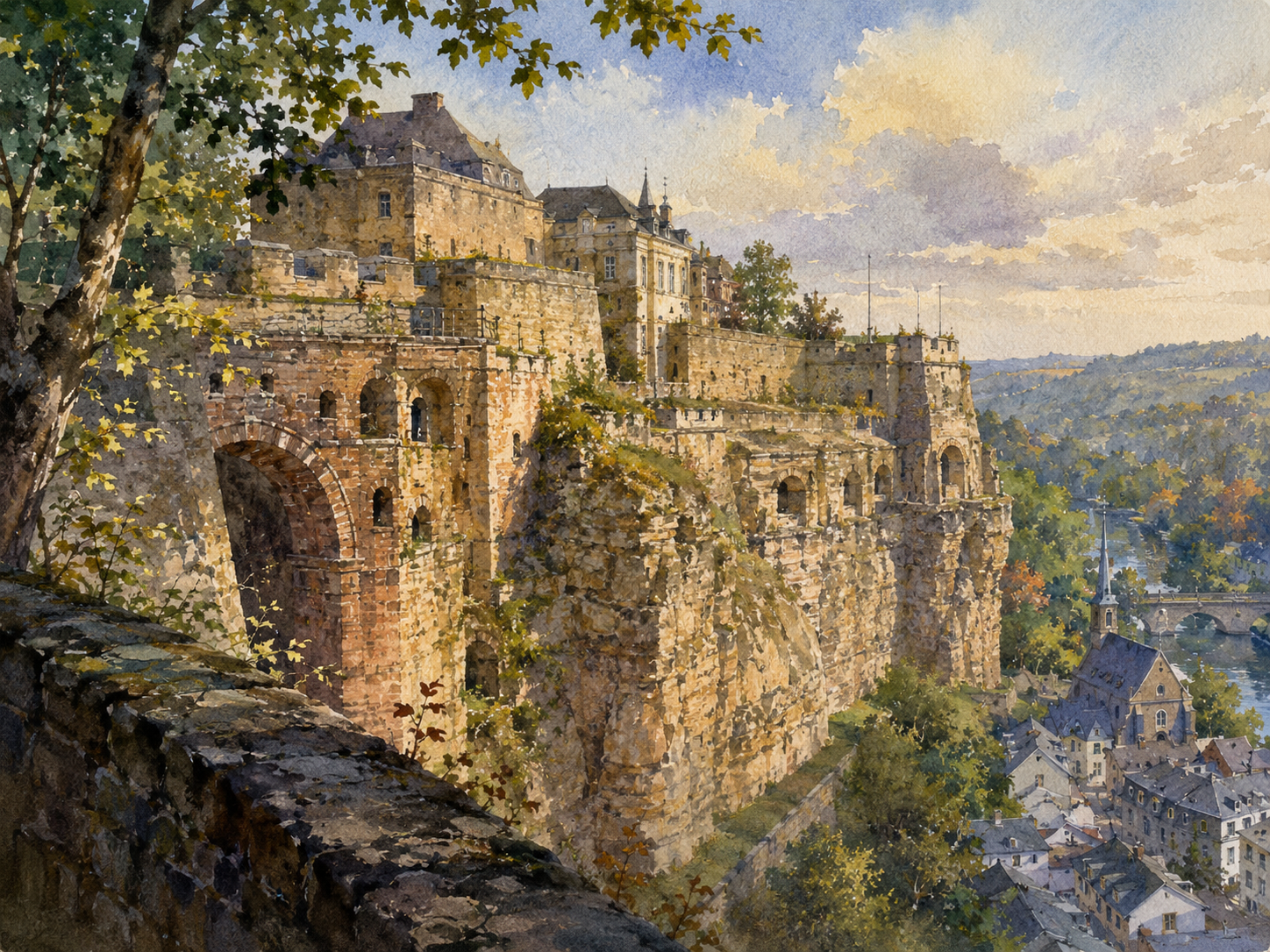
Citadel of the Radiant Heights
Critique
1. Introduction This vibrant watercolor painting depicts a historic European citadel built directly into a massive sandstone cliff, overlooking a bustling town nestled in a river valley. The artist utilizes the luminous quality of the medium to capture a bright, sun-filled day, where every stone and leaf seems to vibrate with light. The composition is structured around the verticality of the fortifications, creating a sense of awe at the engineering and history embedded within the landscape. The atmosphere is one of peaceful coexistence between the formidable defenses of the past and the quiet, everyday life of the town below. 2. Description The main focus is the towering cliff face, characterized by tiered stone walls, arched openings, and grand buildings that crown the summit. The warm, golden hues of the sun-baked stone contrast with the cool, blue-grey slate roofs of the houses in the lower valley. A prominent church with a slender spire stands near a winding river, which is crossed by a multi-arched stone bridge in the distance. Lush green trees grow from the crevices of the rocks and line the riverbank, while a foreground stone wall and overhanging maple leaves frame the view from a high vantage point. 3. Analysis The artist employs a meticulous watercolor technique, combining crisp, detailed brushwork in the architecture with soft, atmospheric washes in the sky and distant hills. The light source is clearly defined from the upper right, casting long, cool shadows that emphasize the rugged texture of the cliff and the three-dimensional forms of the buildings. The color palette is rich and varied, using ochre, sienna, and umber for the stone, which are balanced by the vibrant greens of the foliage and the pale violets in the shadows. The use of perspective is expert, guiding the eye from the intimate foreground details down to the expansive valley and toward the hazy horizon. 4. Interpretation and Evaluation The painting successfully conveys the layered history of a city like Luxembourg or a similar European fortress town, where nature and architecture are inextricably linked. By emphasizing the sunlight, the artist transforms a potentially imposing subject into a scene of radiant beauty, suggesting a celebration of cultural heritage and architectural endurance. The technical mastery is evident in the handling of complex architectural perspectives and the convincing representation of different material textures. The balance of light and shadow not only creates depth but also imbues the scene with a sense of vitality and temporal presence. 5. Conclusion Initially, the viewer's attention is captured by the sheer scale of the stone fortifications, but the eye soon wanders to the charming details of the town and the serene river. The work achieves a perfect harmony between the massive, static elements of the citadel and the organic, living components of the trees and sky. It serves as a brilliant example of how watercolor can be used to document complex urban landscapes while infusing them with a poetic, light-filled quality. Ultimately, the painting leaves a lasting impression of stability and grace, honoring the enduring spirit of the historic city it represents.
Same Subcategory
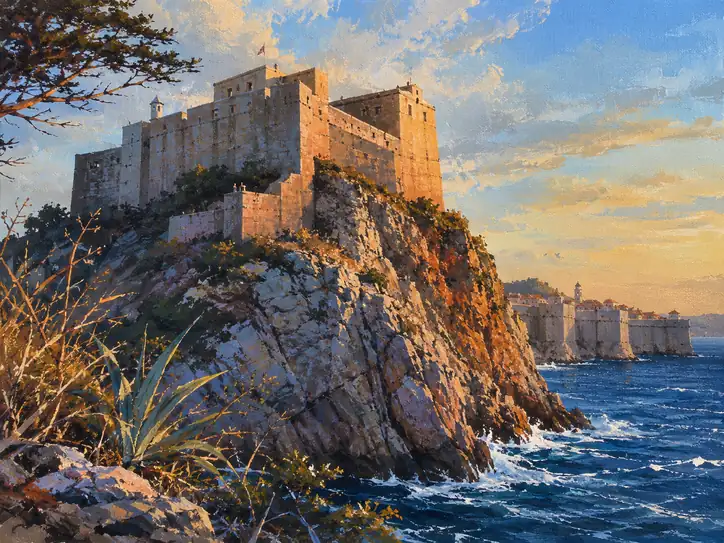 Bastion of the Sunlit Memories
Similar Artworks
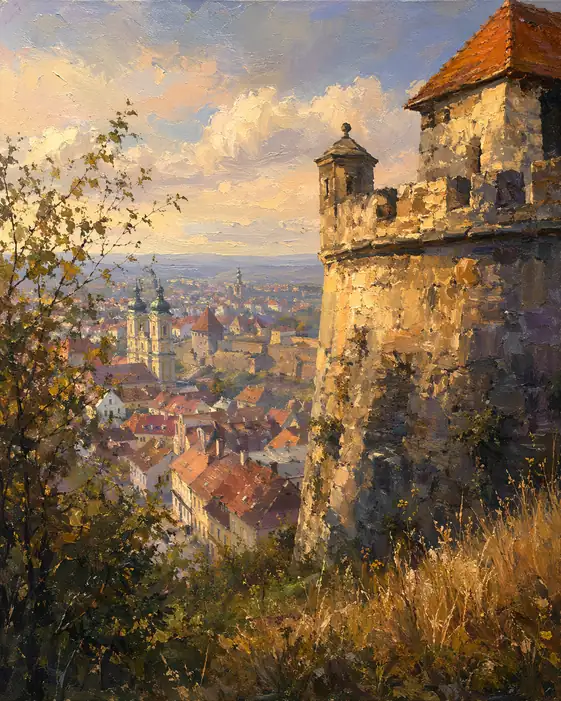 The Golden Fortress: Time and Light
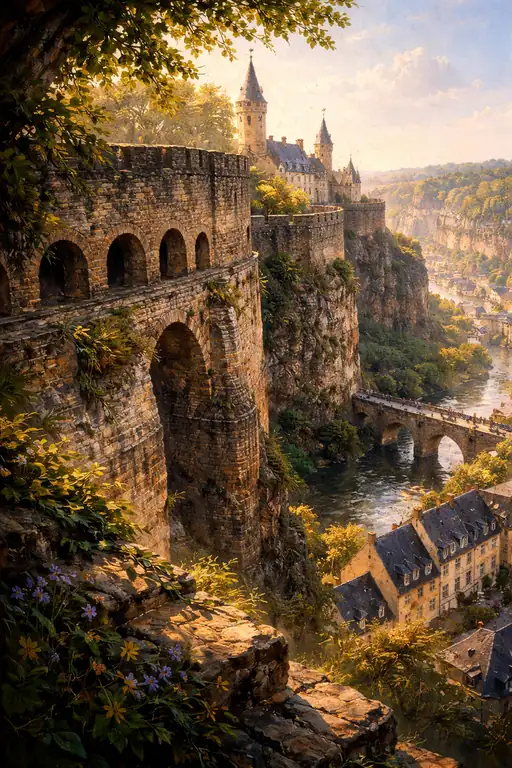 The Enduring Watch Over the Valley
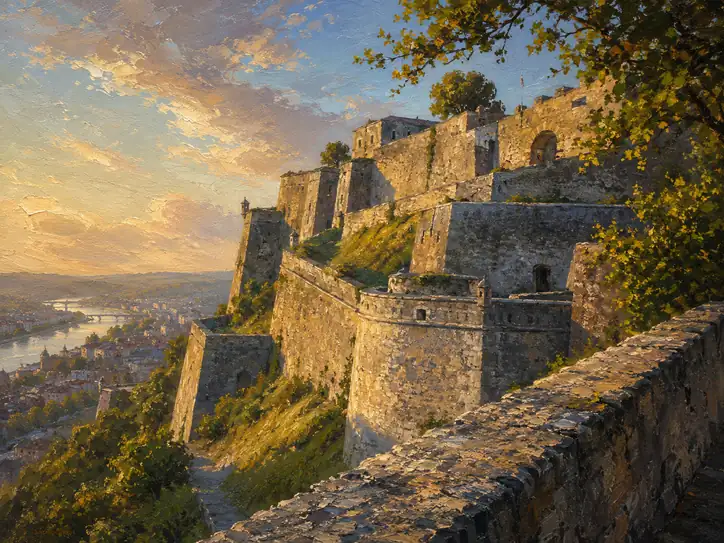 Gilded Walls of the Forgotten King
 The Gilded Citadel of Yesteryear
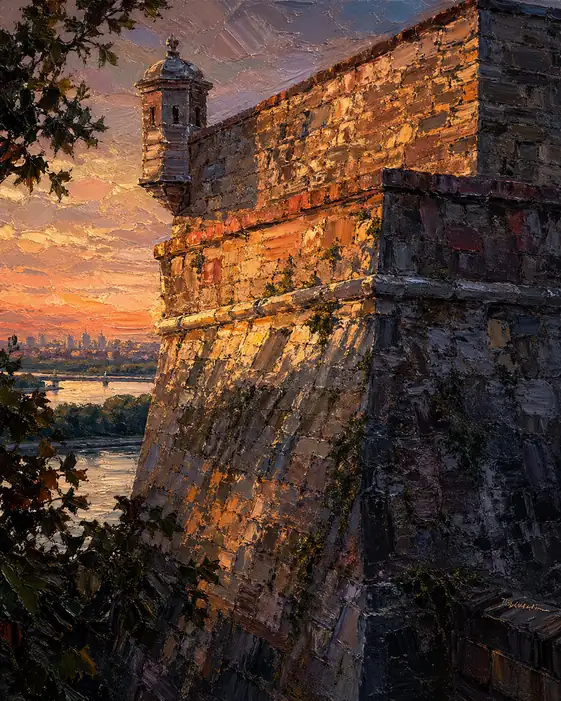 Eternal Witness in Golden Light
 Bastion of the Fading Sun
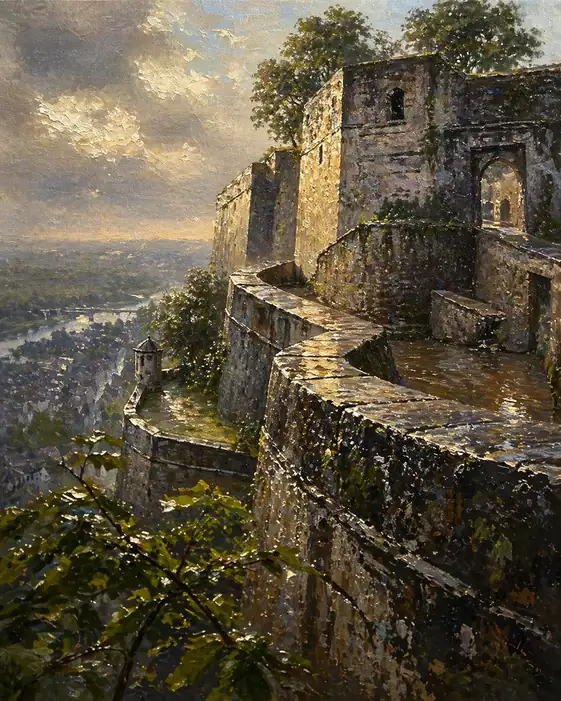 Citadel of Eternal Shadows
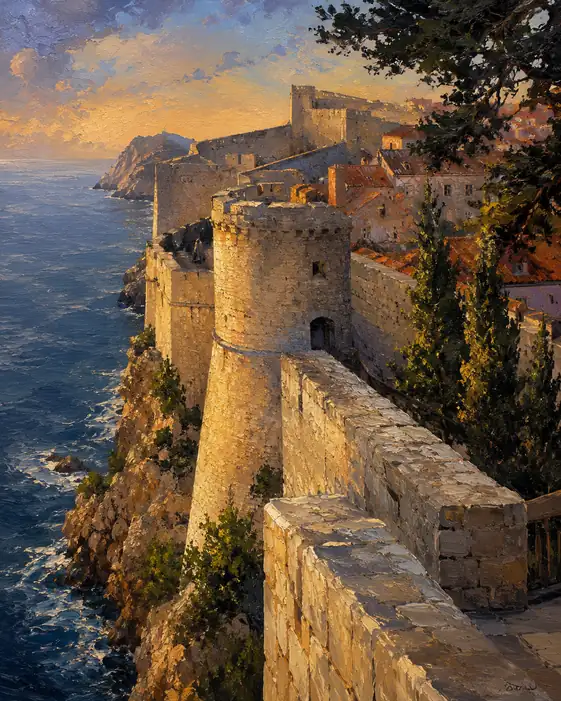 Gilded Sentinel of the Ancient Coast
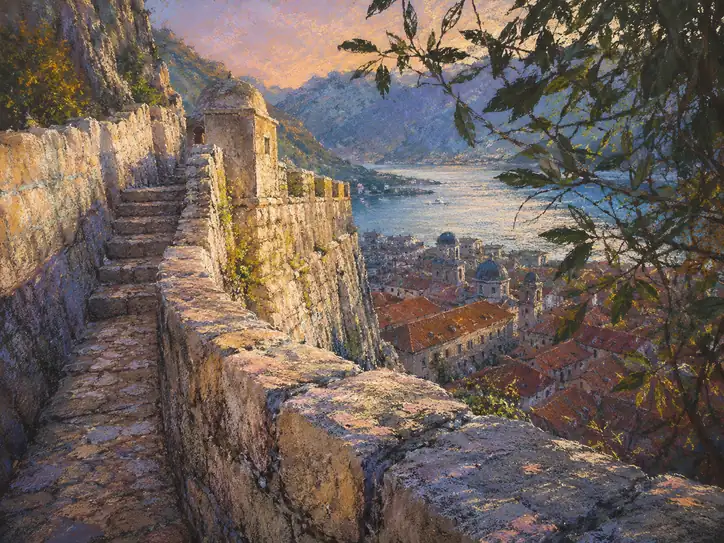 Twilight Sentinel over the Timeless Town
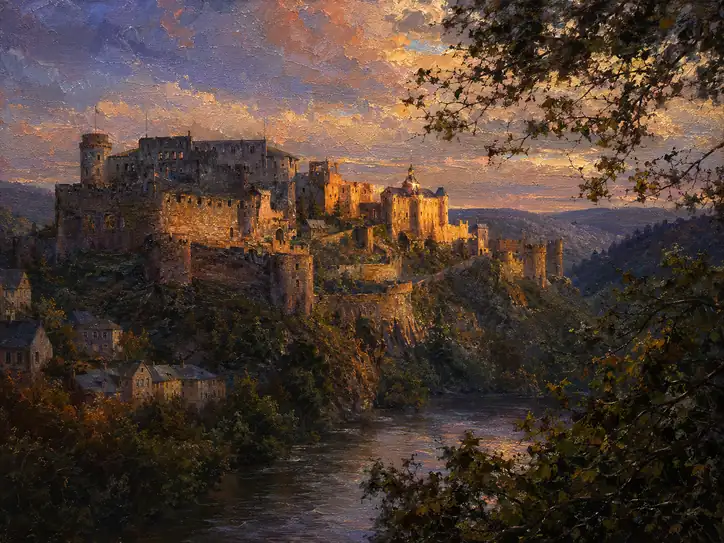 Guardians of the Crimson Sunset