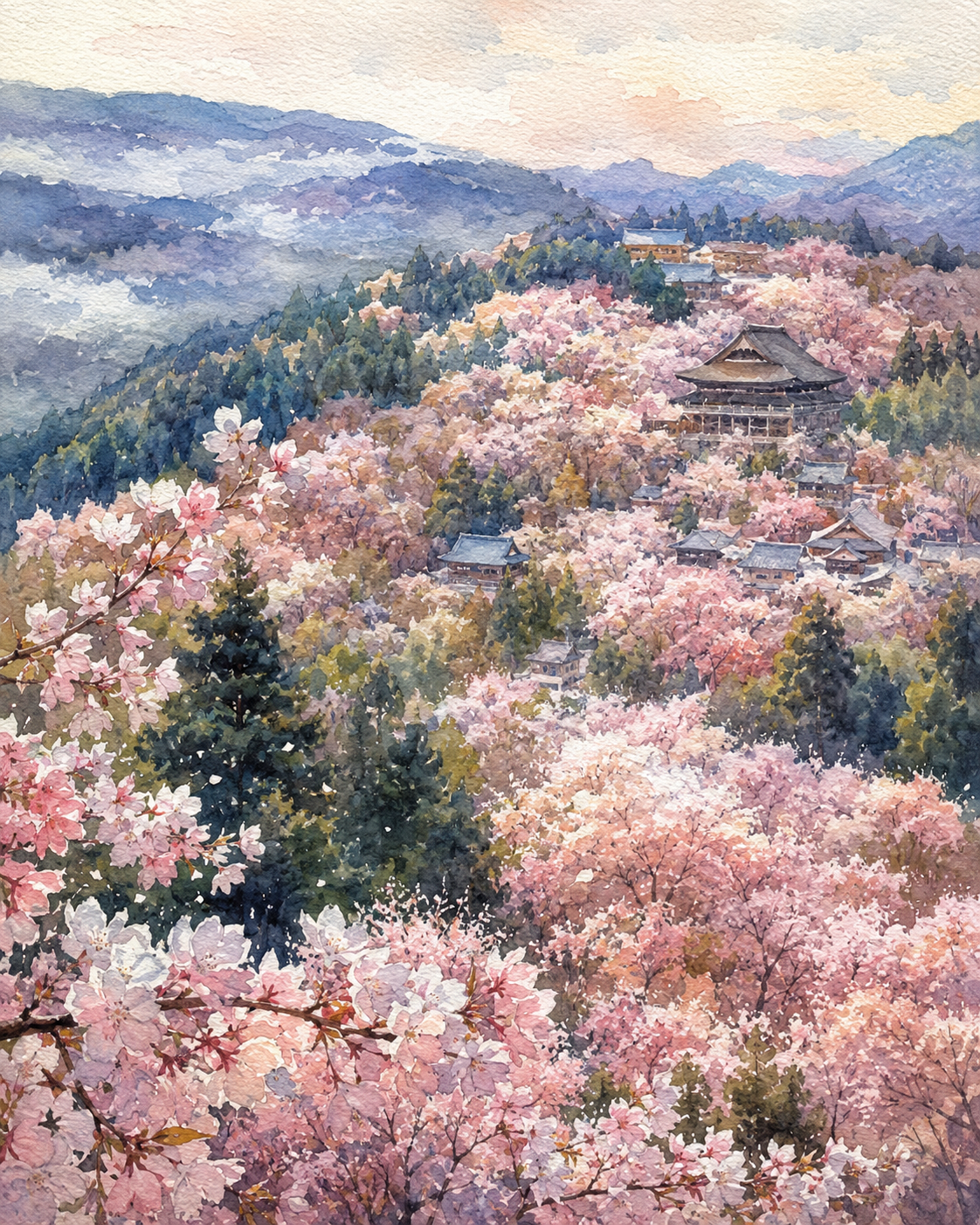
Oceans of Petals in the Mountain Mist
Critique
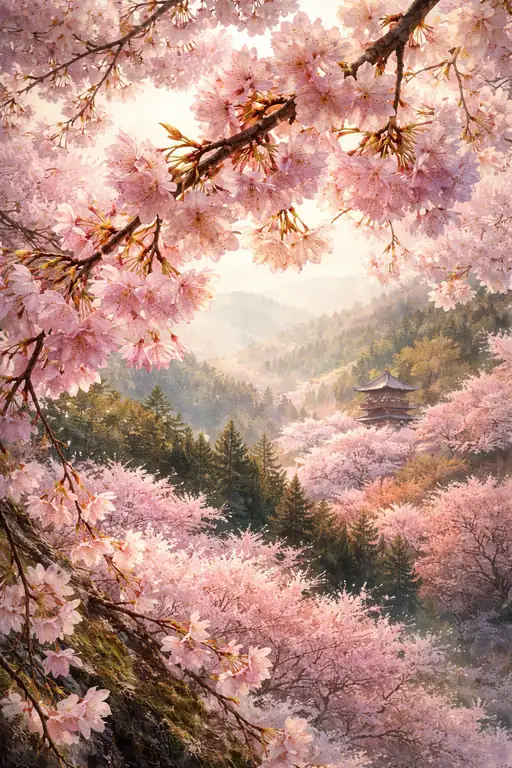
1. Introduction This delicate watercolor painting presents a breathtaking panoramic view of a mountain slope blanketed in cherry blossoms, punctuated by the traditional tiled roofs of a Japanese temple complex. The work utilizes the inherent transparency and fluid nature of the watercolor medium to capture the ephemeral beauty of spring with remarkable sensitivity. A soft, diffused light permeates the scene, creating a dreamlike atmosphere that emphasizes the harmony between the man-made structures and the surrounding landscape. The overall effect is one of serene tranquility, inviting the viewer into a world where time seems to slow down amidst a sea of pink petals. 2. Description The composition is dominated by countless cherry trees in full bloom, rendered in varying shades of pale pink and white that create a soft, cloud-like texture across the hillside. Nestled within this floral abundance are several temple buildings with dark, tiered roofs and intricate wooden details, their solid forms providing a grounding contrast to the ethereal blossoms. In the background, rolling mountains are depicted in hazy shades of indigo and pale blue, partially obscured by low-lying mist or clouds. The foreground features detailed branches of cherry blossoms on the left, which frame the vast landscape and add a sense of intimate proximity to the viewer. 3. Analysis The artist demonstrates a sophisticated mastery of watercolor techniques, employing wet-on-wet washes to create soft transitions in the sky and distant mountains, while using more controlled strokes for the foreground flowers and architectural details. The color palette is restricted yet highly effective, relying on the contrast between the warm, delicate pinks of the blossoms and the cool, receding blues of the background to create depth. Light is handled with great subtlety; there are no harsh shadows, suggesting a high-altitude or slightly overcast spring morning. The rhythmic repetition of the blossoms and the organic flow of the mountainside create a sense of visual continuity and natural grace. 4. Interpretation and Evaluation The painting successfully captures the essence of "mono no aware," the poignant appreciation of the fleeting nature of life, symbolized by the short-lived cherry blossoms. By choosing a high vantage point, the artist transforms a specific site into a timeless representation of seasonal renewal and spiritual peace. The technical execution is exceptional, as the artist manages to convey a vast amount of detail without sacrificing the luminous, airy quality that defines the watercolor medium. The balance between the soft, blurred background and the crisp, detailed foreground is masterfully achieved, guiding the eye through a complex and rewarding visual journey. 5. Conclusion Initially, the viewer is overwhelmed by the sheer volume of pink blossoms, but a closer study reveals the careful placement of the temple buildings as quiet anchors within the scene. The work is a testament to the power of watercolor to evoke a specific mood and atmosphere, perfectly matching the subject's themes of fragility and beauty. It stands as a refined and deeply moving tribute to the Japanese spring landscape, offering a moment of quiet reflection to all who observe it. Ultimately, the painting leaves a lasting impression of lightness and grace, embodying the very spirit of the season it so beautifully depicts.
Same Subcategory
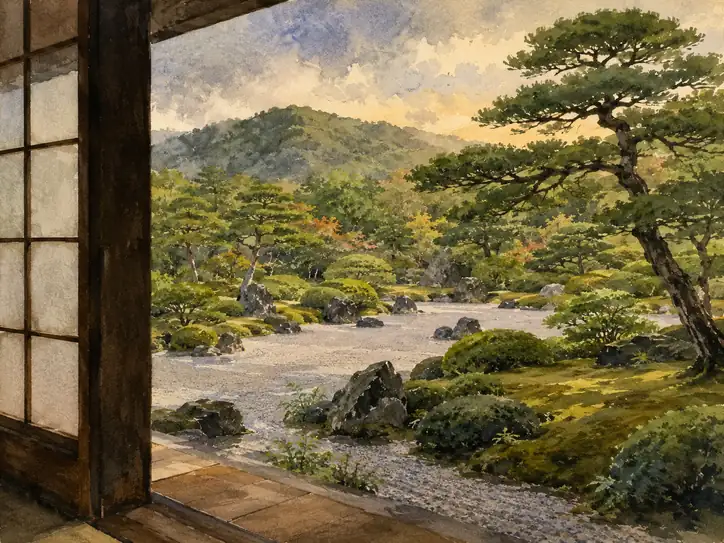 The Silent Threshold: A Window into Zen
Similar Artworks
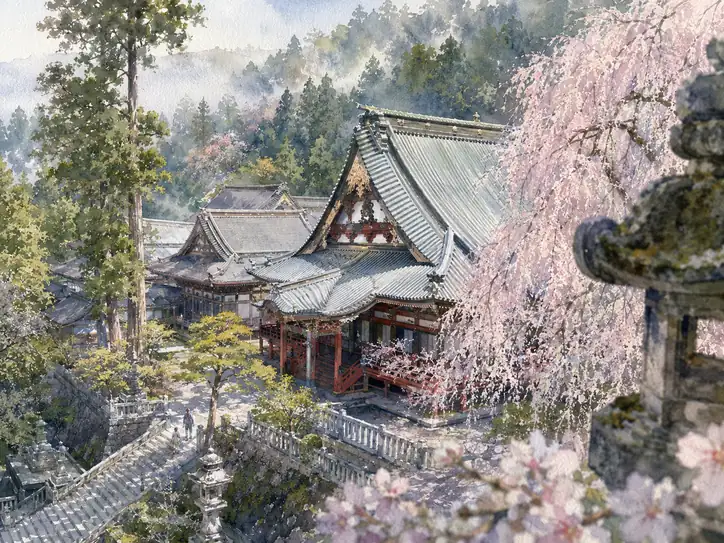 Whispers of the Weeping Sakura
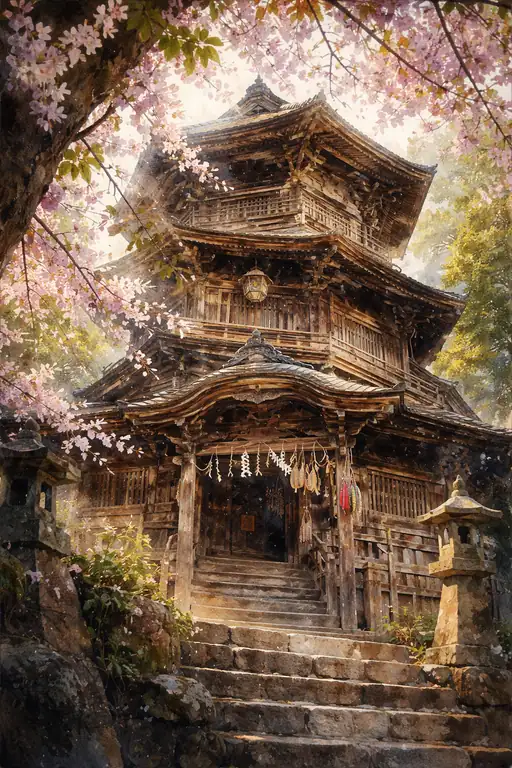 Spring's Quiet Benediction
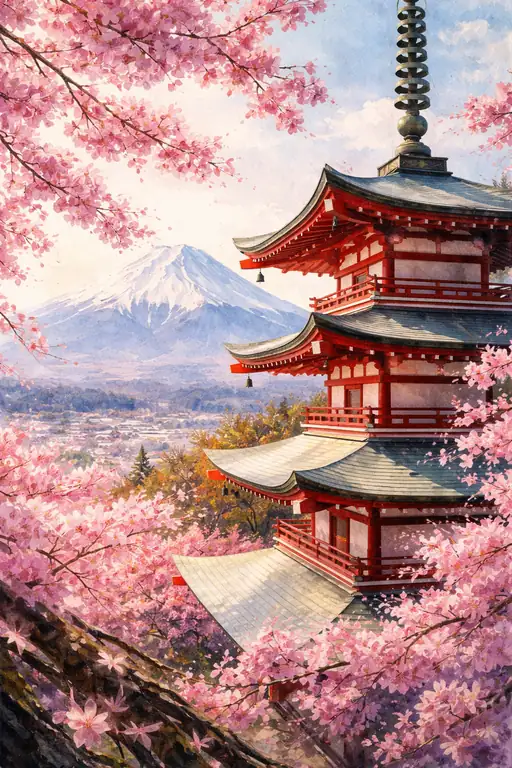 Spring Awakens the Sacred Peak
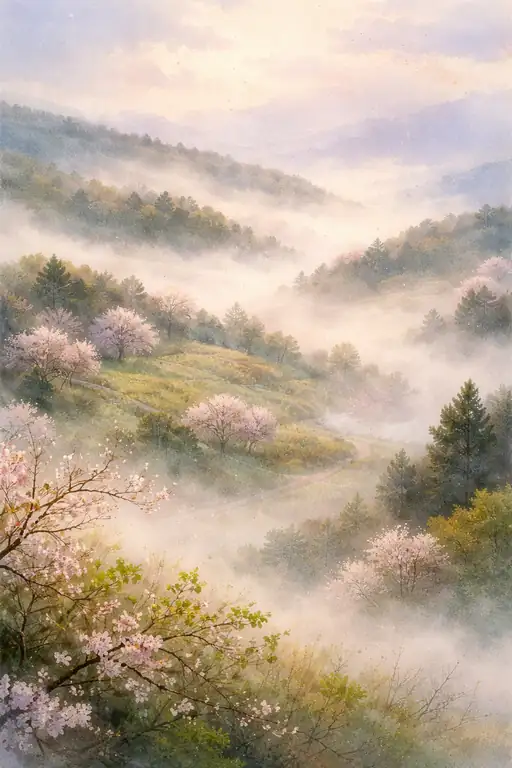 Awakening in the Vernal Mist
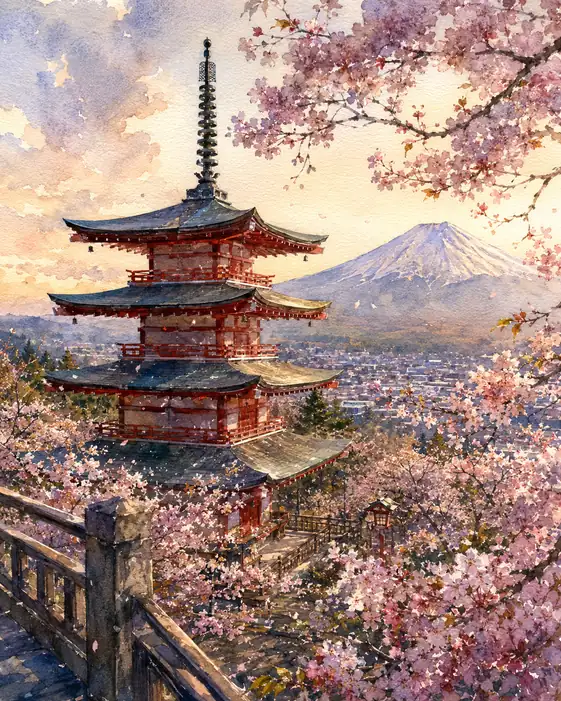 Echoes of the Gilded Spring
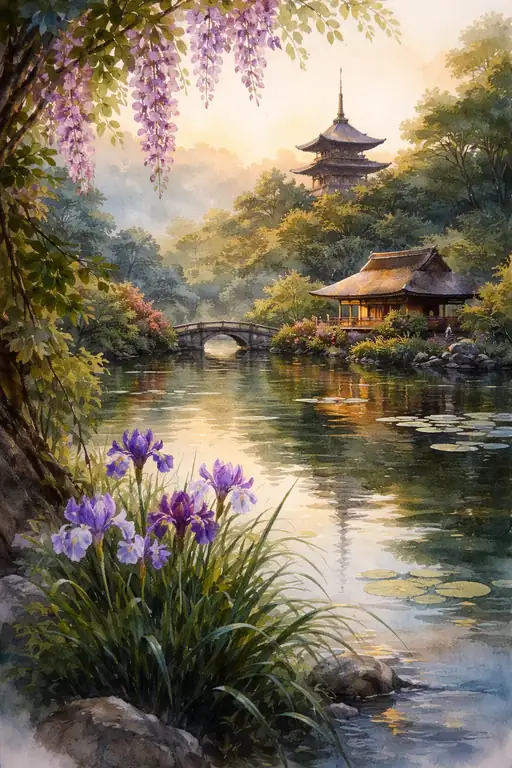 Sunset Harmony in the Temple Garden
 Spring Light and Shadows: Fuji's Awakening
 Amanohashidate in the Breath of Spring
 Spring's Evanescent Frame for Ancient Prayers
 Whispers of the Spring Valley