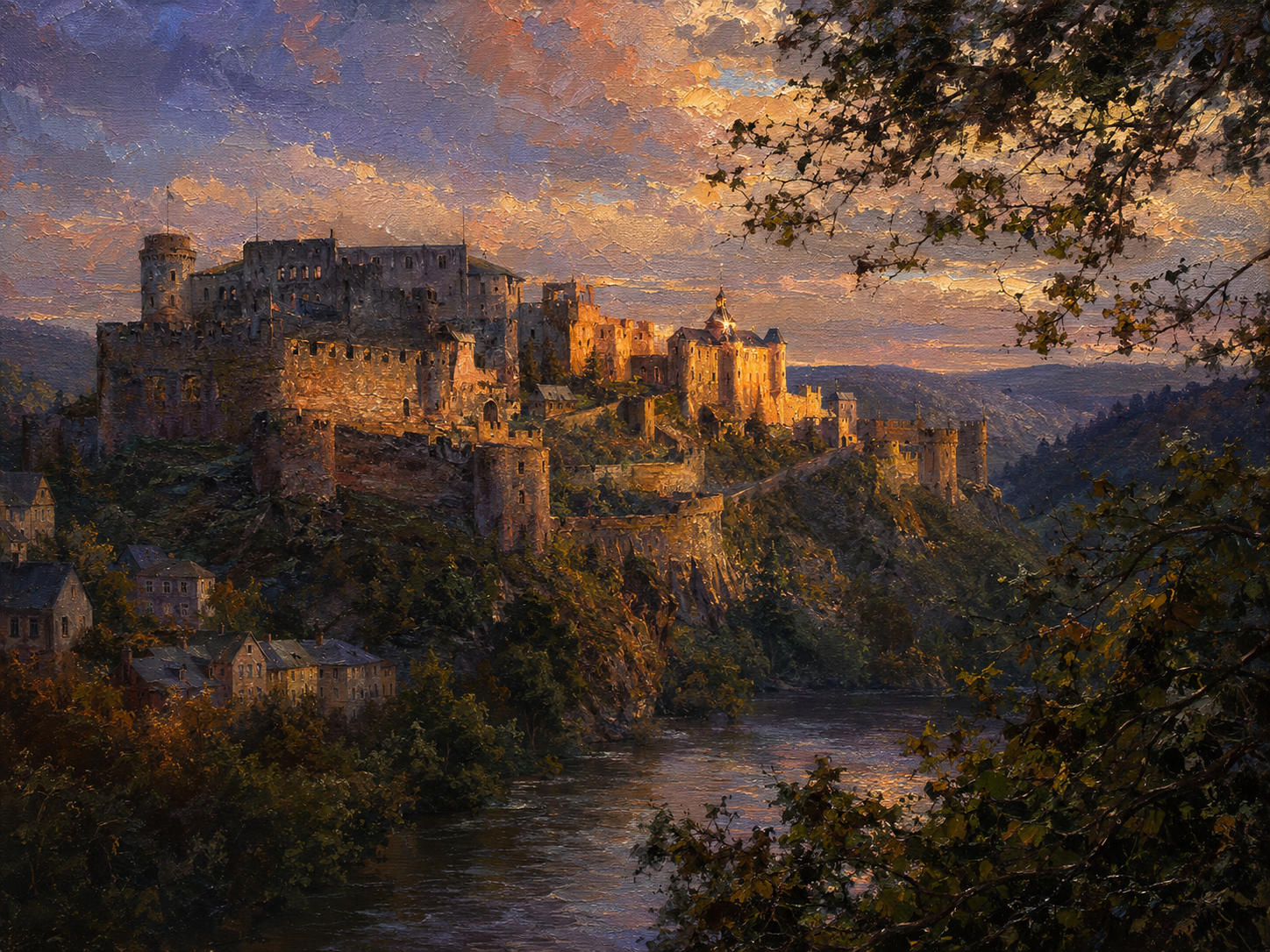
Guardians of the Crimson Sunset
Critique
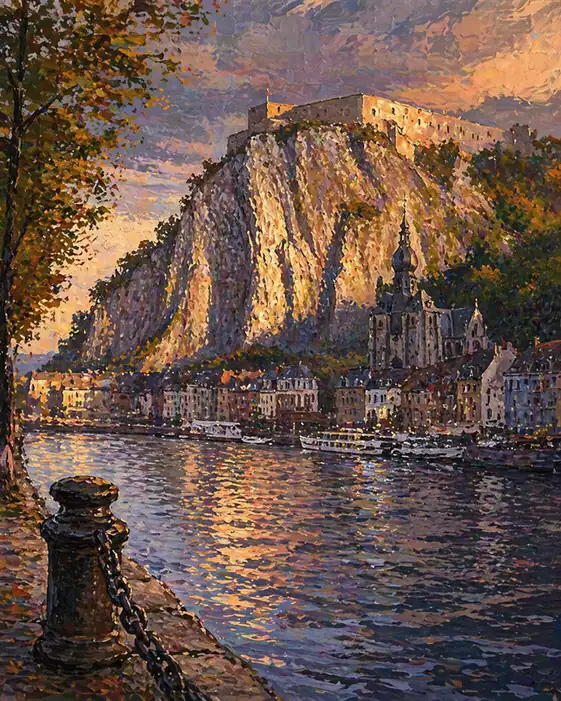
1. Introduction This evocative oil painting captures a sprawling medieval fortress perched atop a rugged cliff, overlooking a tranquil river at the height of a dramatic sunset. The work is characterized by its rich, textured application of paint, utilizing an impasto technique that breathes life into both the ancient stone structures and the swirling clouds above. The composition is masterfully balanced, drawing the viewer into a romanticized vision of European history where architecture and nature exist in a powerful, light-filled harmony. The overall mood is one of nostalgic grandeur, emphasizing the enduring strength of the castle against the fleeting beauty of the twilight hour. 2. Description The central subject is a complex series of stone fortifications, featuring circular towers, crenellated walls, and high-pitched roofs that catch the brilliant orange and amber light of the setting sun. Below the cliff, a calm river flows through a deep valley, its surface reflecting the darkening sky and the silhouettes of the surrounding hills. To the lower left, a cluster of small, steeply-roofed houses suggests a village nestled in the shadow of the fortress. Framing the scene are dark, detailed branches and leaves in the foreground, which provide a sense of looking through a natural portal at the distant, sun-drenched monument. 3. Analysis The color palette is built upon a striking contrast between the warm, fiery tones of the sunset—vibrant yellows, oranges, and pinks—and the cool, deep blues and violets creeping into the shadows. This chromatic tension enhances the three-dimensional quality of the castle, making the illuminated stone appear to glow from within. The brushwork is vigorous and expressive, particularly in the sky where thick strokes of paint mimic the chaotic beauty of sunset clouds. The use of atmospheric perspective is evident in the distant, hazy hills, which recede into a soft purple mist, creating a vast sense of spatial depth. 4. Interpretation and Evaluation The painting successfully evokes the spirit of 19th-century Romanticism, focusing on the sublime relationship between man-made ruins and the untamed natural world. By emphasizing the texture of the paint, the artist adds a modern, tactile dimension to a classic subject, making the historical scene feel immediate and visceral. The lighting is the most compelling element, as it serves not just to illuminate the scene but to define its emotional core—a sense of peaceful transition and silent history. The technical execution is highly proficient, showing a keen understanding of how to manipulate light and shadow to create a focal point of intense visual interest. 5. Conclusion Initially, the eye is drawn to the brilliant light hitting the castle walls, but a longer gaze reveals the intricate details of the village and the subtle reflections in the river. The work achieves a remarkable sense of atmosphere, transporting the viewer to a specific, idealized moment in time where the world seems paused in a golden glow. It is a celebration of both the permanence of the fortress and the ever-changing spectacle of the sky, rendered with passion and technical skill. Ultimately, the painting leaves the observer with a profound sense of wonder and a renewed appreciation for the intersection of history and landscape.
Same Subcategory
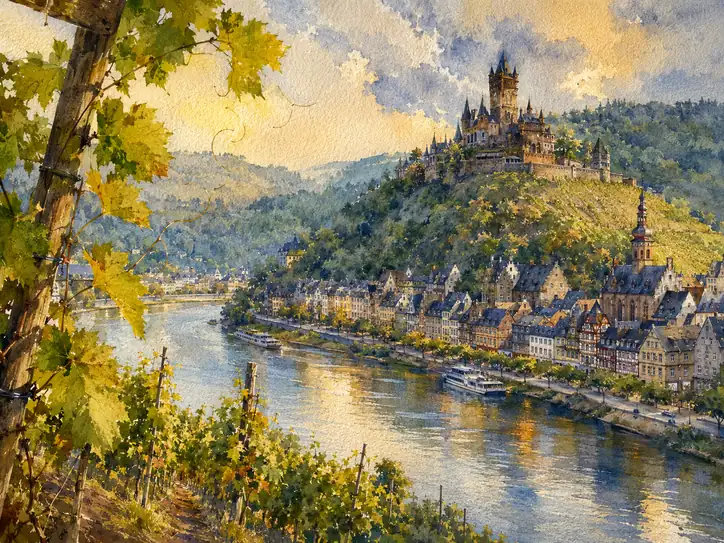 Sun-Drenched Legacy on the River
Similar Artworks
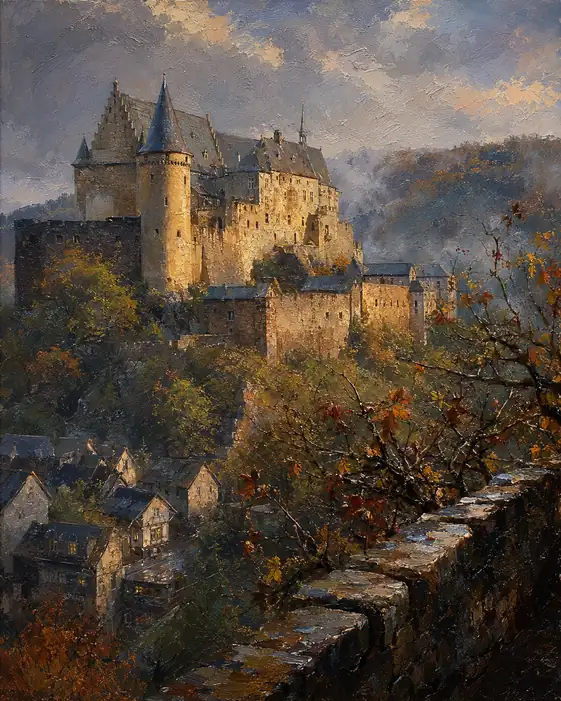 Guardian of the Golden Hour
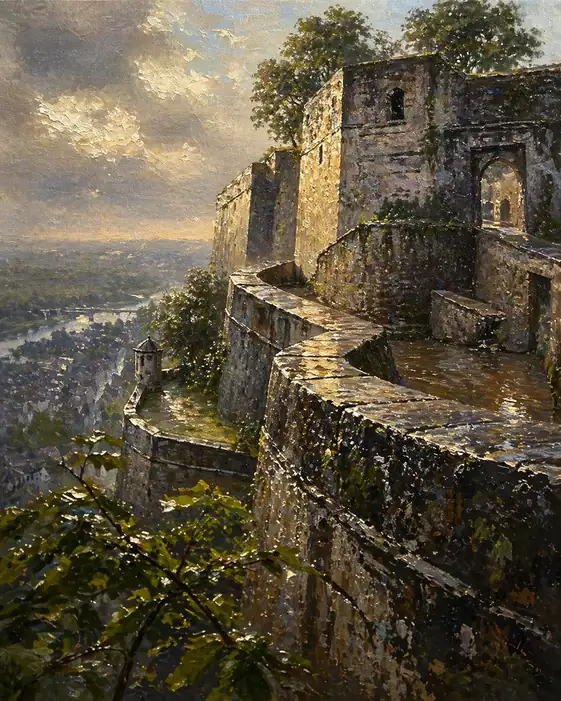 Citadel of Eternal Shadows
 Zenith of the Golden Fortress
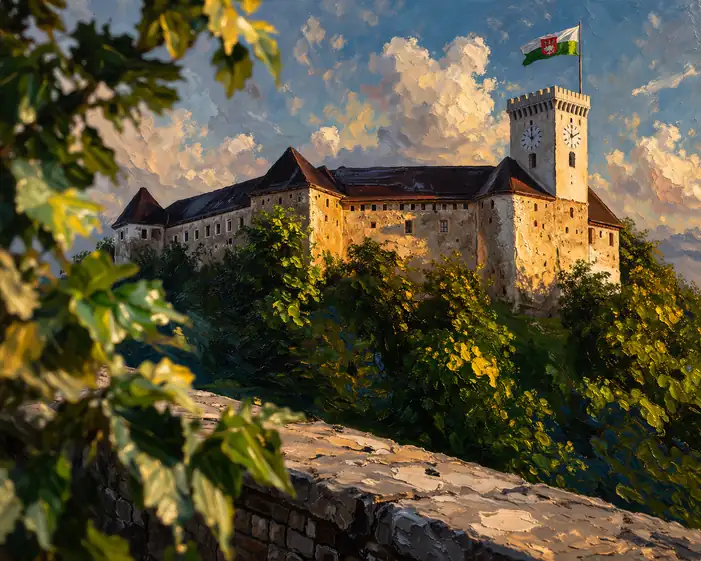 Citadel of the Golden Hour
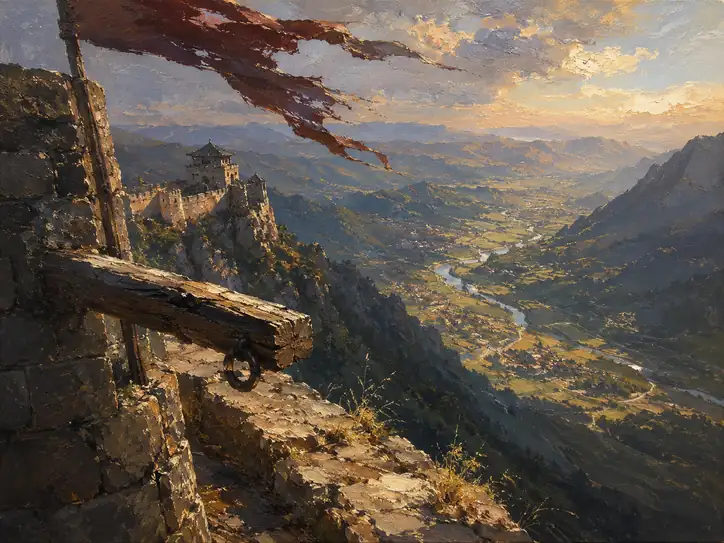 Vigil O'er the Golden Vale
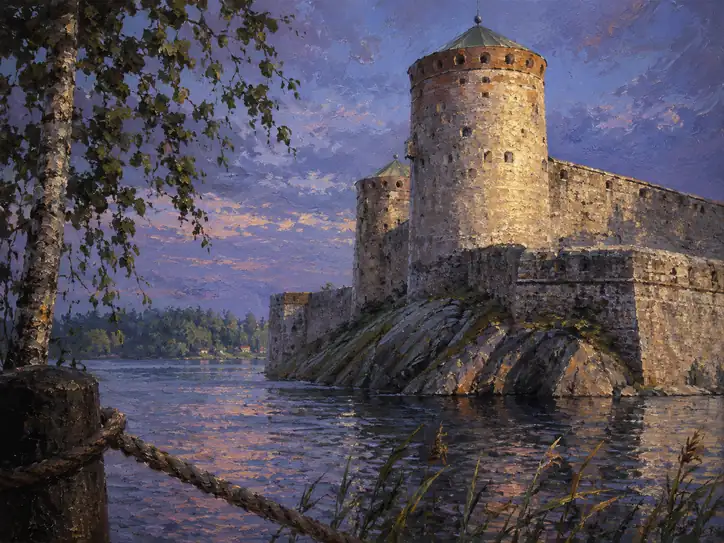 Sentinel of the Eternal Afterglow
 A Glorious Sunset Casting Gold Over a Historic Castle and Vineyards
 Twilight Embrace of the Stones
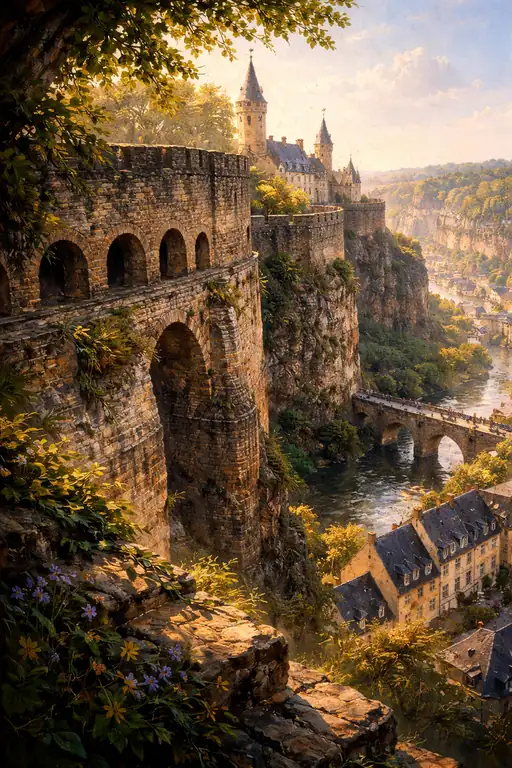 The Enduring Watch Over the Valley
 Golden Echoes of the Citadel