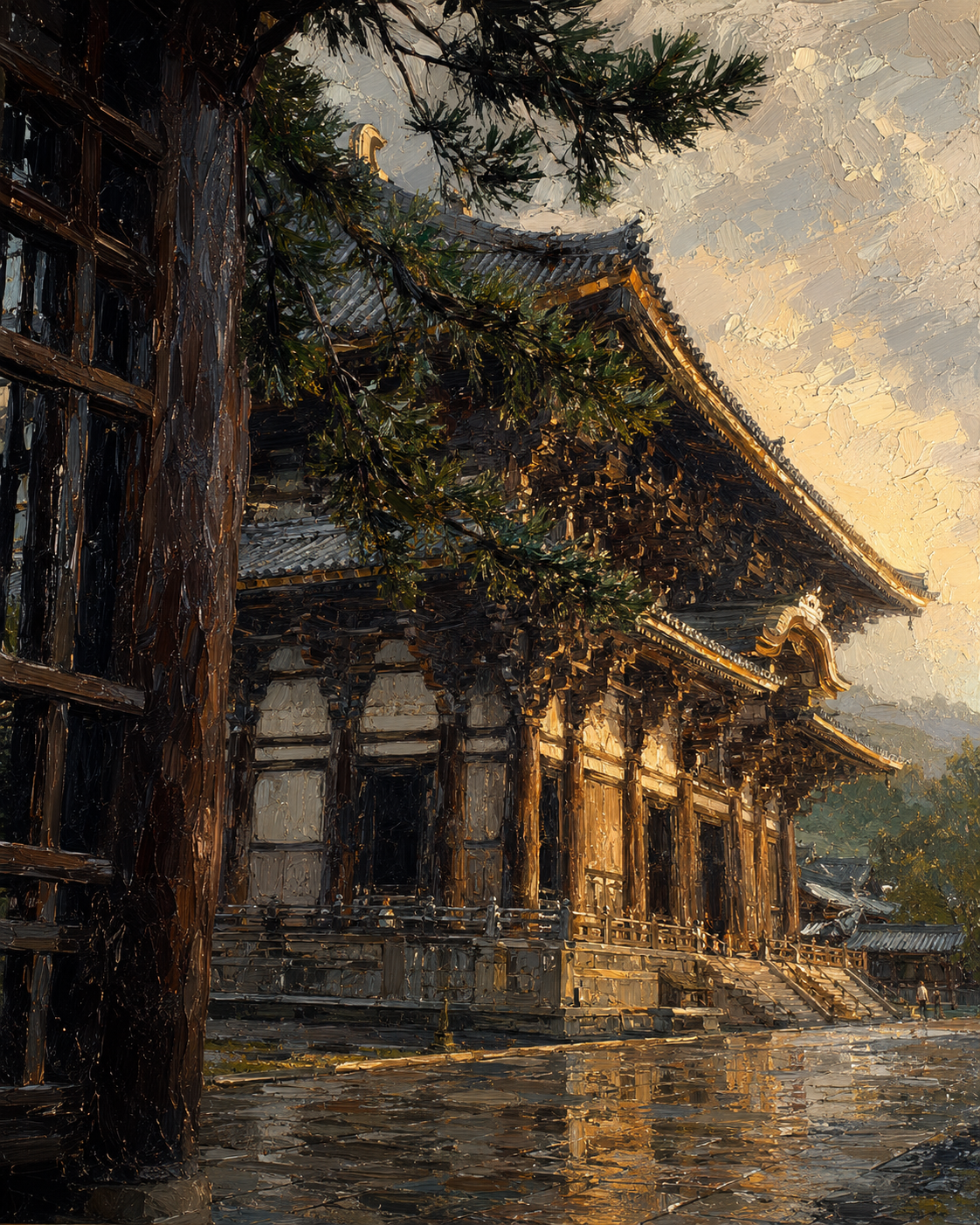
Sanctuary of Shimmering Gold
Critique
1. Introduction This oil painting presents a grand architectural scene centered on a traditional Japanese temple hall, rendered with a profound sense of scale and texture. The composition utilizes a heavy impasto technique, where thick layers of paint create a tactile surface that enhances the physical presence of the wooden structures. A dominant foreground element on the left frames the view, drawing the eye toward the ornate, light-bathed main building. The atmosphere is one of quiet majesty, captured during a moment where the low sun casts a warm, golden radiance across the scene. 2. Description The main subject is a massive two-story wooden hall with intricate gabled roofs and decorative gold accents, standing atop a stone foundation. To the left, a dark, deeply textured vertical pillar occupies the immediate foreground, while pine branches heavy with needles stretch across the upper portion of the frame. The ground appears to be a wet stone courtyard, reflecting the golden light and the dark shadows of the surrounding architecture in shimmering, fragmented strokes. In the distance, smaller buildings and misty trees suggest a larger temple complex nestled within a natural landscape. 3. Analysis The artist employs a dynamic range of values, contrasting the nearly black tones of the foreground pillar with the brilliant ochre and cream highlights on the temple's facade. This contrast creates a strong sense of depth, further emphasized by the overlapping layers of the pine branches and the large-scale architecture. The impasto brushwork is particularly effective in simulating the weathered grain of old wood and the rough surface of the roof tiles. A vertical orientation reinforces the towering height of the temple, while the horizontal reflections on the ground provide a stabilizing visual base. 4. Interpretation and Evaluation The work successfully captures the spiritual and historical weight of Japanese Buddhist architecture through its bold application of color and light. The decision to use such a heavy texture transforms a static architectural study into a vibrant, living encounter with the material world. The lighting is masterfully handled, suggesting a transition between day and night that evokes a sense of timelessness and peace. Technically, the painting demonstrates a sophisticated control of the palette knife or brush, effectively balancing intricate detail with expressive, broad strokes. 5. Conclusion Initially, the viewer is struck by the overwhelming texture of the paint, but closer inspection reveals a carefully constructed study of light and form. The painting invites a meditative state, mirroring the tranquil nature of the site it depicts while celebrating the raw beauty of the medium itself. It stands as a powerful fusion of traditional subject matter and modern, expressive technique, leaving a lasting impression of solemnity. The work ultimately achieves a harmonious balance between the physical weight of the architecture and the ethereal quality of the evening light.
Same Subcategory
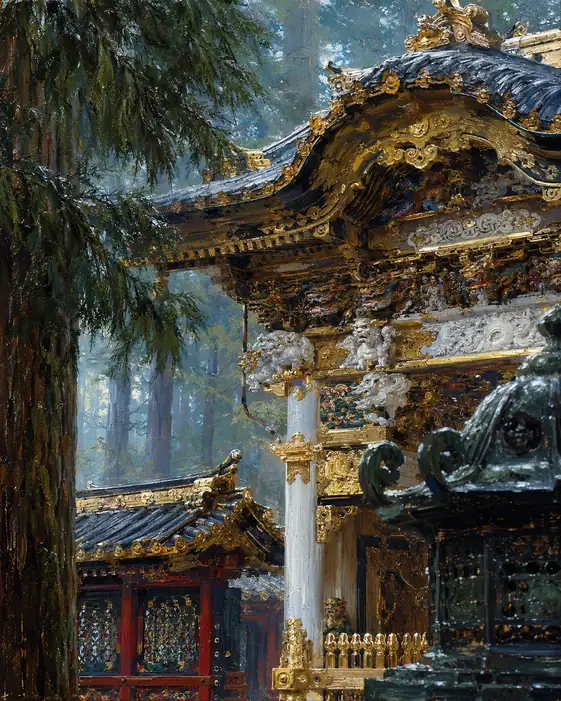 Golden Grandeur in the Whispering Cedar Grove
Similar Artworks
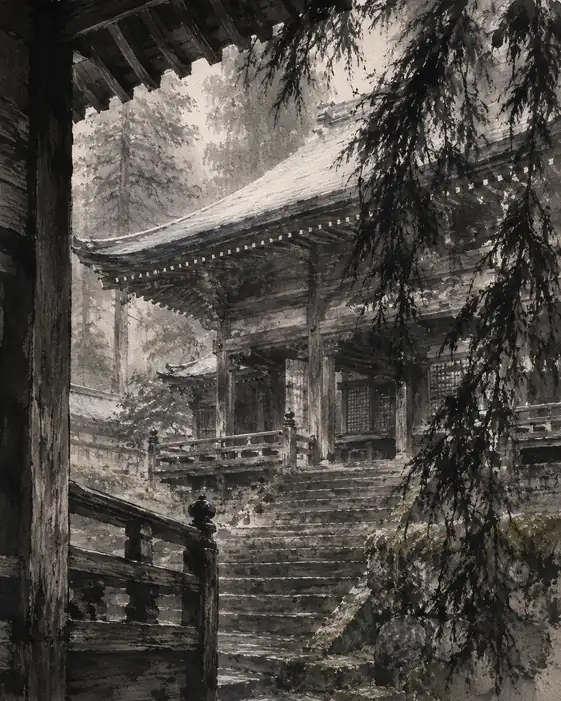 The Sacred Silence of the Mist
 Golden Splendor in the Sacred Woods
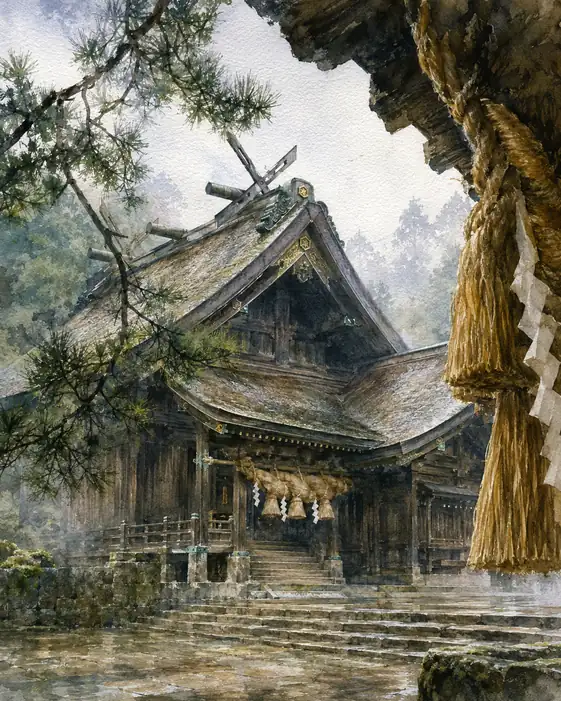 Threshold of the Sacred Mist
 Eternal Whispers of a Golden Roumon Gate
 Echoes of the Ancient Wood in Sunset
 Reflections of Devotion: The Twilight Temple
 Sacred Reflection: Morning Serenity at Angkor Wat
 Silence of the Thousand Pagodas in the Golden Mist
 The Golden Sanctorum Within the Cedar Shadows
 Eternal Echoes of the Golden Keep