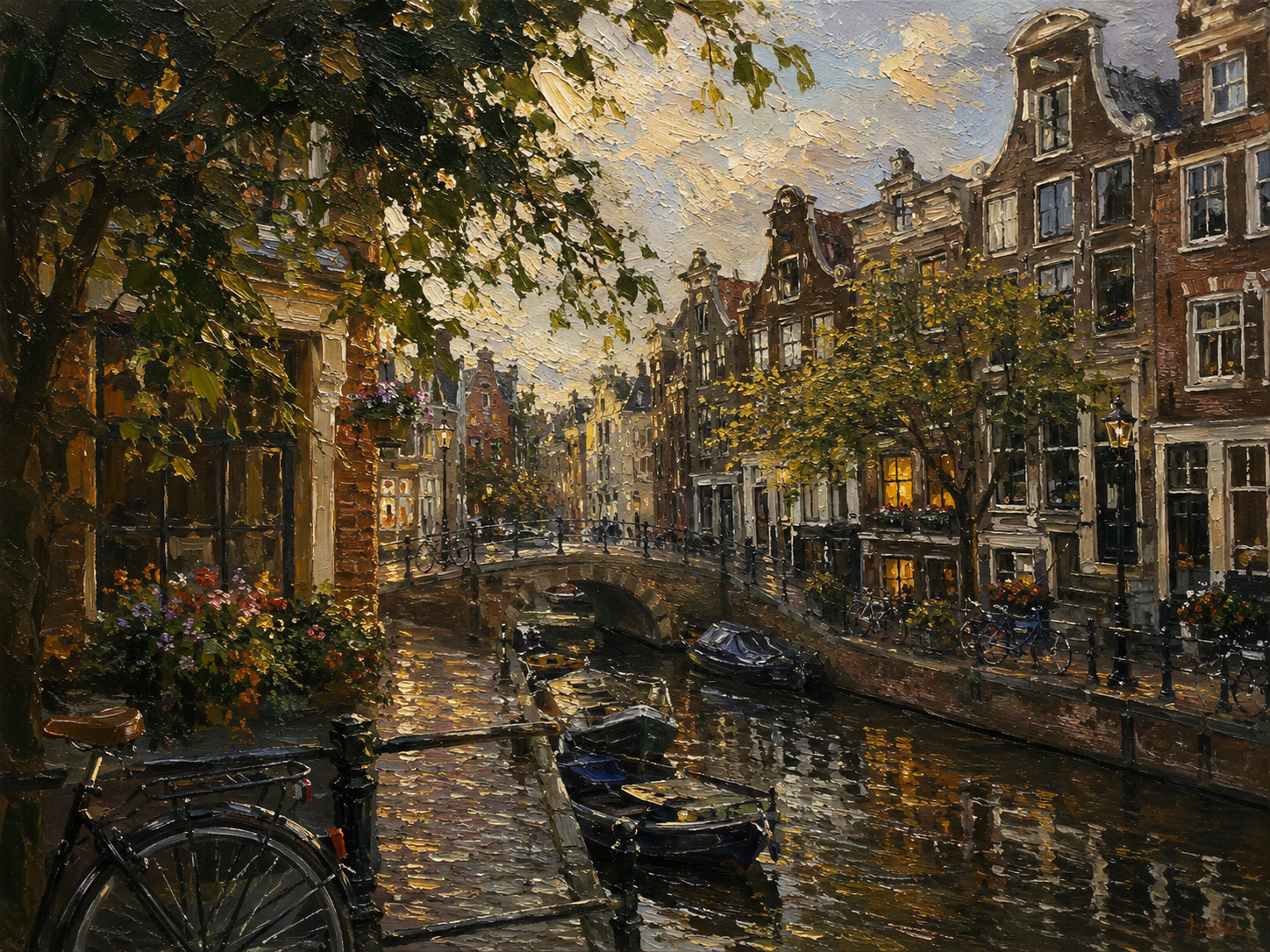
Nocturne on the Water
Critique
1. Introduction This painting captures a serene evening view along a historic canal, evocative of the classic urban landscapes found in the Netherlands. The composition is richly layered, featuring traditional architecture, moored boats, and an arched stone bridge that spans the waterway. Through a bold use of texture and light, the work conveys the quiet charm of a city transitioning into the stillness of the night. 2. Description The right side of the canvas is dominated by tall, narrow buildings with ornate gabled facades, their windows radiating a warm, inviting light. Below, the dark water of the canal reflects these golden hues in fractured patterns, alongside several small boats tethered to the banks. An arched bridge provides a focal point in the middle distance, while a bicycle is positioned in the lower left corner, partially obscured by lush green foliage and vibrant flowers. The sky above is filled with textured clouds, reflecting the lingering light of dusk. 3. Analysis The artist utilizes an exceptionally thick impasto technique, where the paint is applied in heavy layers to create a palpable sense of depth and physical presence. This stylistic choice is most evident in the reflective surfaces of the water and the rugged texture of the brickwork. The color palette is carefully balanced between deep, cool shadows and intense, warm highlights, creating a vivid sense of atmosphere. A strong linear perspective is established by the canal and the rows of buildings, drawing the viewer deep into the urban space. 4. Interpretation and Evaluation By focusing on the quiet beauty of a night-time canal, the artist explores the relationship between the historic built environment and the fluid, ever-changing nature of light. The heavy application of pigment gives the scene a timeless quality, as if the physical history of the city has been preserved within the layers of paint. The technical execution of the light—particularly its ability to transform the dark water into a shimmering field of gold—is highly successful. This painting effectively communicates a feeling of peaceful solitude amidst a dense urban setting. 5. Conclusion This artwork is a masterful exploration of light and form, turning a traditional cityscape into a deeply expressive and tactile experience. The initial attraction to the glowing windows and reflections leads to a greater appreciation of the intricate textures and thoughtful composition. Ultimately, the work invites a meditative contemplation of the enduring beauty found in the historic heart of a living city.
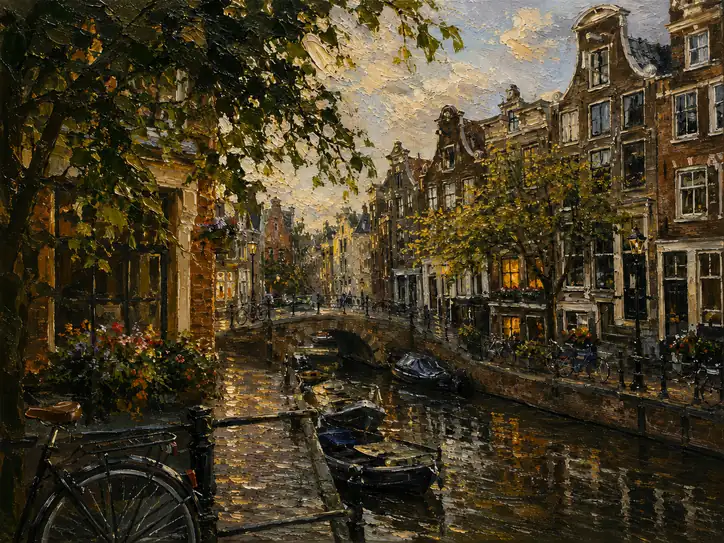 Memory’s Golden Glow
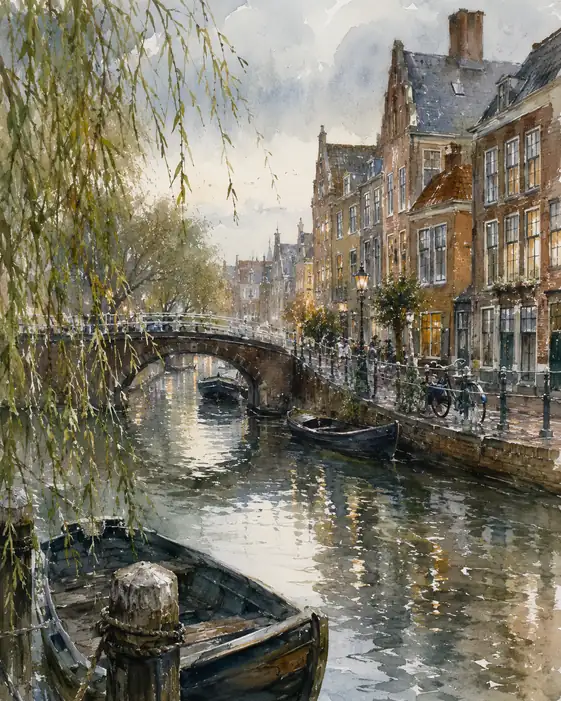 Dusk Whispers to the Rippling Canal
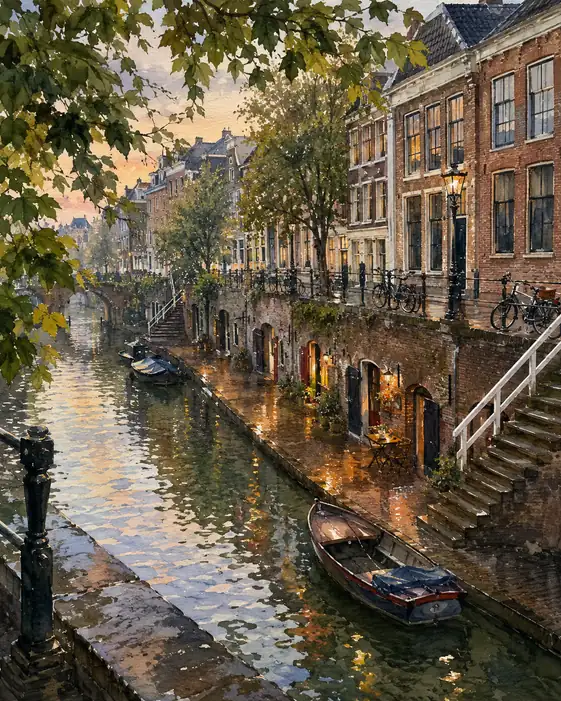 Gilded Dusk on the Ancient Canal
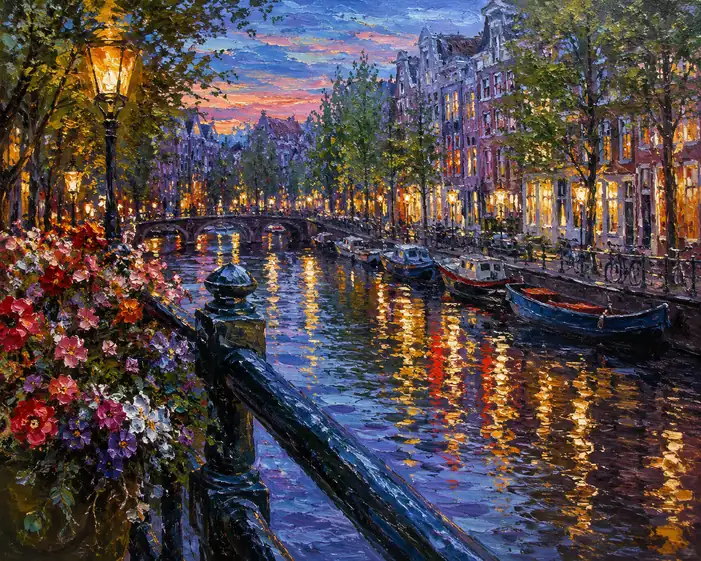 Canal of Lost Dreams
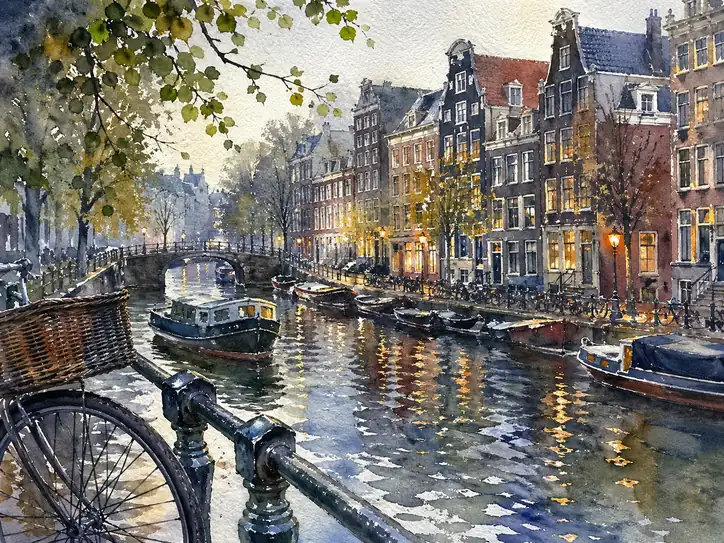 Twilight Echoes on the Canal
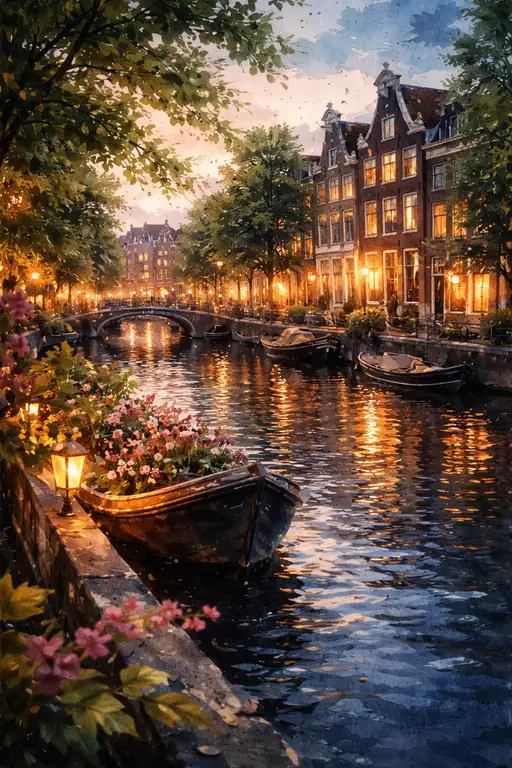 Embrace of the Evening
 Speicherstadt's Red Symphony
 A Symphony of Twilight Lights
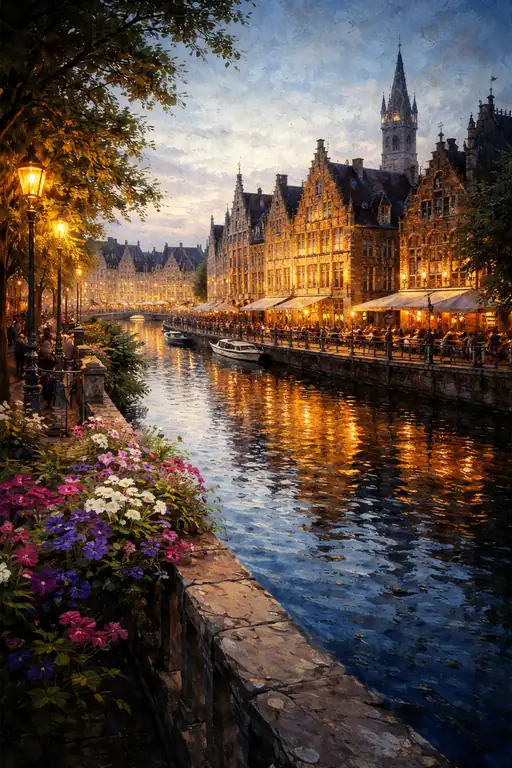 Twilight Echoes of Ghent
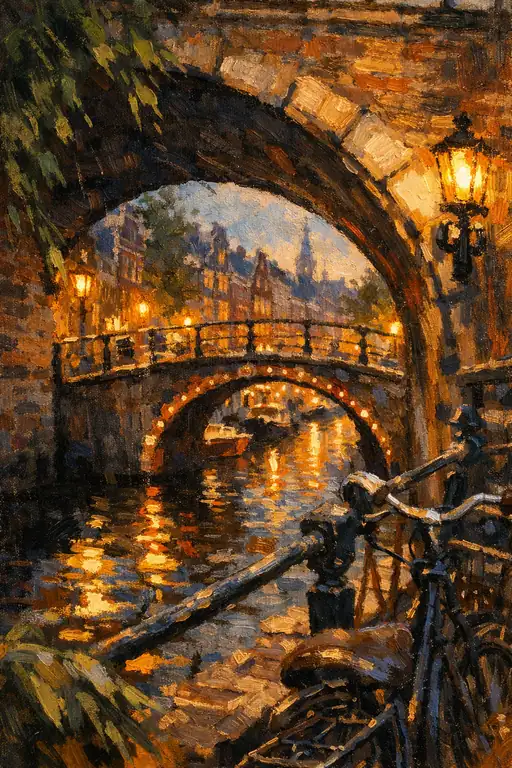 The Eternal Lantern's Warm Embrace
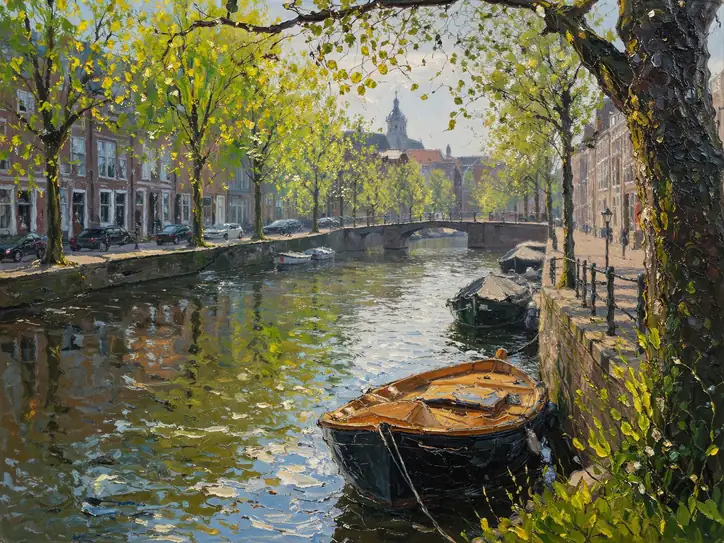 A Brushstroke of Romance