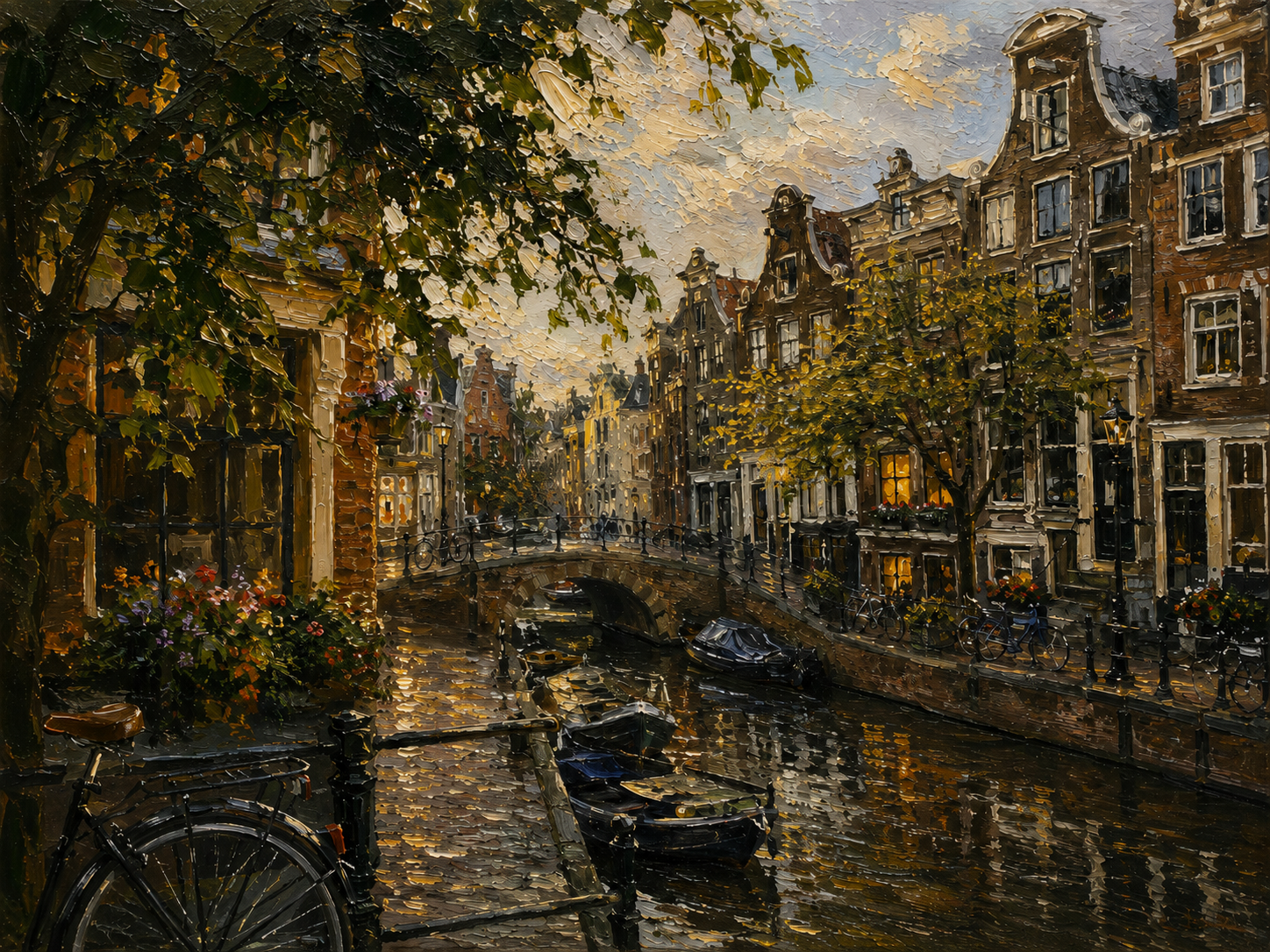
Memory’s Golden Glow
Critique
1. Introduction This painting presents an atmospheric canal scene, characteristic of historic European cities like Amsterdam, during the quiet transition to evening. The composition is framed by traditional gabled houses and an arched stone bridge, with a prominent bicycle in the immediate foreground. The work is defined by its heavy texture and dramatic lighting, capturing the vibrant reflections of city lights upon the dark water. 2. Description On the right side of the frame, a row of narrow, multi-story buildings with distinctive gabled roofs towers over the canal, their windows glowing with warm, orange light. Several small boats are moored along the waterway, their forms slightly distorted by the rippling surface. An arched bridge spans the canal in the middle ground, leading the eye toward more distant architecture. In the lower left corner, a portion of a black bicycle is visible, leaning against a railing decorated with colorful flowers. 3. Analysis The artist employs an extreme impasto technique, where thick ridges of paint create a tactile, three-dimensional quality across the entire canvas. This texture is particularly effective in rendering the reflections on the water and the weathered surfaces of the brick buildings. The color palette centers on a contrast between the deep, shadowy tones of the architecture and the brilliant, golden highlights from the windows and streetlamps. The perspective is slightly angled, emphasizing the depth of the canal and the height of the surrounding structures. 4. Interpretation and Evaluation The choice of an evening setting allows the artist to focus on the interplay between artificial light and natural shadow, creating a mood of urban intimacy. The heavy application of paint suggests a sense of history and permanence, as if the very air of the city is thick with stories. The technical mastery of the light reflections is particularly noteworthy, as they appear to dance across the water’s surface with great energy. This piece successfully conveys the unique charm and enduring character of a historic canal district. 5. Conclusion This painting is a powerful study of light and texture, transforming a familiar urban vista into a richly expressive work of art. The initial impression of a dark cityscape evolves into a complex tapestry of color and form upon closer inspection. Ultimately, the work invites the viewer to linger in the quiet beauty of a city as it transitions into the night, offering a resonant sense of place and atmosphere.
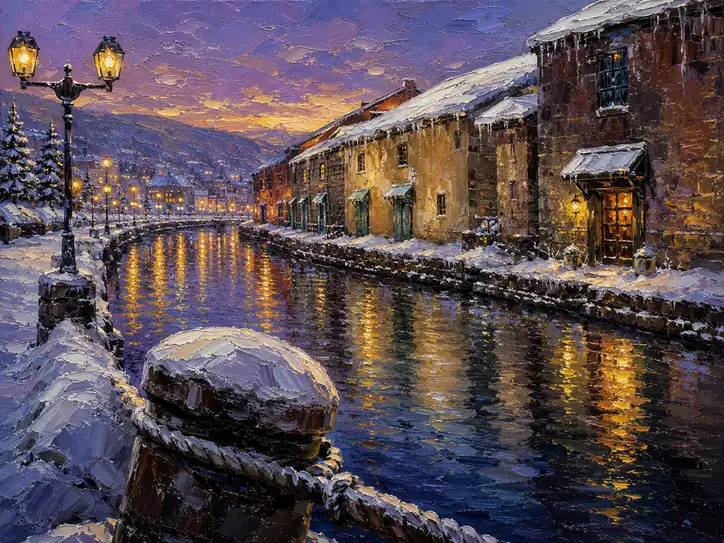 Gleam of the Frozen Twilight
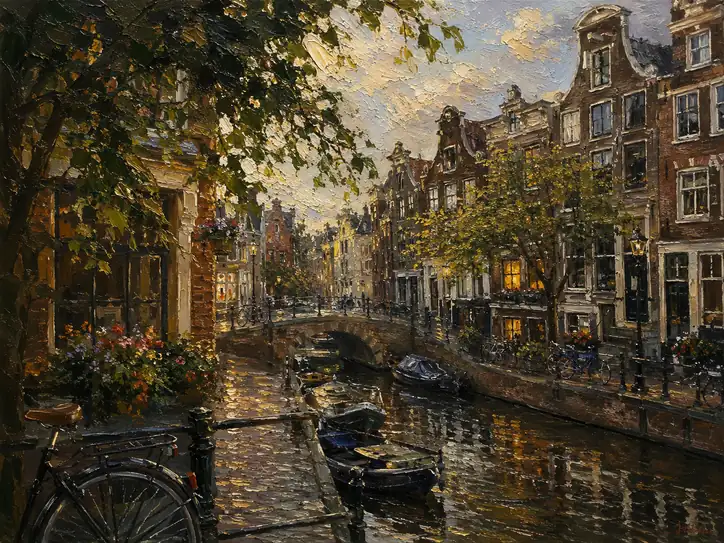 Nocturne on the Water
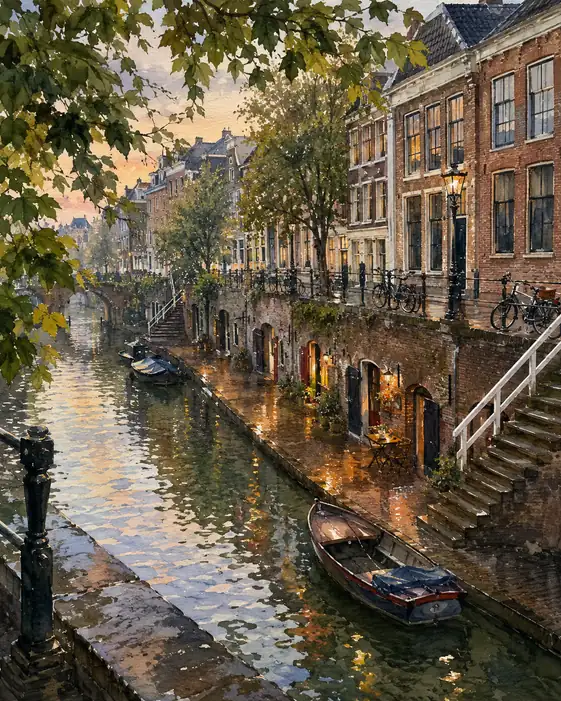 Gilded Dusk on the Ancient Canal
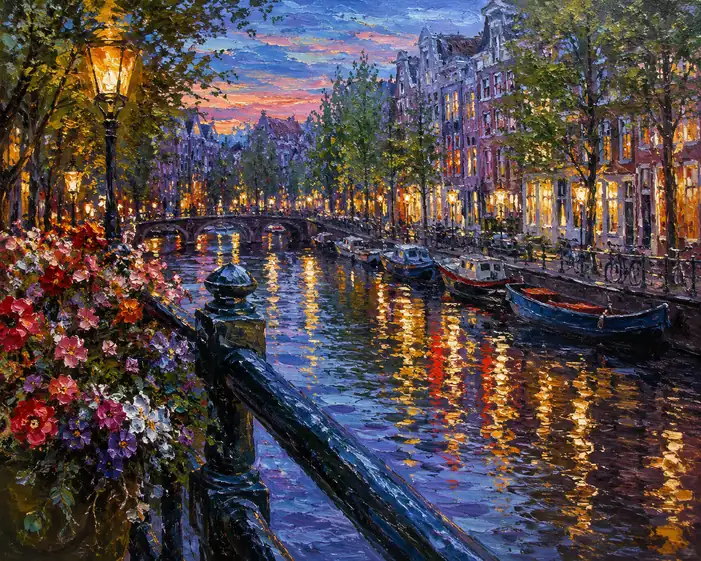 Canal of Lost Dreams
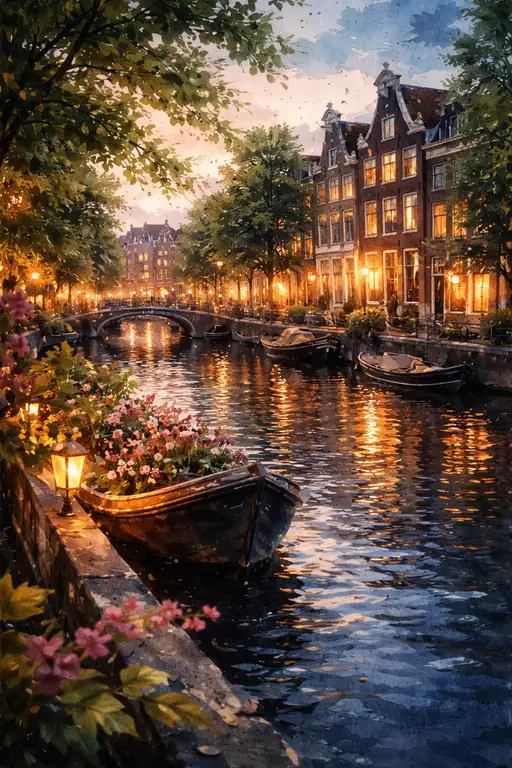 Embrace of the Evening
 A Symphony of Twilight Lights
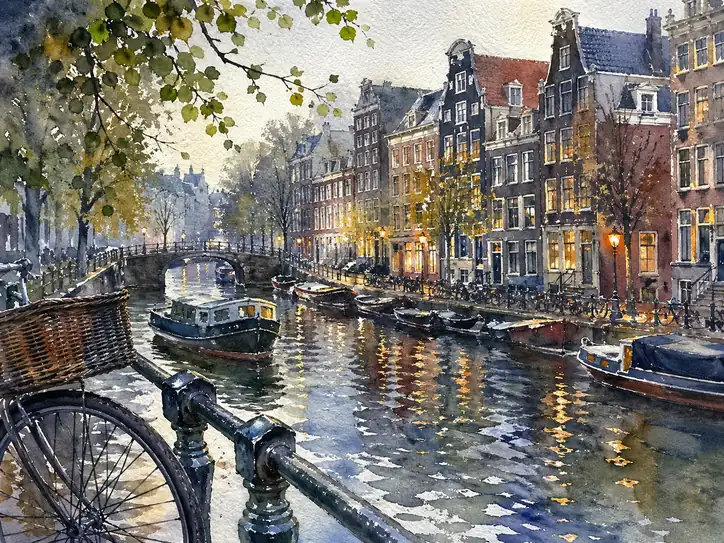 Twilight Echoes on the Canal
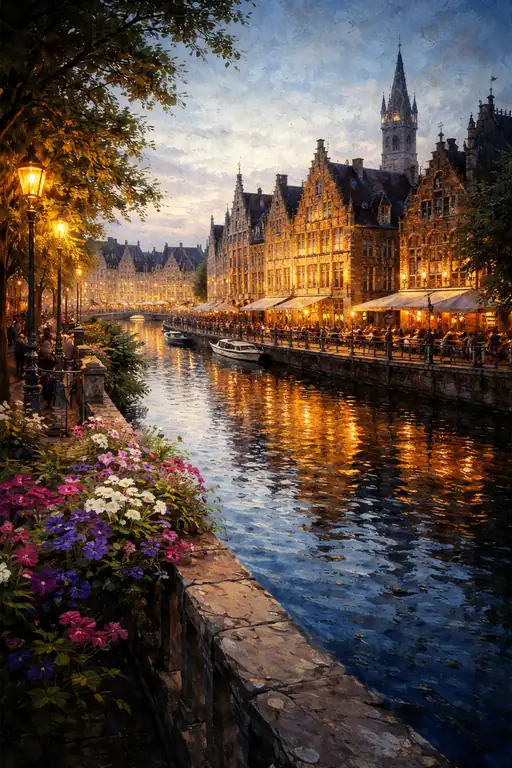 Twilight Echoes of Ghent
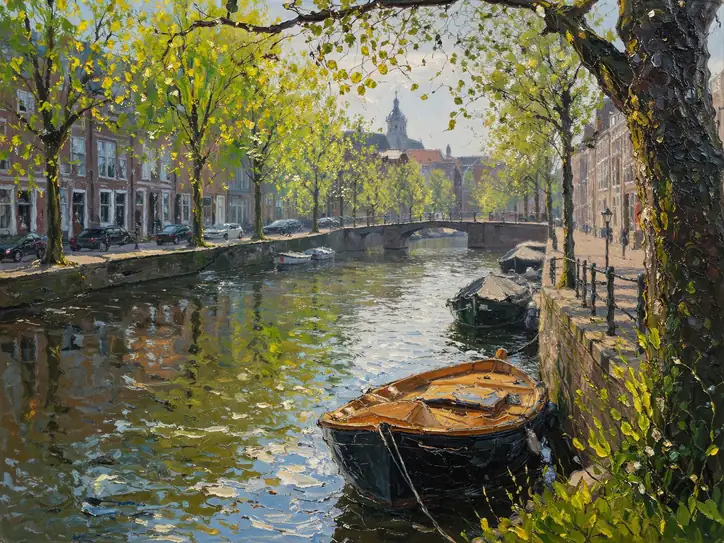 A Brushstroke of Romance
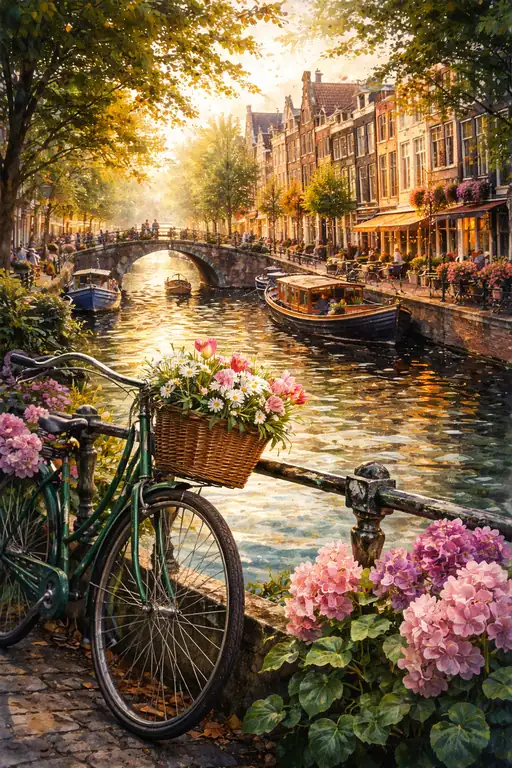 Golden Serenade of the Canal
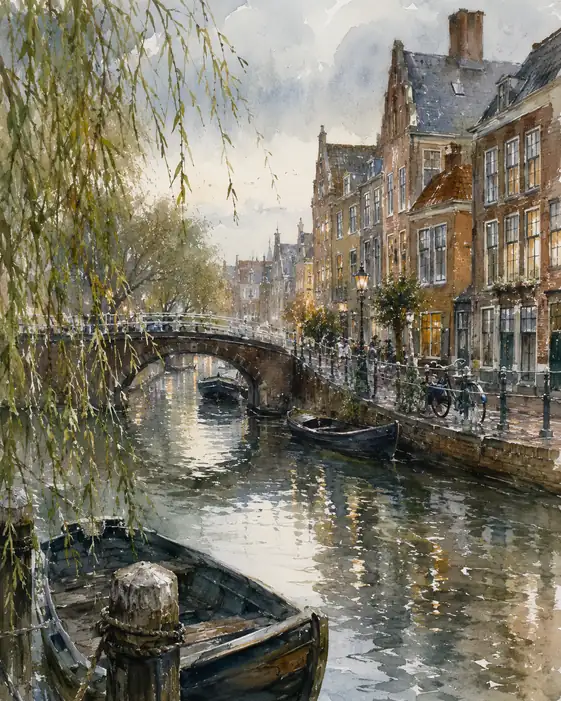 Dusk Whispers to the Rippling Canal