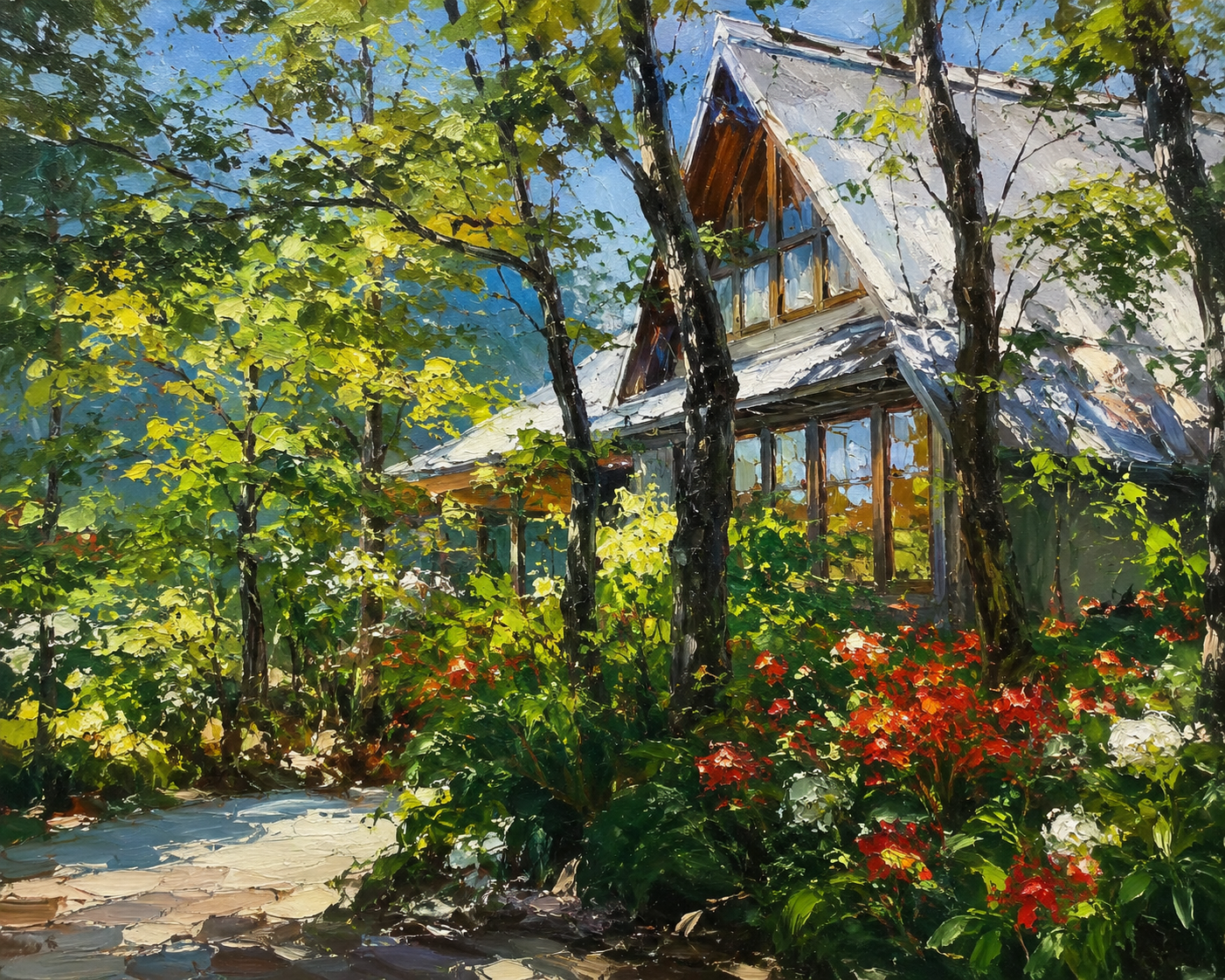
In the Arms of the Sunlit Woods
Critique
1. Introduction This impressionistic oil painting captures a sun-drenched wooden cabin nestled within a lush, forested environment. The composition emphasizes the harmonious relationship between the rustic architecture and the vibrant natural surroundings. By employing a dynamic perspective, the artist invites the viewer to explore a serene, private retreat bathed in the warmth of a summer afternoon. 2. Description The artwork features a two-story cabin with a steeply pitched, light-colored roof, characterized by large windows that reflect the surrounding greenery. In the foreground, a dense cluster of bright red and white blossoms provides a vivid splash of color against the verdant foliage. A stone-paved path winds from the lower left toward the structure, partially shaded by the overhanging branches of tall, slender trees. 3. Analysis The artist utilizes a vigorous impasto technique, where thick, textured brushstrokes create a sense of physical depth and movement across the canvas. Sunlight is represented through brilliant white and pale yellow highlights that filter through the leafy canopy, creating a dappled effect on the ground and trees. The palette is dominated by rich greens and earthy browns, which are punctuated by the intense primary red of the floral arrangements. 4. Interpretation and Evaluation This piece successfully evokes a feeling of tranquility and the sensory richness of nature. The energetic application of paint conveys the vitality of the landscape, while the careful management of light and shadow adds a dramatic, three-dimensional quality to the scene. The work’s strength lies in its ability to balance the solid forms of the cabin with the ephemeral qualities of shifting light and organic growth. 5. Conclusion The painting stands as a vibrant celebration of light and texture within a secluded natural setting. Its expressive brushwork and bold color choice leave a lasting impression of warmth. Ultimately, the initial perception of a simple forest dwelling evolves into a deeper appreciation for the complex interplay between the built environment and the untamed beauty of the woods.
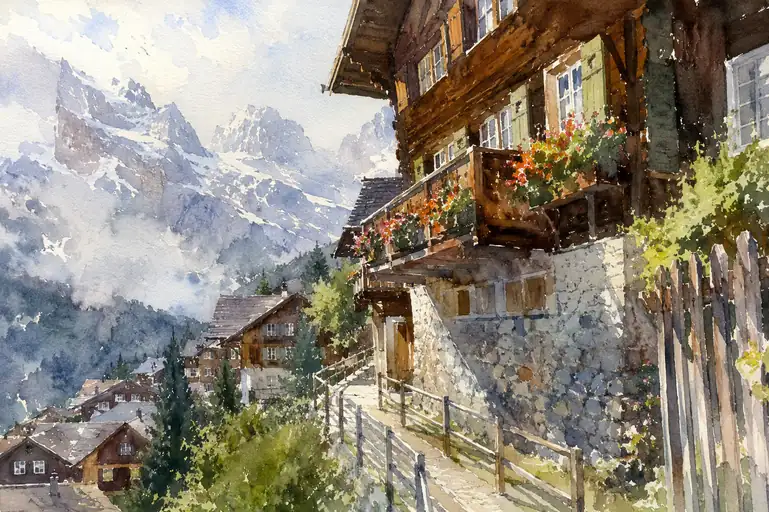 A Path to the Sky’s Embrace
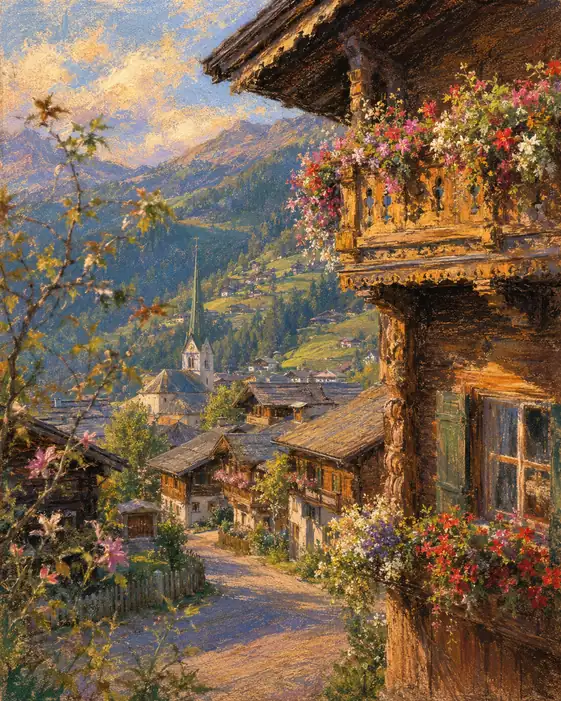 Basking in the Alpine Glow
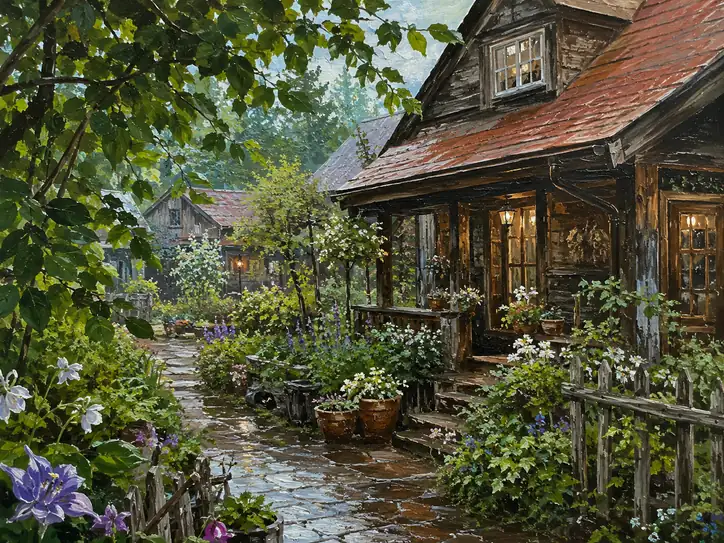 The Gentle Light of Home
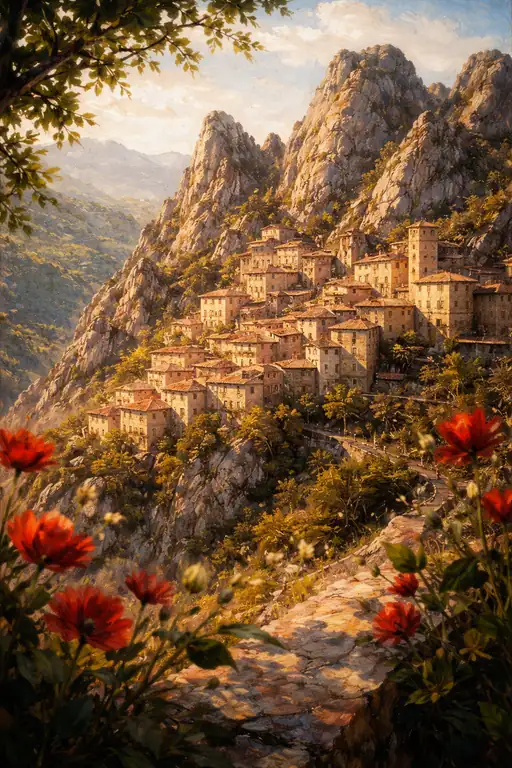 Crimson Ascent
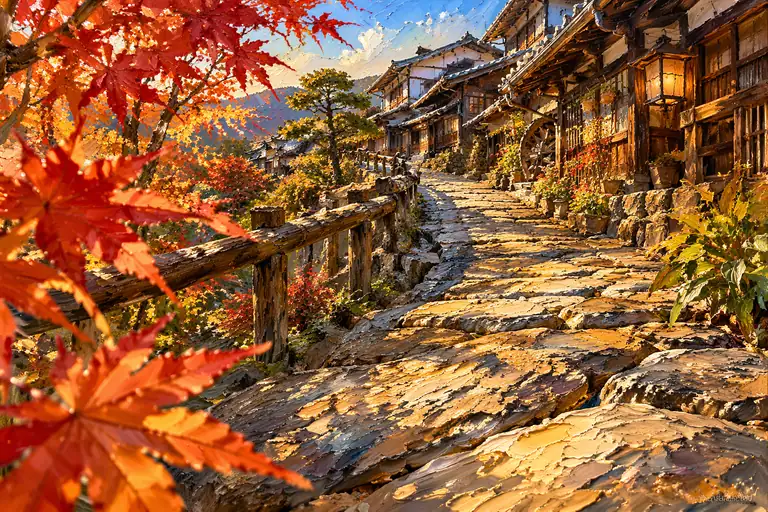 Ascent to the Autumn Skies
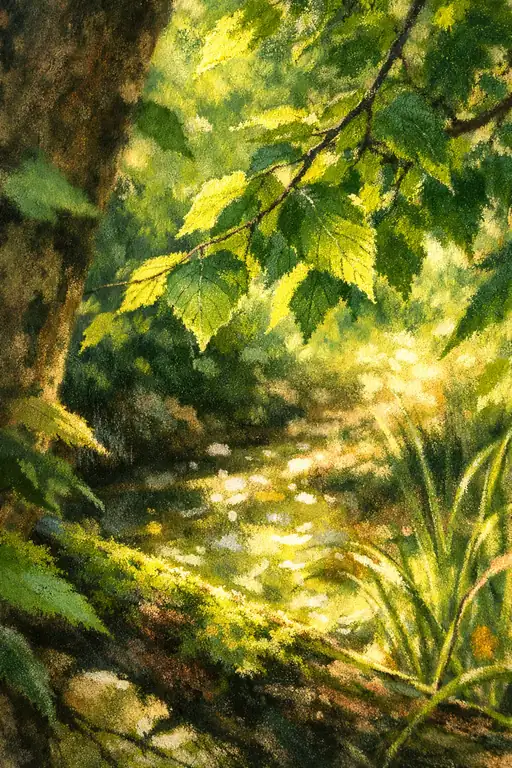 Sunlit Stream Through Leaves
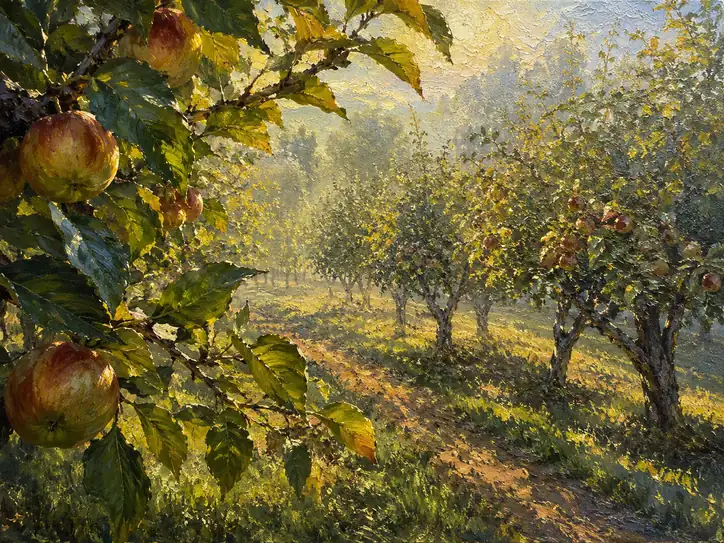 Jewels of the Sunlit Orchard
 Footsteps in the Dappled Light
 Idyllic Reverie in the Cottage Garden
 The Fragrance of Golden Hours
 Autumn Whispers in the Sunlit Gorge
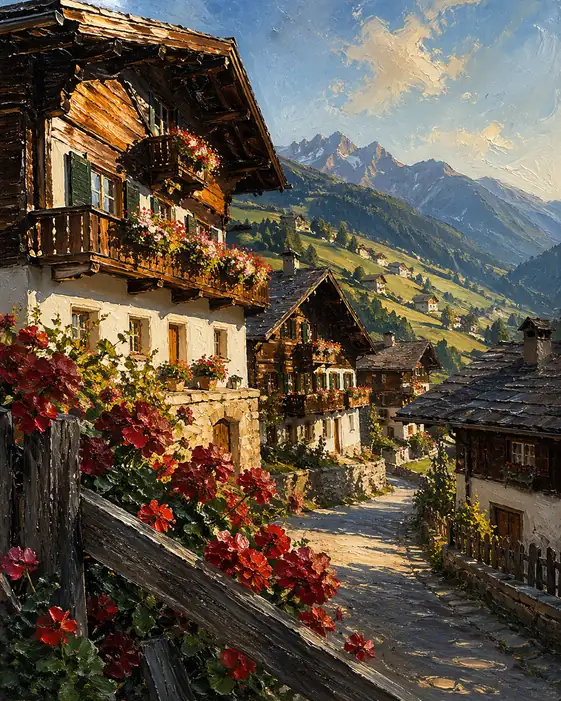 Alpine Chalet Bloom