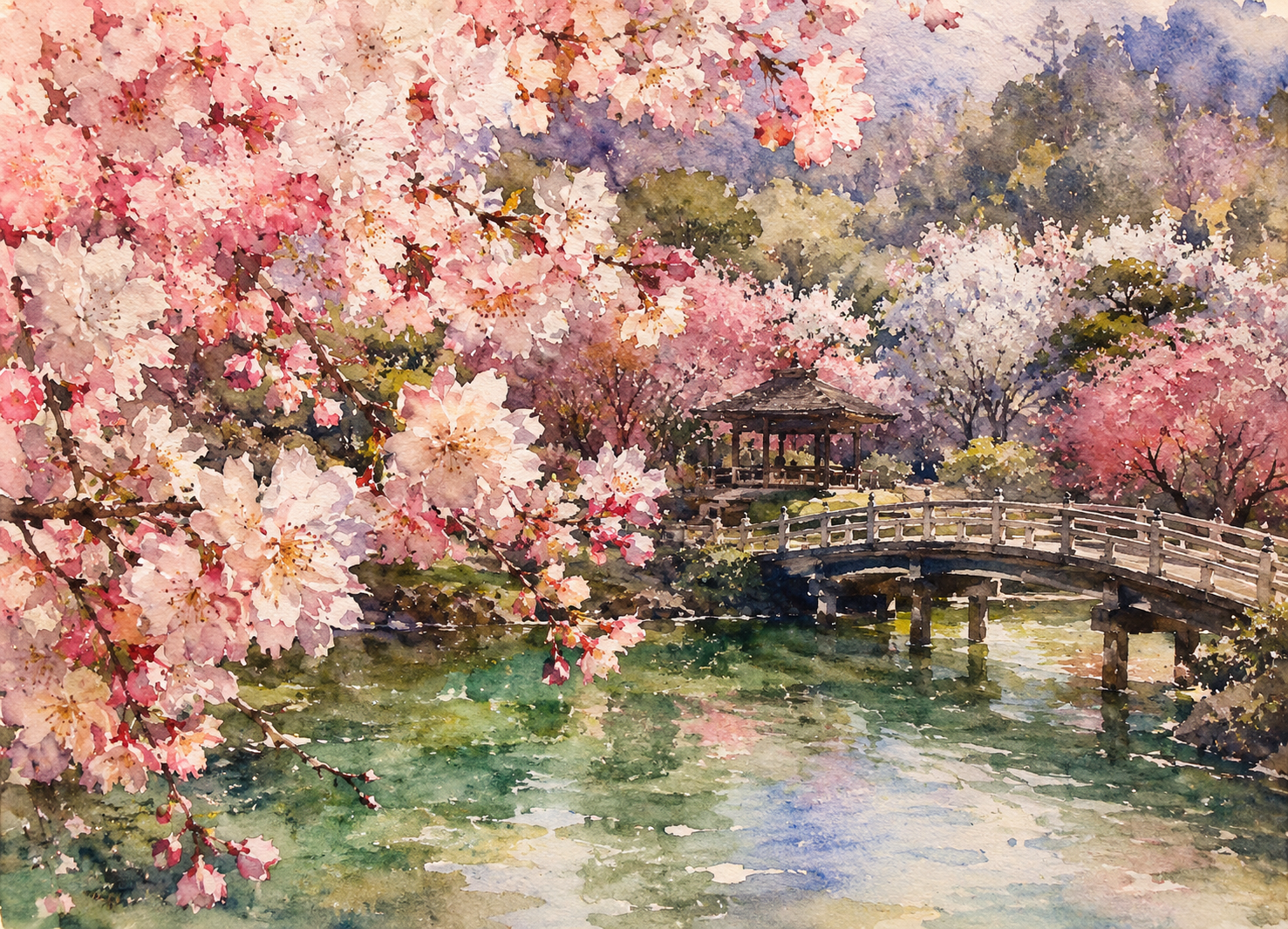
The Waltz of Sakura and Stone
Critique
1. Introduction This luminous watercolor painting captures a quintessential spring scene within a traditional Japanese garden. The artwork features an arched wooden bridge and a rustic gazebo surrounded by a profusion of cherry blossoms in full bloom. It conveys a sense of celebration and peaceful contemplation, inviting the viewer into a space where the elegance of traditional landscape design meets the fleeting beauty of the seasonal floral display. 2. Description In the immediate foreground, large, delicate cherry blossoms on sprawling branches frame the left side of the composition, their petals rendered in varying shades of soft pink and white. A traditional wooden bridge spans a clear pond in the middle ground, its reflection shimmering on the water's surface alongside the colors of the surrounding trees. A simple wooden gazebo sits tucked away among the blossoms, while the background is filled with a dense, colorful canopy of cherry trees and darker evergreen foliage. 3. Analysis The artist utilizes a masterfully delicate watercolor technique, employing soft washes to create the hazy atmosphere of a spring afternoon. The individual blossoms are rendered with fine, light brushstrokes that capture their fragile, paper-like quality. The color palette is a harmonious blend of pastel pinks, creamy whites, and vibrant greens, all grounded by the earthy browns of the wooden structures. The composition is well-balanced, using the foreground branches to provide a sense of depth and intimacy. 4. Interpretation and Evaluation This work successfully evokes the sensory richness and emotional tranquility associated with hanami, or cherry blossom viewing. The skillful handling of reflections and light within the pond adds a layer of depth and serenity to the overall scene. The artist’s ability to balance the complex, organic forms of the blossoms with the geometric stability of the bridge and gazebo demonstrates a high level of technical proficiency. The piece captures not just a physical location, but the very essence of a seasonal moment. 5. Conclusion The painting is a refined celebration of seasonal renewal and the enduring charm of the Japanese garden aesthetic. While the initial focus is undoubtedly on the spectacular display of cherry blossoms, the structural elements provide a necessary counterpoint of permanence and human presence. It stands as a beautiful tribute to the delicate wonders of nature, leaving the viewer with a lasting sense of peace and an appreciation for the subtle nuances of the spring landscape.
Same Subcategory
 Arching Towards the Eternal
 Lantern Whispers on the Water
Similar Artworks
 Tranquility in the Zen Garden
 Spring Awakening at the Arched Bridge
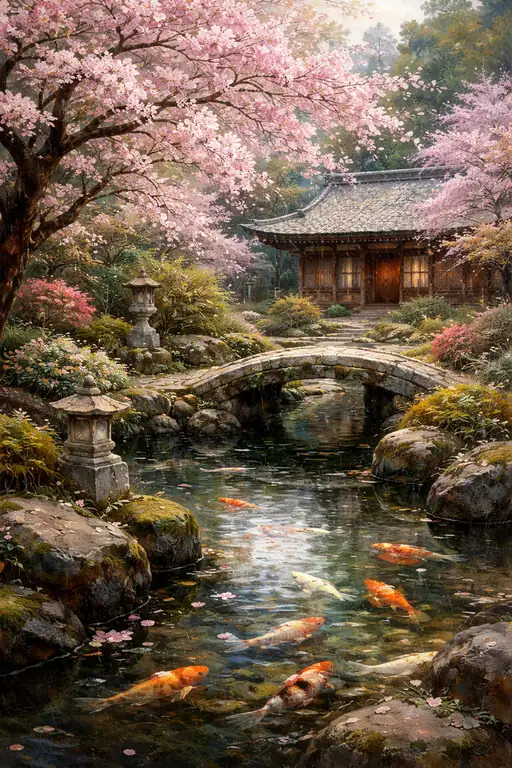 Reflections in the Koi Pond
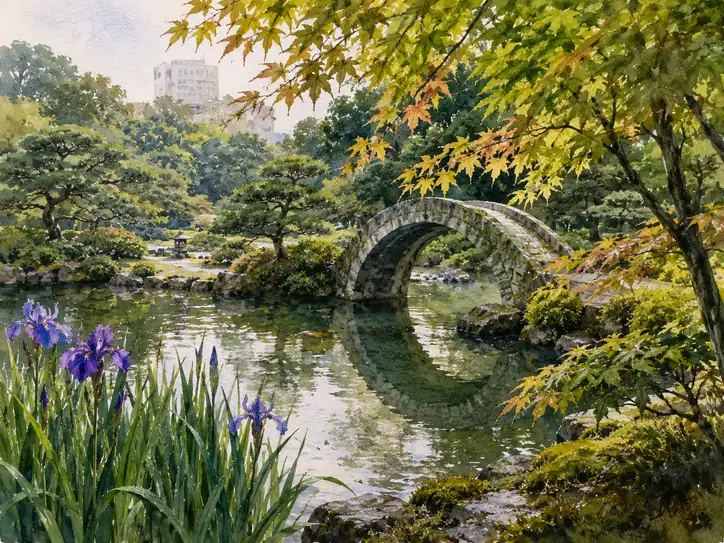 Where the Heart Finds Its Circle
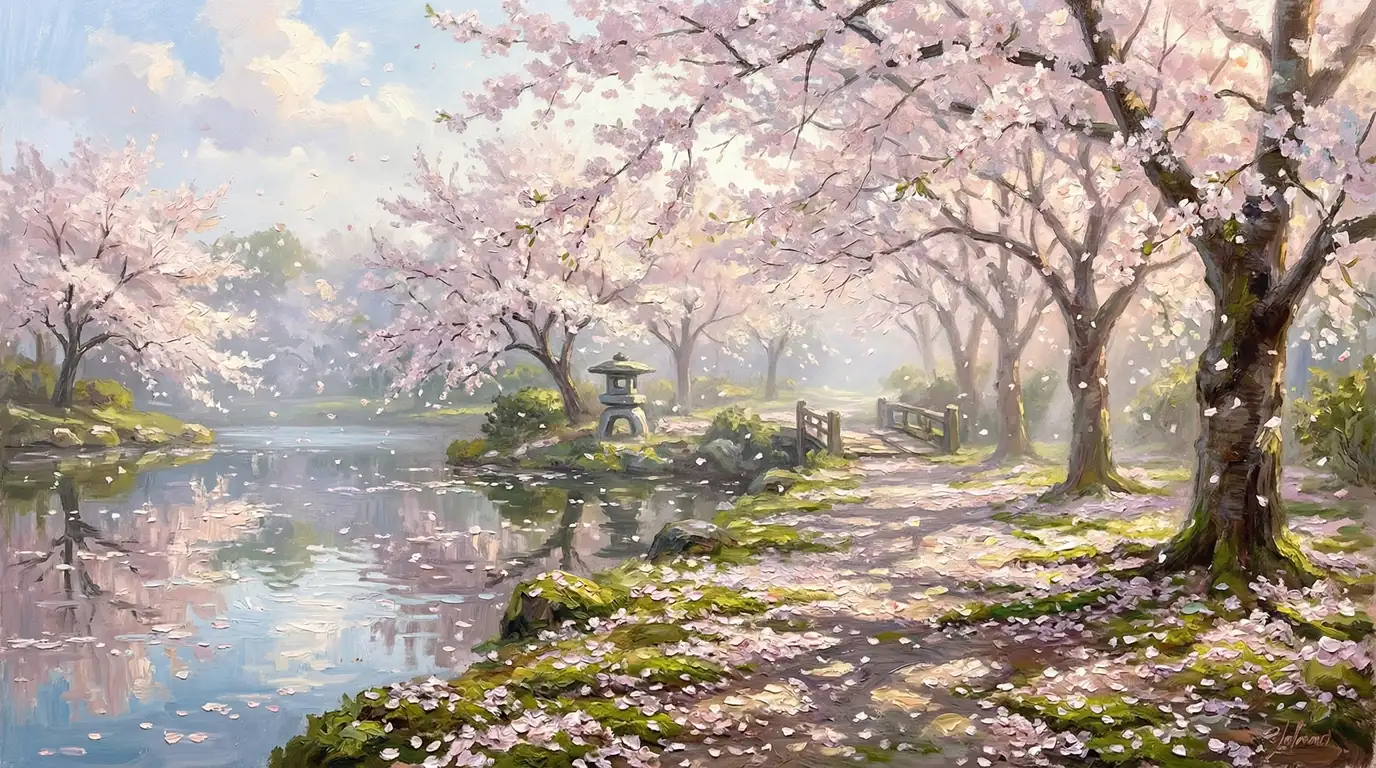 Reflections of a Petal's Sigh
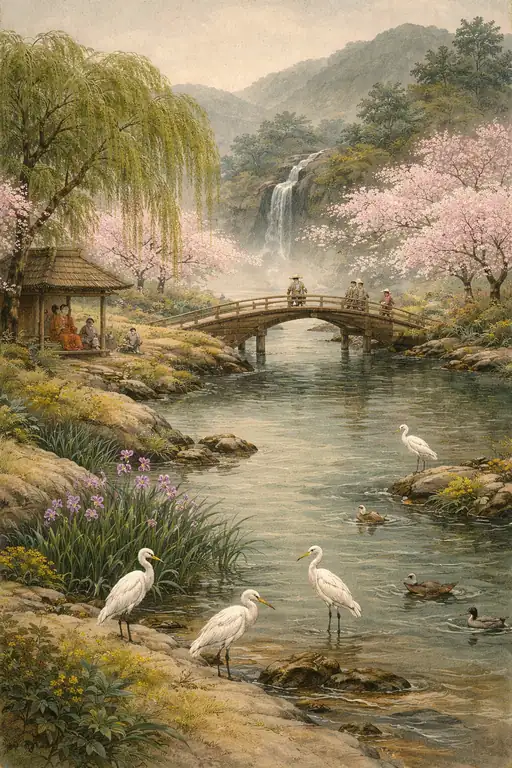 Dance of the Egrets in Spring
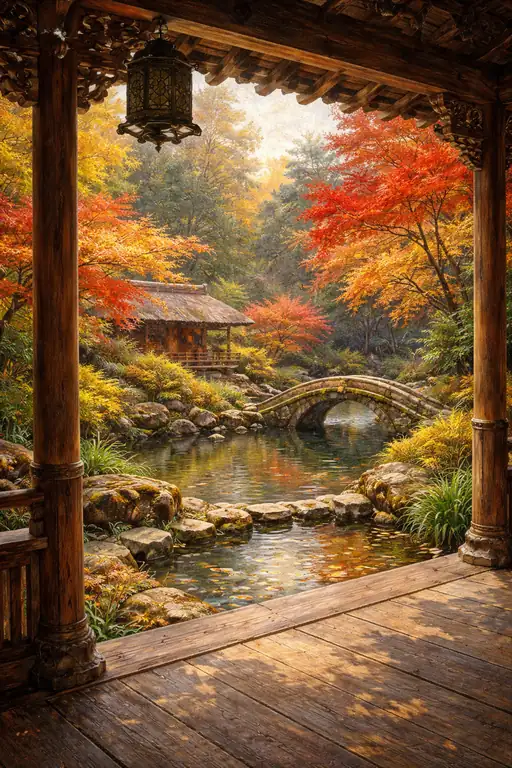 Crimson Reflections
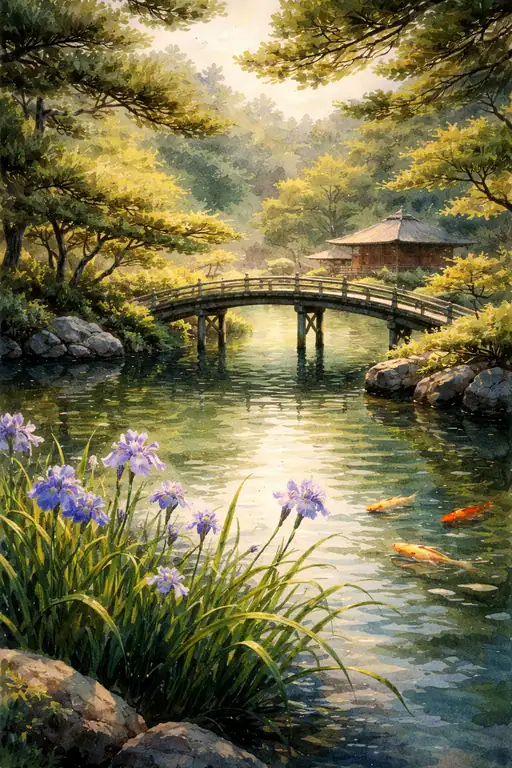 Whispers of the Golden Pond
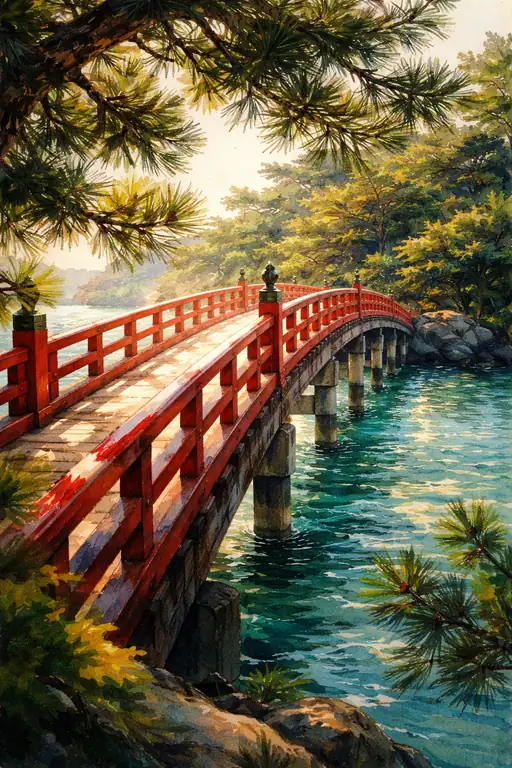 Reflections in the Emerald Sanctuary
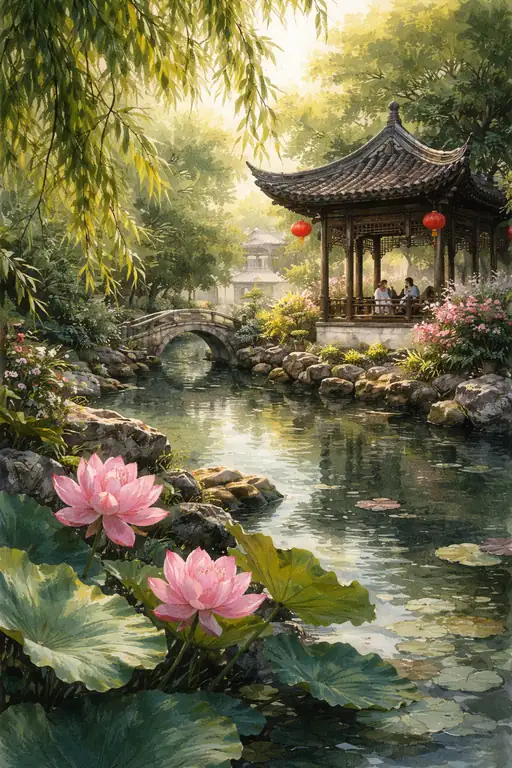 Tranquility in Bloom: The Lotus Pavilion