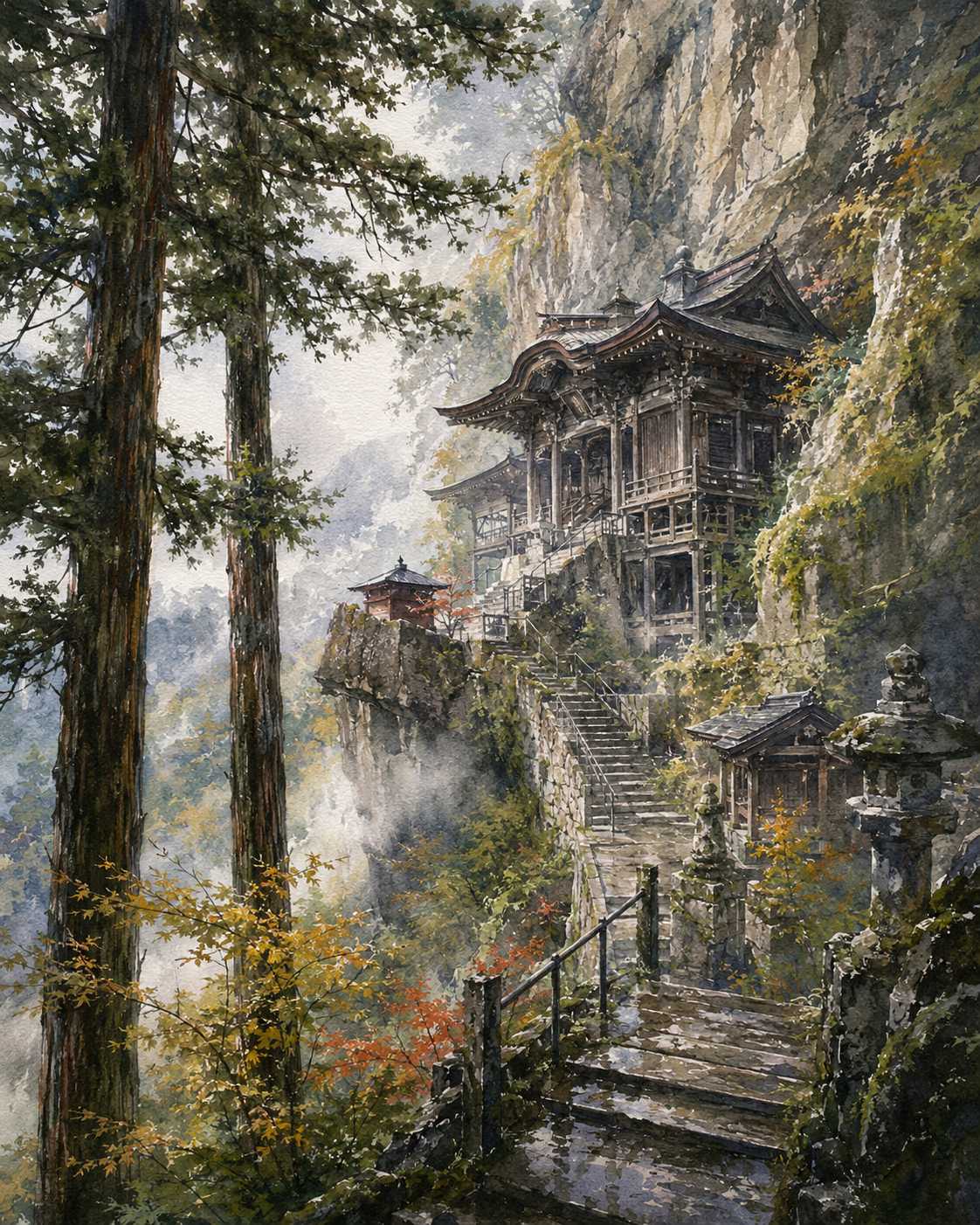
Prayer in the Mountain Mist
Critique
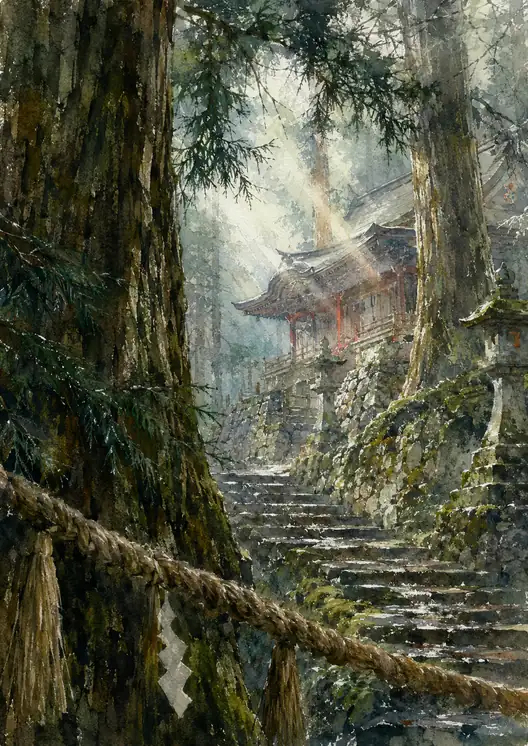
1. Introduction This detailed painting depicts a traditional Japanese temple complex built into a steep, mist-shrouded cliffside. The vertical composition emphasizes the dramatic scale of the mountain and the spiritual significance of the architecture. The work captures the essence of mountain asceticism and the harmonious integration of man-made structures into a rugged, natural landscape, creating an atmosphere of profound stillness. 2. Description In the foreground, tall, ancient cedar trees rise on the left, their textured bark and green needles framing the scene. A set of wet stone steps and a traditional stone lantern lead the viewer's eye upward along a winding stairway. The middle ground features a large, ornate wooden hall with intricate latticework, perched precariously on a rocky ledge. Swirls of mist flow between the cliffs and the buildings, while patches of autumn foliage add touches of red and orange to the verdant slopes. 3. Analysis The artist employs a sophisticated use of verticality and atmospheric perspective to convey depth and height. The distant mountains are rendered in soft, hazy washes of gray and green, contrasting with the sharp, detailed lines of the wooden architecture in the foreground and middle ground. The lighting is soft and diffused, as if filtered through a damp mountain mist, which highlights the mossy textures of the rocks and the weathered surfaces of the temple buildings. 4. Interpretation and Evaluation This artwork successfully evokes the sublime and mystical quality of sacred mountain sites in Japan. The contrast between the fragile, wooden buildings and the massive, unyielding rock face serves as a metaphor for human devotion in the face of nature's power. The level of detail in the architectural elements and the organic flow of the mist demonstrates exceptional technical skill and a deep understanding of traditional Japanese aesthetic principles. 5. Conclusion The painting is a masterfully executed landscape that balances architectural complexity with natural grandeur. While the initial impression is dominated by the striking placement of the temple, the subtle details of the mist and the ancient trees provide a context of timelessness and peace. It stands as a powerful tribute to the enduring spiritual connection between the Japanese people and their mountainous landscape, leaving a lasting impression of awe and serenity.
Same Subcategory
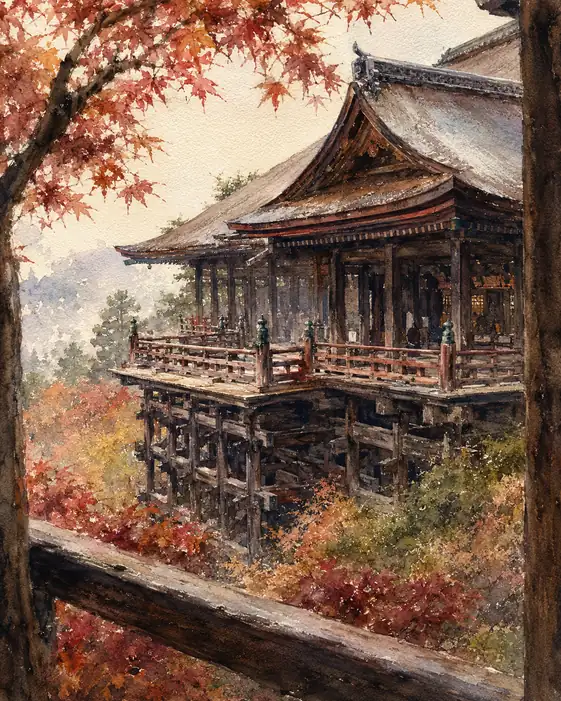 Where the Autumn Wind Rests
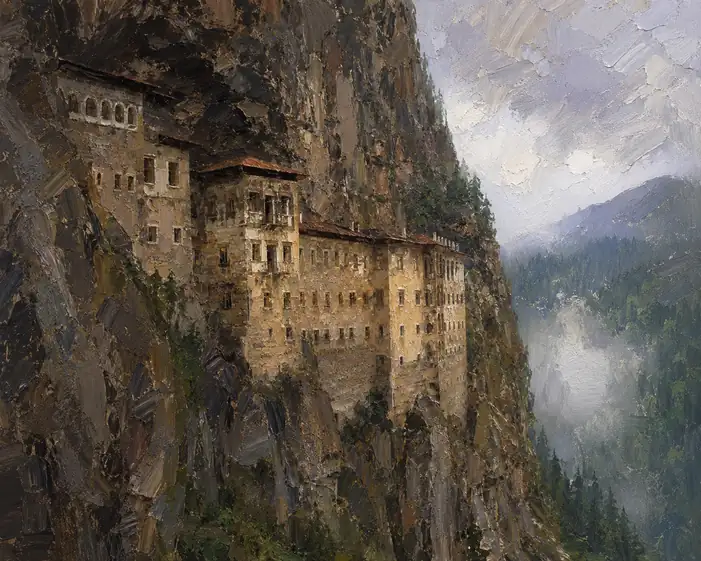 Faith Clinging to the Stone
Similar Artworks
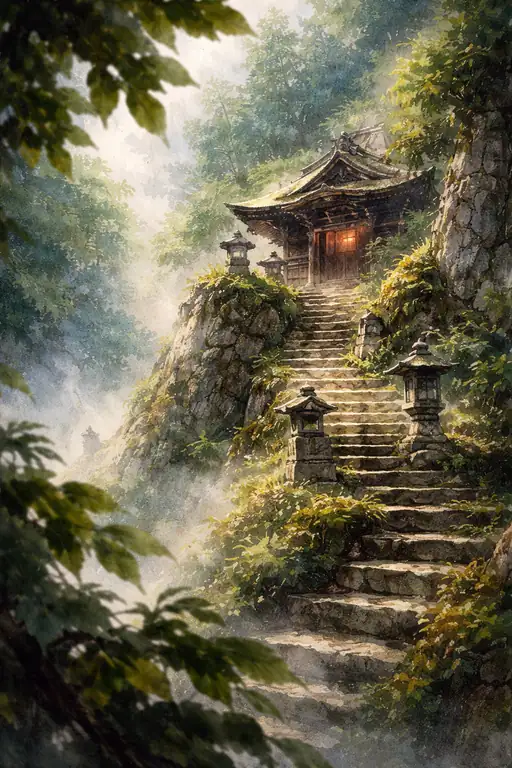 One Step Closer to the Divine
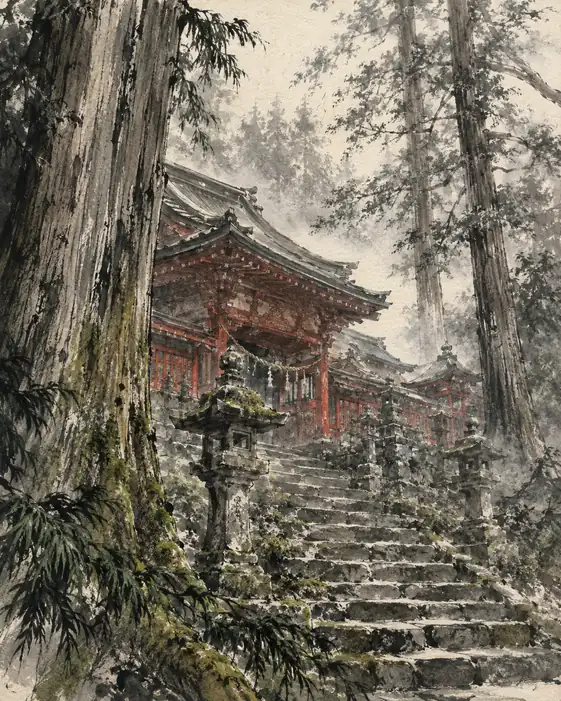 Threshold of the Ancient Silence
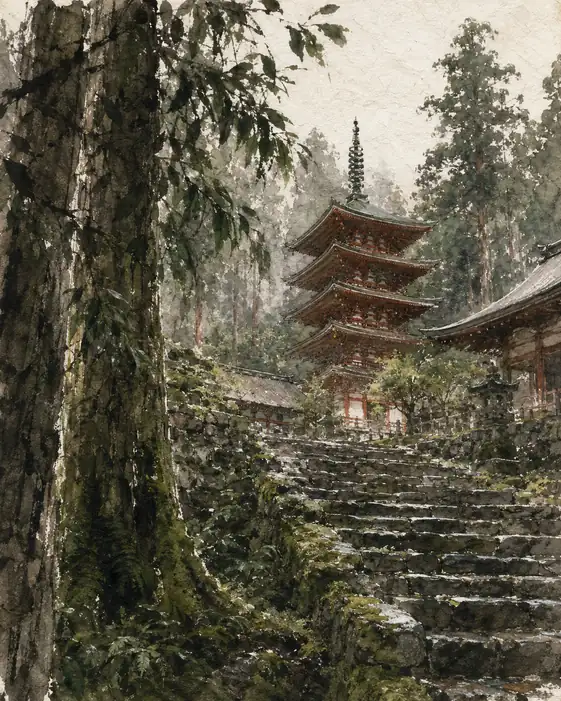 Echoes of Eternity in the Mossy Mist
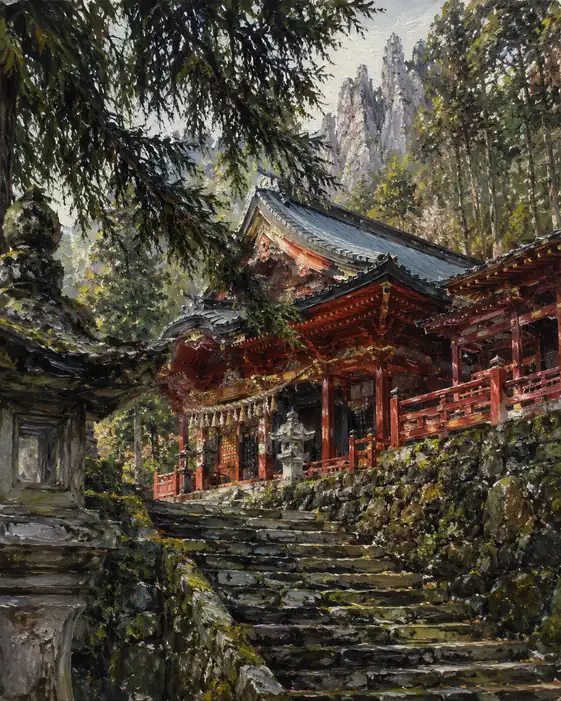 Eternal Prayer in the Vermilion Woods
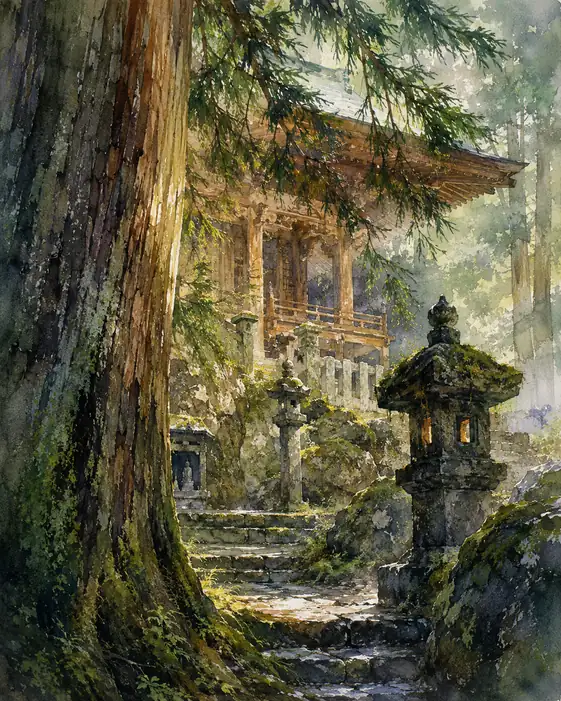 Sanctuary of the Ancient Cedars
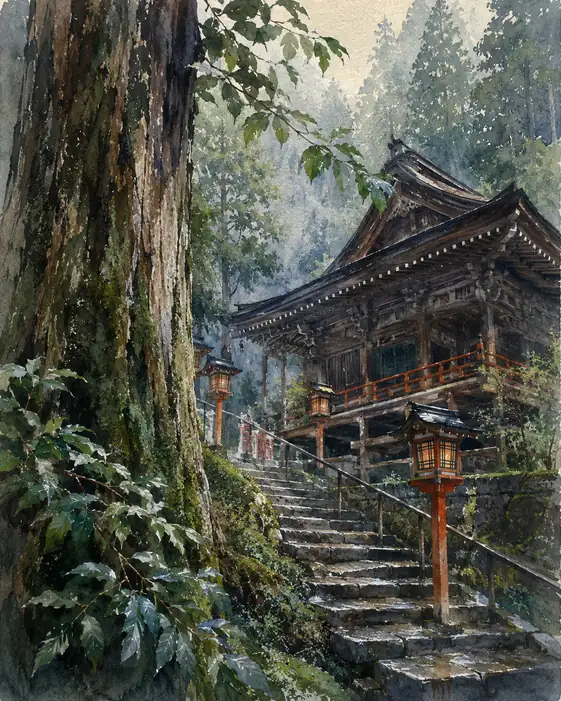 Guardian of the Ethereal Mist
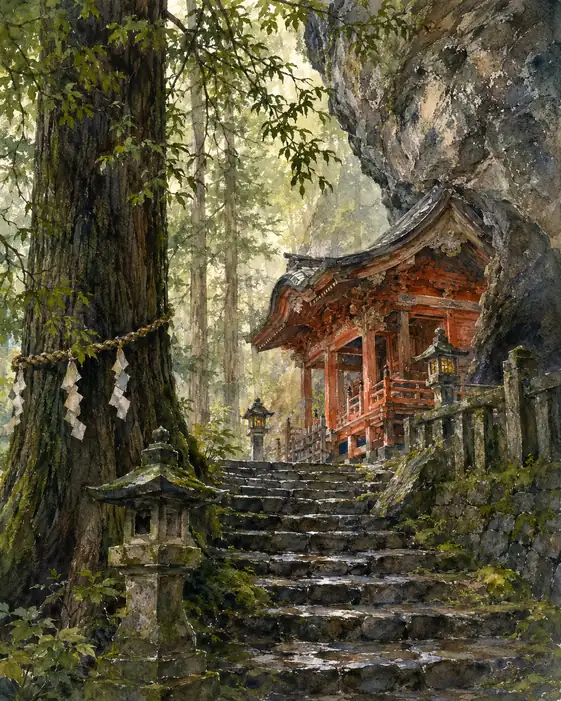 The Ancient Spirit’s Sanctuary
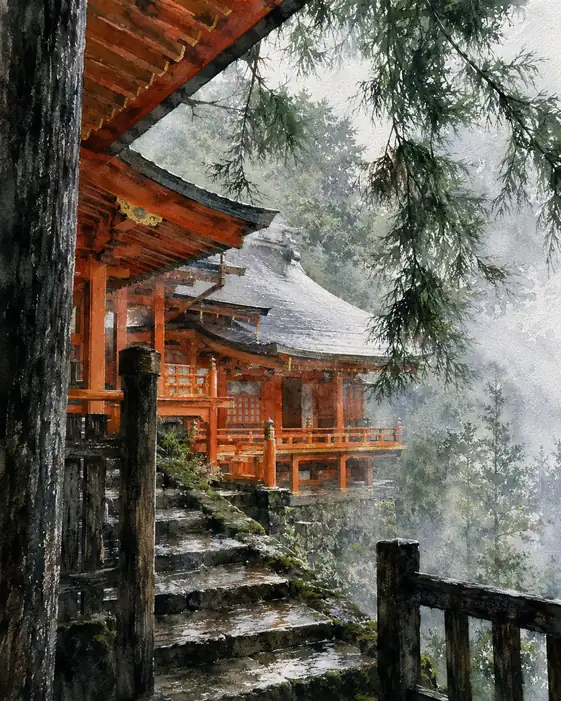 Sanctuary Veiled in Misty Rain
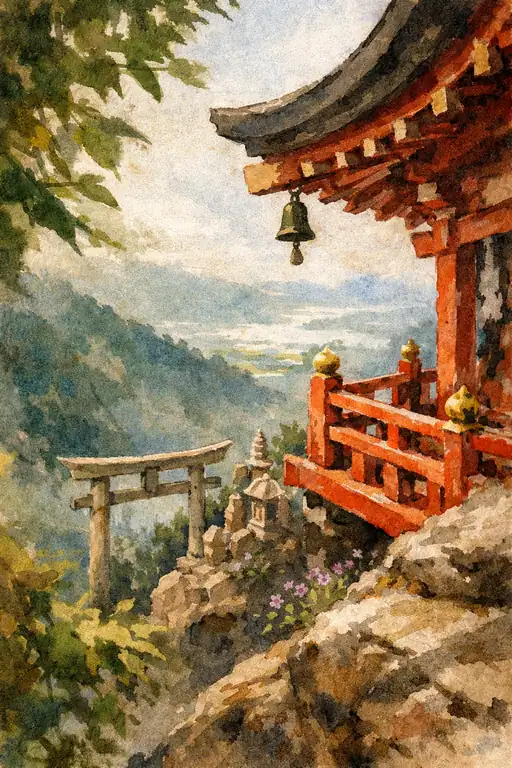 Echoes from the Misty Heights
 Sanctuary of the Piercing Light