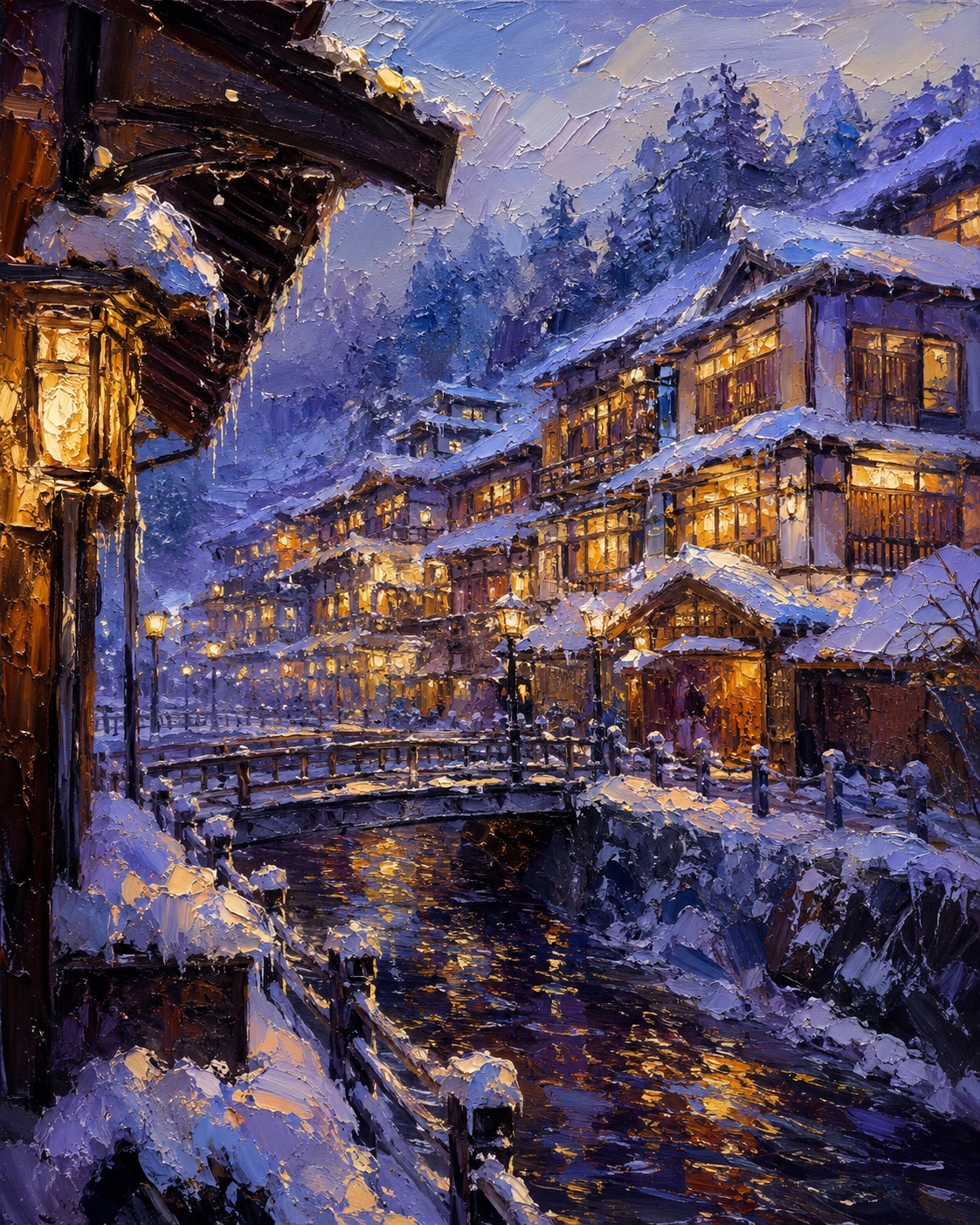
A Warm Serenade in the Frozen Blue
Critique
1. Introduction This oil painting presents a dramatic nocturnal scene of a snow-covered Japanese hot spring town, executed with a powerful and textured impasto technique. The composition centers on the vibrant contrast between the deep, cool blues of the winter night and the warm, golden illumination emanating from traditional wooden inns. This juxtaposition creates a sense of both freezing cold and inviting warmth, evoking a strong feeling of nostalgia and tranquility. The artist’s vigorous brushwork brings a dynamic energy to this serene historical setting. 2. Description A river flows through the heart of the town, its surface shimmering with the reflections of glowing lanterns and windows. In the immediate foreground, a snow-laden wooden structure with a radiant lamp sets a stage-like atmosphere. The middle ground is filled with multi-storied traditional buildings, their intricate architectural details highlighted by the interior light, while a small bridge connects the two banks. The background features towering, snow-capped mountains and dark evergreen forests under a deep navy sky, grounding the town in a vast, natural landscape. 3. Analysis The painting is characterized by its heavy texture, with thick layers of paint applied to create a physical presence on the canvas. The artist masterfully manages the chiaroscuro effect, using the intense light sources to define the volume of the buildings and the soft contours of the accumulated snow. The diagonal lines of the bridge and the vertical structures of the inns create a stable yet complex compositional grid. The strategic placement of orange and yellow highlights against the dominant blue creates a rhythmic visual interest that leads the viewer through the town. 4. Interpretation and Evaluation This work explores the enduring harmony between human civilization and the harsh beauty of the natural world. The warmth of the domestic lights serves as a symbol of resilience and comfort against the overwhelming silence of the winter wilderness. The technical execution is exceptional, particularly in how the impasto strokes translate the physical weight of the snow and the fluidity of the water. The piece displays high originality by combining traditional Japanese themes with a bold, almost expressionistic handling of the medium. 5. Conclusion While the initial impression is one of striking color contrast, the painting reveals its true depth through the tactile richness of its surface. The viewer’s perception shifts from observing a picturesque vista to experiencing the palpable atmosphere of a frozen moment in time. Ultimately, this artwork is a profound success, demonstrating a harmonious blend of technical mastery and emotional depth that elevates it beyond simple landscape representation into a compelling sensory experience.
Same Subcategory
 The City's Jeweled Islet
Similar Artworks
 Luminous Urban Tapestry
 Golden Echoes in the Ravine
 Golden Shivers on a Winter Boulevard
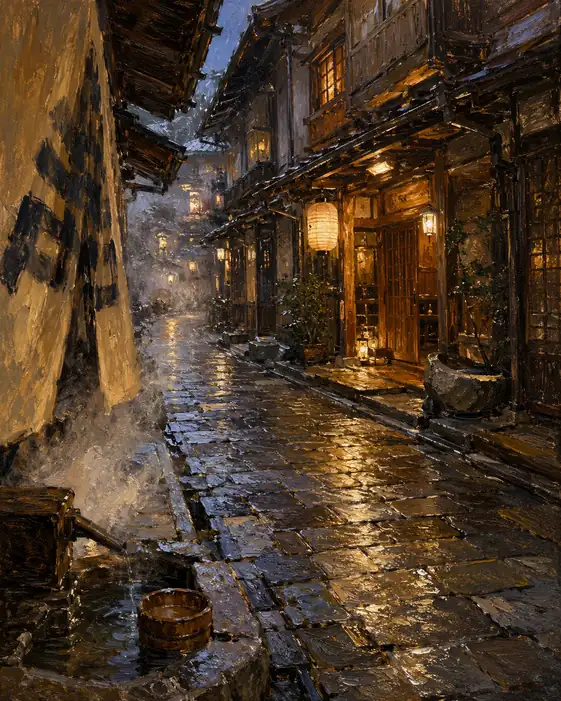 Whispers of the Glistening Night
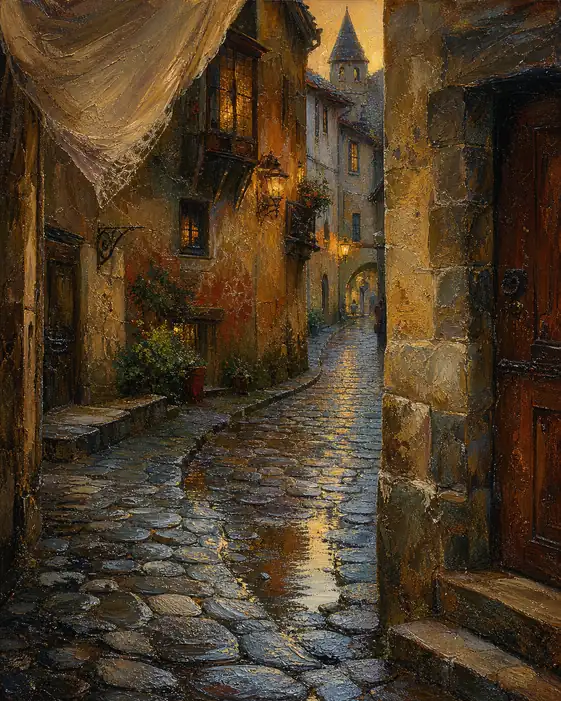 Amber Dreams on the Cobblestone Alley
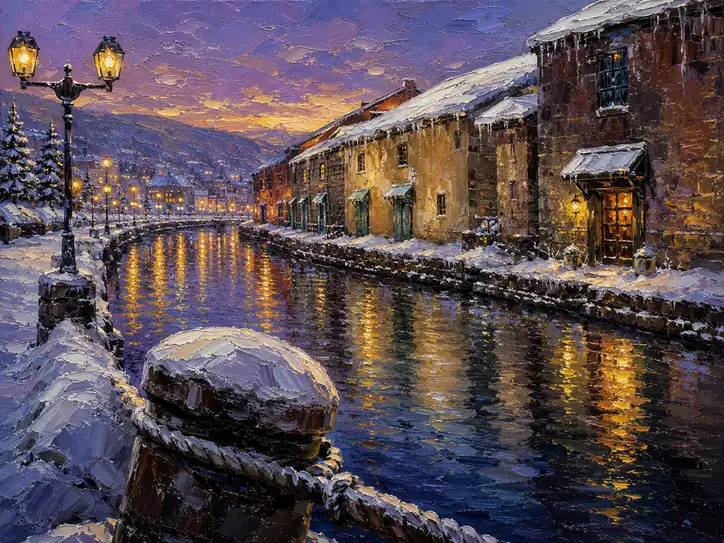 Gleam of the Frozen Twilight
 My Soul's Refuge in the Blue Twilight
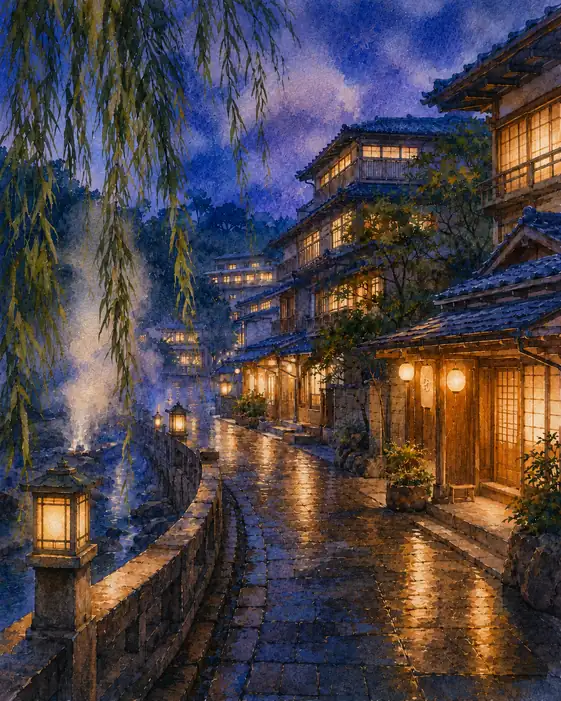 A Lullaby of Lanterns and Willow Whispers
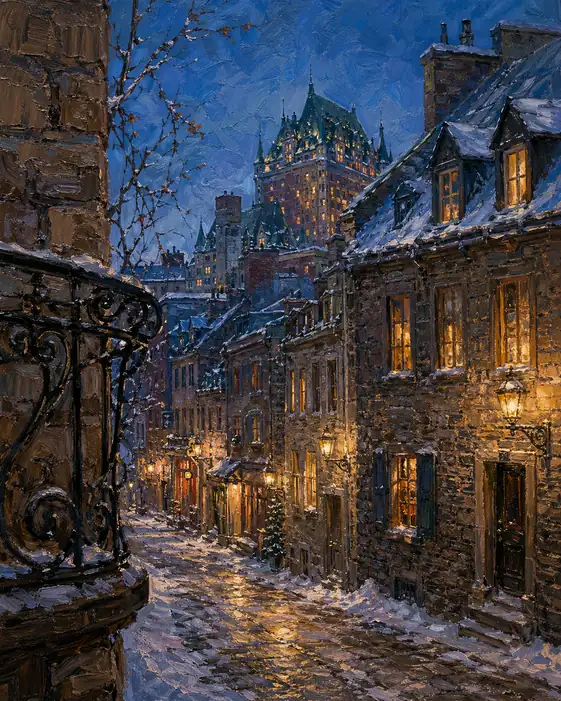 The Warmth of the Northern Night: A Quebec Winter
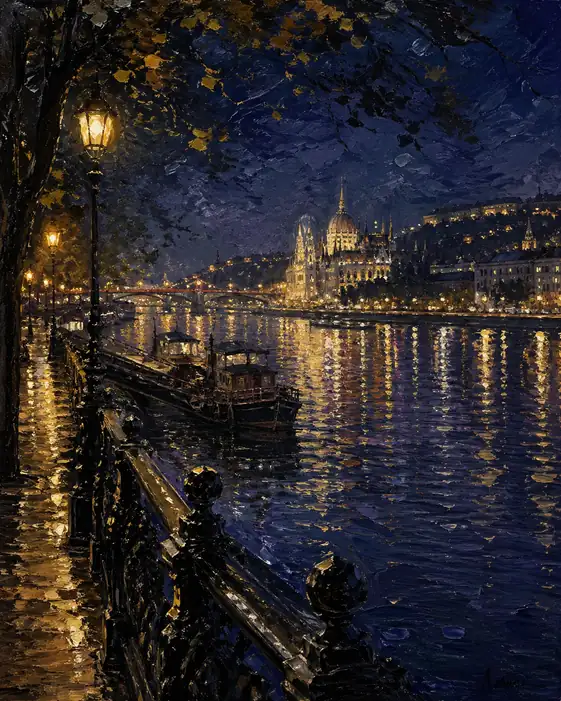 The River's Golden Pulse