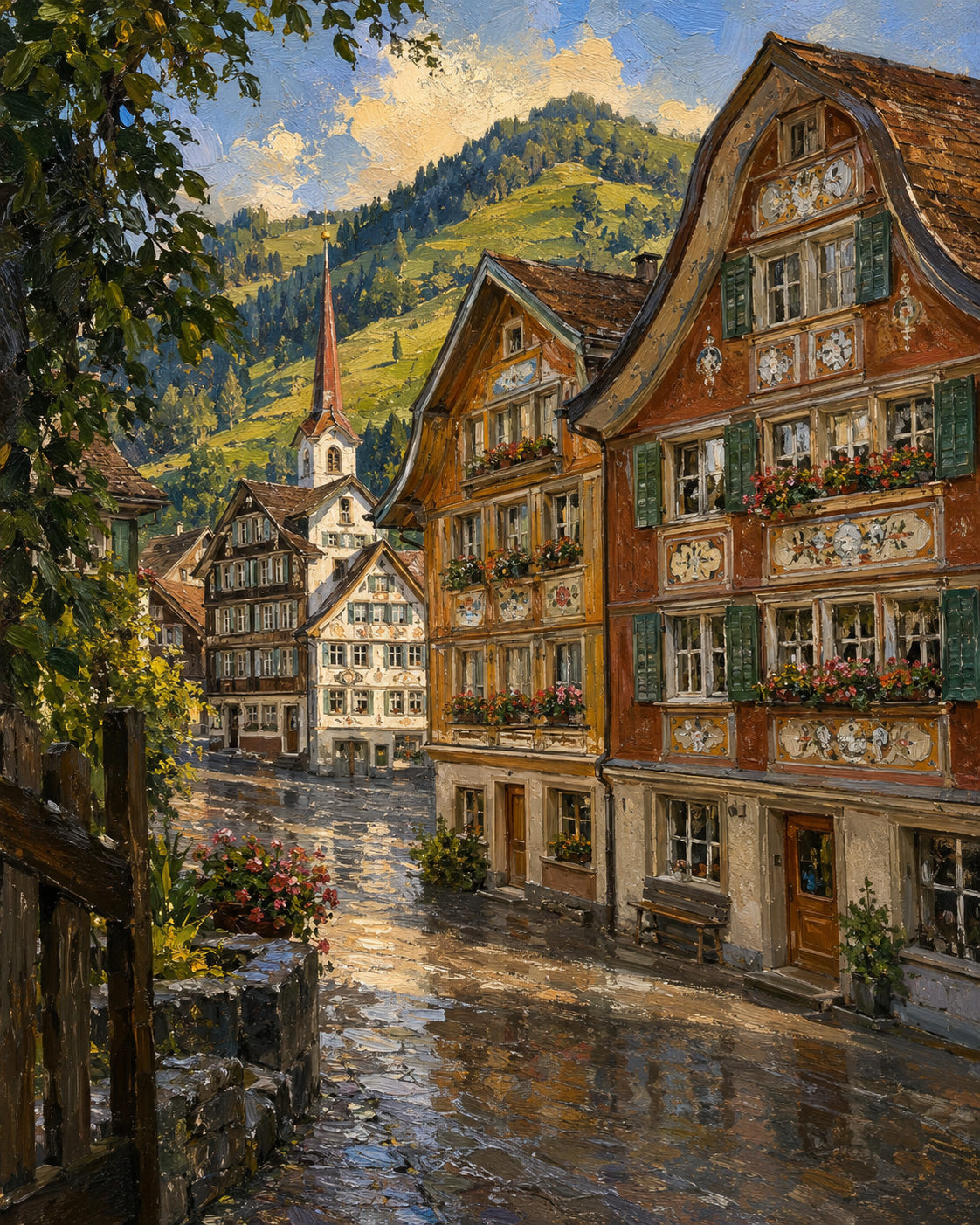
Alpine Serenade in the Rain-Washed Village
Critique
1. Introduction This vibrant oil painting captures a picturesque European mountain village against a backdrop of sun-drenched slopes. The artwork employs a bold impasto technique, where thick brushstrokes bring both the historic architecture and natural landscape to life. It presents a scene rich in cultural heritage, characterized by decorated facades and an atmosphere of post-rain freshness. 2. Description In the foreground, traditional houses feature intricate murals and floral window boxes rendered with palpable texture. A wet cobblestone street winds through the village toward a church with a distinctive red spire. The background is dominated by a lush green mountain rising into a bright blue sky, while the ground reflects the surrounding colors with shimmering precision. 3. Analysis The composition utilizes strong diagonal lines to create depth and movement through the village space. There is a powerful color contrast between the warm tones of the buildings and the cool greens of the environment. The intense light source creates sharp highlights and deep shadows, emphasizing the three-dimensional quality of the thick, layered paint. 4. Interpretation and Evaluation This piece celebrates the harmony between human civilization and the rugged alpine environment. The passionate rendering of floral decorations and frescoed walls suggests a deep appreciation for the aesthetic details of daily life. This work is highly evaluated for its masterful use of color and the tactile energy of its brushwork, elevating a classic landscape. 5. Conclusion The initial impression of overwhelming energy soon reveals a heartwarming narrative within the village's details. By merging light and matter, the painting transcends traditional landscape boundaries, offering a powerful and emotionally resonant vision of a timeless cultural sanctuary.
Same Subcategory
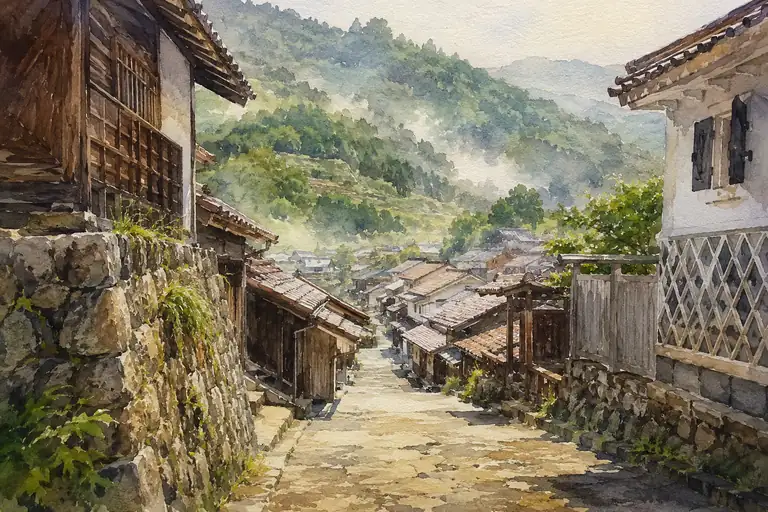 Echoes of the Ancient Path
Similar Artworks
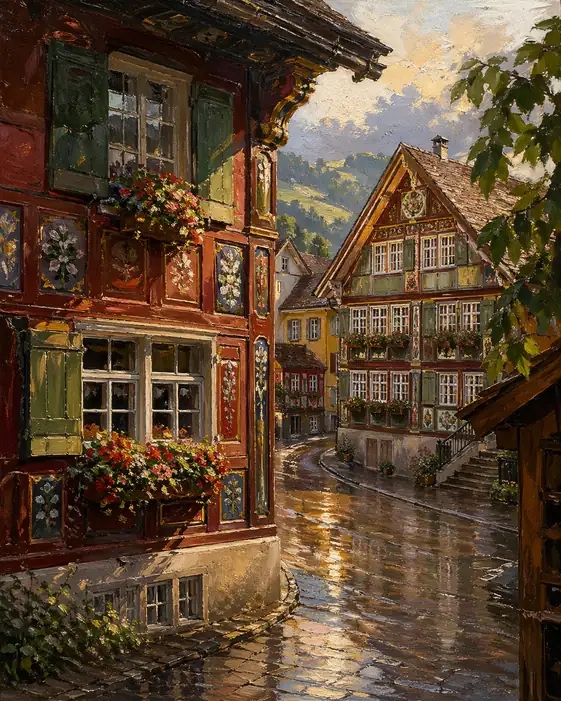 Fence Line to the Snow-capped Majestic Peaks
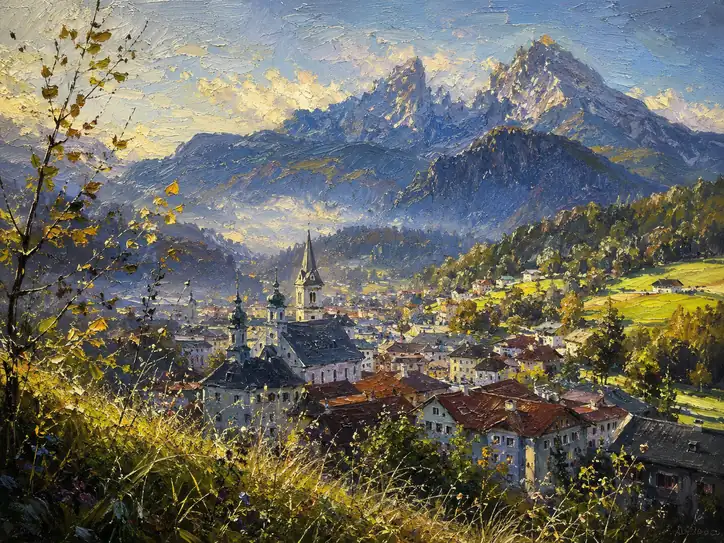 Peace Sheltered by the Giants
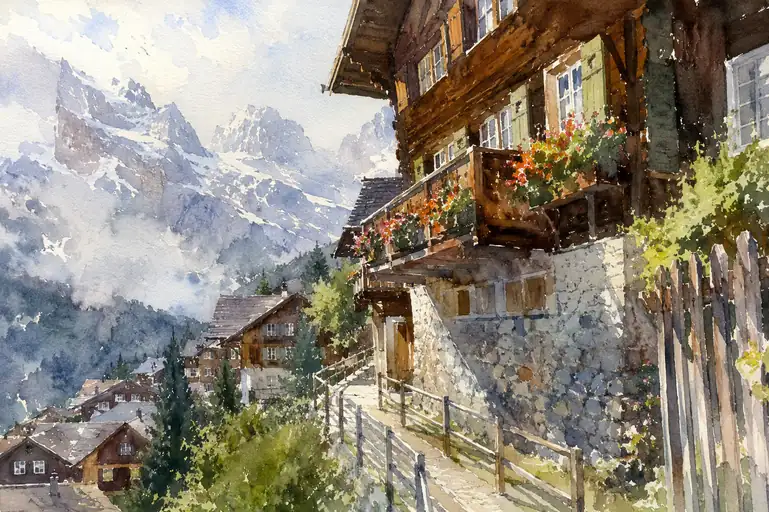 A Path to the Sky’s Embrace
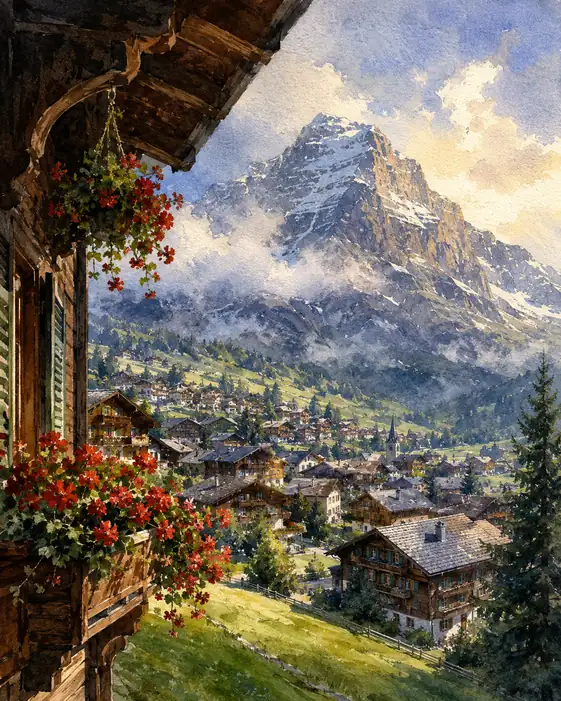 Eternal Peace Under the Peak
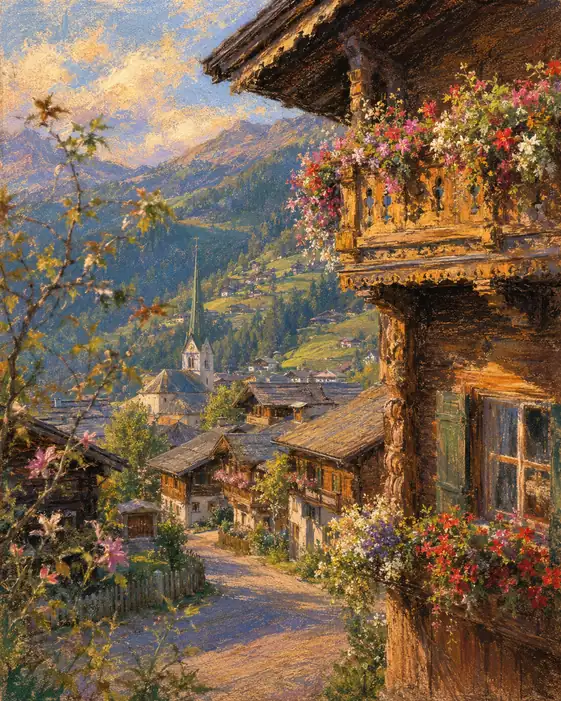 Basking in the Alpine Glow
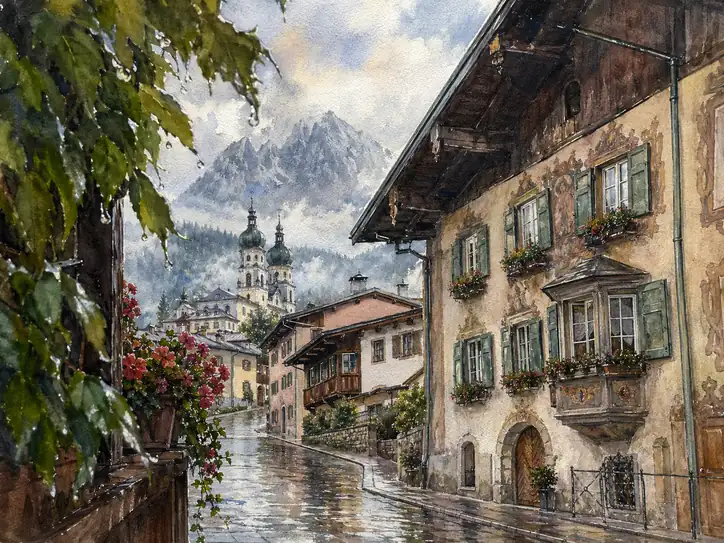 A Charming Alpine Village Glistening Under a Gentle Rainfall
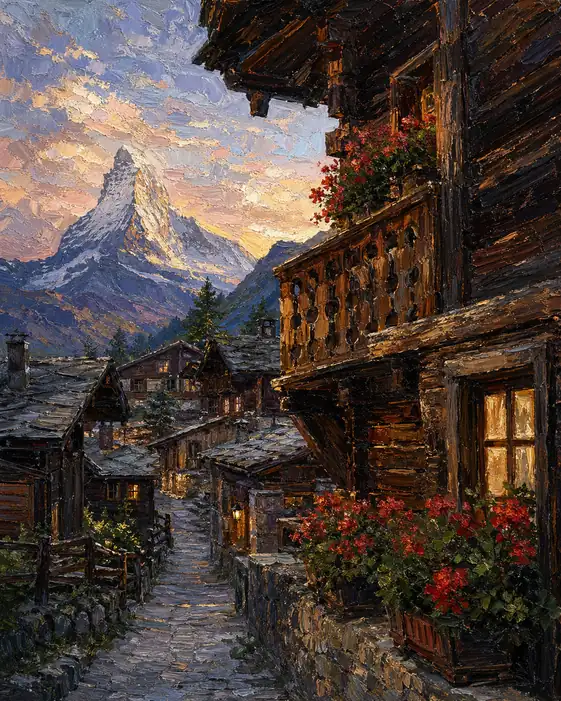 Golden Echoes of the Peak
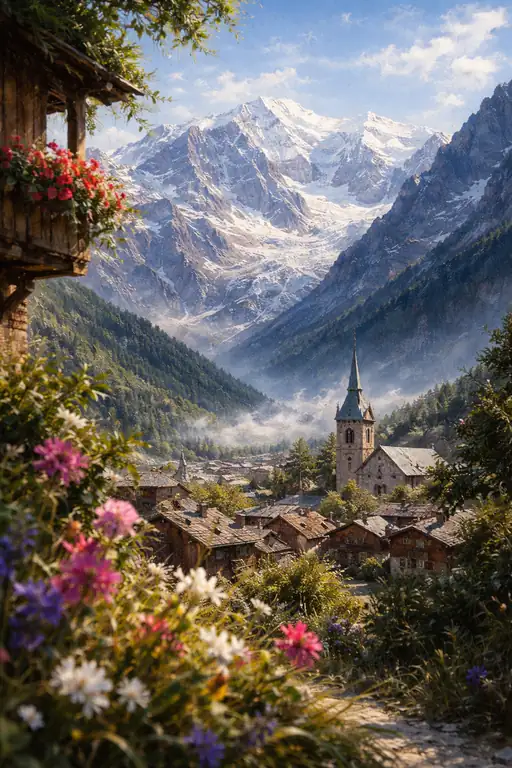 Echoes of Alpine Solitude
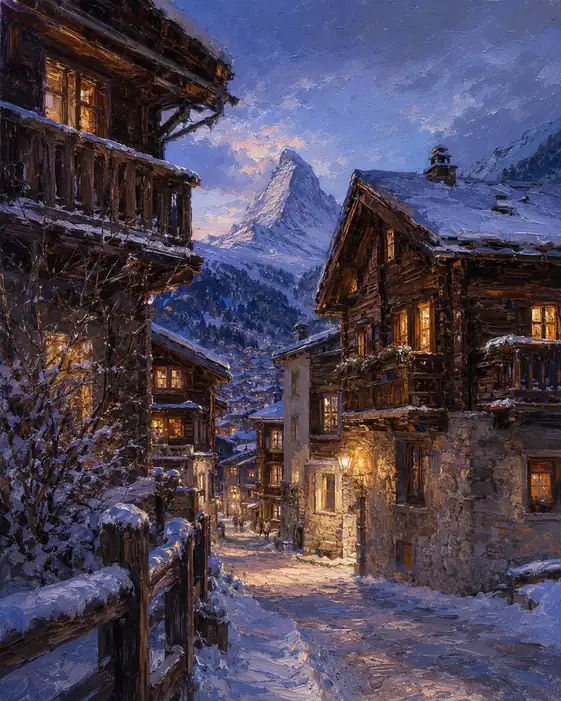 Silver Night Beneath the Peak
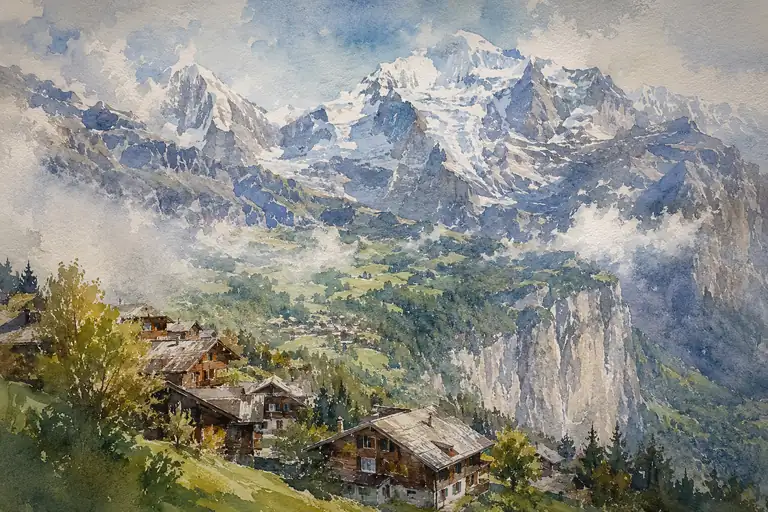 Silence of the High Valleys