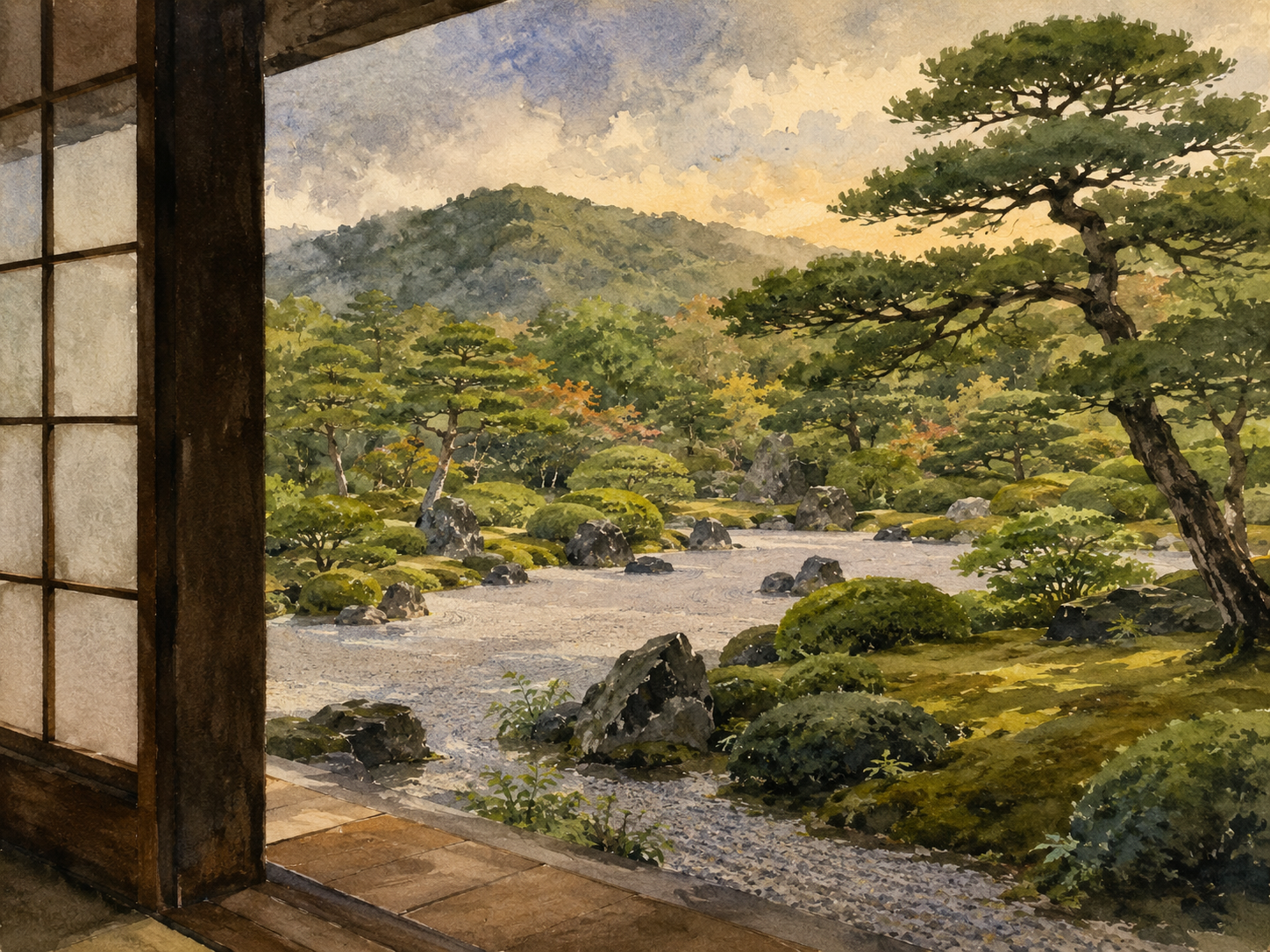
The Silent Threshold: A Window into Zen
Critique
1. Introduction This watercolor painting offers a serene view of a traditional Japanese rock garden, observed from within an architectural space. The composition is framed by a shoji screen, guiding the gaze toward a landscape of sand, stone, and distant mountains. It masterfully explores the aesthetic of silence and the integration between interior spaces and the natural world. 2. Description The left side features a translucent shoji screen and a solid wooden beam. Beyond the threshold lies a dry landscape garden where raked gravel creates ripples around weathered rocks. A majestic pine tree leans in from the right, while the background reveals a dense forest and rolling mountains bathed in the soft, golden light of late afternoon. 3. Analysis The framing technique emphasizes depth, creating a transition from the dark interior to the luminous exterior. The artist employs a harmonious color palette, contrasting architectural browns with vibrant greens and the sky's glow. Light and shadow enhance the tactile quality of the stones and the intricate patterns in the sand. 4. Interpretation and Evaluation This work is a visual meditation on "shakkei" (borrowed scenery) and "wabi-sabi," emphasizing the beauty of transience. The meticulous rendering of sand ripples and textured bark demonstrates a keen observation of nature’s details. This piece is highly evaluated for its technical precision and ability to evoke tranquility through a sophisticated use of atmosphere. 5. Conclusion The initial impression of stillness soon reveals a dynamic interplay of light and texture. The painting successfully captures the essence of Japanese aesthetics, offering a window into a world where architecture and nature exist in perfect, contemplative unity.
Same Subcategory
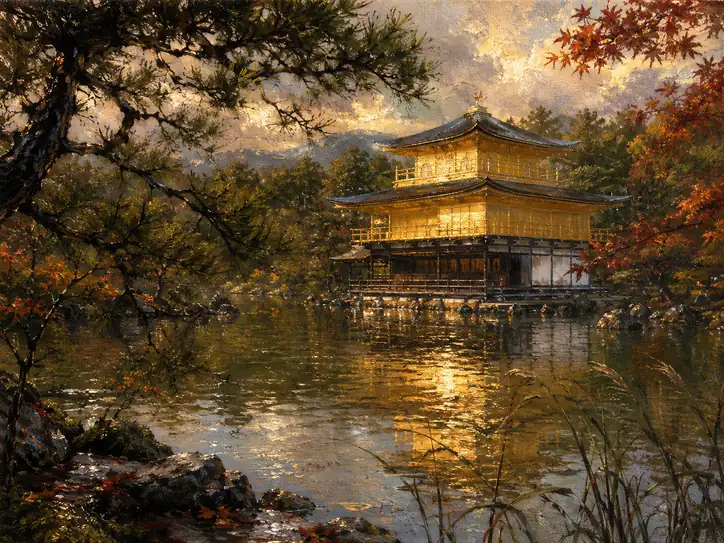 The Echo of Golden Stillness
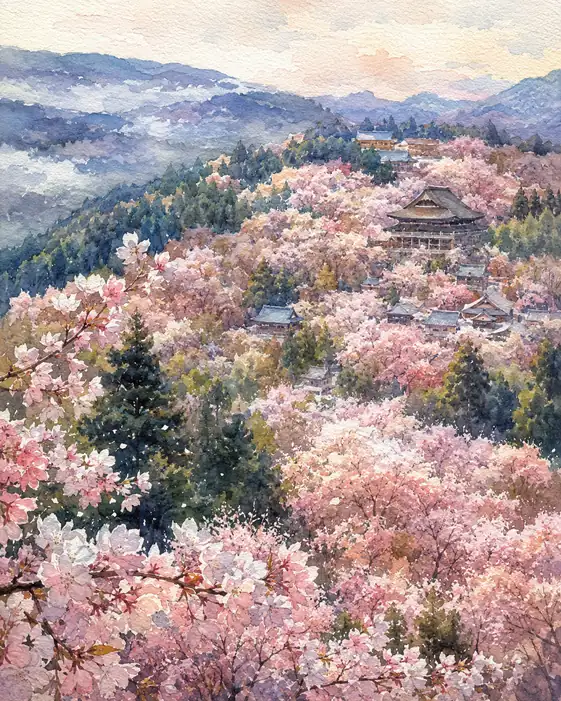 Oceans of Petals in the Mountain Mist
Similar Artworks
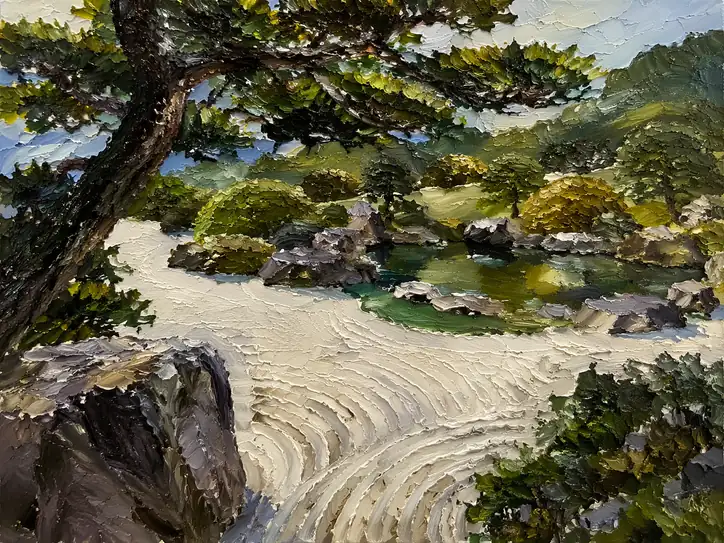 Ripples of the Raked Earth
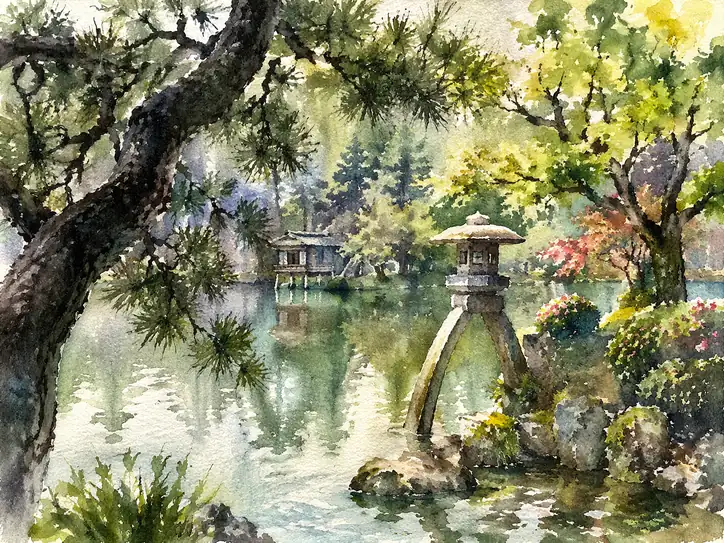 Quiet Reflections by the Stone Guardian
 The Infinite Ripples of Stillness
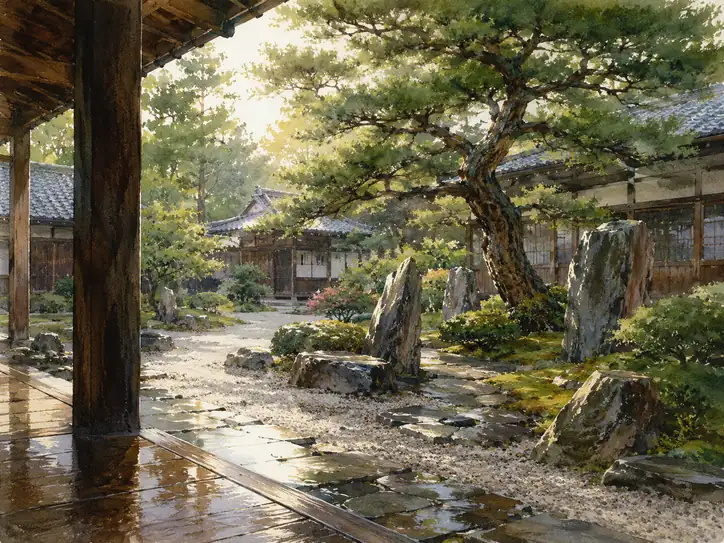 Reflections of Tranquility: Sunlight on the Wet Engawa
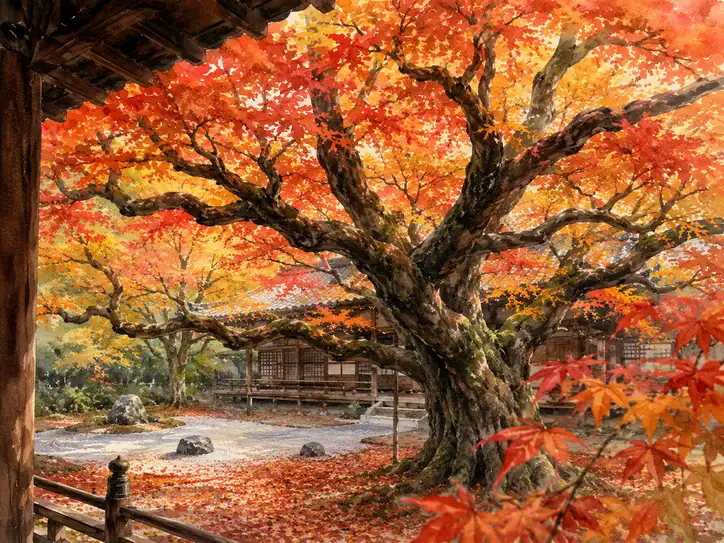 Ember of the Zen Garden
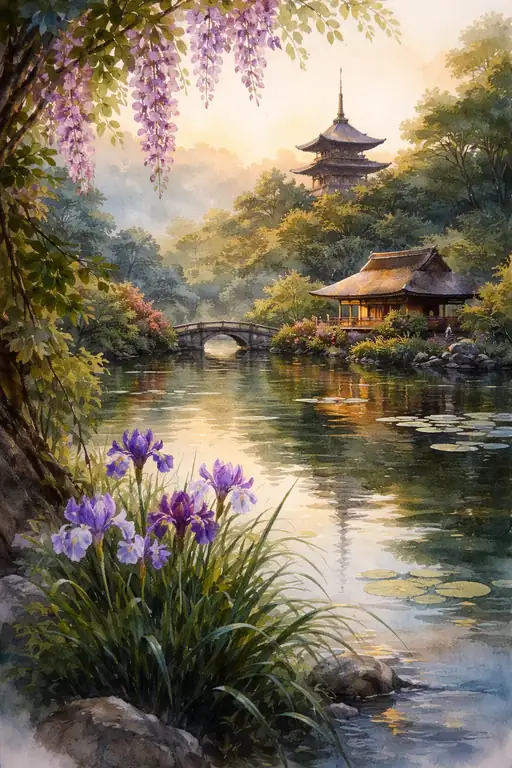 Sunset Harmony in the Temple Garden
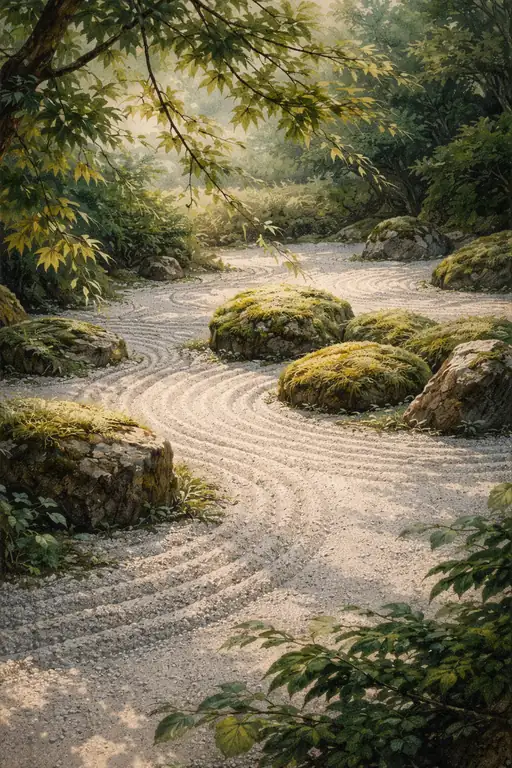 Rhythms of the Raked Sand
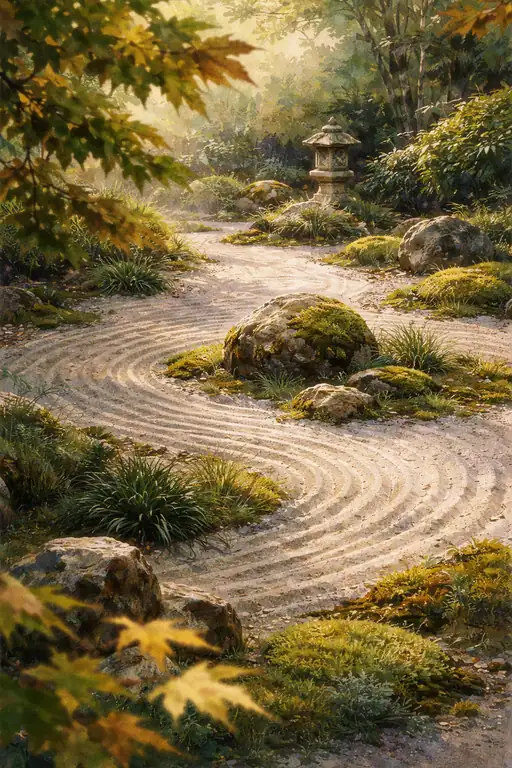 The Golden Harmony
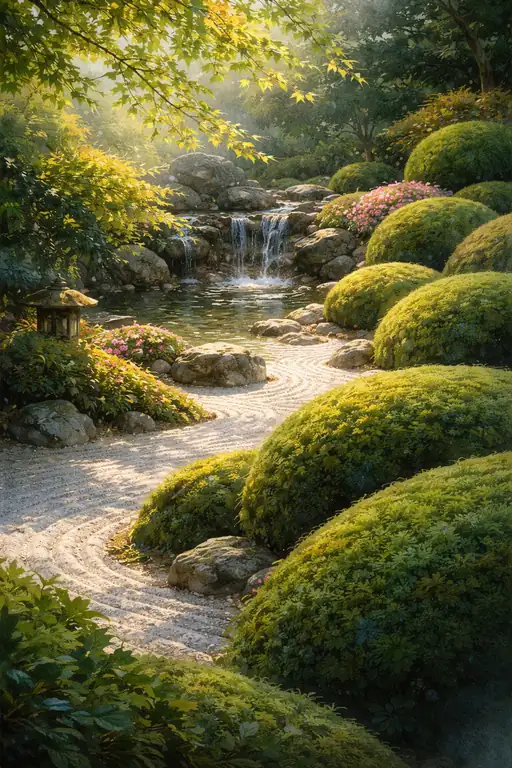 Ripples of the Raked Zen Sea
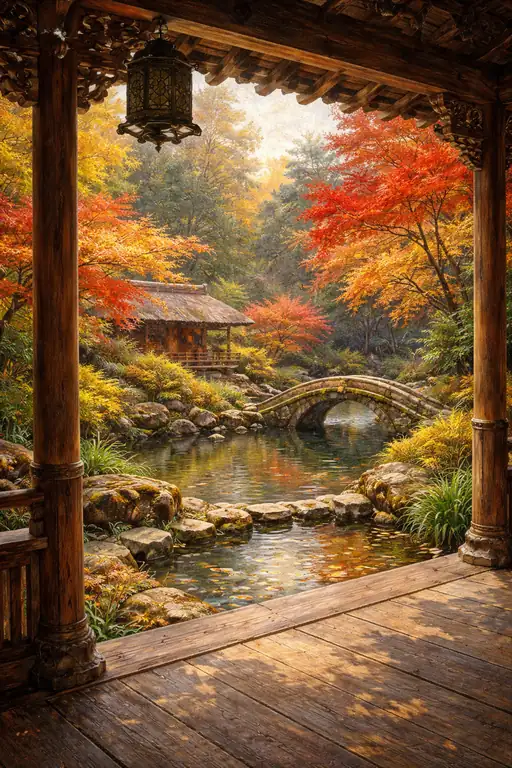 Crimson Reflections