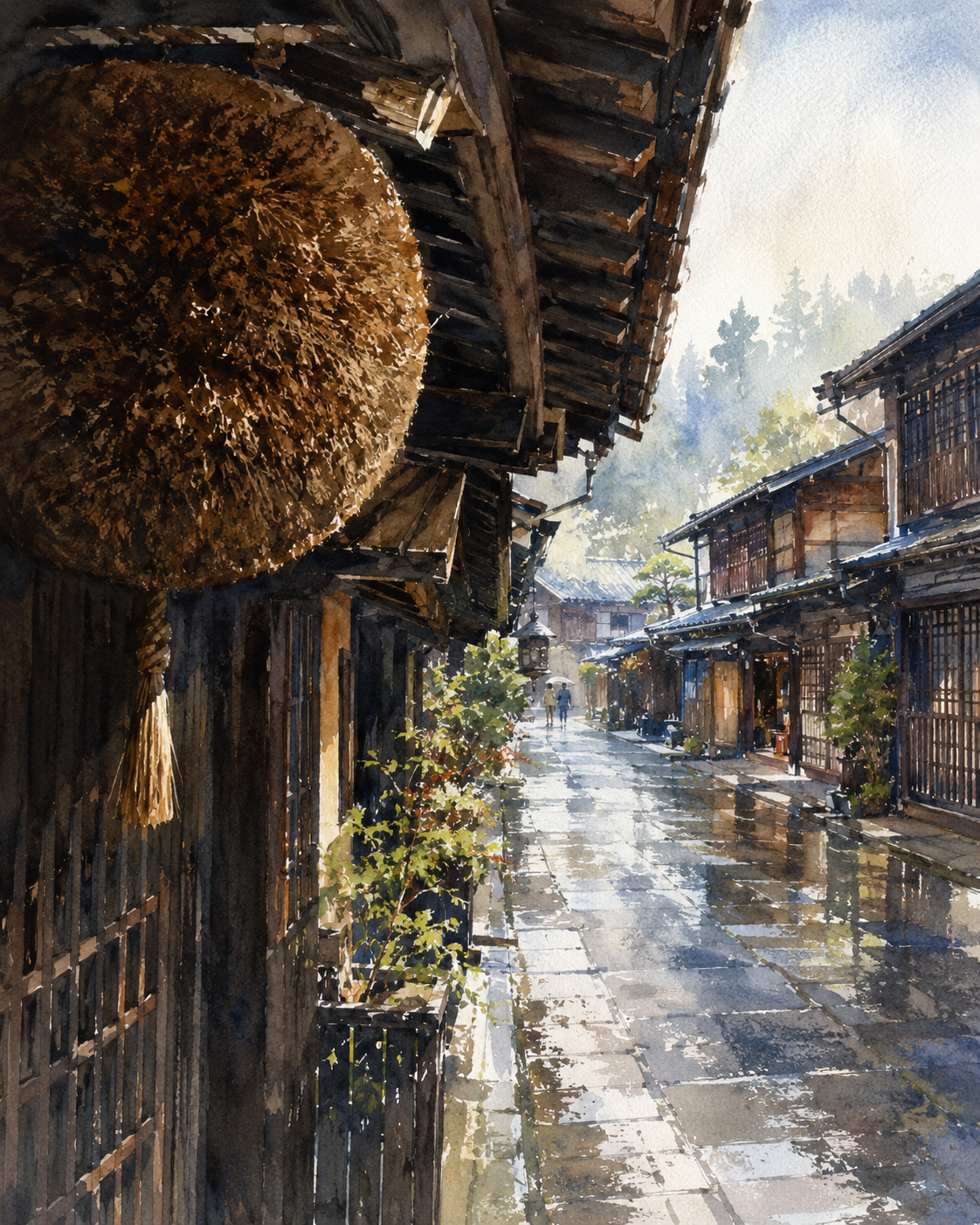
Memory Reflected in the Post-Rain Stone
Critique
1. Introduction This watercolor painting masterfully depicts a traditional Japanese street in the aftermath of a refreshing rain. The composition is defined by a large, textured cedar ball, or sugidama, hanging in the immediate left foreground, serving as a powerful focal point that leads the eye down a narrow, wet-paved thoroughfare. The work captures the unique atmosphere of a historical post town, emphasizing the interplay between damp organic textures and the reflective quality of sudden sunlight. It evokes a profound sense of nostalgia and cultural resonance. 2. Description The sugidama on the left is rendered with meticulous detail, showing the dense, brownish needles and the woven tassel below. Flanking the street are traditional wooden buildings with intricate lattice windows and weathered tiled roofs, their deep shadows providing a strong rhythmic structure to the piece. The cobblestone ground, glistening with rainwater, acts as a reflective surface that mirrors the bright sky and the surrounding structures. In the distance, misty evergreen trees are visible, executed with soft, atmospheric washes that enhance the sense of depth. 3. Analysis The artist employs a sophisticated contrast between the circular form of the cedar ball and the rigid linear geometry of the architecture. The color palette is predominantly earthy, featuring a range of browns and ochres, which are balanced by the cool, luminous grays of the wet pavement. Lighting is handled with exceptional skill; a strong light source from the left illuminates the texture of the sugidama and creates sharp highlights on the ground. The use of transparent layers allows the underlying paper to provide a natural luminosity to the highlights. 4. Interpretation and Evaluation This artwork is a superb example of how traditional subject matter can be imbued with a modern sensibility through the expressive use of light. The inclusion of the sugidama not only identifies the cultural context but also adds a significant sculptural element to the landscape. The painting successfully translates the sensory experience of a humid, post-rain environment into a visual medium, inviting the viewer to feel the coolness of the air. The balance between detailed representation and atmospheric abstraction demonstrates a high level of artistic maturity and technical control. 5. Conclusion Overall, the painting is a captivating exploration of the enduring beauty found in Japan's historical architecture and its natural environment. The initial impact of the foreground elements matures into an appreciation for the subtle nuances of light and shadow throughout the composition. It serves as a visual poetic tribute to a bygone era that continues to exist in the present. This work is a significant achievement in watercolor landscape painting, offering both aesthetic pleasure and a deep, contemplative connection to the spirit of the place.
Same Subcategory
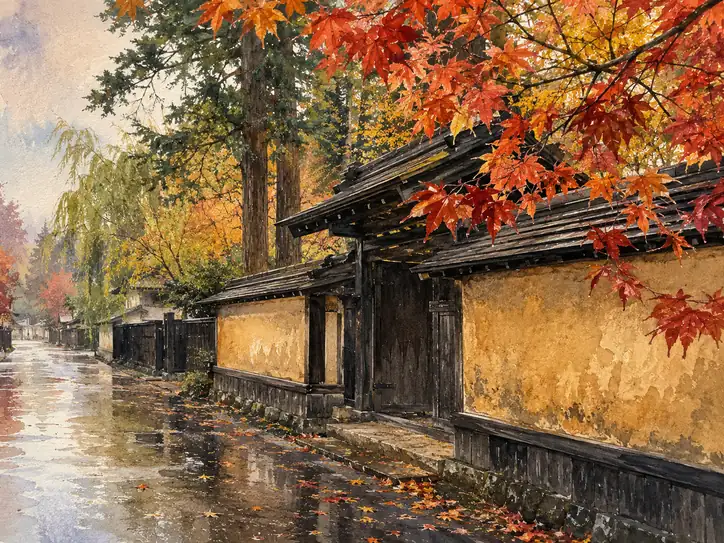 The Rain's Quiet Reflection
Similar Artworks
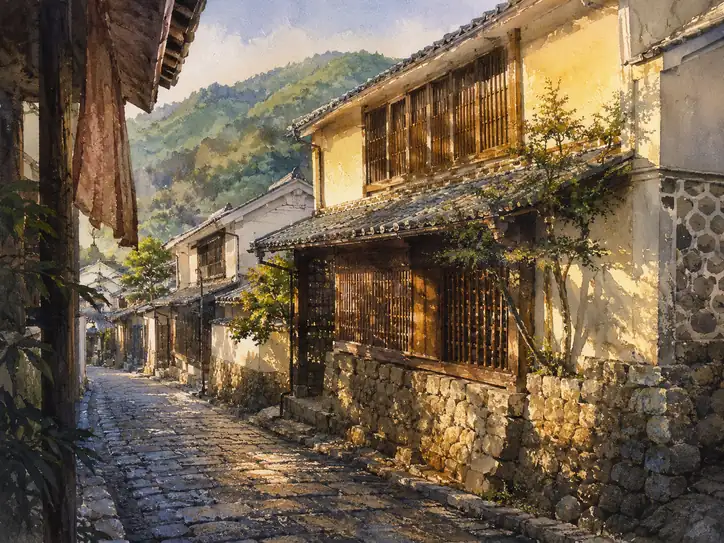 Sun-Drenched Memories of the Old Street
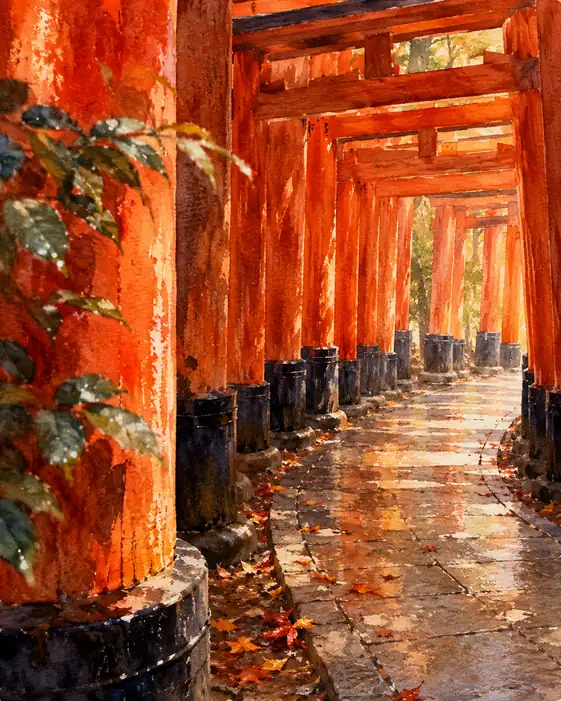 Whispers in the Vermilion Tunnel
 Whispers of the Wet Stone Path
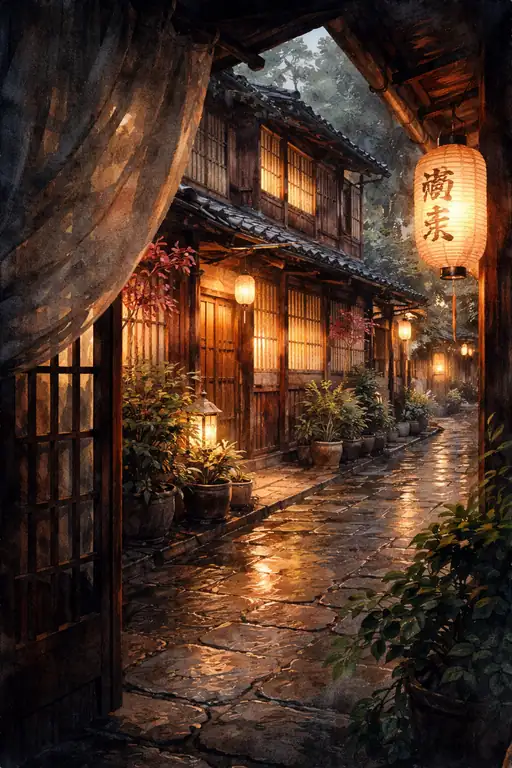 The Lantern's Reflection: A Rainy Night in Kyoto
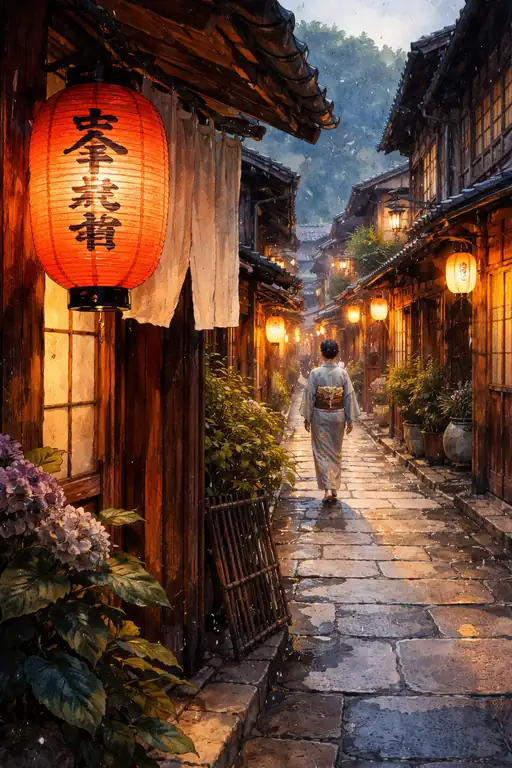 Whispers of the Evening Rain in Kyoto
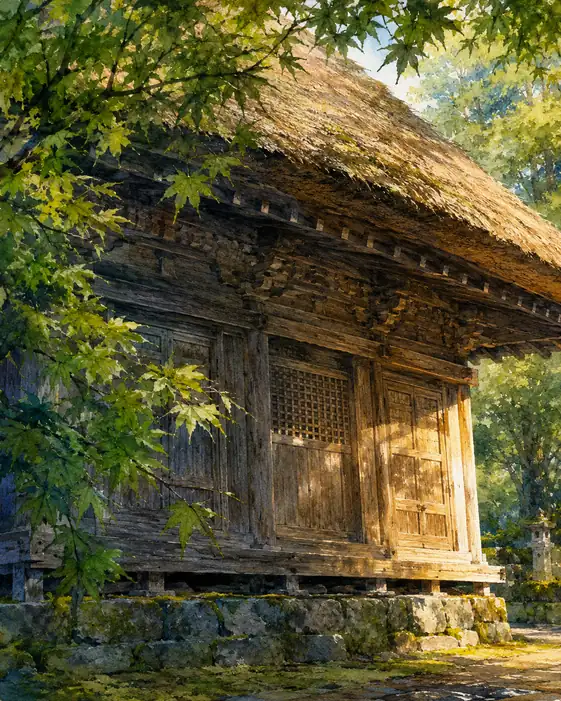 Memory of the Sun-Drenched Leaves
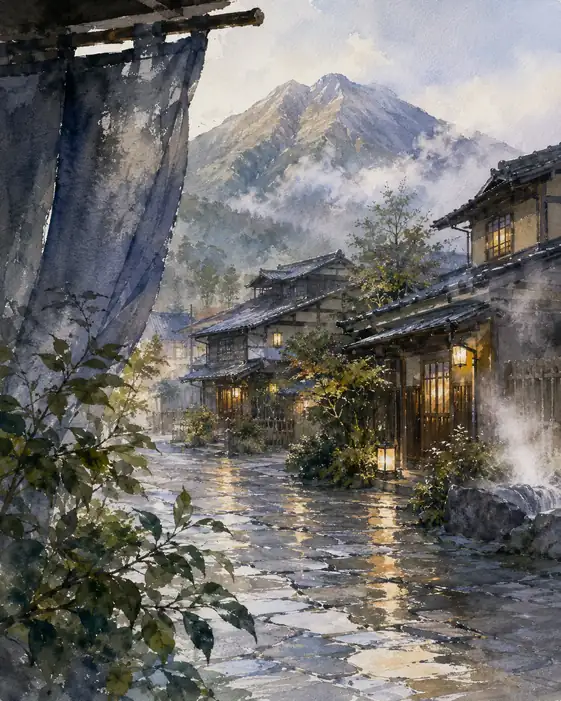 Echoes of the Mist-Bound Inn
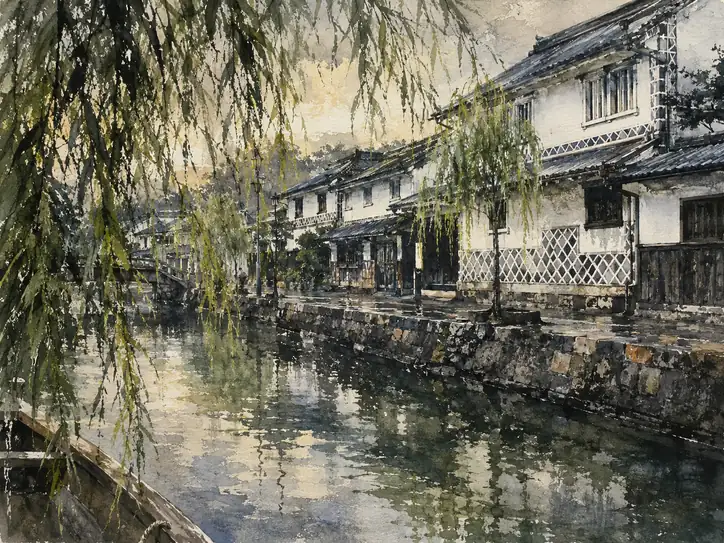 Sigh of the Willow, Mirror of the Ages
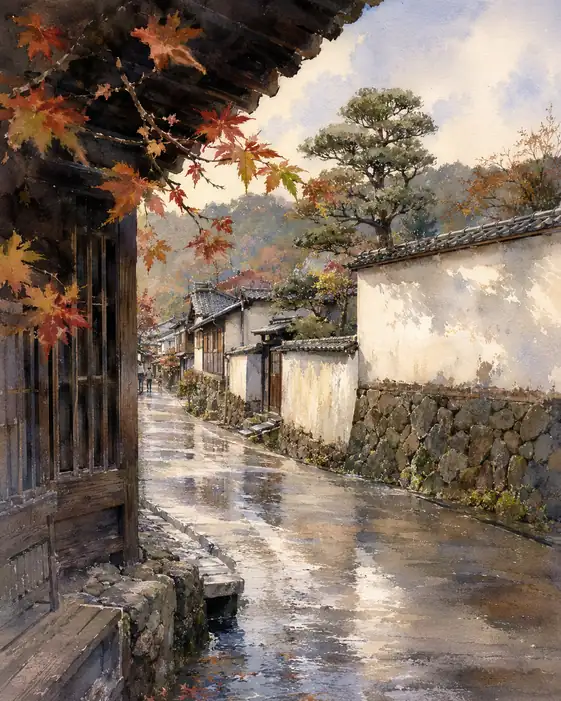 Reflections of a Fading Autumn
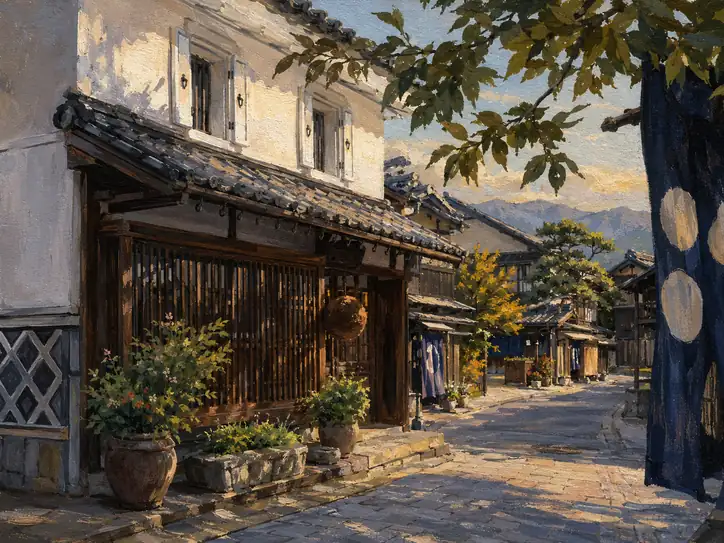 The Golden Hour in a Hidden Village