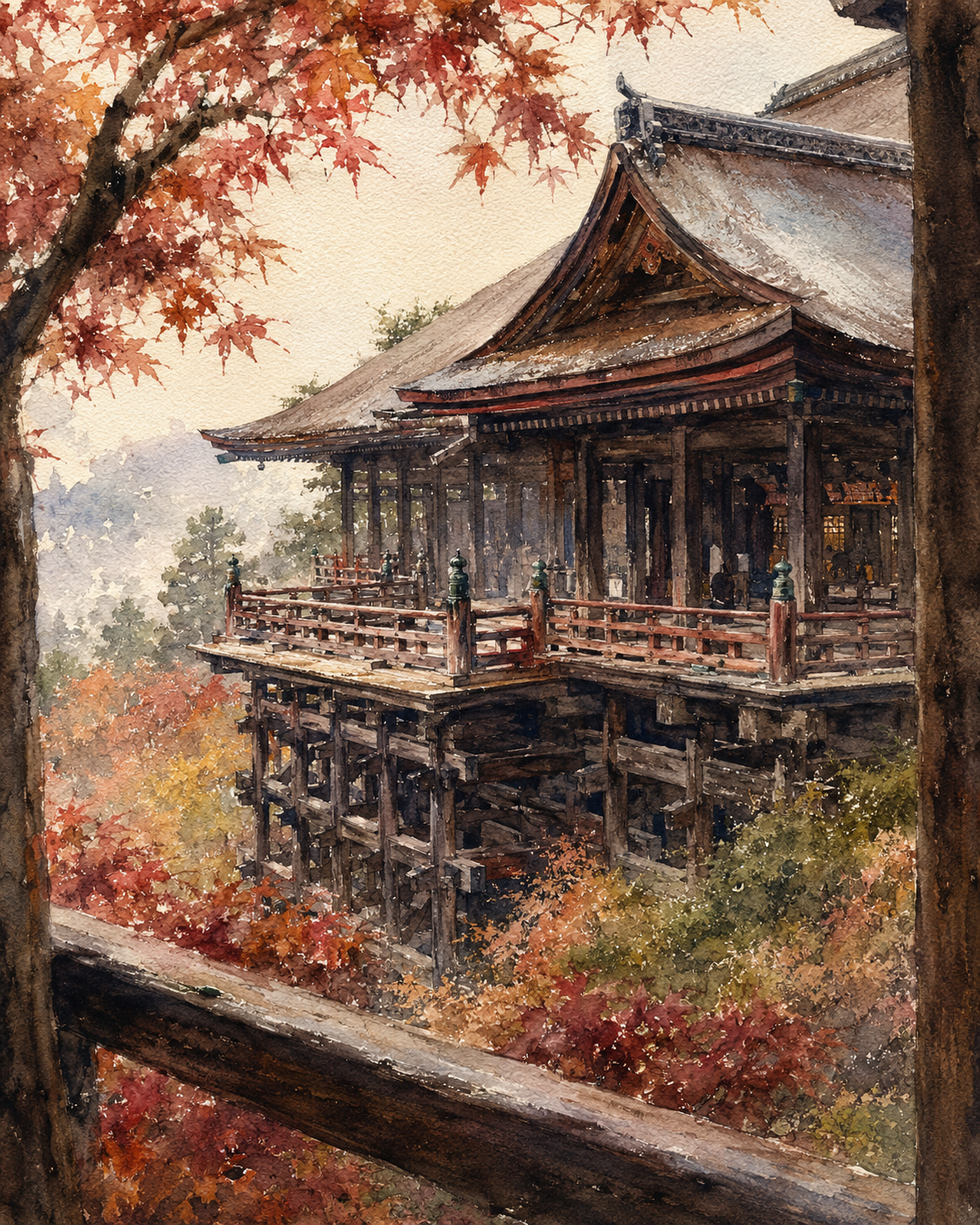
Where the Autumn Wind Rests
Critique
1. Introduction This evocative watercolor-style painting depicts the iconic stage of a historic temple perched on a cliffside, surrounded by the fiery colors of autumn. The work masterfully captures the contrast between the solid, weathered textures of traditional wooden architecture and the delicate, ephemeral beauty of falling leaves. Through a sophisticated use of washes and fine detail, the artist successfully conveys the serene and contemplative atmosphere of a historic Japanese landscape. 2. Description The composition features a large wooden structure supported by a complex lattice of pillars, occupying the central and right sections of the frame. In the upper left foreground, branches of a maple tree reach across the scene, their leaves transitioning through various shades of vibrant red and orange. The distant background shows misty, pale mountains that provide a sense of atmospheric depth. Below the main structure, the dense vegetation is rendered in a tapestry of autumn hues, partially obscuring the base of the massive wooden supports. 3. Analysis The color palette is dominated by warm, earthy tones of the timber and the brilliant reds of the foliage, set against the soft, cool grays of the misty background. The artist utilizes the transparency of the medium to suggest the way light filters through the autumn canopy, creating a luminous effect. The diagonal orientation of the temple stage enhances the dramatic sense of height and spatial volume inherent to the site. The brushwork alternates between sharp, precise lines for the architectural elements and soft, diffused washes for the natural surroundings. 4. Interpretation and Evaluation This piece effectively explores themes of cultural heritage and the cyclical nature of time, reflecting the Japanese aesthetic of finding beauty in the aged and the transient. The technical skill in rendering the complex wooden joinery is remarkable, grounding the poetic atmosphere in architectural reality. By framing the scene with vibrant autumn leaves in the foreground, the artist creates a dynamic visual entry point that emphasizes the harmony between human creation and the natural world. The handling of color transitions and bleeding edges demonstrates a profound mastery of the watercolor technique. 5. Conclusion Upon close inspection, the intricate details of the wooden structure reveal a profound respect for craftsmanship, which is beautifully balanced by the spontaneity of the floral surroundings. This synthesis of the structured and the organic invites a deep reflection on the enduring presence of history within the landscape. Ultimately, the painting is a superb portrayal of seasonal beauty, offering a timeless vision of Japan's spiritual and natural landscape.
Same Subcategory
 Sanctuary Suspended in the Silent Heights
 Prayer in the Mountain Mist
Similar Artworks
 Echoes from the Sacred Void
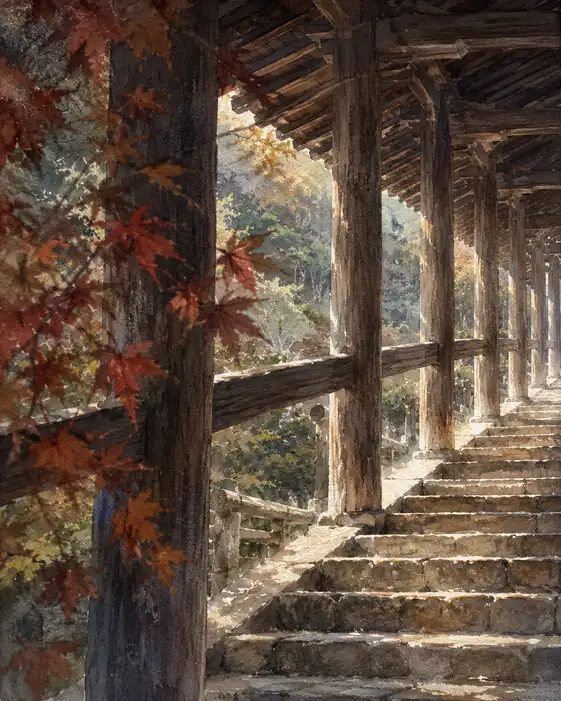 Echoes of Crimson Footsteps
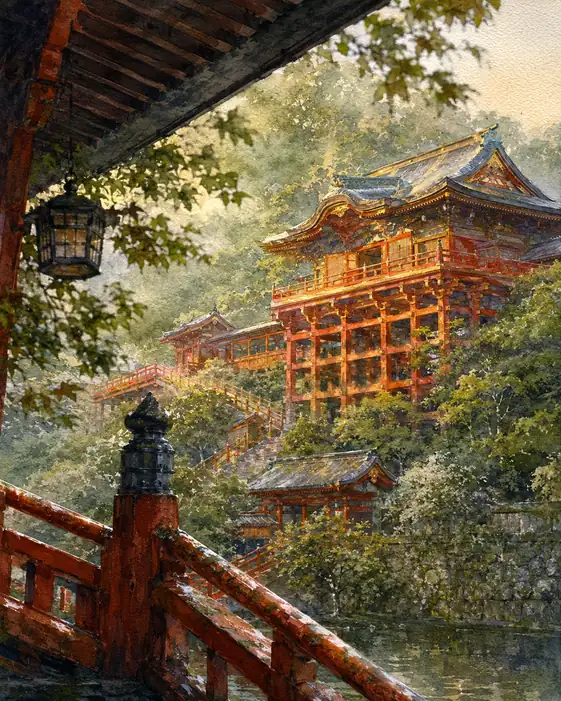 Kyoto Sanctuary in the Misty Peaks
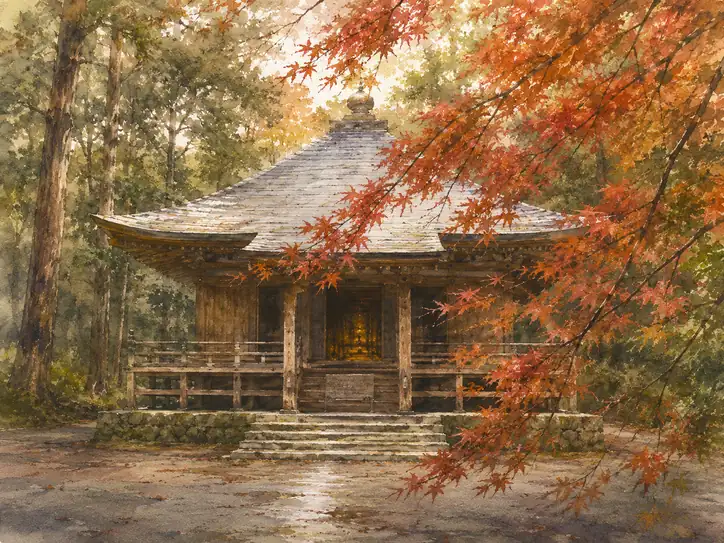 Golden Glow in the Maple Shadows
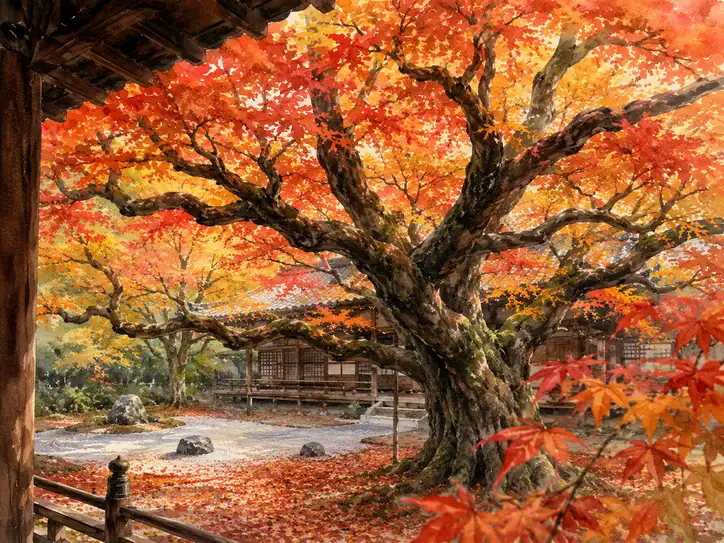 Ember of the Zen Garden
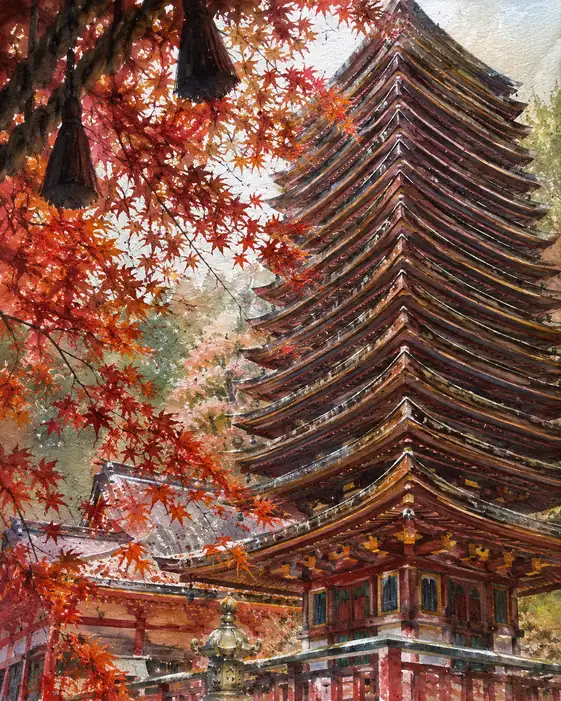 Vermilion Prayer in the Wind
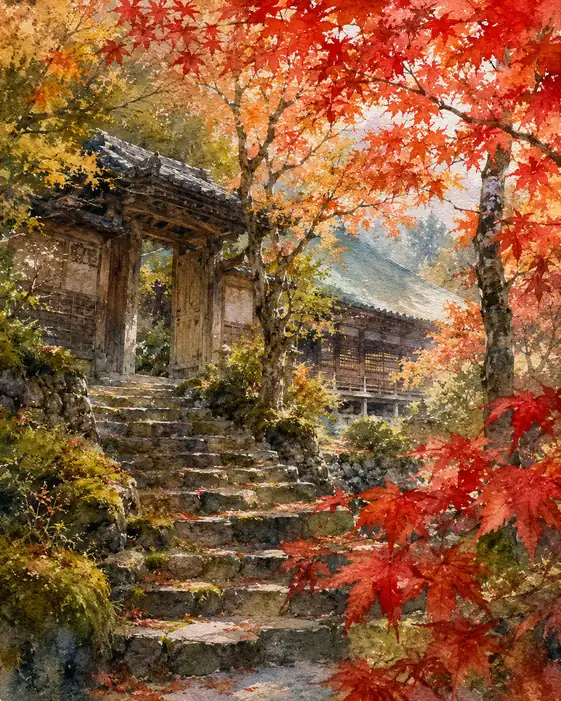 The Crimson Threshold of Silence
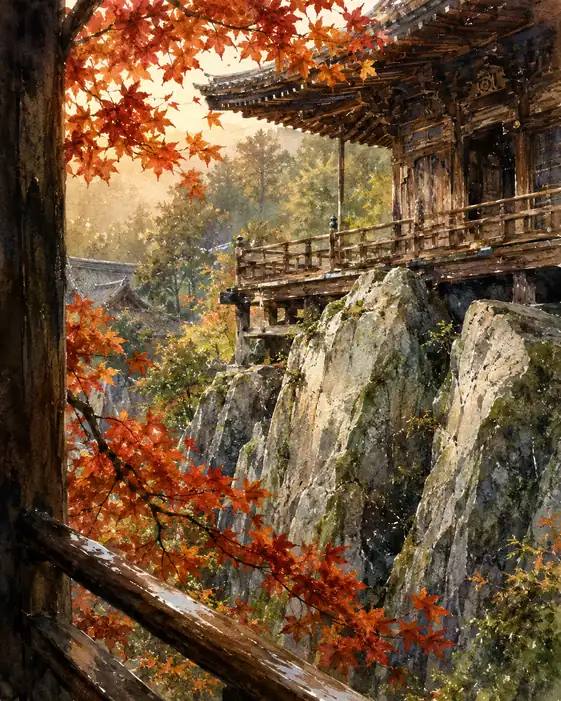 Crimson Reverie on the Temple Veranda
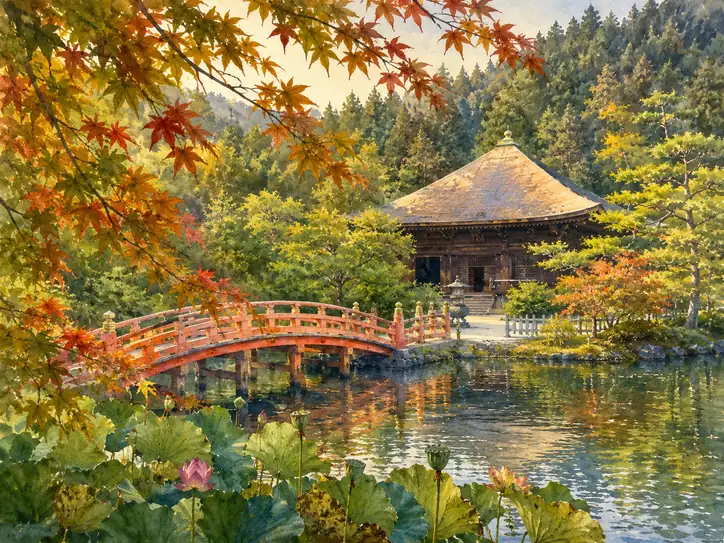 Whispers of the Crimson Autumn
 Autumn twilight, the Pagoda’s Silent Prayer