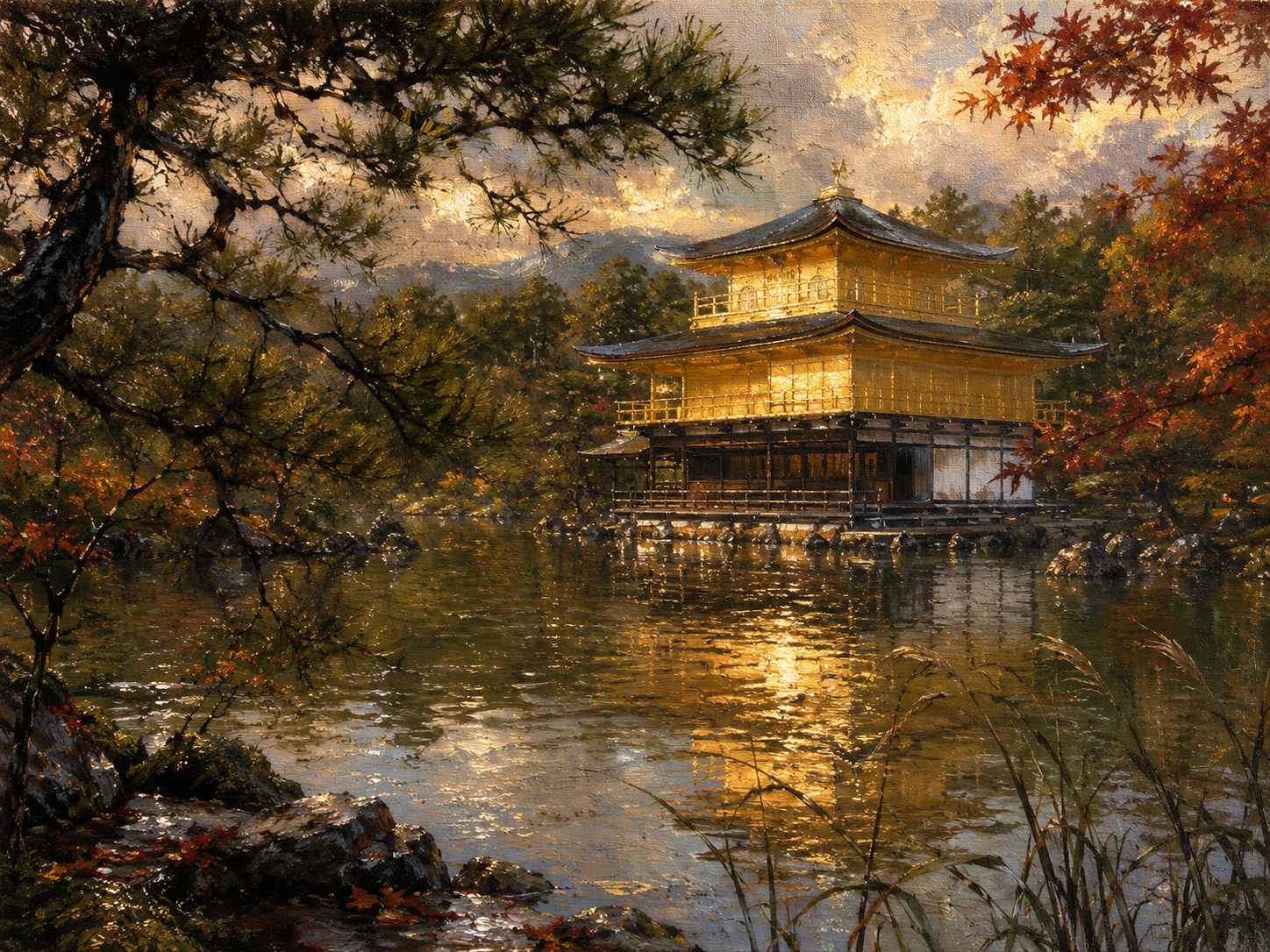
The Echo of Golden Stillness
Critique
1. Introduction This landscape painting depicts a magnificent golden pavilion standing serenely by a pond, capturing a moment of profound stillness and natural harmony. The work focuses on the interplay between traditional architecture and the changing seasons, using a rich palette to evoke the atmosphere of late autumn. Through meticulous detail and a strong emphasis on light, the artist invites the viewer into a contemplative space where history and nature converge. 2. Description In the center-right of the composition, a three-storied golden structure rises above the water, its brilliant facade reflected clearly in the mirror-like surface of the pond. A large, gnarled pine tree in the left foreground extends its branches across the top of the frame, providing a dark, natural border. To the right, vibrant red maple leaves introduce a splash of seasonal color, while the background features dense forest greenery and soft, glowing clouds in the sky. The water is textured with gentle ripples and shimmering highlights of reflected gold. 3. Analysis The artist employs a classical three-tiered spatial arrangement, using the dark pine in the foreground to anchor the view and provide depth. A powerful contrast is established between the radiant warmth of the golden building and the cooler, shadowed tones of the foliage and rocks. The brushwork is expressive yet precise, with impasto techniques used to suggest the sparkling light on the water and the intricate textures of the roof. Backlighting from the evening sun creates a luminous halo around the pavilion, emphasizing its iconic silhouette. 4. Interpretation and Evaluation This piece successfully explores the relationship between the enduring beauty of man-made monuments and the transient qualities of the natural environment. The technical execution is exceptional, blending a realistic approach with a poetic sensitivity to light and atmosphere. The composition pays homage to traditional Japanese aesthetics while maintaining a unique stylistic identity through its rich, multi-layered application of color. The portrayal of water reflections as dynamic patterns of light demonstrates a sophisticated understanding of visual perception and artistic technique. 5. Conclusion While the viewer is initially captivated by the splendor of the golden pavilion, the gaze is eventually drawn to the subtle details of the surrounding landscape. This synthesis of nature and architecture creates a sense of timeless tranquility that resonates deeply within the soul. Ultimately, the painting stands as a remarkable testament to the artist's ability to capture the essence of cultural heritage through a masterful command of light and form.
Same Subcategory
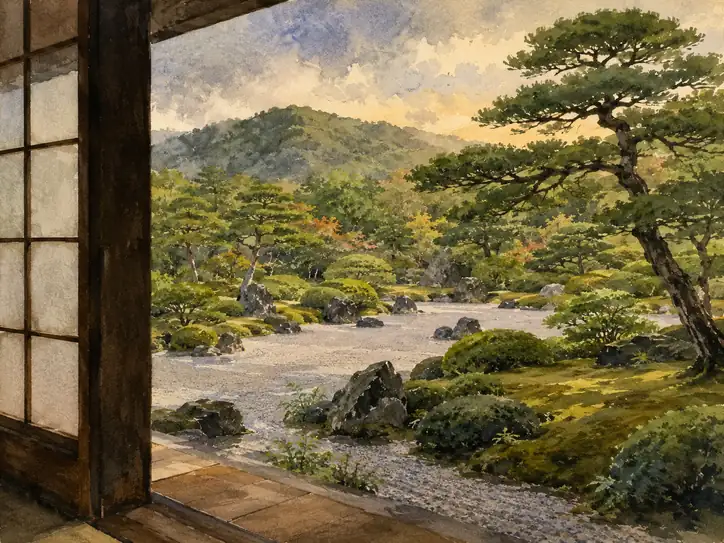 The Silent Threshold: A Window into Zen
Similar Artworks
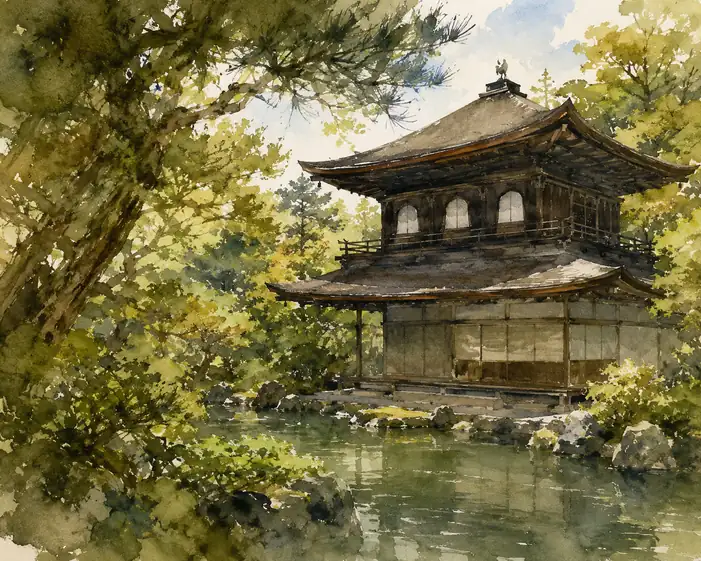 Echoes of Wabi-Sabi: The Silver Mirror
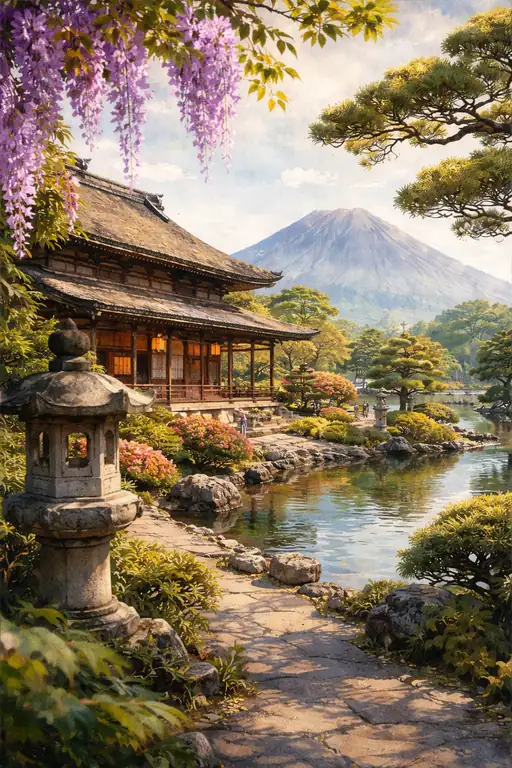 Fuji from the Wisteria Garden
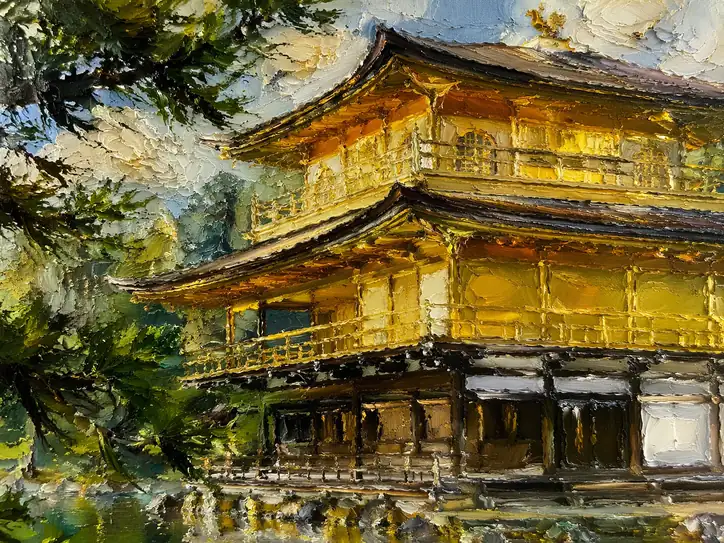 A Touch of Gold
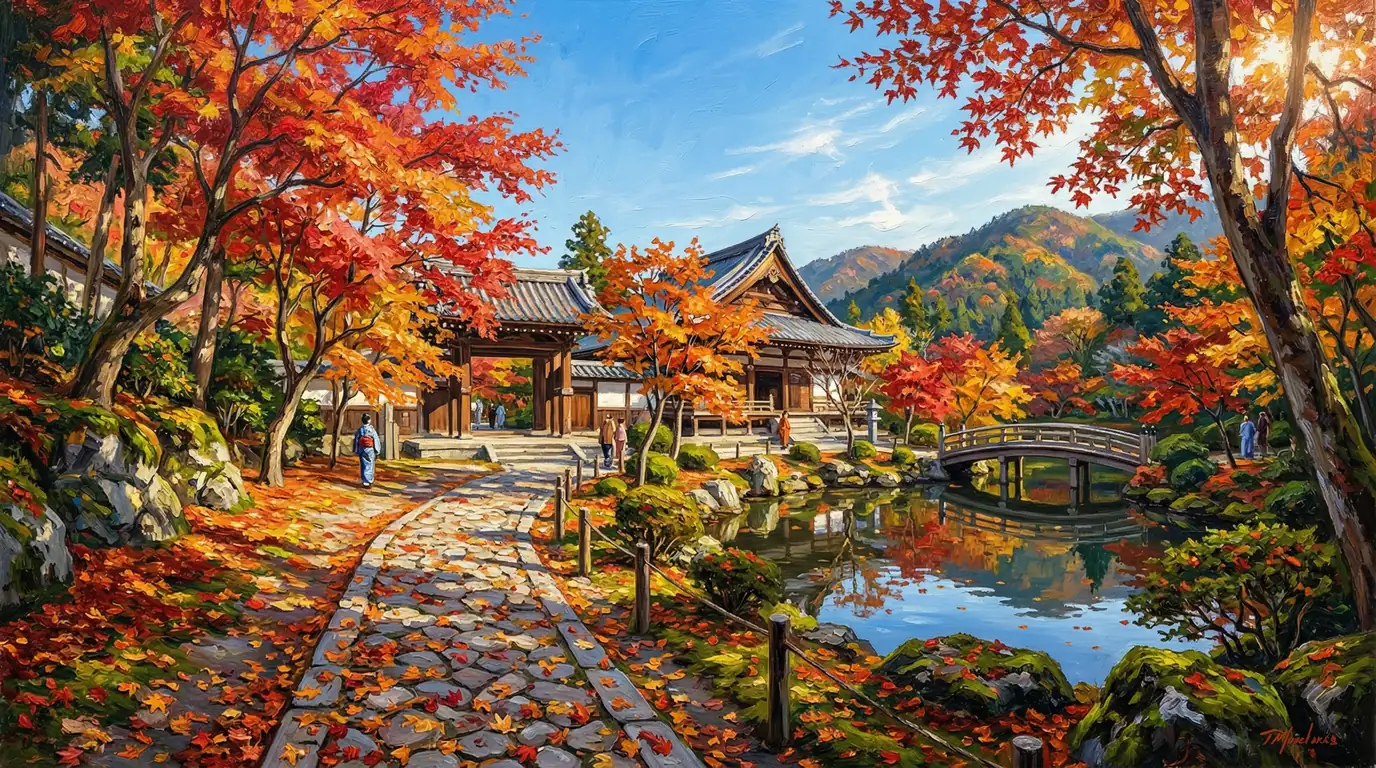 Autumn's Ephemeral Mirror
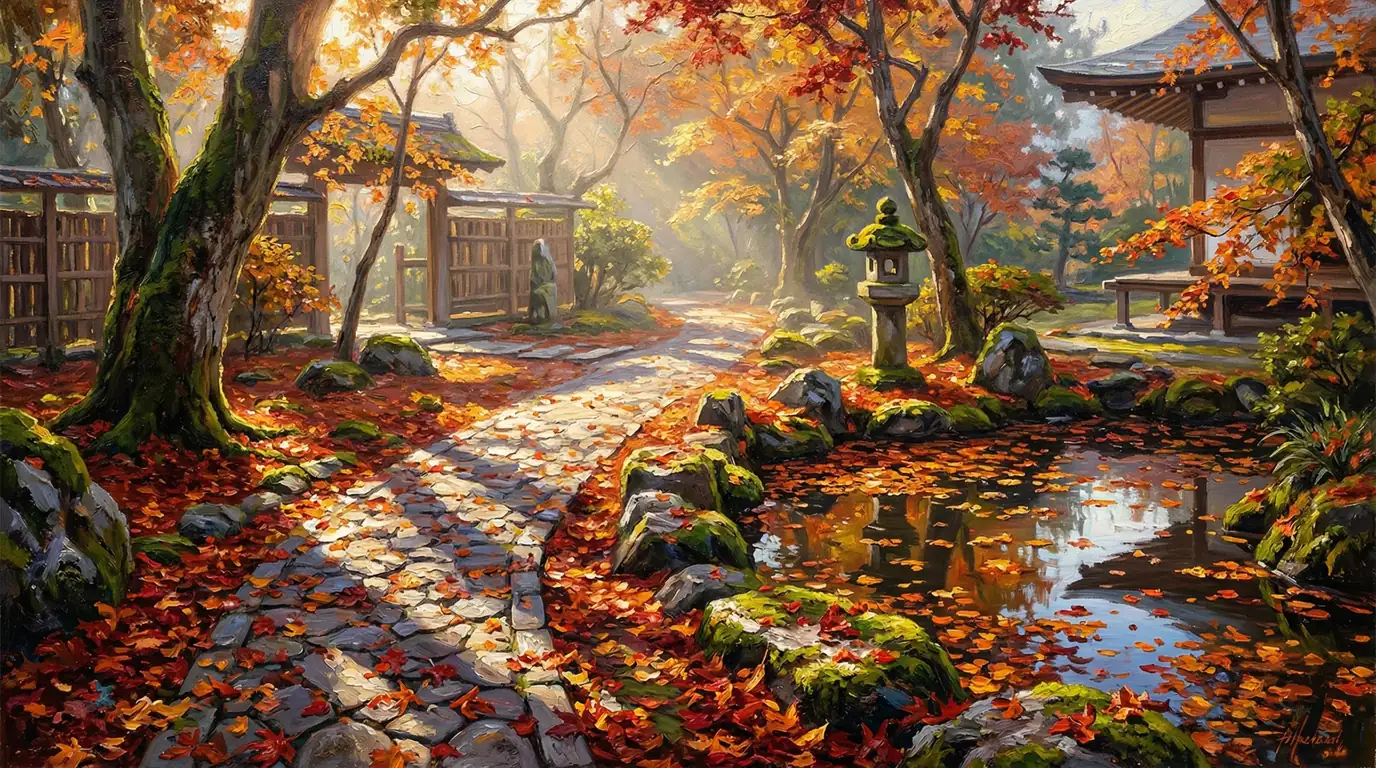 Golden Autumn in the Zen Garden
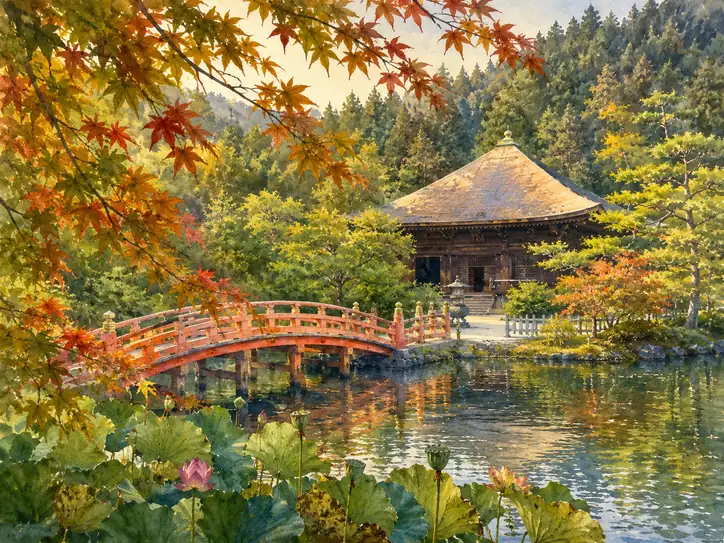 Whispers of the Crimson Autumn
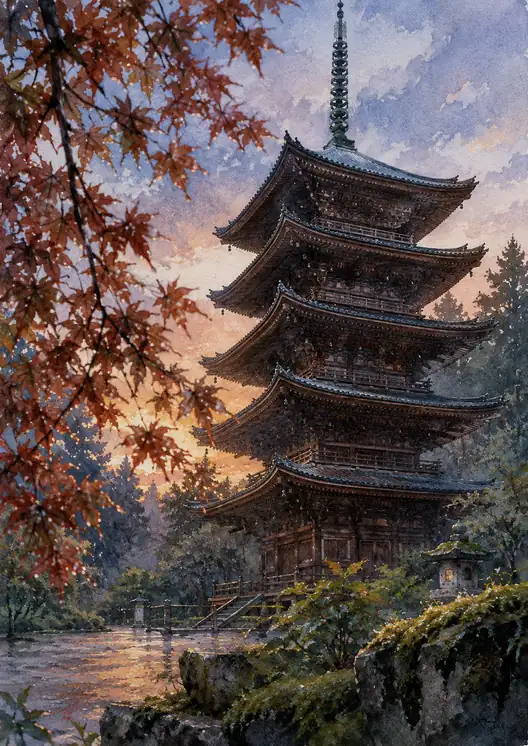 Autumn twilight, the Pagoda’s Silent Prayer
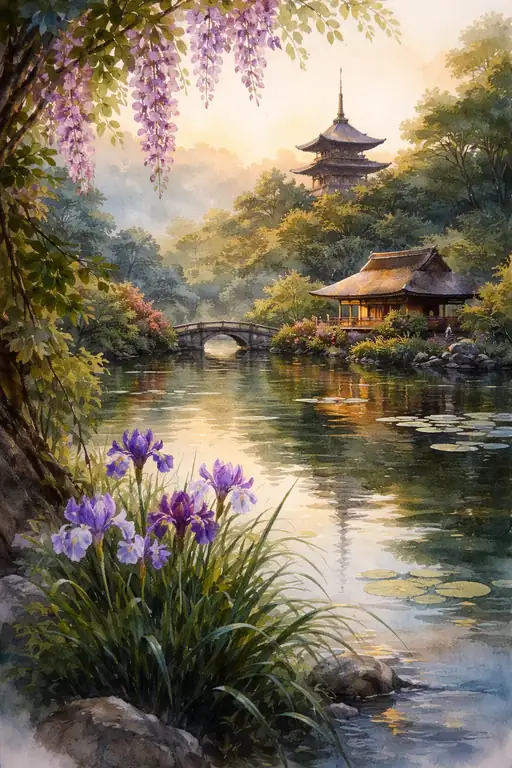 Sunset Harmony in the Temple Garden
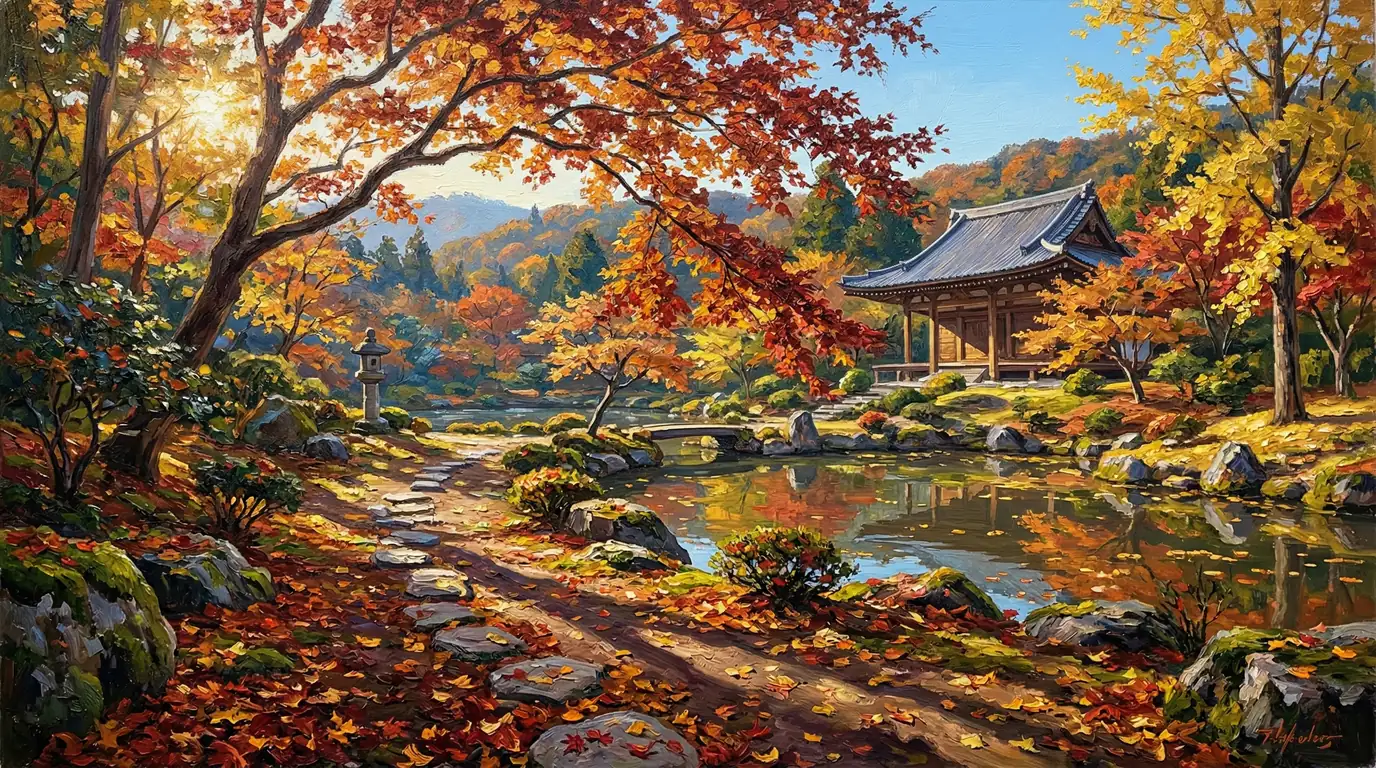 Echoes of Golden Leaves
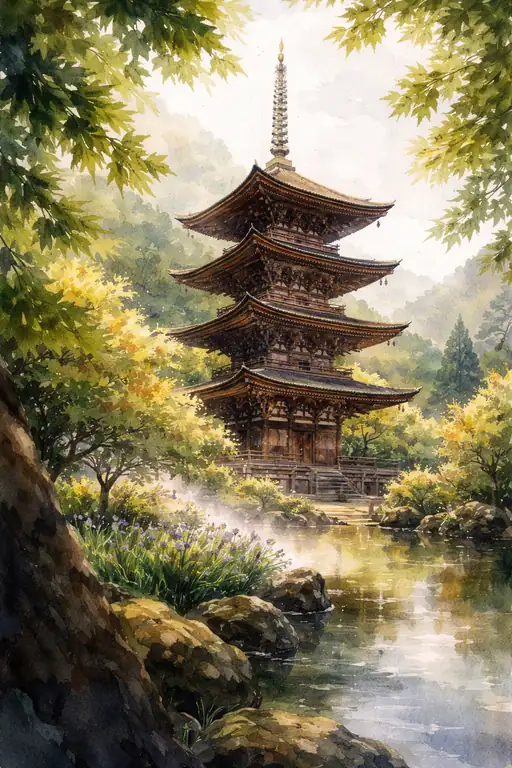 Reflection of the Silent Pagoda