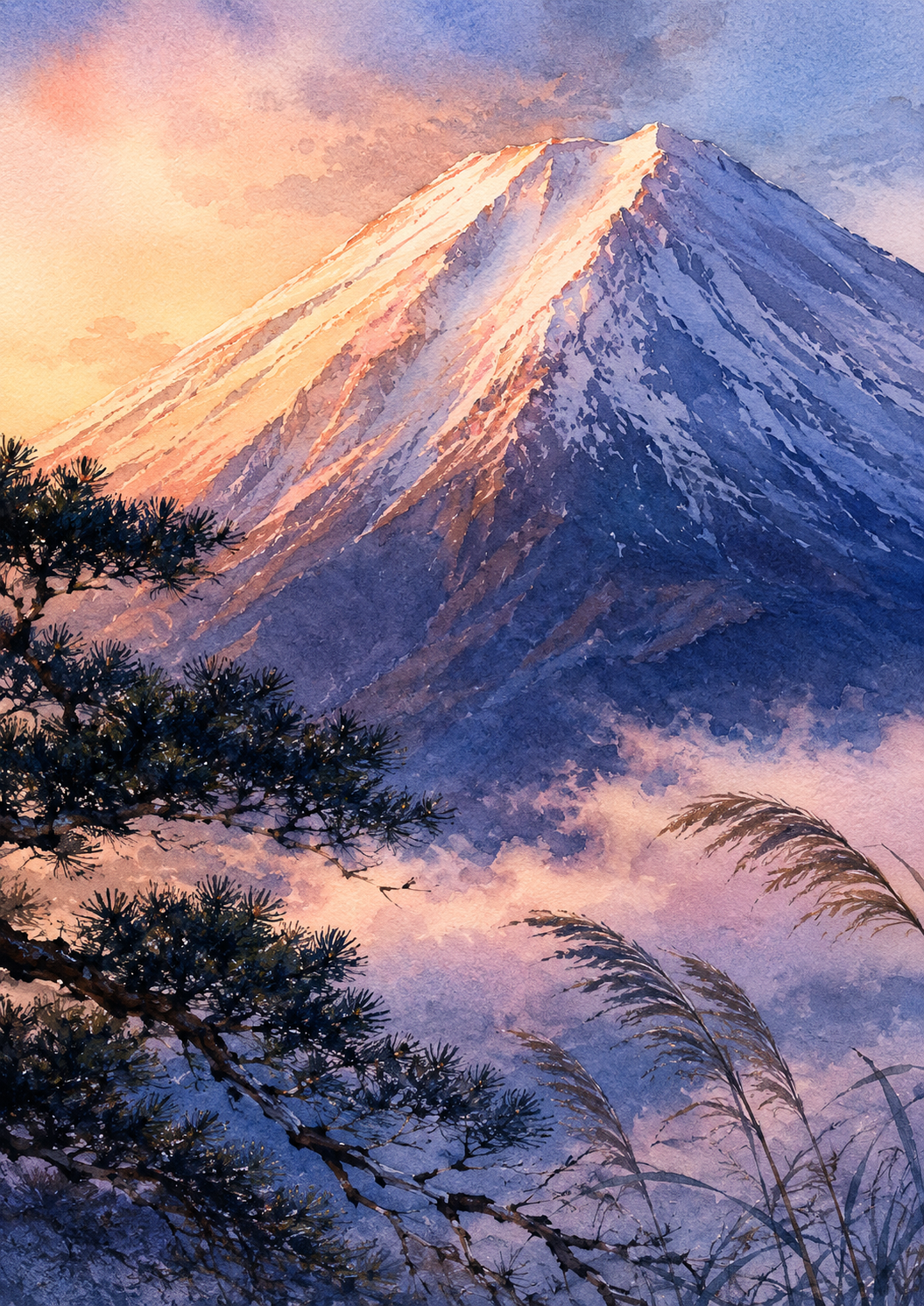
Transcendence at Dawn: The Radiant Crown of the Peak
Critique
Introduction This watercolor painting presents a majestic snow-capped mountain peak illuminated by the first light of dawn or the final rays of sunset. The composition adheres to a traditional aesthetic, emphasizing the grandeur of the natural world through a vertical format. The interplay between the radiant sky and the cool, shadowed slopes creates a powerful visual contrast that anchors the work. The inclusion of foreground vegetation provides a sense of scale and grounds the viewer within the mountainous landscape. Description The mountain peak is the primary focal point, its upper reaches painted in brilliant whites and warm oranges that suggest a direct hit of sunlight. Below the snowline, the mountain transitions into deep indigo and purple shadows, revealing the rugged texture of the slopes. The sky to the left glows with a soft, peach-colored light, while the clouds below the summit are infused with hints of pink and violet. In the foreground, dark, silhouetted pine branches and slender stalks of pampas grass frame the view, their intricate details set against the luminous background. Analysis The artist utilizes the unique properties of watercolor to create smooth gradients and soft, atmospheric effects, particularly in the sky and the mist-shrouded base of the mountain. The use of a restricted color palette, dominated by complementary blues and oranges, enhances the overall harmony and emotional impact of the piece. The composition is carefully balanced, with the weight of the mountain offset by the delicate verticality of the grasses and the irregular reach of the pine branches. The variation in paint density, from transparent washes to more concentrated pigments, adds depth and dimension to the scene. Interpretation and Evaluation The work evokes a sense of spiritual tranquility and reverence for the natural sublime, a theme deeply rooted in landscape traditions. The mountain serves as a timeless symbol of stability and aspiration, its illuminated peak representing a moment of transcendence. Technically, the painting demonstrates a high level of skill in managing watercolor's fluidity, successfully capturing the fleeting qualities of light and atmosphere. The contrast between the broad, sweeping forms of the mountain and the fine details of the foreground plants creates a visually engaging and well-resolved composition. Conclusion Through its masterful handling of light and color, the painting offers a serene and evocative vision of a mountain at a transitional time of day. The integration of traditional motifs with a modern painterly sensibility results in a work that is both familiar and fresh. Initially appearing as a classic landscape study, the piece reveals a sophisticated understanding of how light interacts with form and atmosphere. This work stands as a compelling testament to the enduring power and beauty of the mountain as a subject in art.
 The Golden Breath of Autumn
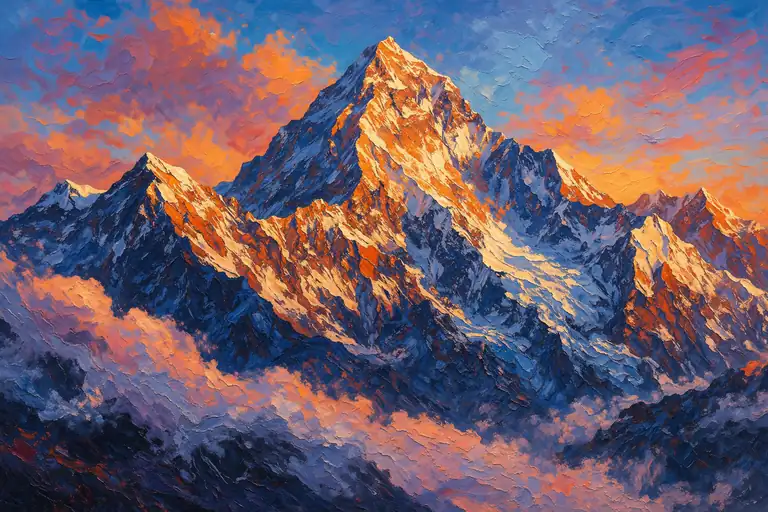 Golden Summit Above the Clouds
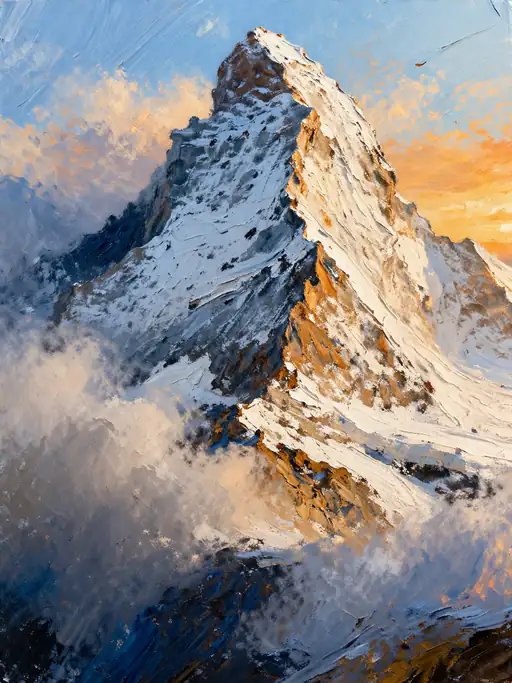 The Burning Crown of the Alps
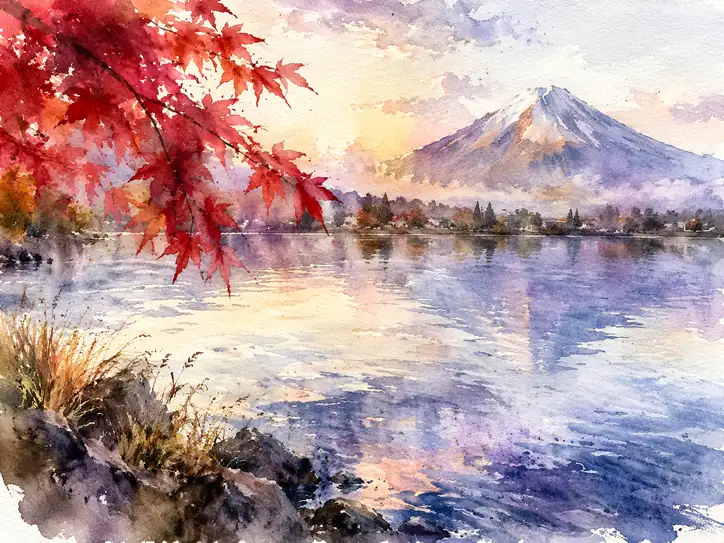 A Crimson Reverie at the Foot of Fuji
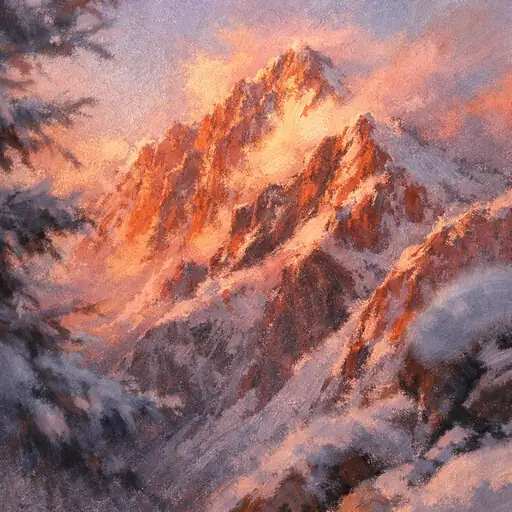 The Peak's Final Soliloquy in Gold
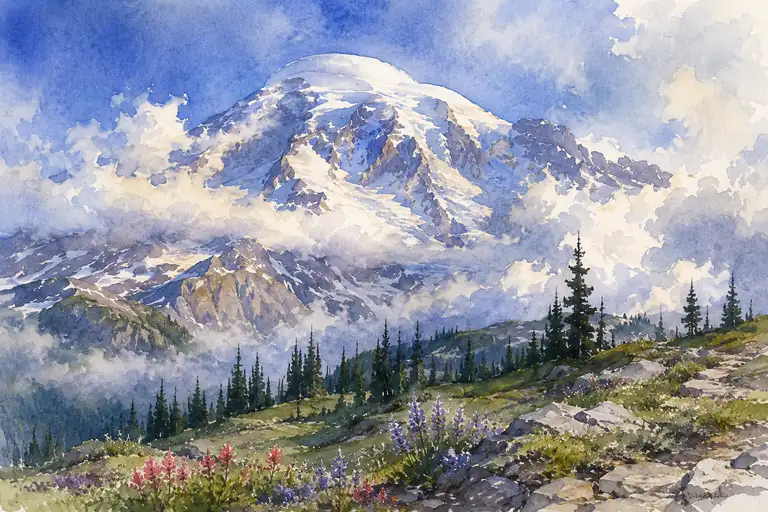 Where Flowers Gaze at Eternity
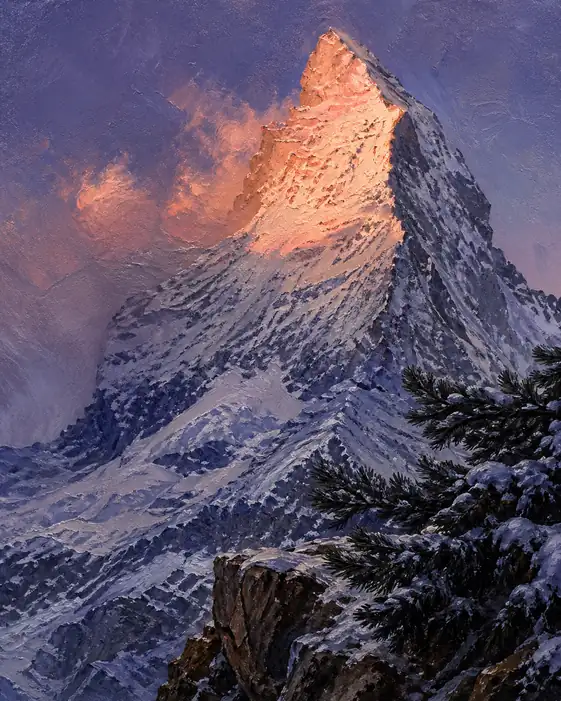 Dawn's Fiery Crown
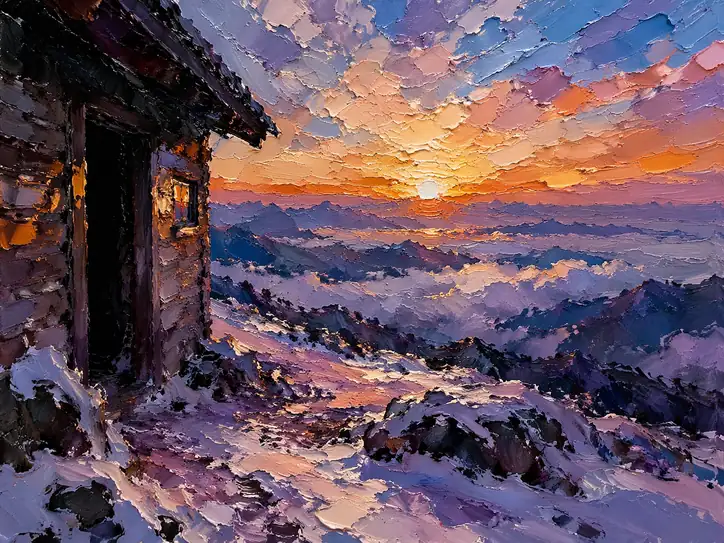 Sanctuary Above the Clouds
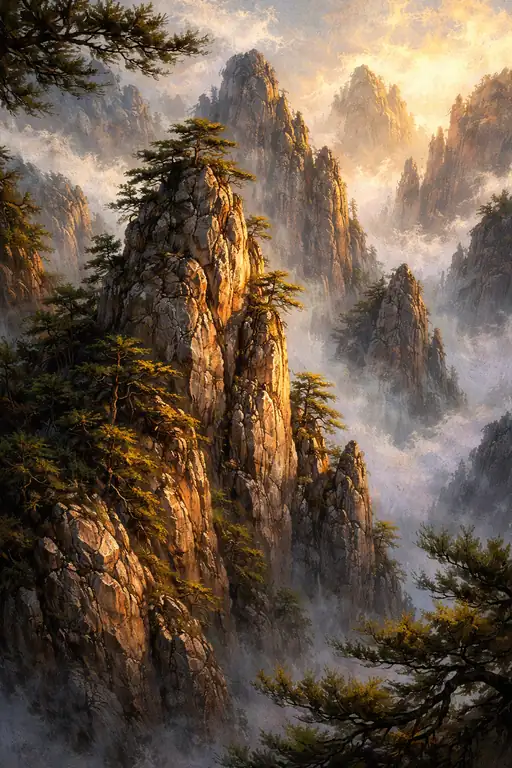 Pines Anchored in Golden Mist
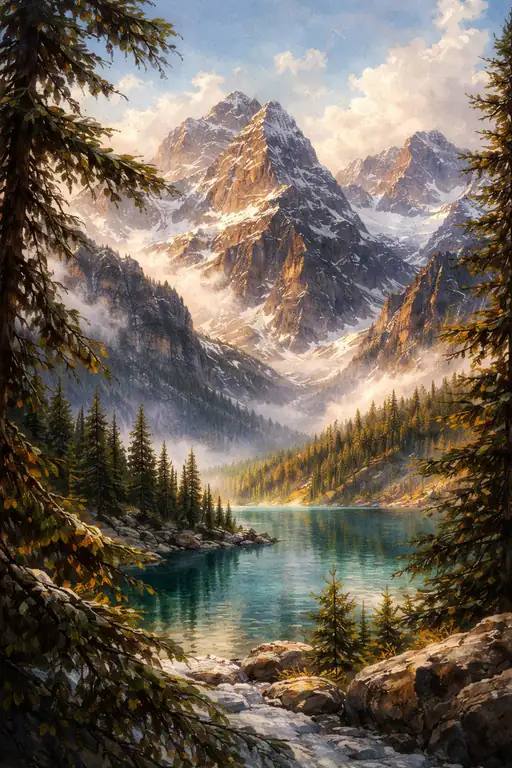 Majestic Peaks at Dawn
 Golden Echoes of the Winter Peaks