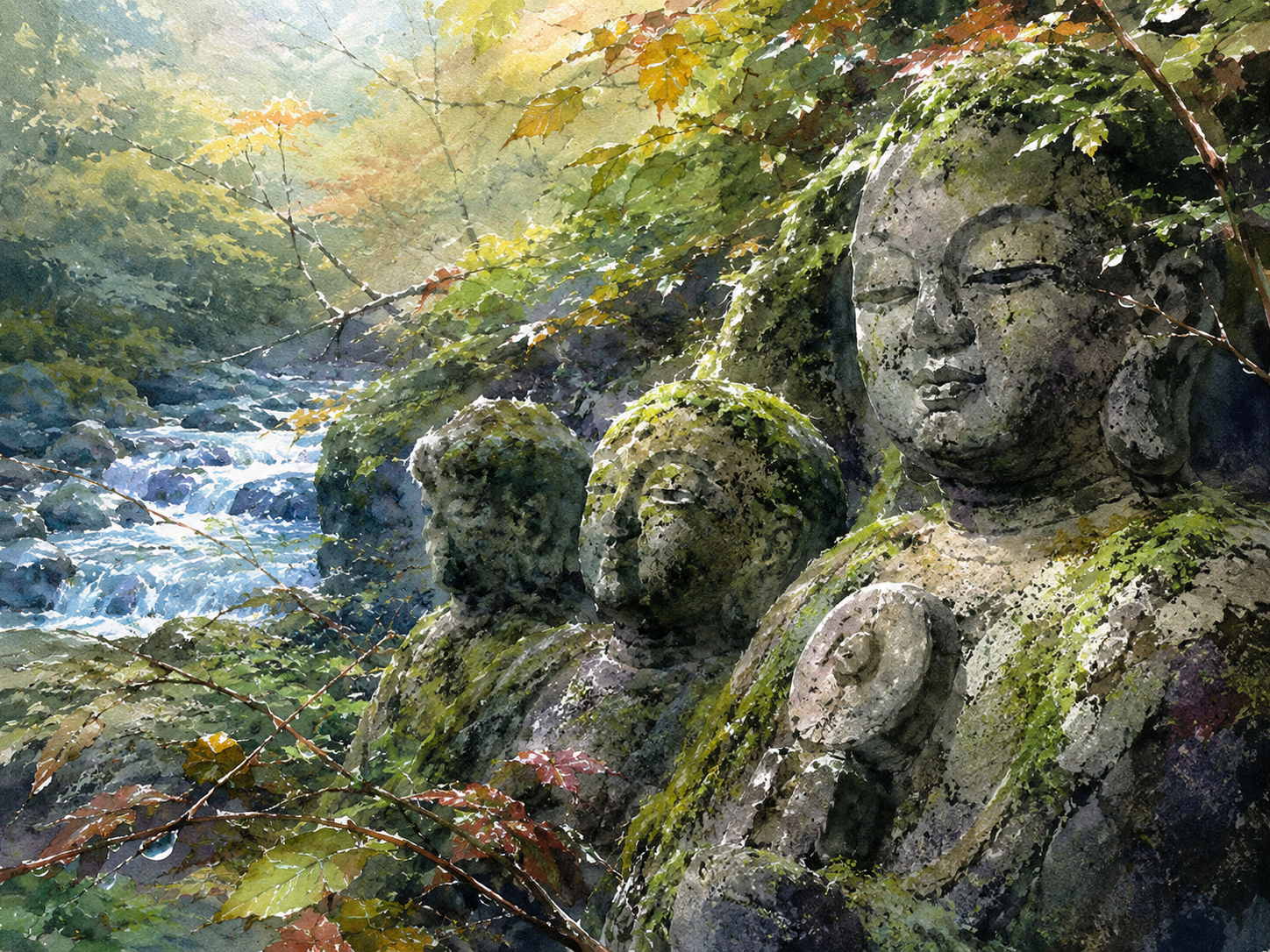
Sanctuary of the Eternal Smile
Critique
1. Introduction This painting depicts a quiet, sacred space where three moss-covered stone statues rest beside a lively mountain stream. The composition focuses on the serene expressions of these Buddhist figures, which seem to embody a timeless tranquility within the heart of a lush forest. 2. Description The primary figure in the foreground is rendered with great detail, its surface textured with patches of vibrant green moss and ancient stone grain. Behind it, two similar statues fade slightly into the background, all situated beneath a canopy of sunlit leaves. To the left, a bright stream cascades over rocks, its white water reflecting the soft light filtering through the trees. 3. Analysis The artist uses a delicate color palette dominated by earthy grays, mossy greens, and the brilliant white of the flowing water. The use of light is particularly effective, with bright highlights suggesting dappled sunlight hitting the foliage and the stream. The contrast between the solid, unmoving statues and the dynamic energy of the water creates a balanced visual tension. 4. Interpretation and Evaluation The work serves as a meditation on the harmony between spirituality and the natural world. The moss covering the statues symbolizes the slow passage of time and the inevitable way nature reclaims human creations. The peaceful countenances of the figures invite the viewer into a state of contemplation, successfully evoking a sense of deep spiritual calm. 5. Conclusion In conclusion, the painting is a masterful exploration of light, texture, and atmosphere. The initial impression of a hidden woodland sanctuary is deepened by the artist's skillful portrayal of spiritual serenity. The work stands as a beautiful reminder of the quiet, enduring presence of the sacred in the natural landscape.
Same Subcategory
 Sanctuary Above the Abyss
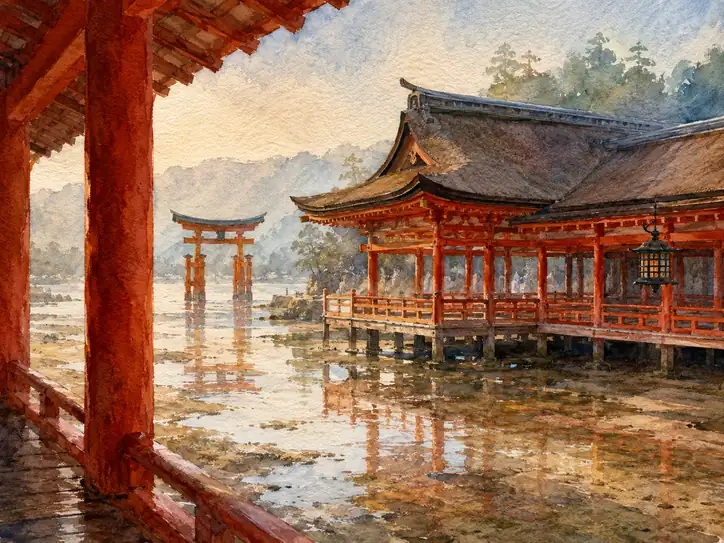 The Sacred Mirror: Eternal Reflection of the Sea Shrine
Similar Artworks
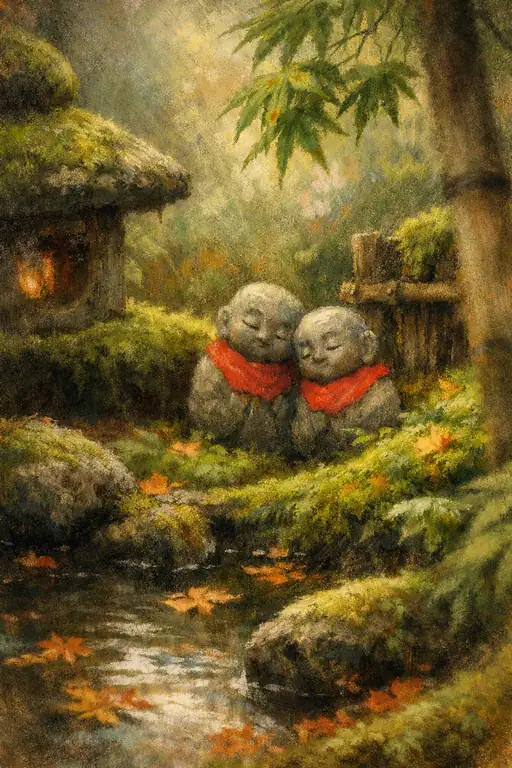 Enduring Companions in the Autumn Light
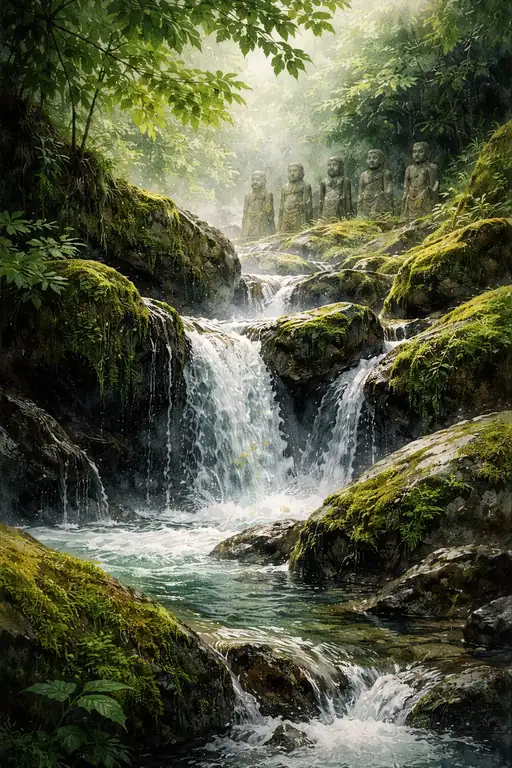 Sacred Whisper of the Forest Stream
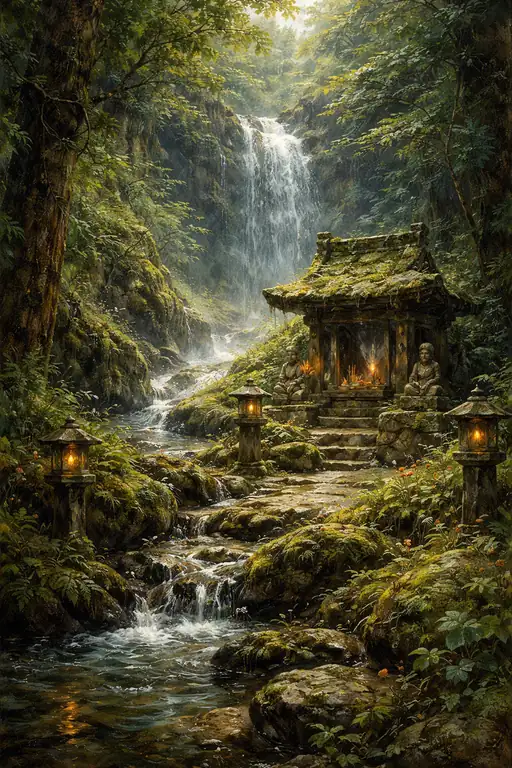 Spiritual Glow of the Forgotten Shrine
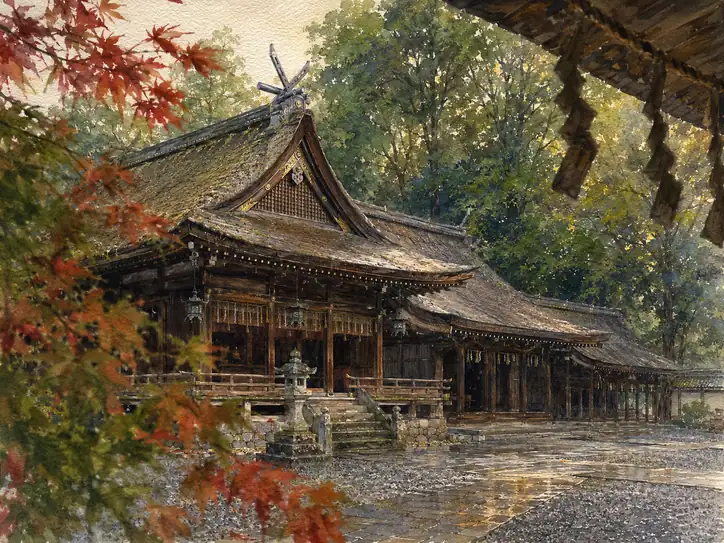 Sanctuary of the Whispering Leaves
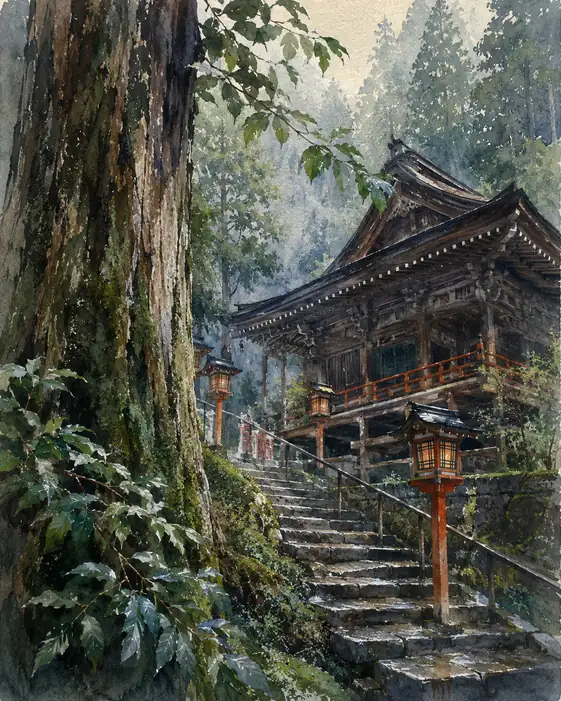 Guardian of the Ethereal Mist
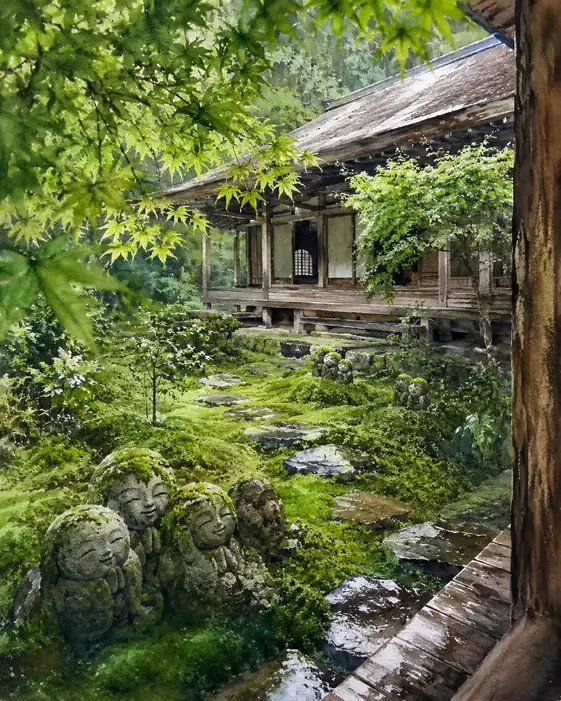 The Forest's Gentle Smile
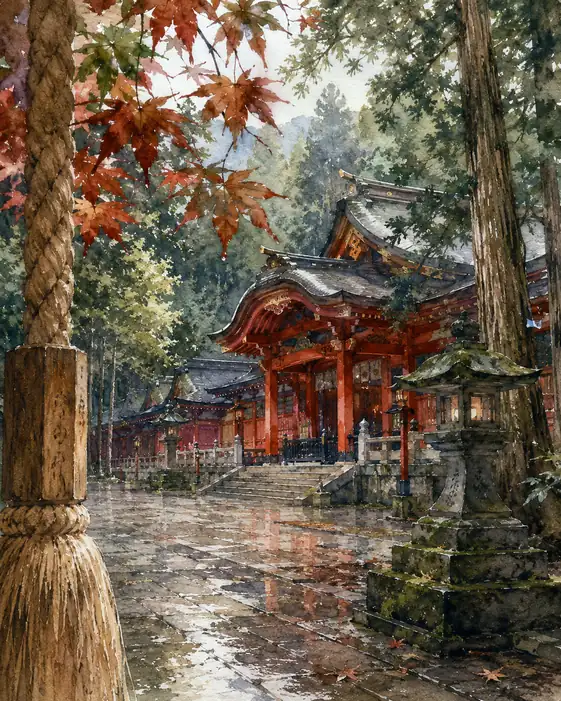 Serenity in the Autumn Rain
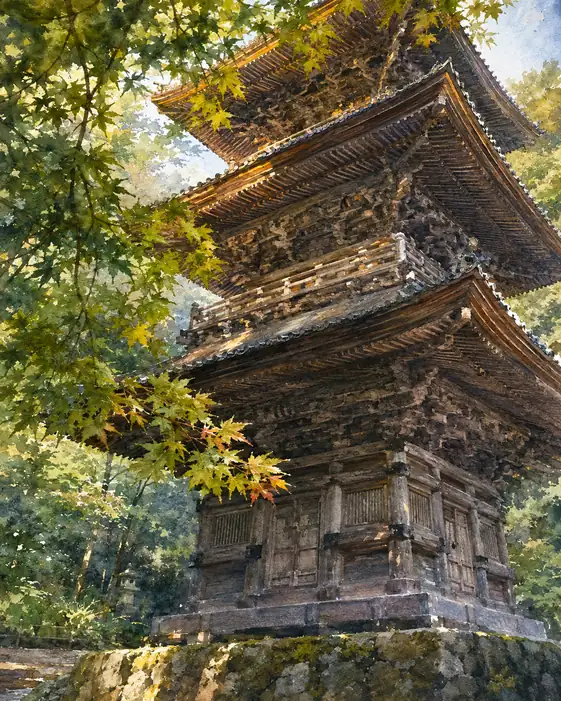 A Forest Three-Story Pagoda Through Maples
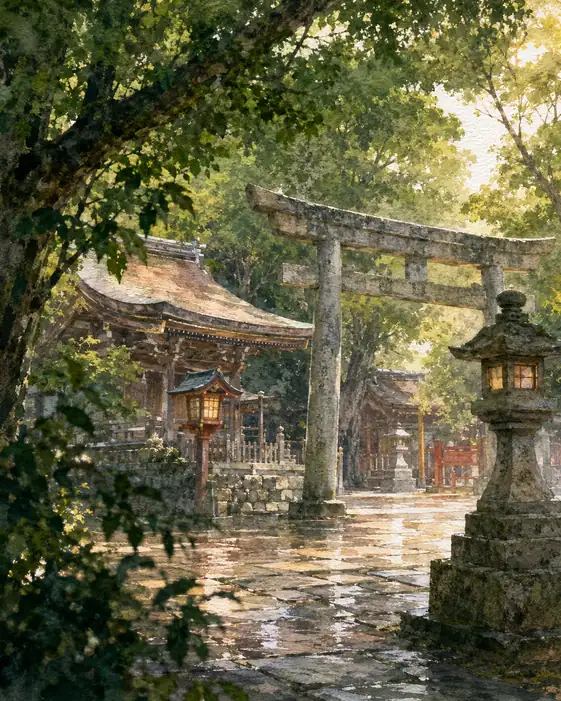 Sanctuary in the Emerald Mist
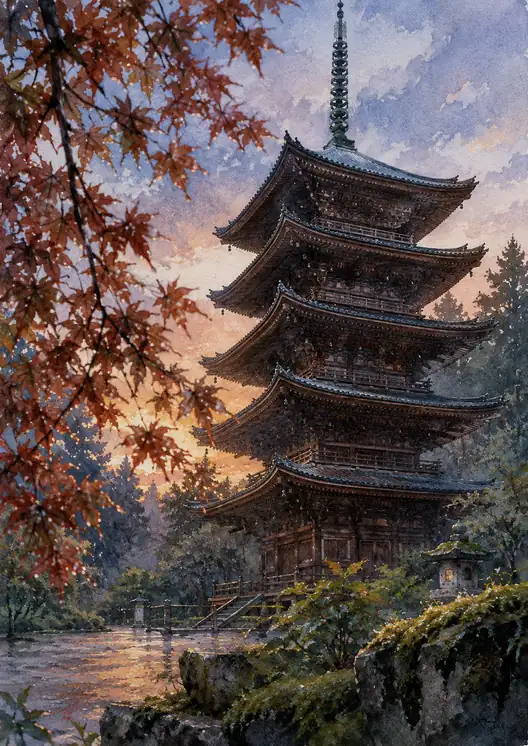 Autumn twilight, the Pagoda’s Silent Prayer