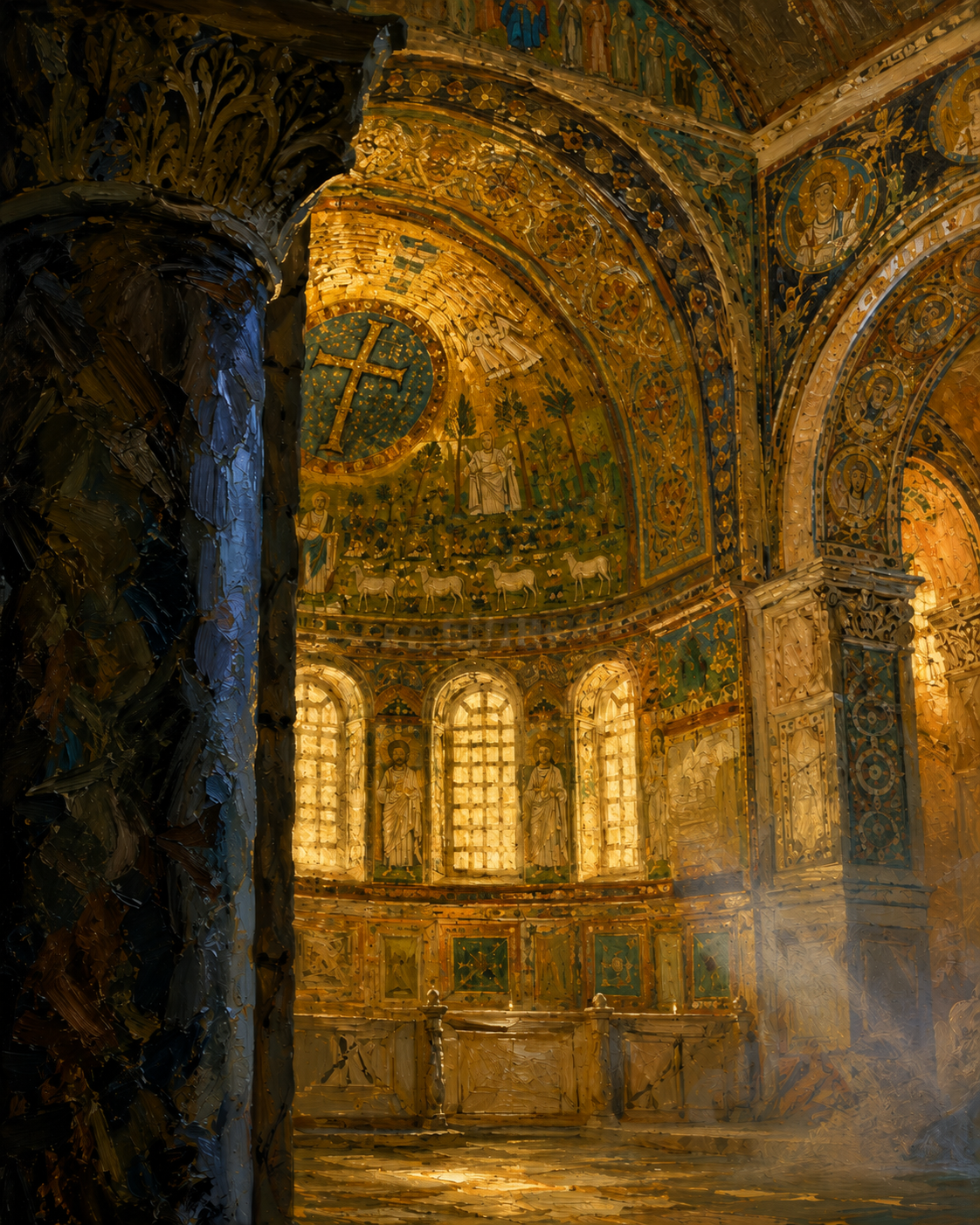
The Eternal Glow of a Sacred Memory
Critique
1. Introduction This oil painting presents a powerful and evocative view of a Byzantine-style basilica interior, focusing on the luminous golden mosaics of the apse. The composition is structured around a dramatic contrast between the dark, heavy architecture of the foreground and the ethereal, light-filled sacred space beyond. The work serves as a sophisticated exploration of religious iconography and the sensory experience of ancient spiritual environments. 2. Description The focal point is a shimmering apse adorned with intricate mosaics featuring a central cross, symbolic sheep, and figures of saints set against a brilliant gold background. To the left, a massive, darkly textured column with a Corinthian-style capital frames the scene, casting the immediate foreground into shadow. Beams of soft, dust-moted sunlight filter through the windows, illuminating the stone floor and creating a hazy, atmospheric glow that softens the rigid architectural lines. 3. Analysis Technically, the artist employs a vigorous impasto technique, where thick, visible brushstrokes mimic the individual tesserae of the mosaics and the weathered surface of the stone. This heavy texture adds a physical presence to the light, making the golden surfaces appear to vibrate with energy. The color palette is dominated by rich golds, deep blues, and earthy browns, with the cooler tones of the shadows providing a necessary balance to the overwhelming warmth of the mosaic light. 4. Interpretation and Evaluation The painting successfully captures the "timelessness" of Byzantine art, translating the static beauty of mosaics into a dynamic interplay of light and shadow. The artist’s choice to frame the view through a dark column creates a sense of discovery, as if the viewer has just stepped into the sacred chamber. The technical handling of light, particularly the way it interacts with the textured surfaces, demonstrates a high level of skill in capturing both the physical materiality and the spiritual atmosphere of the space. 5. Conclusion In summary, the artwork is a masterful synthesis of historical appreciation and technical innovation, offering a profound meditation on the beauty of sacred architecture. The initial impression of overwhelming brilliance is grounded by the tactile quality of the paint and the deliberate composition. It is a highly finished work that resonates with a sense of quiet awe, successfully bridging the gap between the material world and the divine through the medium of light and texture.
Same Subcategory
 Eternal Geometry of the Sky
Similar Artworks
 Where Time Breathes in Gold
 Resonance of the Gilded Silence
 Sanctuary of the Golden Glow
 Illumination of the Gothic Rose
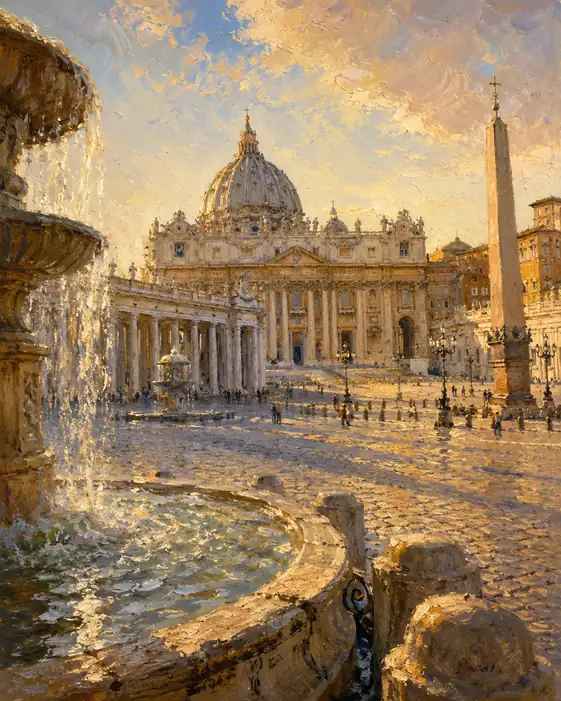 A Golden Vigil Over the Eternal Square
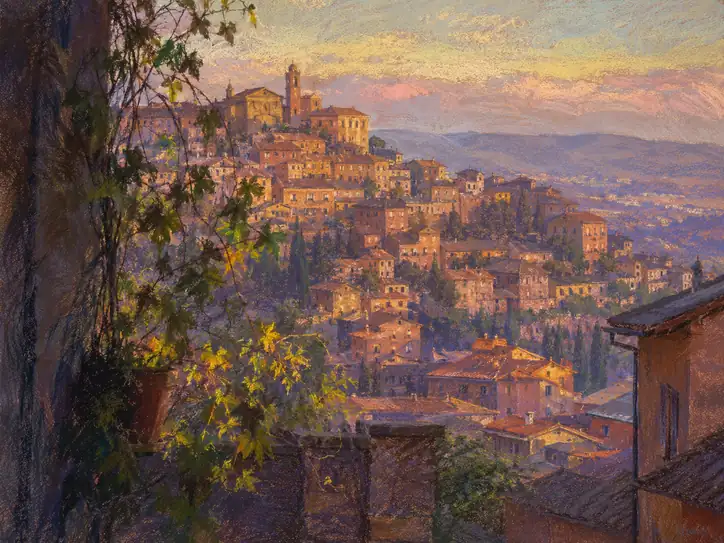 Resonance of the Golden Hillside
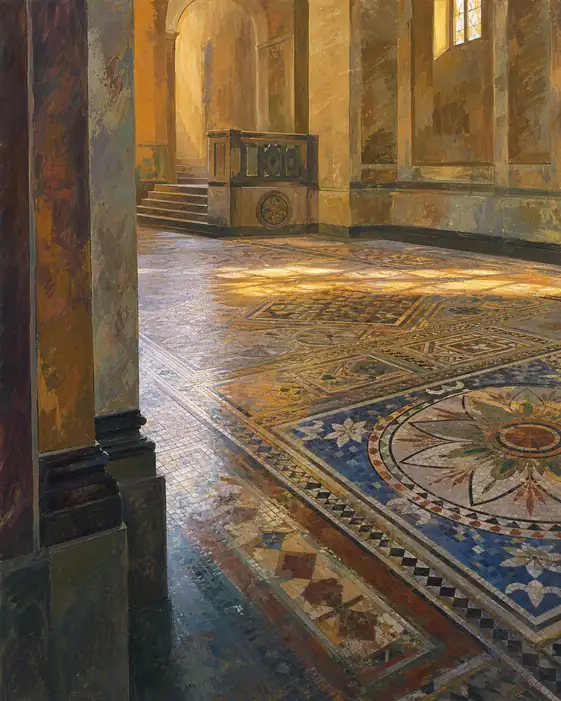 The Sacred Path of Light
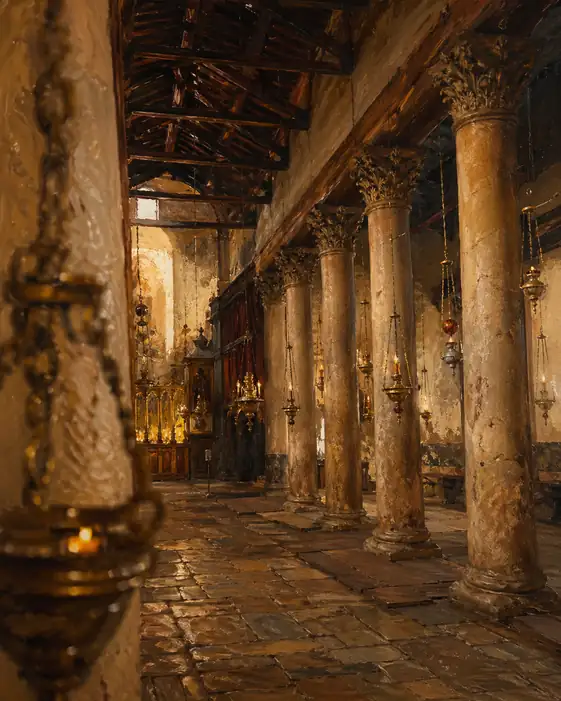 The Echo of Eternal Silence
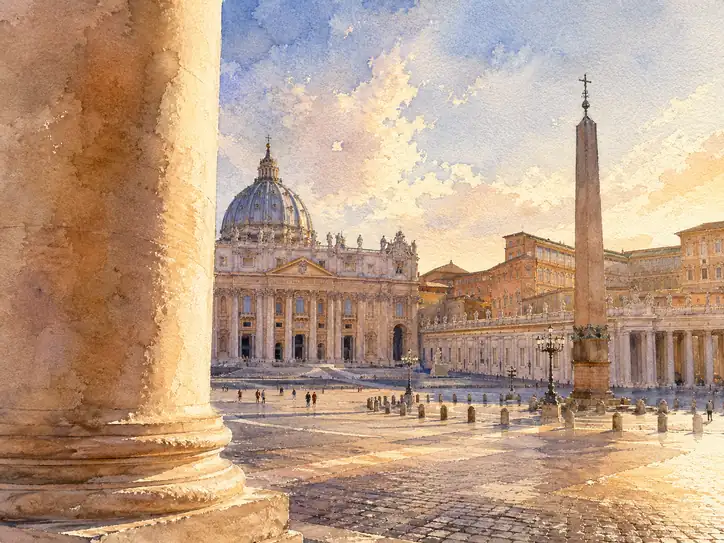 Eternal Grace in the Golden Hour
 Mosaics of Ravenna's Grace