
The Sculpted Silence of the Earth
Critique
1. Introduction The work appears to be a landscape painting showing a large terraced excavation, viewed from an elevated lookout. Its title, date, and exact medium cannot be confirmed from the image alone, and the location of the site is likewise uncertain. 2. Description A pale railing and nearby shrubs occupy the foreground, establishing the viewer's position at the edge of the scene. Beyond them spreads a broad stepped pit, cut into horizontal benches and illuminated by cool daylight. A band of darker trees and distant hills encloses the excavation under a wide, cloud-filled sky. 3. Analysis The painting relies on contrast between ordered geometry and irregular natural forms. Repeating terraces create rhythm and depth, while the vegetation at the front softens the transition into the mined space. The palette of lavender gray, pale stone, and muted green unifies the image and prevents the subject from becoming merely harsh. 4. Interpretation and Evaluation This is a noteworthy treatment of an uncommon motif. The composition is clear, the spatial recession is persuasive, and the handling of light gives the excavated surfaces unexpected delicacy. By balancing industrial alteration with atmospheric color and textured brushwork, the picture achieves both descriptive precision and a reflective mood. 5. Conclusion What first seems to be a record of extraction gradually becomes a study of scale, erosion, and human intervention in the land. The painting is strongest when it turns a severe site into a coherent and visually absorbing landscape.
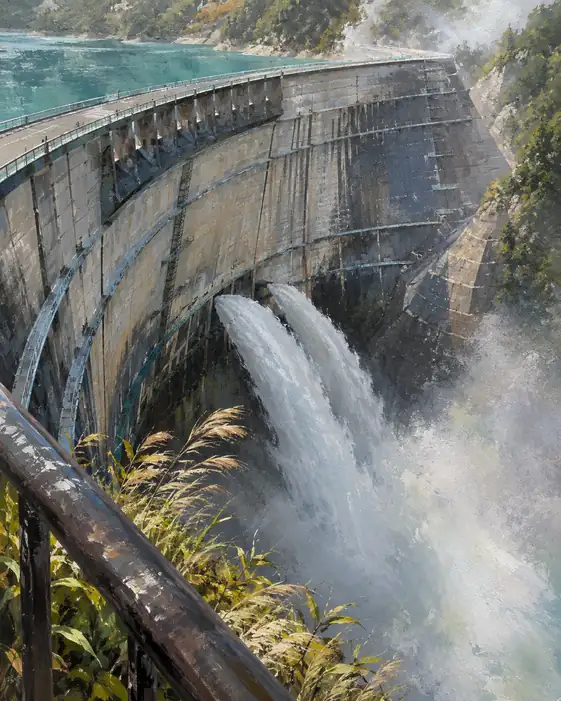 The Pulse of the Concrete Giant
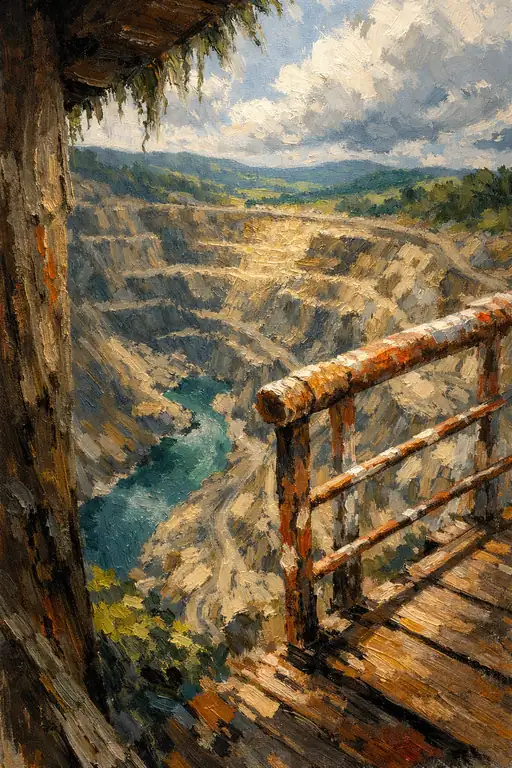 Echoes of the Carved Earth
 Echoes of the Cleft Summit
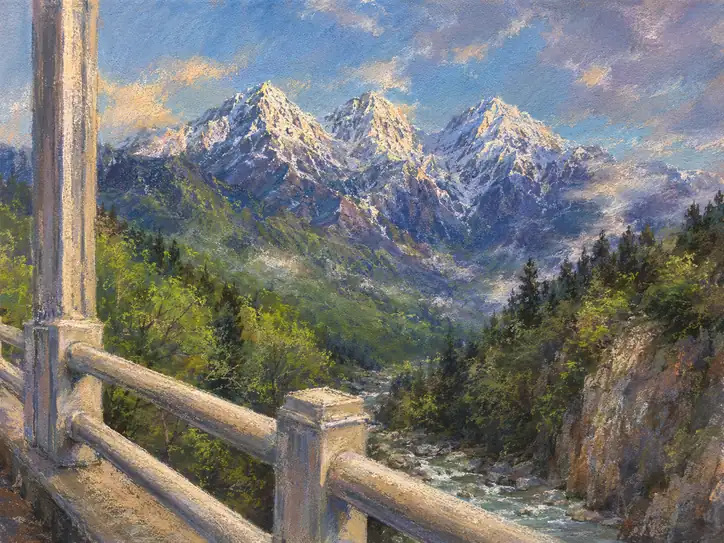 A Glimpse of the Eternal
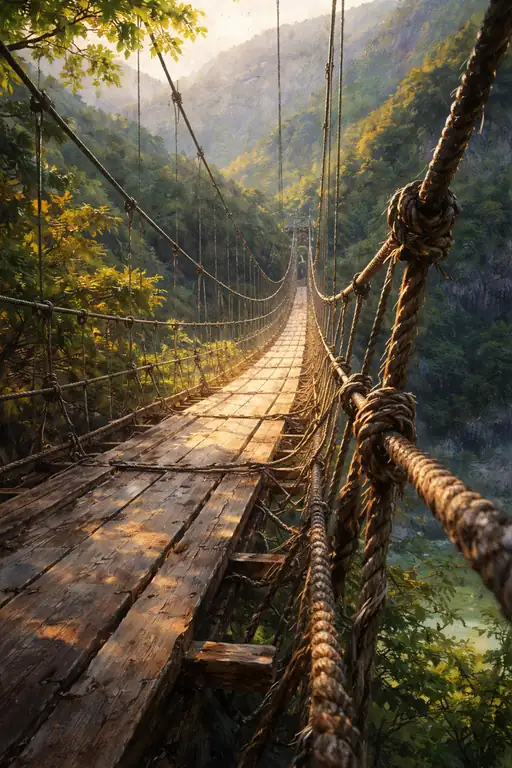 Bridge to the Emerald Unknown
 Veil of the Emerald Chasm
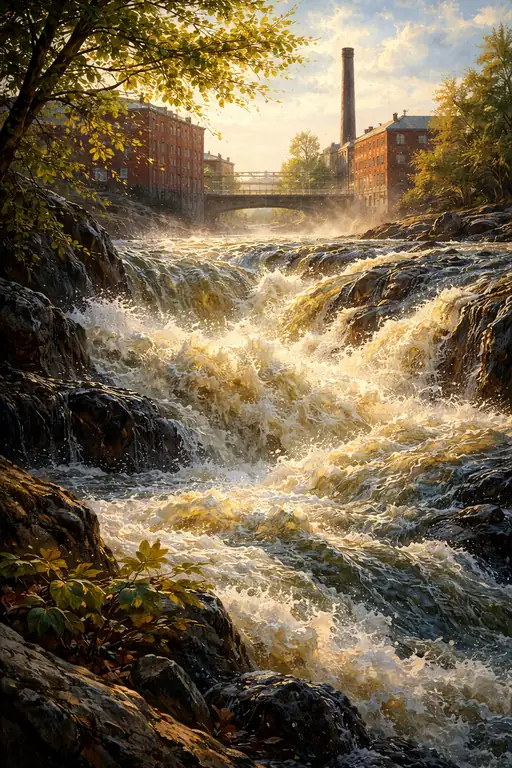 The Harmonious Pulse of Water and Brick
 Arc of the Water's Blessing
 Breath of the Sapphire Horizon
 Vortex of Eternal Flow
 Clash of Elements