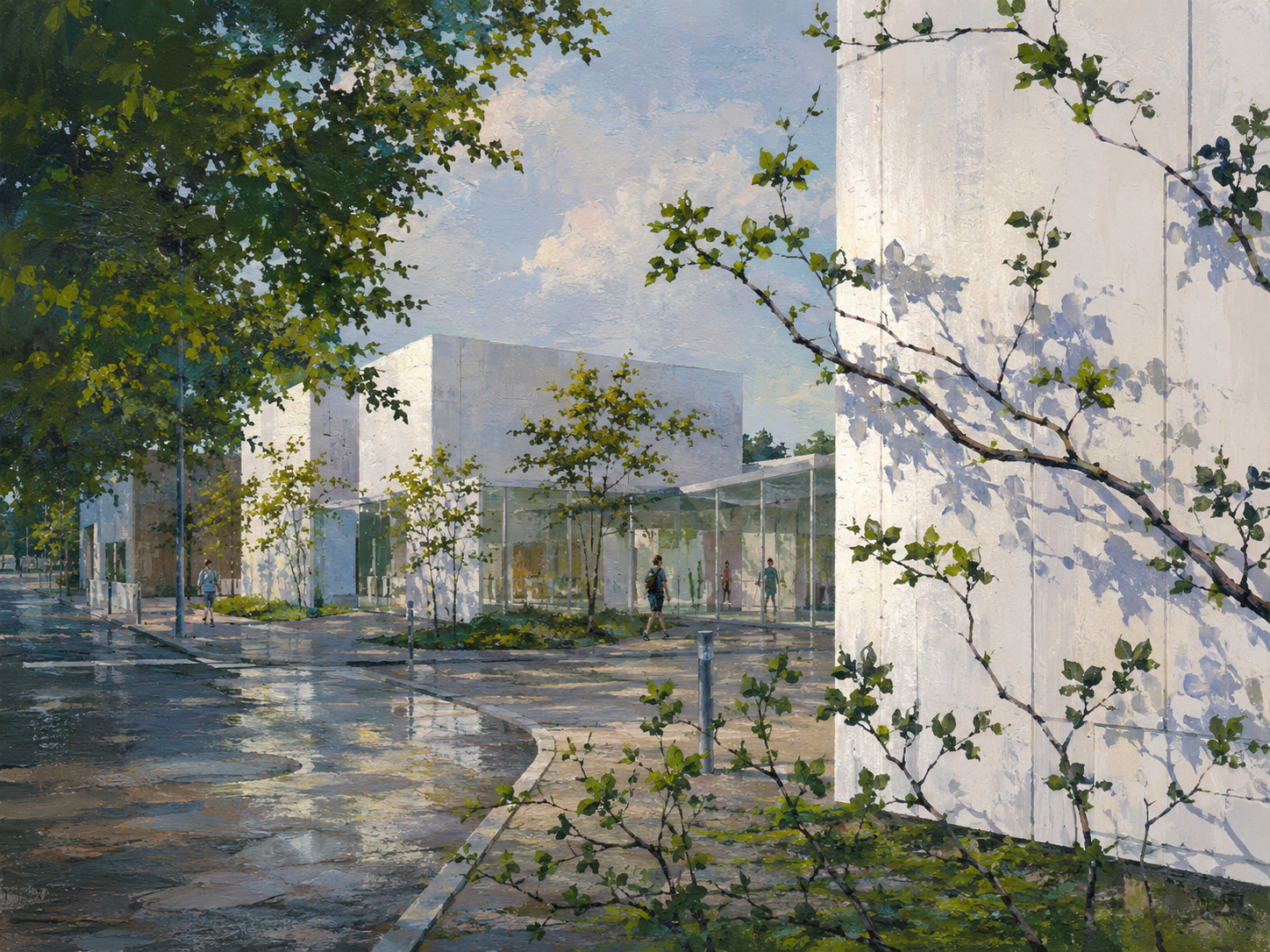
Modernity Rinsed in Light
Critique
1. Introduction This work presents a quiet street scene organized around low white buildings after rain. Trees, reflections, and small figures turn a simple architectural view into a study of light, surface, and everyday movement. 2. Description Boxlike white volumes stand around a glazed corner pavilion set back from the road. The pavement is wet, and puddled reflections spread across the foreground street and walkway. Green trees fill the left side and frame the upper edge, while slender branches cross the large wall at right and cast blue-gray shadows. A few pedestrians provide scale and suggest ordinary use. 3. Analysis The composition balances geometry against organic growth. Horizontal roofs and vertical walls establish a calm order, but the branches and reflected shapes loosen the strictness of the architecture. Soft brushwork modulates white surfaces, and the restrained palette of greens, grays, pale blues, and warm pavement tones creates a clear but gentle atmosphere. Light after rain becomes the element that joins building, ground, and foliage. 4. Interpretation and Evaluation The image can be read as an observation of contemporary space made hospitable by weather and planting. Its strengths lie in the measured composition, in the sensitive handling of reflection and shadow, and in the control of color and technique across very different materials. The work is also somewhat original in the way it resists monumentality and treats modern architecture as part of lived daily space. 5. Conclusion At first, the white walls seem to dominate the painting. Closer viewing shows that trees, water, glass, and passing figures are equally necessary to the scene. The painting moves from an architectural record toward a fuller appreciation of atmosphere shaped by light and ordinary use.
 Echoes in the Moss-Draped Stillness
 Where Two Worlds Meet at Twilight
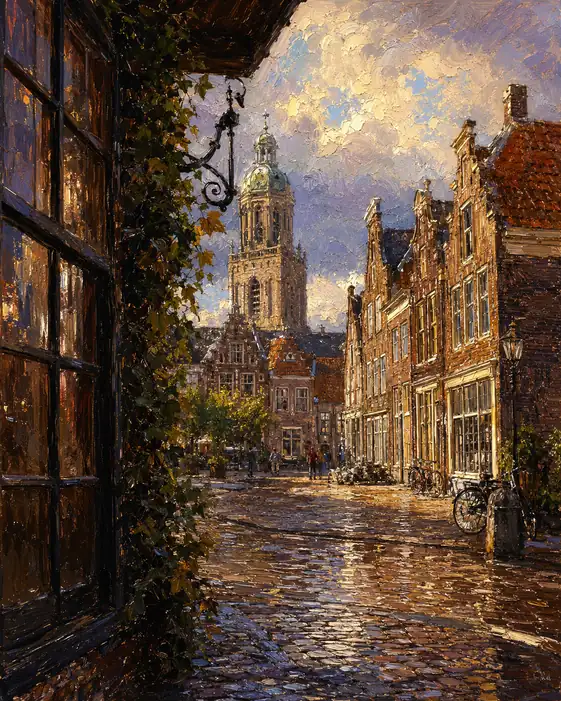 Echoes on the Glistening Alley
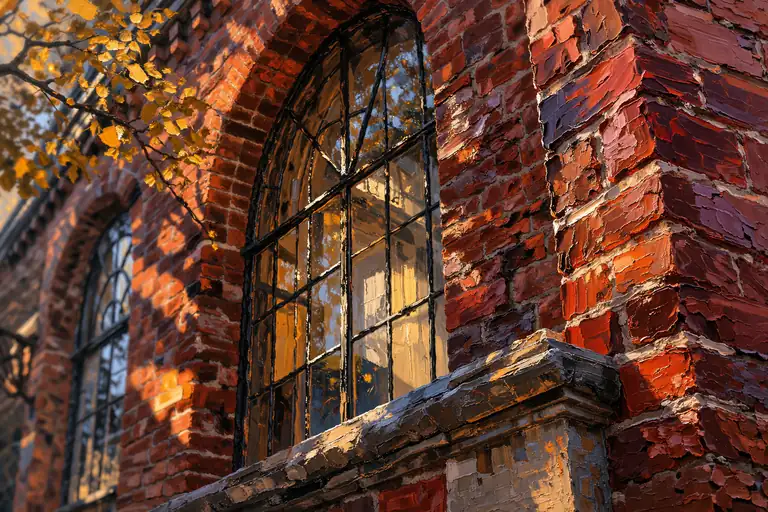 A Window to an Autumn Dream
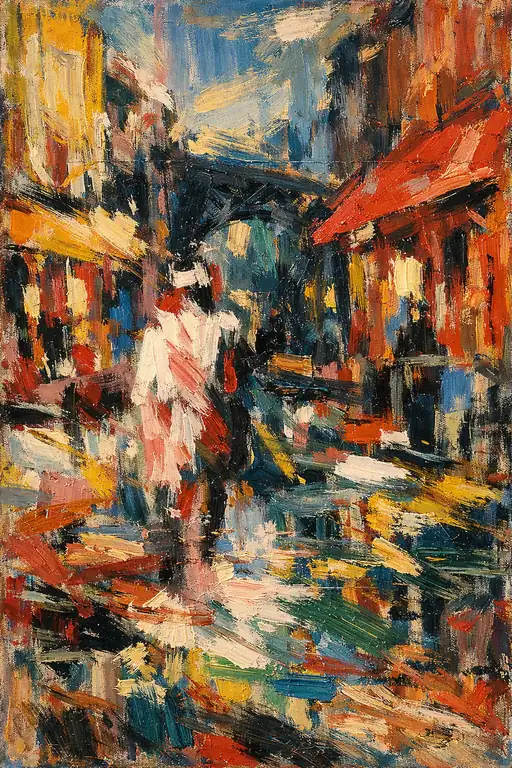 Echoes of the Neon Pavement
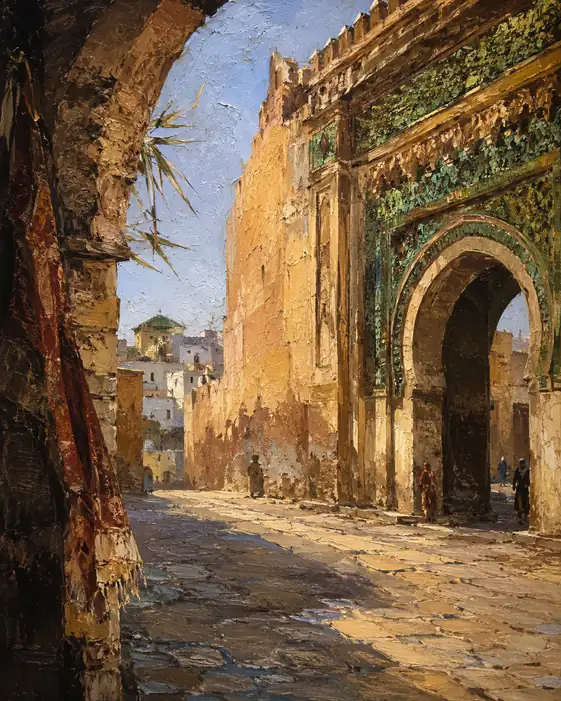 Gateway to the Golden Alley
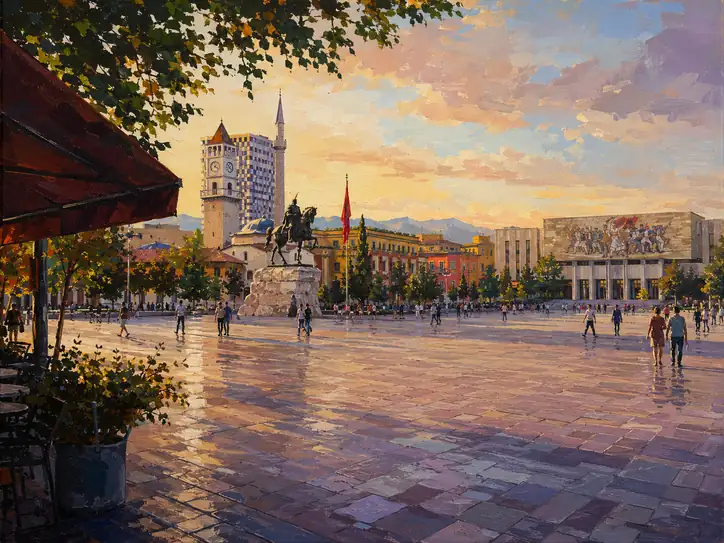 Twilight Symphony in the Square
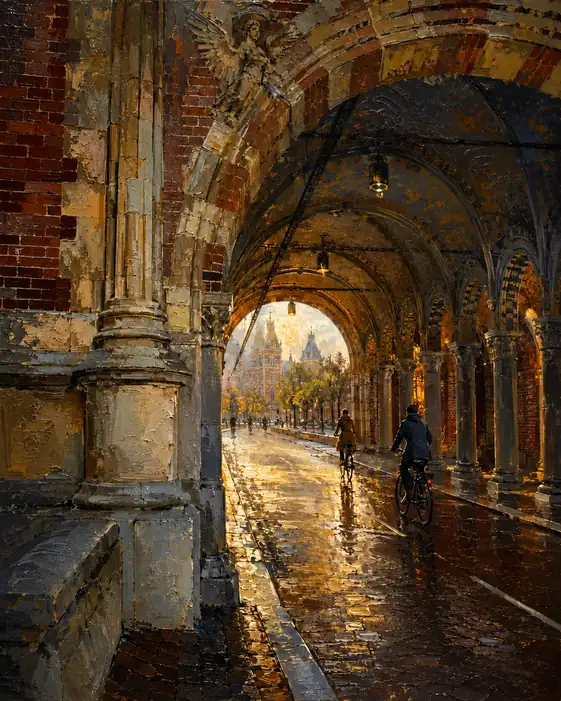 Under the Angel's Gaze
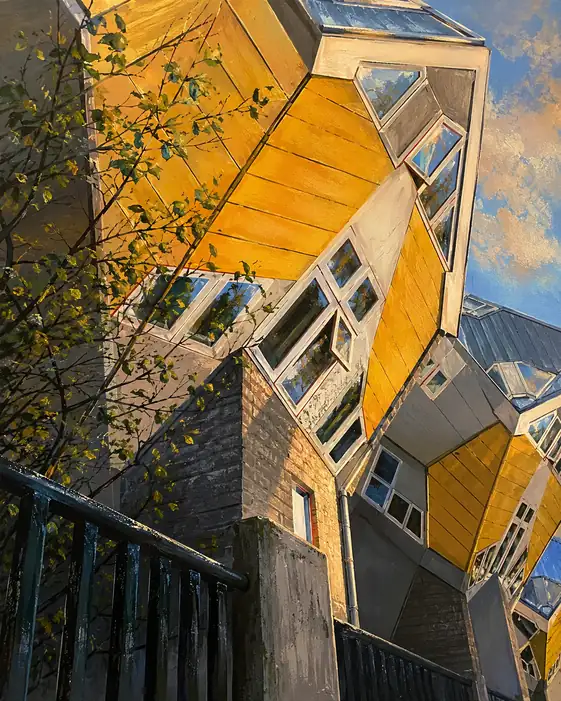 Cubes Dancing in the Daylight
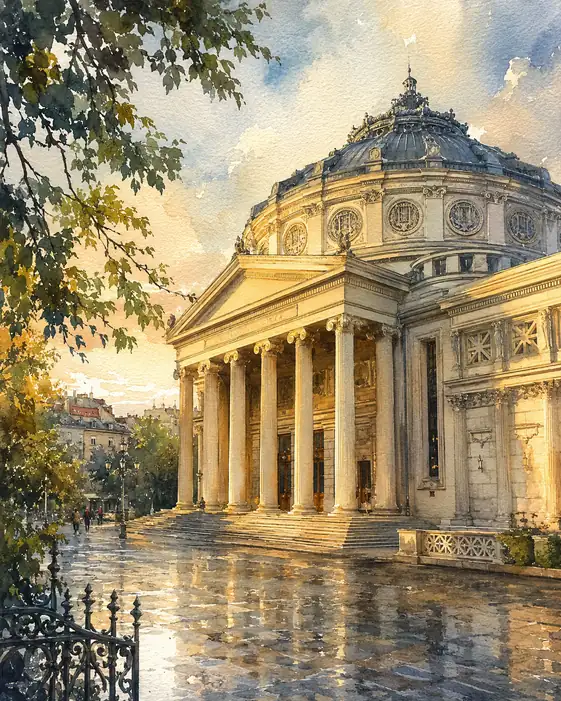 Golden Reverie of the Athenaeum
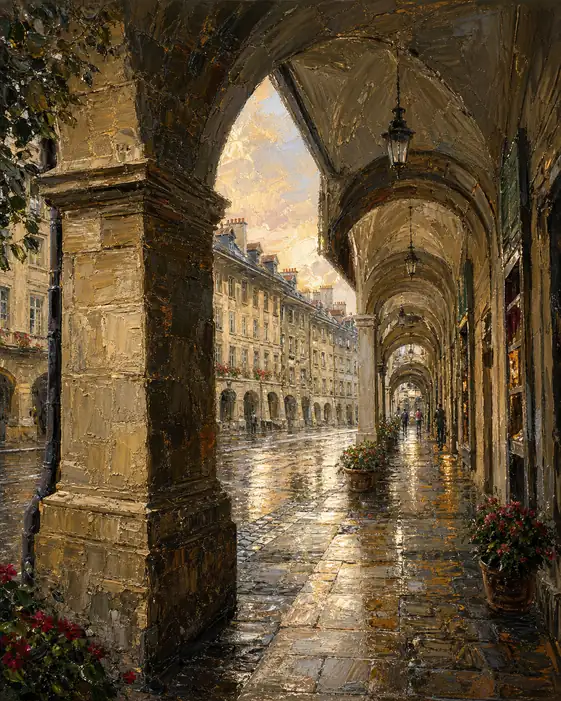 Gilded Pathways Under Arches