Echoes of the Blade
Critique
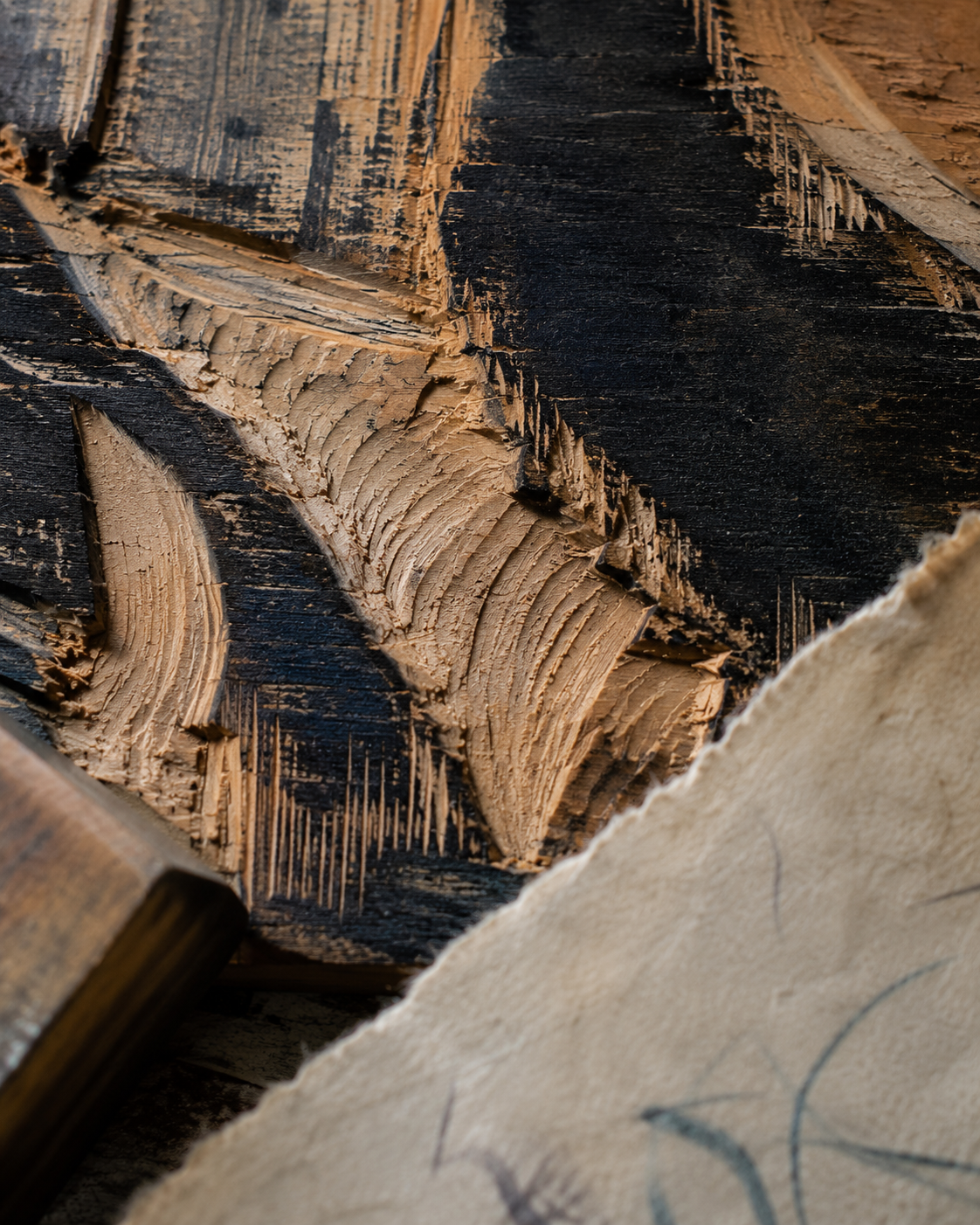
1. Introduction This still life painting captures the intricate process of carving a woodblock for printmaking from a compelling close-up perspective. The raw, energetic marks left by the chisel imbue the composition with dynamic movement, highlighting the balance between force and precision in traditional craft. By focusing on the matrix rather than the final print, the work visualizes the physical labor and creative struggle inherent in artistic expression. 2. Description At the center, the black-inked surface of the woodblock is gouged away to reveal the pale wood underneath. These carved grooves exhibit a rhythmic, striated texture where the blade has sliced through the grain, catching light on their sharp edges. The lower-right features the edge of a preparatory sketch, while a heavy wooden tool occupies the lower-left, its dark grain adding to the overall sense of materiality and weight. 3. Analysis Stark contrast between the black surface and exposed wood creates a powerful visual drama that guides the eye along the carved paths. The marks follow a consistent rhythm, suggesting the deliberate movement of the artist's hand through the resistant medium. Directional lighting emphasizes the depth of the recessed areas, creating a tactile reality. The artist's ability to render the fibrous quality of the wood and the sharpness of the cuts is exceptional. 4. Interpretation and Evaluation The essence of printmaking as an art of subtraction is brilliantly visualized through these physical scars. Each mark represents a moment of decision, transforming the woodblock into a map of the creative process where effort and intention are permanently etched. This handling of texture conveys a deep respect for the medium, bringing the viewer into the high-tension environment of the studio. The work achieves a high level of technical and conceptual mastery. 5. Conclusion What initially appears as an abstract pattern of light and dark soon reveals itself to be a scene filled with the vitality of manual craft. The painting effectively argues that the matrix of a print possesses its own unique aesthetic value. By capturing the breath of the material and the traces of human labor, this piece offers a moving reflection on the origins of beauty in the physical world and the depth of the process.
 Prayer in the Grain
 The Heart of Chivalry: A Lifetime in Steel
 The Last Ember of Hope
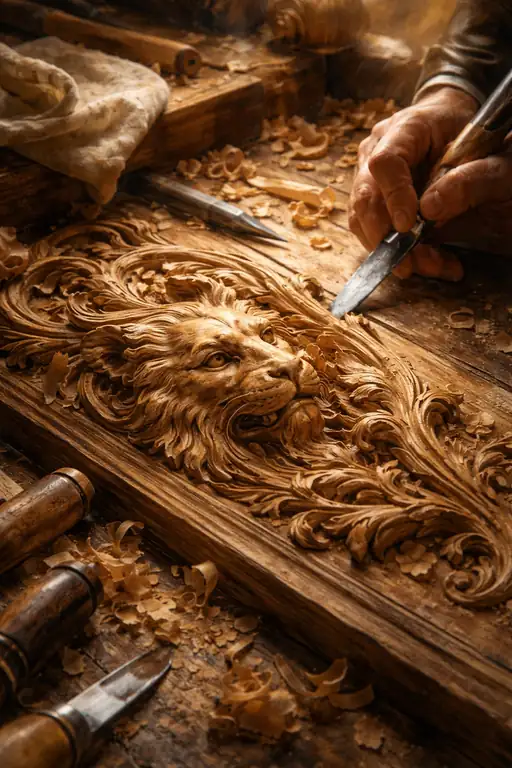 The Artisan's Devotion Etched in Wood
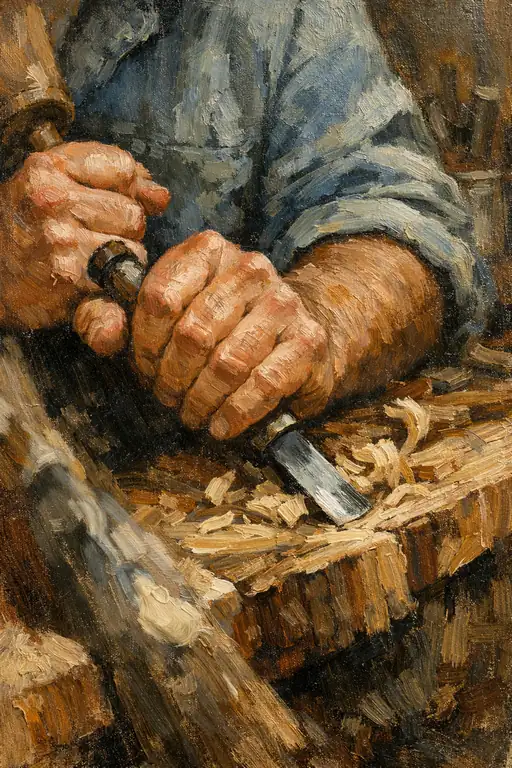 Carving Time with Weathered Hands
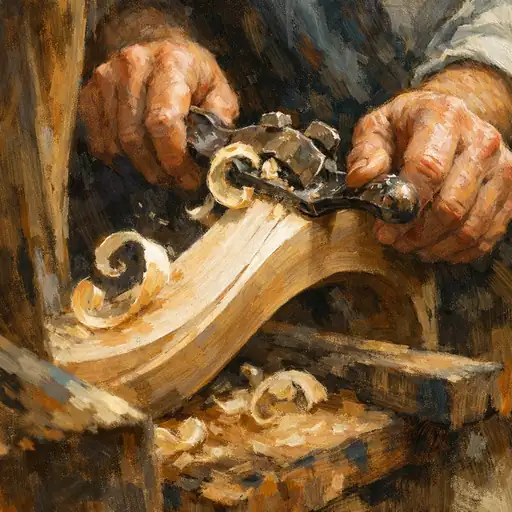 The Graceful Curve of Craftsmanship
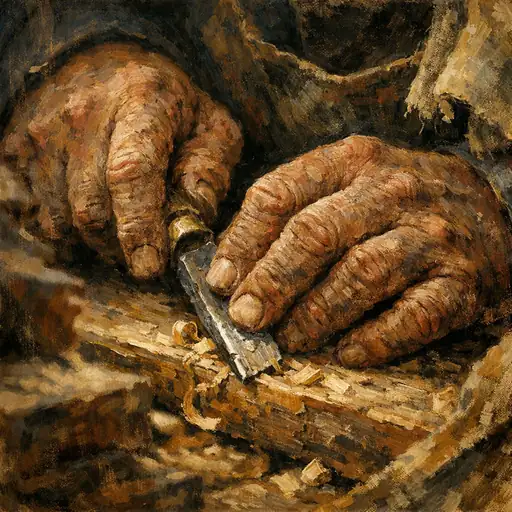 The Chisel's Path
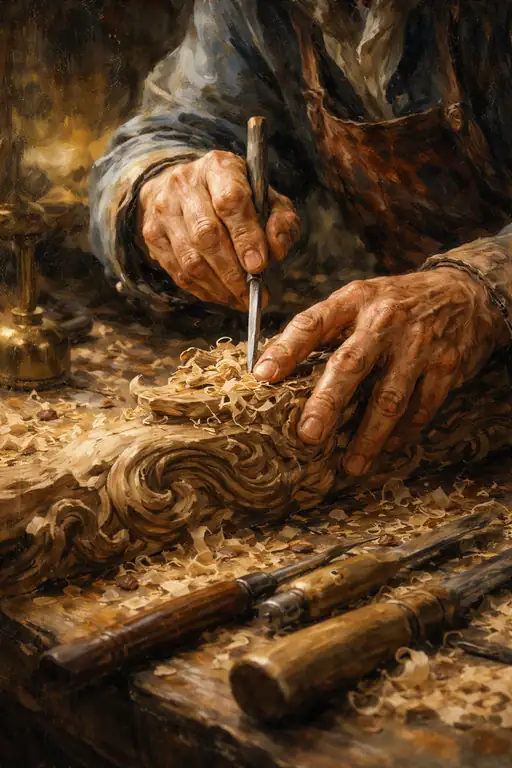 The Soul Carved in Wood
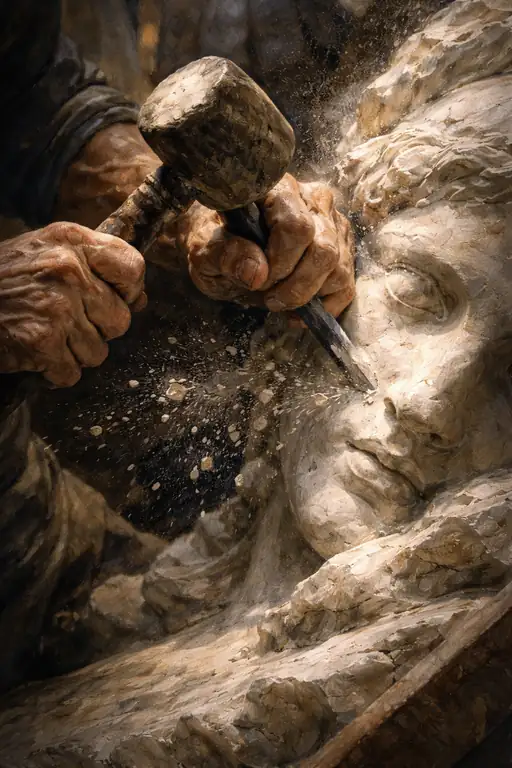 The Chisel's Climax: Birth from Stone
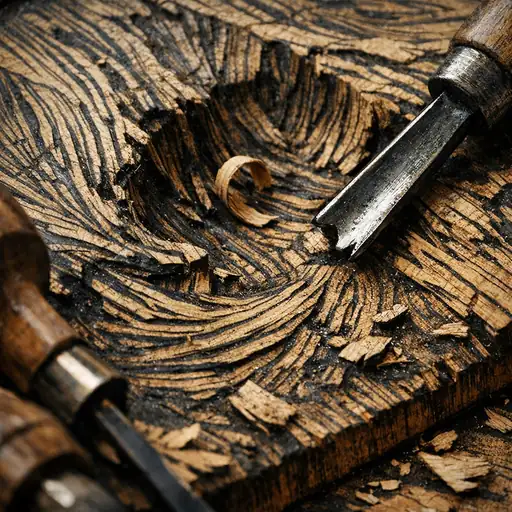 Wood Carving
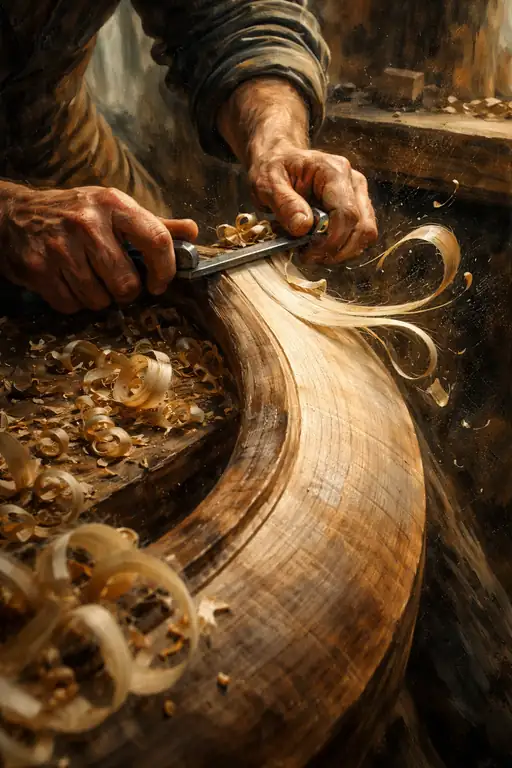 Whispers of the Wood