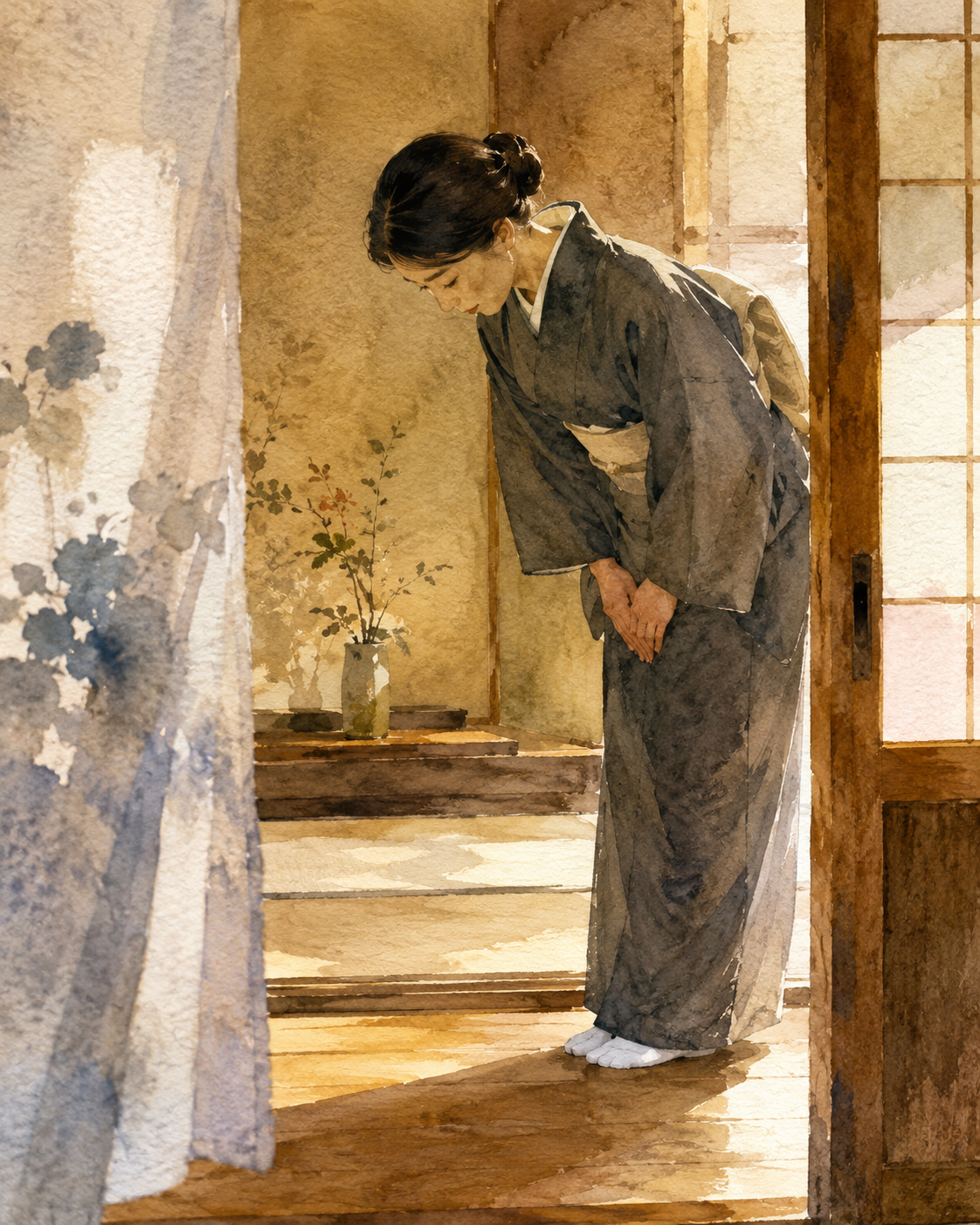
The Grace of Silence
Critique
1. Introduction This watercolor painting depicts a serene and quintessentially Japanese scene, featuring a woman in traditional attire performing a respectful bow. The artist utilizes the delicate qualities of the watercolor medium to create an atmosphere of quiet dignity and domestic tranquility. Set within a traditional interior, the work captures a fleeting moment of etiquette that reflects deep-seated cultural values. The soft, translucent washes of color contribute to a sense of airy light and spatial depth throughout the composition. 2. Description The central figure is a woman with her hair elegantly styled in a bun, wearing a dark, charcoal-colored kimono secured with a lighter-toned obi. She is shown in profile, leaning forward in a formal bow with her hands clasped gently in front of her. The setting includes a wooden or tatami floor, a sliding shoji screen on the right, and a delicate floral arrangement in a simple vase in the background. On the left, a light blue patterned curtain hangs, partially obscuring the view and adding a layer of visual texture to the scene. 3. Analysis The composition is carefully balanced, with the vertical lines of the shoji and the curtain framing the bowing figure. The lighting is a critical element, as warm sunlight streams from behind the shoji on the right, casting a soft, elongated shadow across the floor. The artist employs a "wet-on-wet" technique in several areas, allowing colors to bleed into one another to suggest the soft textures of fabric and wood. The use of a muted, earthy palette punctuated by the dark kimono creates a strong focal point while maintaining a harmonious overall tone. 4. Interpretation and Evaluation This work serves as an evocative exploration of humility, grace, and the beauty found in everyday rituals. The act of bowing is rendered with a sensitivity that elevates it from a mere social convention to a profound expression of respect and inner peace. Technically, the artist shows a masterful command of light and shadow, particularly in the way the sunlight illuminates the woman's neck and the edges of her garment. The composition feels both intimate and spacious, demonstrating a sophisticated understanding of Japanese aesthetic principles like "ma" or negative space. 5. Conclusion In conclusion, the painting is a remarkable example of how watercolor can be used to convey complex cultural emotions and a specific sense of place. The interplay between the structured environment and the fluid medium results in a piece that is both grounded and ethereal. The viewer is left with a sense of calm and a deep appreciation for the quiet moments that define a culture's identity. This work successfully bridges the gap between formal representation and emotional resonance, making it a truly captivating piece of art.
Same Subcategory
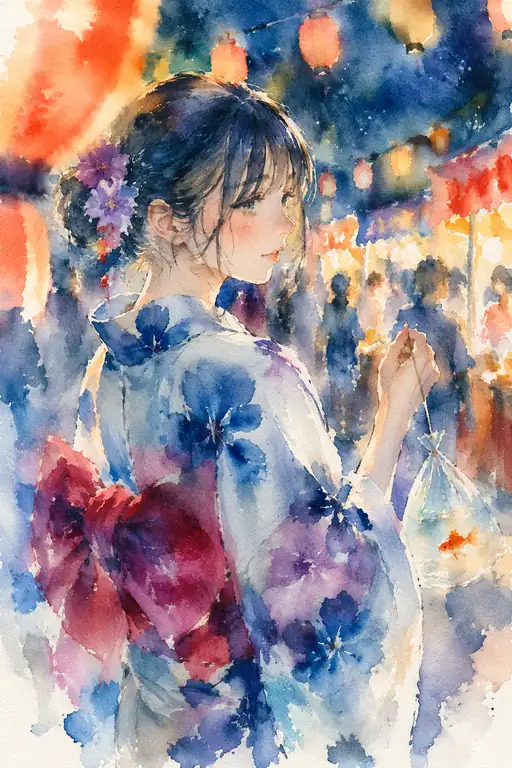 Flickering Memories of a Summer Festival
Similar Artworks
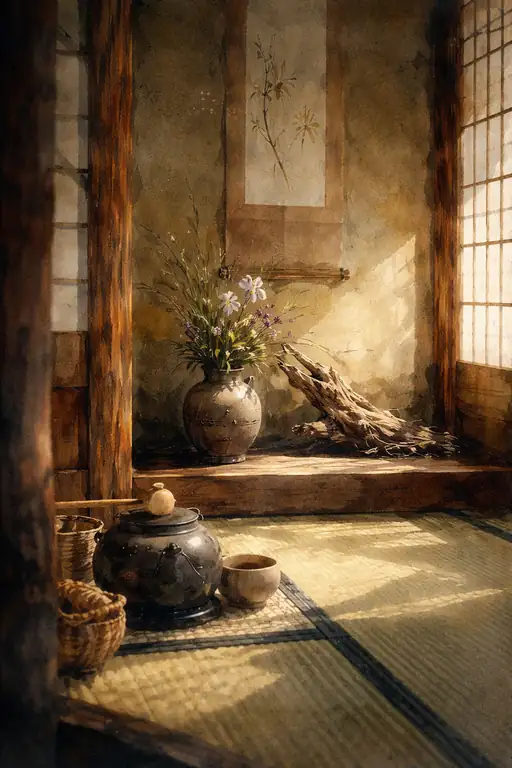 Stillness of the Tea Room
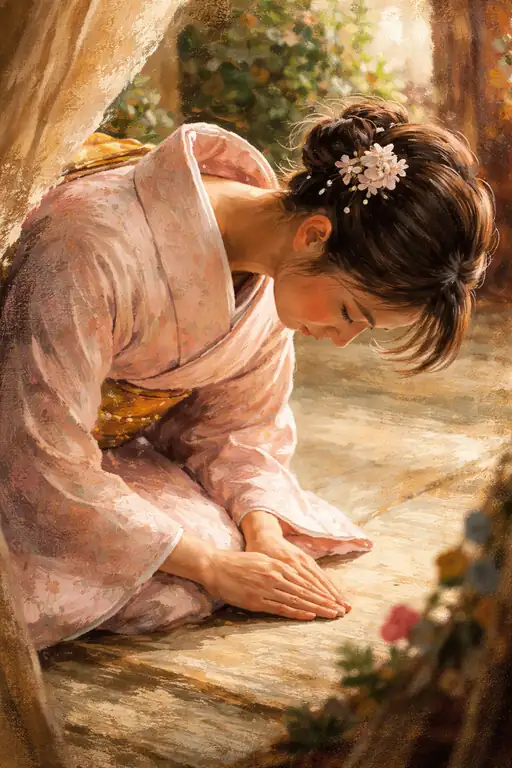 Grace in the Sunbeams
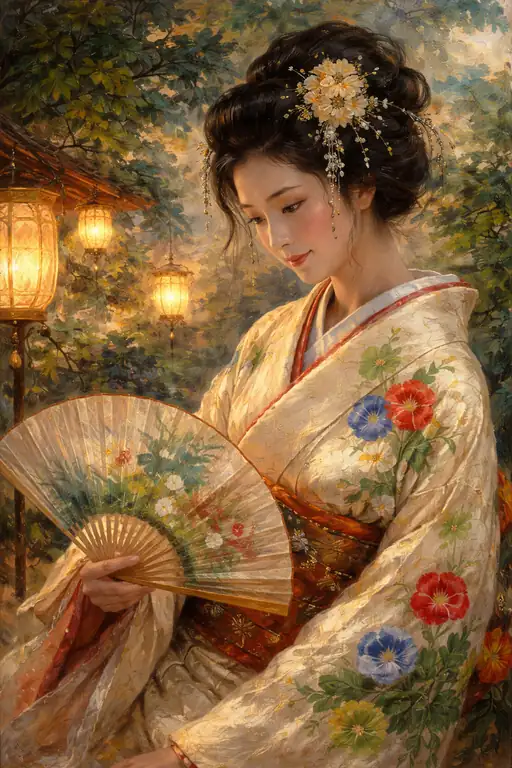 Grace Behind the Painted Fan
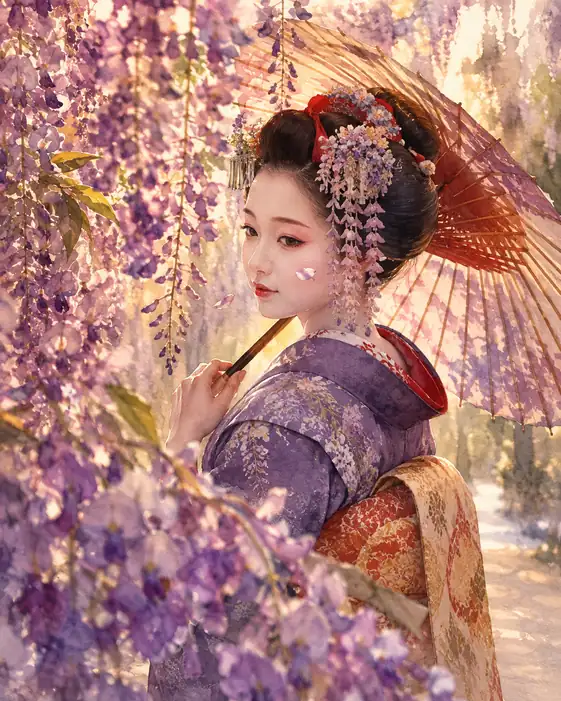 Graceful Glance Beneath Cascading Wisteria
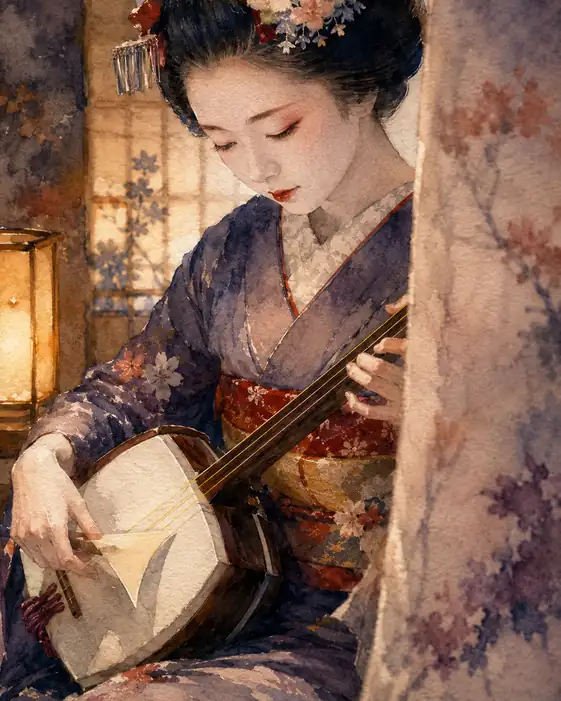 Melody in the Indigo Night
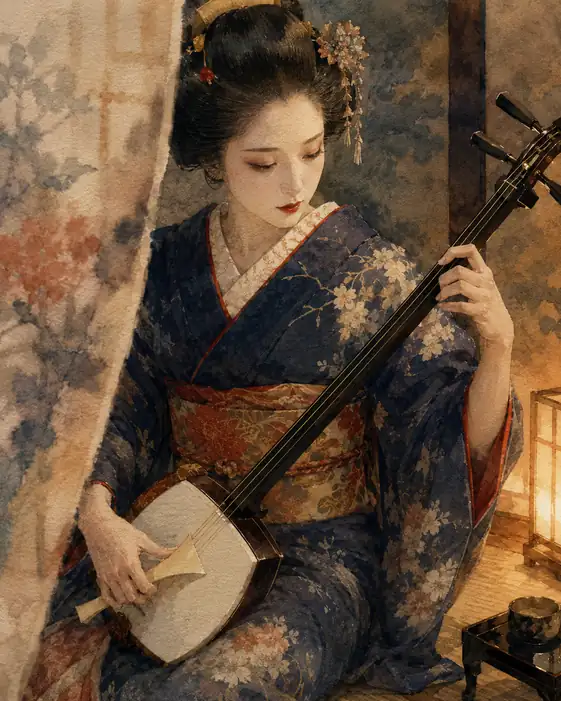 The Echoes of Indigo
 Whispers of the Spring Breeze
 Morning Light Through Shoji
 A Dream Woven in Sakura and Silk
 Whispers of Silk and Sunlight: A Moment of Grace