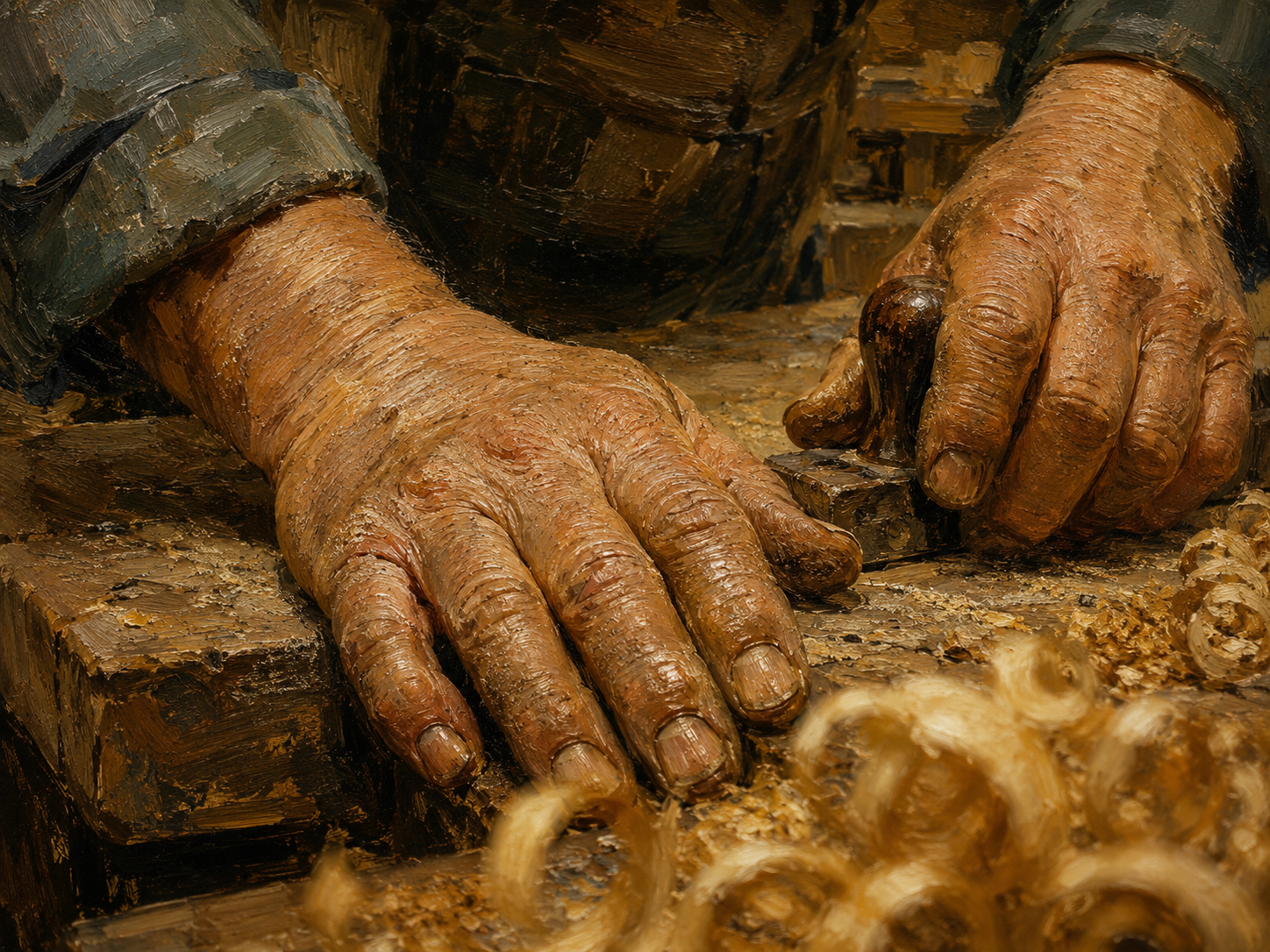
Prayer in the Grain
Critique
1. Introduction This oil painting focuses on the weathered hands of a craftsman and the tangible textures of his trade. The composition is dominated by two powerful hands manipulating tools on a workbench, bringing form to raw material. Through the extensive use of impasto techniques, the work conveys a physical weight and tactile presence that transcend mere visual observation. 2. Description The central subjects, the hands, are rendered with deep wrinkles and knobby joints, using thick layers of paint to create actual physical relief on the canvas. The right hand firmly grips the handle of a plane, while the left hand stabilizes the wood, capturing a frozen moment of skilled labor. In the foreground, freshly curled wood shavings pile up, contrasted against the dark background and the grainy surface of the workbench. 3. Analysis The color palette is grounded in earthy tones such as brown and ochre, emphasizing the rugged sincerity of manual work. Light enters from the upper right, casting intricate shadows across the ridges of the hands and the overlapping shavings, highlighting their three-dimensional forms. The density of the brushstrokes is remarkable; each dab of paint functions as a layer symbolizing the accumulation of time and effort. 4. Interpretation and Evaluation Rather than a simple record of a task, this piece interprets the dialogue between human and material as a celebration of the sanctity of labor. The vigorous texture treats physical presence and natural beauty as equals, showcasing the artist's technical prowess and deep insight into the subjects. The stable composition combined with obsessive attention to detail evokes both a still-life serenity and the craftsman's inner passion. 5. Conclusion This work is a compelling achievement that powerfully depicts fundamental human creativity through tactile expression. Its intense realism prompts viewers to imagine the scent of wood and the sounds of the workshop. While initially struck by the ruggedness of the hands, one eventually recognizes the tender precision of the movements and the inherent beauty of the transforming material.
Same Subcategory
 Indigo Dreams Under the Sun
 Echoes of the Blade
Similar Artworks
 The Chisel's Path
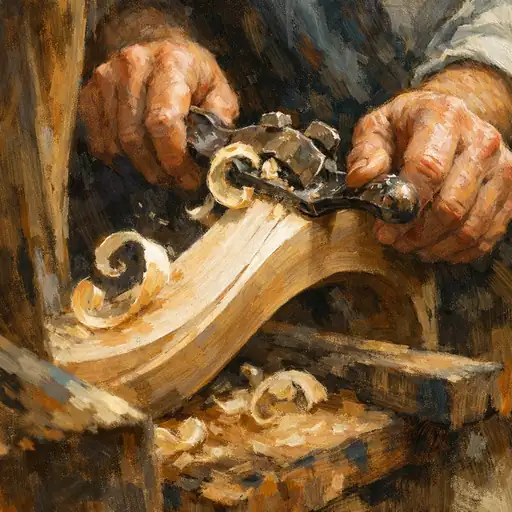 The Graceful Curve of Craftsmanship
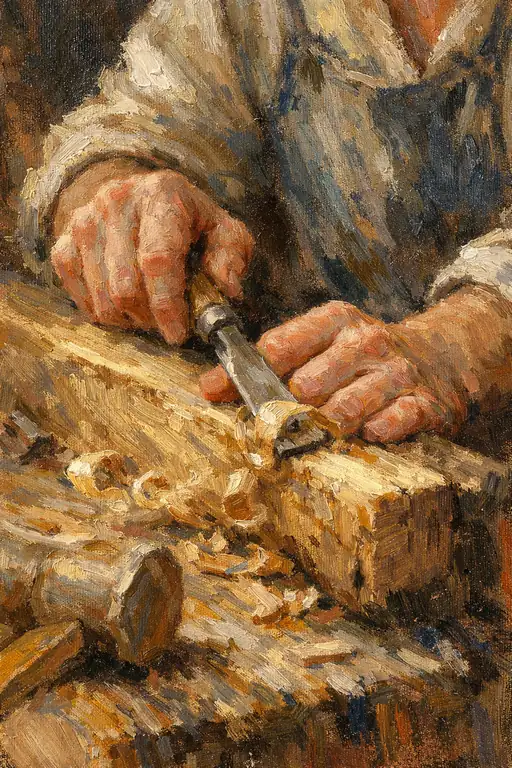 The Last Ember of Hope
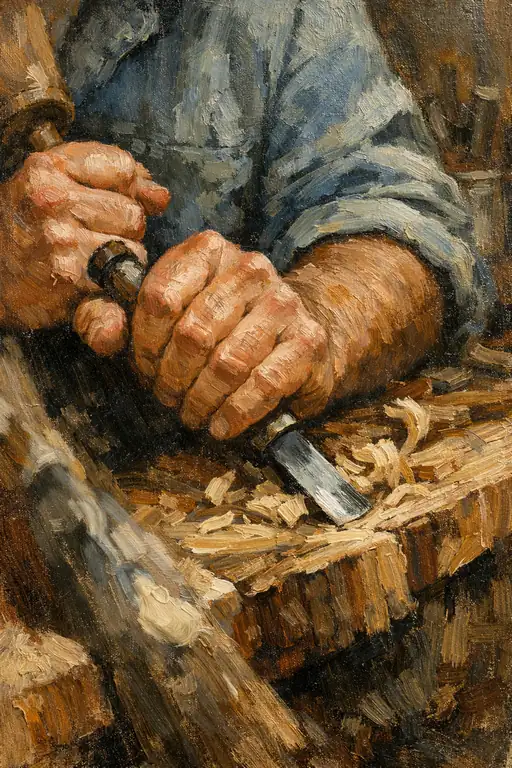 Carving Time with Weathered Hands
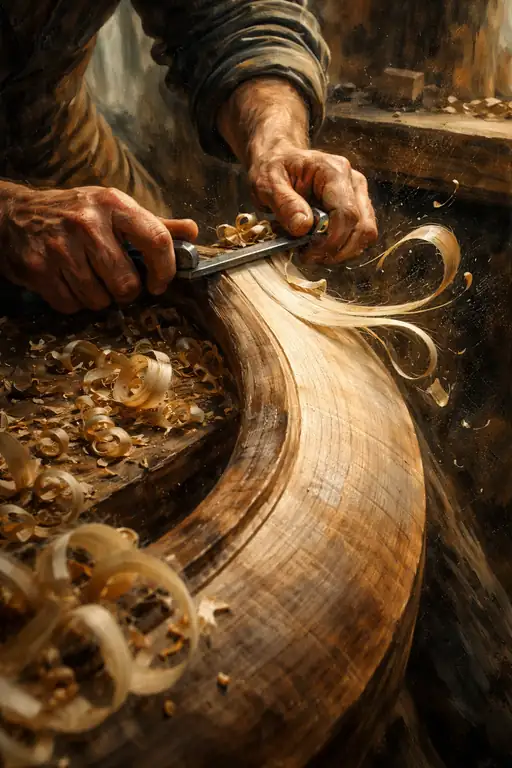 Whispers of the Wood
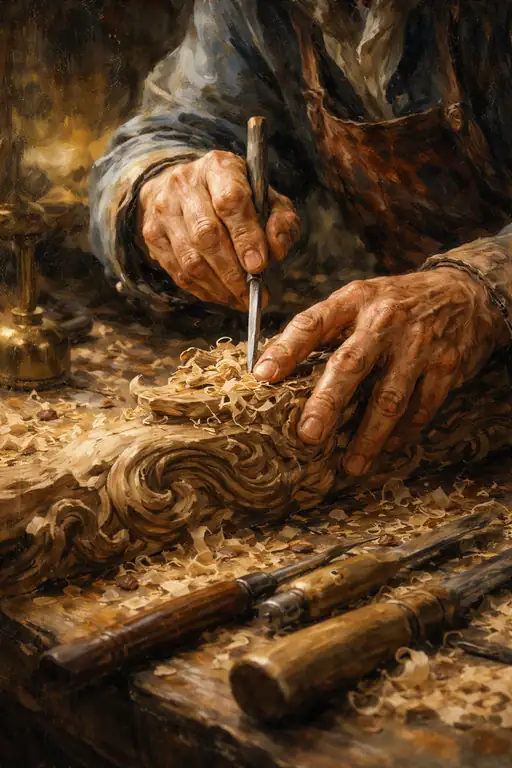 The Soul Carved in Wood
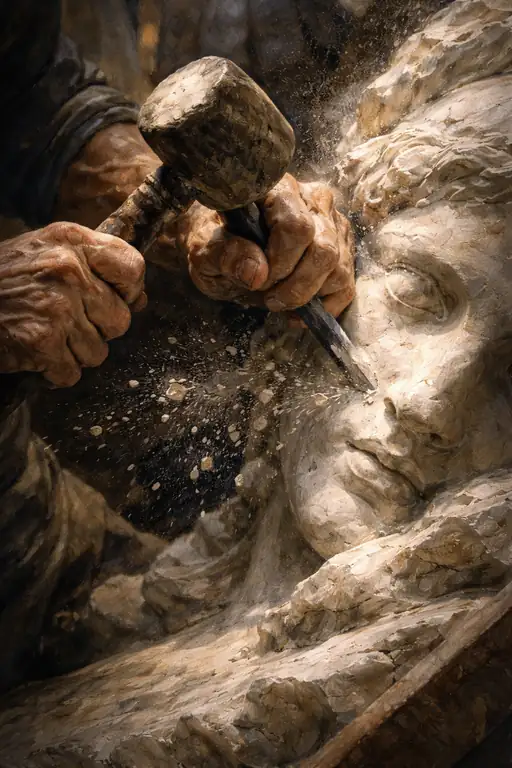 The Chisel's Climax: Birth from Stone
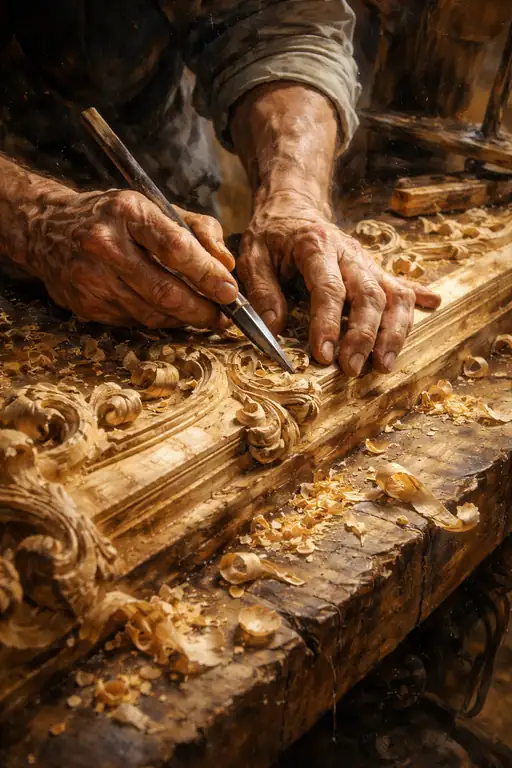 The Enduring Legacy of Woodcarving
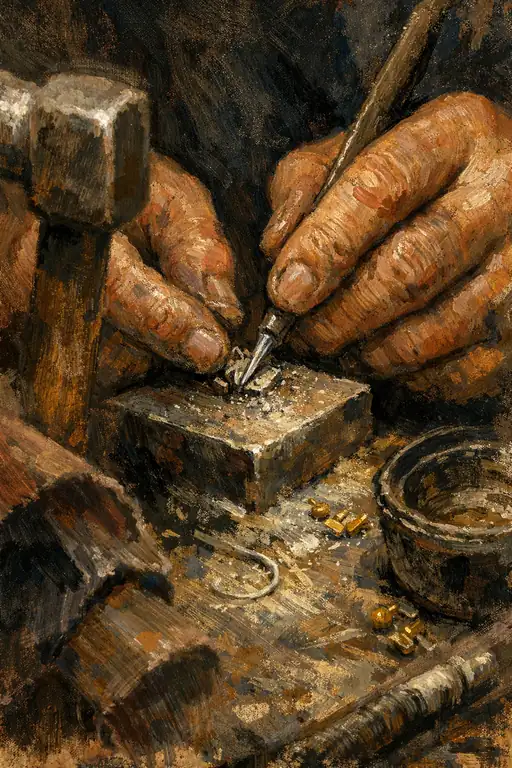 The Weight of Time in Calloused Hands
 The Artisan's Devotion Etched in Wood